Could an at-home device deliver the same lasting results as professional treatment? The answer depends on what the device actually does and how precisely it can target each hair follicle. If you’re weighing professional vs at home electrolysis, product labels can make the choice confusing. Some devices use electrolysis methods, while others use different technologies or make claims that are difficult to verify.
Wanting a private, convenient option is understandable, especially when professional appointments take time and commitment. Concerns about irritation, infection, or unwanted marks also deserve a clear, balanced answer. At-home use can carry risks if a device is misused, and results depend heavily on technique. A professional electrologist can discuss your goals and perform treatment with specialized equipment, but the right approach varies from person to person.
This guide explains what home devices can and can’t do, how professional electrolysis differs, and what to compare when weighing safety, precision, results, and appointments. You’ll also find practical questions to ask before choosing, so you can make an informed decision and explore local care if that feels right.
Key Takeaways
- Identify whether a home device uses IPL, laser, an epilator, or claims to use electrolysis. These methods are not interchangeable.
- In the professional vs at home electrolysis comparison, consider who performs the treatment, how it’s tailored, and what support is available.
- Before choosing, clarify your hair-removal goal and treatment area, review the manufacturer’s instructions, and ask about safety and follow-up.
- For individual skin concerns, seek clinical advice rather than relying on a device label or a one-size-fits-all recommendation.
- North Bay Electrology offers appointment-only professional electrolysis for the face, neck, body, sensitive areas, and pre-surgical hair clearance.
Professional vs. at-home electrolysis: what are you actually comparing?
The privacy, convenience, and control of treating hair at home can be appealing. But a device marketed for home use may not perform electrolysis at all. The phrase professional vs at home electrolysis can describe comparisons between very different technologies, so first identify what the device actually does.
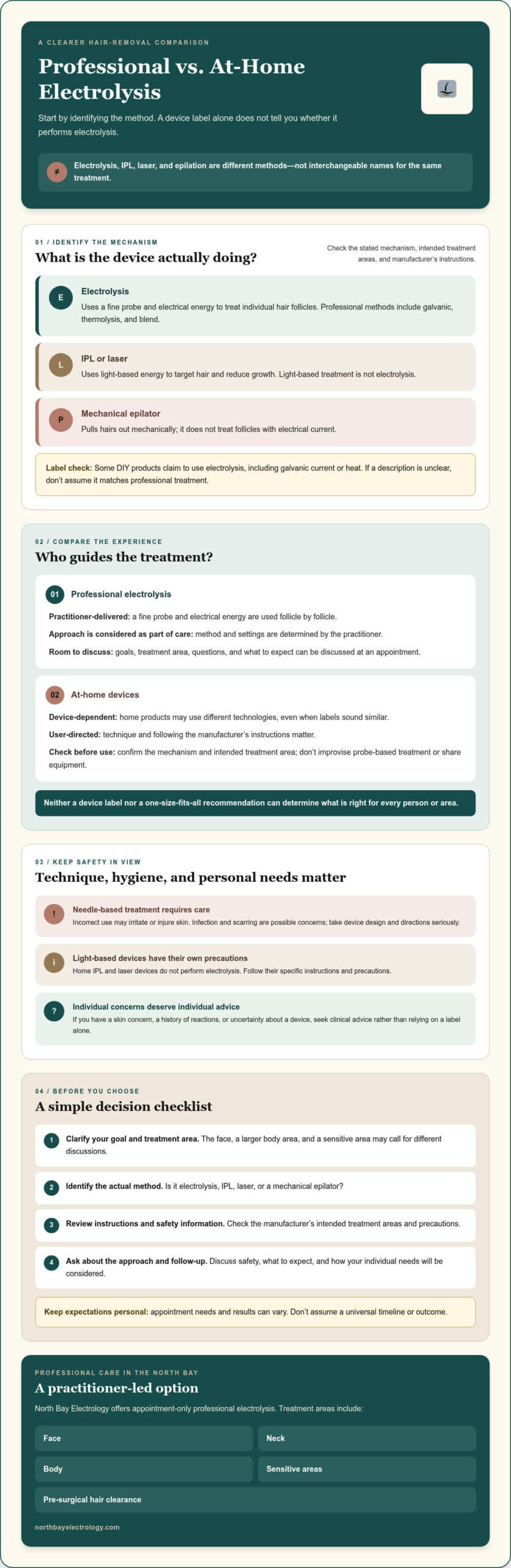
A simple distinction: Electrolysis uses a fine probe and electrical energy to treat individual hair follicles. Light-based devices use light energy to target hair and reduce growth. These are different methods, not interchangeable names for the same treatment.
What does “at-home electrolysis” mean?
Product labels can be confusing. Some DIY devices claim to use electrolysis, such as galvanic current or heat. Others are home IPL or laser devices, which use light, or mechanical epilators, which pull hairs out. An epilator doesn’t treat follicles with electrical current, and IPL isn’t electrolysis simply because it’s sold for hair removal.
Before choosing a device, check its stated mechanism and read the manufacturer’s instructions. Look for an explanation of how it works and the treatment areas it is intended for. If the description is unclear, don’t assume the word “electrolysis” means the device matches professional treatment. For a general overview of the methods, see How electrolysis works.
How is professional electrolysis different?
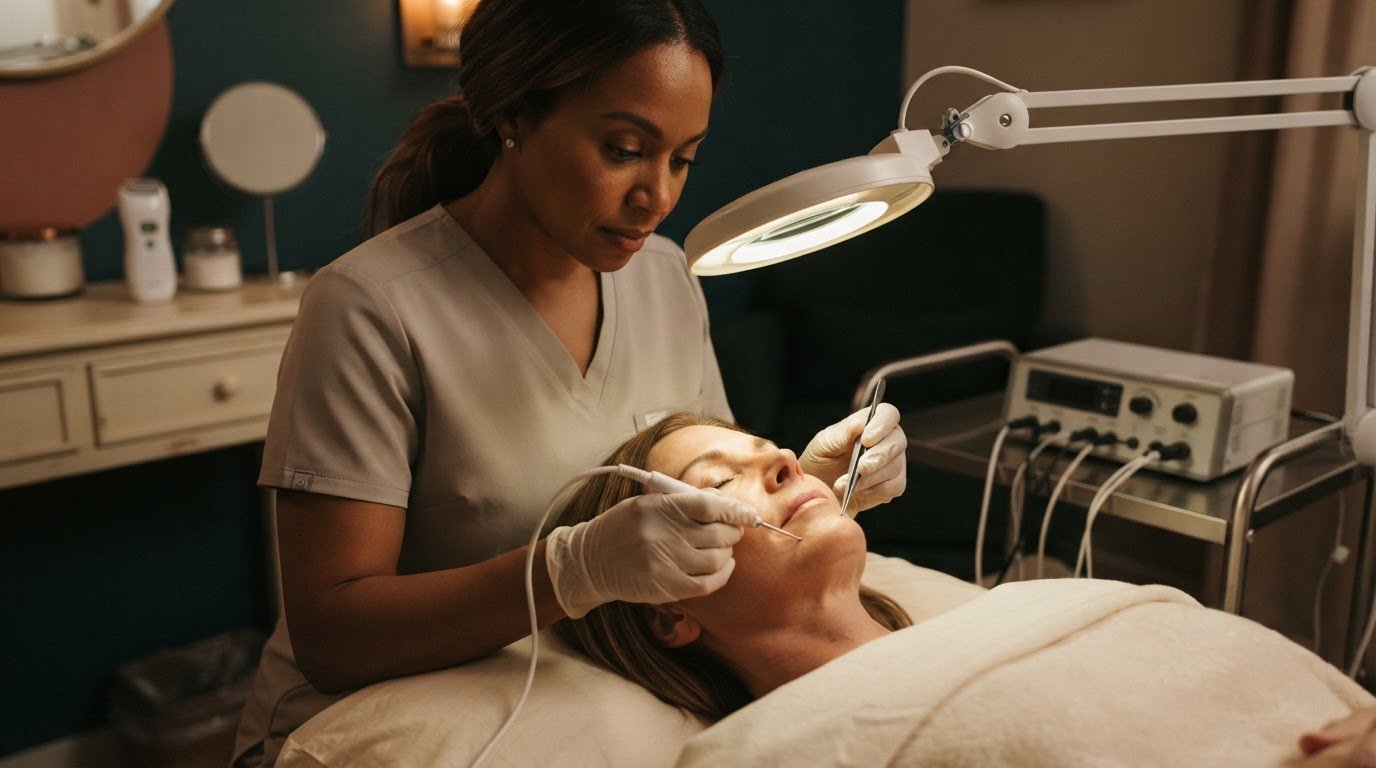
Professional electrolysis is practitioner-delivered, follicle-by-follicle treatment. The practitioner directs a fine probe into an individual follicle and applies electrical energy. Galvanic, thermolysis, and blend methods use current in different ways. The method and settings are determined as part of professional care, rather than left to a device label alone.
This approach allows the treatment area and a person’s individual needs to be considered. It doesn’t mean every person or area will have the same experience or results. A professional appointment also gives you an opportunity to discuss your goals and questions before deciding whether treatment feels right for you.
Keeping these categories separate makes the comparison clearer. Professional electrolysis and a DIY device that claims to use electrolysis are not automatically equivalent, and neither should be confused with home IPL, home laser, or an epilator. Their mechanisms, level of practitioner involvement, and approach to hair removal differ.
How electrolysis works, and why technique and setting matter
Understanding the mechanism helps explain why a device’s name alone isn’t enough to judge what it does. In electrolysis, a practitioner treats individual hair follicles with electrical energy delivered through a fine probe. Home IPL and laser devices use light-based energy instead. Different hair-removal mechanisms are not interchangeable: light-based hair reduction does not become electrolysis simply because both methods are used to address unwanted hair.
What happens during professional electrolysis?
Professional treatment is directed at one follicle at a time. Depending on the method, electrical energy works through heat, a chemical reaction, or a blend of the two. The practitioner guides the treatment and selects an approach and settings as part of care, rather than leaving the user to interpret a device label or adjust equipment alone.
The treatment area and your individual needs matter. The face, for example, may call for a different discussion than a larger body area or a sensitive area. Before treatment, ask the electrologist about the method, what to expect, and how the treatment will be approached. The number of appointments and results can vary, so don’t assume a universal timeline or outcome.
Why DIY technique and hygiene deserve careful consideration
Needle-based treatment calls for precision and careful hygiene. Incorrect use may irritate or injure skin, and infection or scarring are possible concerns. That doesn’t mean every home device will cause harm, but it is a reason to take the device’s design and directions seriously. Don’t improvise probe-based treatment, share equipment, or disregard the manufacturer’s instructions.
Home IPL and laser devices also have specific instructions and precautions, but they don’t perform electrolysis. Their light-based mechanisms differ from the follicle-by-follicle process. If you have a skin concern, a history of reactions, or uncertainty about a device’s intended use, seek appropriate clinical advice before proceeding.
In the professional vs at home electrolysis decision, technique is more than a matter of convenience. Professional care gives you an opportunity to discuss treatment planning and questions with an electrologist. DIY use places more responsibility on you to understand the equipment and follow its directions. If you’re considering professional treatment, you can explore professional electrolysis appointments and raise questions about your goals and treatment area.
At-home devices vs. professional electrolysis: compare safety, control, and support
In the professional vs at home electrolysis comparison, start by identifying the technology, then consider who guides its use. Convenience and privacy can matter, along with your treatment area, skin concerns, comfort with self-treatment, and access to follow-up. No option is right for everyone, and professional care shouldn’t be assumed to be painless or risk-free.
| Option | Method | User involvement | Individualized oversight | Convenience and follow-up |
|---|---|---|---|---|
| Home IPL | Uses pulses of light; it is not electrolysis. | You operate the device and follow its instructions. | Generally self-directed; check whether its instructions address your needs. | Can be used at home, with follow-up guided by the manufacturer’s directions. |
| Home laser | Uses light energy, not electrolysis. | You handle device use and safety precautions. | Generally self-directed; individual guidance may require consulting a qualified source. | Home use may be convenient, but you are responsible for following directions and deciding when to seek advice. |
| Mechanical epilator | Pulls hairs out mechanically rather than treating follicles with electrical energy. | You control the device and where it is used. | No practitioner oversight is built into home use. | Convenient for some users; any further use is self-managed. |
| DIY device claiming electrolysis | Claims to use an electrolysis method; verify the actual mechanism and instructions. | You operate the device, which may require careful handling. | Usually self-directed unless you seek separate professional advice. | Home access may be convenient, but questions or concerns may need outside guidance. |
| Professional electrolysis | A practitioner treats individual follicles using an electrolysis method. | You discuss your goals and take part in treatment planning. | The practitioner can consider the area and your individual needs. | Requires appointments; discuss questions and follow-up with the electrologist. |
Which factors should you compare before choosing?
Check what technology a home device uses and what outcome its manufacturer claims. Then weigh your priorities. Do you value privacy most, or would you feel more comfortable discussing a sensitive area with a practitioner? Check whether the device is intended for the area you have in mind, and whether its instructions address your needs. If you have a skin concern, medical history, or previous reaction, ask a qualified health professional for guidance before using a device.
When might professional guidance be especially helpful?
Consider seeking professional input if the treatment area is complex, instructions are unclear, or you’ve had a skin reaction. Pre-surgical hair clearance also calls for planning with the relevant clinicians so treatment can be discussed in relation to surgical needs. For more context, see “Pre-Surgical Electrolysis: The Clinical Guide to Permanent Hair Clearance in the North Bay.”
The right choice depends on the device’s actual method, your personal goals, and the kind of guidance you want. Comparing those factors can help you make a considered decision without assuming that all home devices or professional treatments are alike.
How to choose a safe and suitable hair removal approach
A considered choice starts with your goal, not a device’s marketing language. Use this checklist to organize your questions and decide what kind of support would help you feel comfortable.
- Define your goal. Are you looking to remove individual hairs, reduce hair growth, or address a specific area? Different methods work differently.
- Identify the device type. Check whether it uses IPL, laser, mechanical epilation, or claims to use electrolysis. Read the manufacturer’s explanation of its mechanism and intended outcome.
- Consider the treatment area. Confirm that the device is intended for that area and that its instructions address your needs. Don’t assume guidance for one area applies to another.
- Review safety information. Read precautions, contraindications, and aftercare before use. If you have a skin concern, relevant medical history, or a previous reaction, pause and seek advice from a qualified healthcare professional.
- Decide what support you want. Consider whether you’re comfortable managing treatment yourself or would prefer to discuss your goals and questions with an electrologist.
Questions to ask before using a device at home
Check the manufacturer’s instructions for the device’s method, intended treatment area, precautions, and aftercare. Ask yourself: Is the mechanism clearly described? Does the guidance cover my skin concern or medical history? If instructions are unclear, a precaution applies to you, or you notice an unexpected reaction, stop and consult an appropriate healthcare professional rather than guessing.
Questions to ask a professional electrologist
Ask how the process works, what hygiene practices are followed, what comfort measures and aftercare to expect, and how your treatment area and goals will inform planning. Share relevant skin or medical concerns so they can be considered. A professional discussion can help clarify the process and whether treatment may suit your needs, but it can’t guarantee an outcome or timeline. If you’re checking a practitioner’s credentials or California requirements, verify current information with the appropriate official source.
For more guidance on evaluating local care, see “Choosing a Professional Electrolysis Clinic: What to Look for in the North Bay.” A thoughtful conversation can make the professional vs at home electrolysis decision more manageable, without pressure to decide before your questions are answered.
Professional electrolysis in the North Bay: what to expect from a first step
Choosing between professional vs at home electrolysis doesn’t require you to commit before you understand your options. A conversation with a local electrologist can help you explain what you’re hoping to address, learn how treatment is approached, and ask questions in a respectful setting.
North Bay Electrology is an appointment-only professional electrolysis practice serving communities across the North Bay, including Petaluma, Novato, Cotati, Rohnert Park, Santa Rosa, Sonoma, Napa, Vallejo, San Rafael, Sebastapol, American Canyon, Terra Linda, Corte Madera, Windsor, and Healdsburg. Services include face and neck electrolysis, body hair removal, sensitive-area electrolysis, and pre-surgical hair clearance. The practice focuses on FDA-approved electrolysis techniques and does not offer laser hair removal or walk-in appointments.
What can a first appointment conversation clarify?
You can ask about the treatment process, the area you’re considering, and how your personal goals may shape a treatment plan. If your needs relate to pre-surgical hair clearance, discuss planning with the relevant clinical team as well as the electrologist. Sharing relevant skin or medical concerns can help inform that discussion.
Use the conversation to understand what is known and what still needs individual assessment. Treatment planning, expectations, and suitability should be discussed directly with the practitioner. No one can responsibly promise a specific timeline or outcome without considering your circumstances.
How to explore professional electrolysis in the North Bay
Before arranging an appointment, note the questions you want answered. You might ask how the process works for your treatment area, what to expect from care, and what information the practitioner needs from you. A first step can be about gathering information, not making an immediate decision.
North Bay Electrology also provides insurance reimbursement paperwork. The practice does not bill insurance directly, so if you may seek reimbursement, check your plan’s requirements and ask what paperwork is available.
If you’re considering professional electrolysis, exploring appointment options offers a practical way to continue the conversation at your own pace.
Choose the next step that fits your goals
The key to the professional vs at home electrolysis decision is knowing what a device actually does. Home IPL, laser, epilators, and DIY devices marketed as electrolysis use different approaches, so check the mechanism and instructions before choosing. Consider your treatment area, personal goals, skin concerns, and whether you’d value practitioner guidance. Individual results and treatment plans can vary.
For North Bay communities, North Bay Electrology provides appointment-only professional electrolysis for the face and neck, body, sensitive areas, and pre-surgical hair clearance. A conversation can help you ask questions about the process and discuss your needs without pressure. Insurance reimbursement paperwork is available, though the practice does not bill insurance directly.
You don’t need to have every answer before taking a next step. Start with the questions that matter most to you, and choose the path that feels informed and right for your circumstances.
Frequently Asked Questions
Is at-home electrolysis as effective as professional electrolysis?
Not necessarily, and results depend on the device and how it’s used. Professional electrolysis involves practitioner-directed treatment of individual follicles, while home devices marketed as electrolysis can vary in mechanism and design. A product label alone doesn’t establish that a device works like professional treatment. If you’re comparing professional vs at home electrolysis, check the device’s actual method and claims, and discuss your goals with an electrologist before choosing.
Can I safely perform electrolysis on myself at home?
Self-treatment carries risks, particularly with needle-based devices, because precision and hygiene matter. Incorrect use may irritate or injure skin, and infection or scarring are possible concerns. That doesn’t mean every home device causes harm, but don’t improvise probe-based treatment or ignore the manufacturer’s instructions. If you’re unsure how a device works or have skin concerns, pause and ask a qualified healthcare professional before using it.
What is the difference between at-home electrolysis and home IPL?
They use different methods. Electrolysis treats individual follicles with electrical energy, while IPL uses pulses of light and does not perform electrolysis. Some devices are marketed as electrolysis, so check the manufacturer’s explanation of the mechanism rather than relying on the product name. Also distinguish home IPL from mechanical epilators, which pull out hairs. These technologies aren’t interchangeable, and their instructions and intended outcomes can differ.
Can professional electrolysis cause scarring?
Scarring is a possible risk if skin is injured, though it isn’t an inevitable outcome of professional electrolysis. Individual skin factors and treatment technique may matter, so no practitioner should promise that a procedure is completely risk-free. Before treatment, ask the electrologist how they approach your treatment area, what aftercare they recommend, and what to do if your skin reacts unexpectedly. Share any relevant skin history or previous treatment reactions.
How long does professional electrolysis take compared with using a home device?
There isn’t one reliable timeframe for either option. Professional appointments treat selected follicles during the scheduled session, while time spent using a home device depends on its method, instructions, and the area being treated. Total treatment time can vary with the treatment area, hair, and individual plan. Ask an electrologist what planning may involve for your goals, and follow the device manufacturer’s directions rather than increasing use to speed results.
Is professional electrolysis suitable for sensitive areas or pre-surgical hair clearance?
Professional electrolysis is offered for sensitive areas and pre-surgical hair clearance, but suitability and planning should be discussed individually. For pre-surgical needs, coordinate with the relevant clinical team so the hair-clearance plan can be considered alongside surgical requirements. You can ask the electrologist about the treatment process, your goals, and any skin or medical concerns. A conversation can clarify options, but it can’t guarantee a particular timeline or result.
Does North Bay Electrology accept walk-ins or bill insurance directly?
No. North Bay Electrology is appointment-only and doesn’t accept walk-ins or bill insurance directly. Insurance reimbursement paperwork is available, but check with your plan about its requirements. The practice serves North Bay communities including Petaluma, Novato, Cotati, Rohnert Park, Santa Rosa, Sonoma, Napa, Vallejo, San Rafael, Sebastapol, American Canyon, Terra Linda, Corte Madera, Windsor, and Healdsburg. Explore appointment options to ask about your needs.

Article by
Madison Hanselman
As a trans woman and owner of North Bay Electrology in Petaluma, I bring a deep personal empathy and love for technical systems to my practice. My own transition fuels my passion for permanent hair removal, making my clinic a proud partner and safe haven for the LGBTQ+ community. Balancing rigorous analytics with heartfelt care, I approach electrology as both a precise science and a life-changing path to self-actualization.