

Tweezing can remove a chin hair, but it won’t reliably stop the follicle from producing another. If you’re trying to stop tweezing chin hair permanently, you may wonder whether plucking makes hair thicker or whether a longer-lasting option exists. Tweezing doesn’t permanently disable the follicle, so the routine can continue as new hairs become visible.
You deserve clear information without pressure or judgment. This article explains why tweezing doesn’t provide permanent removal, how electrolysis treats individual follicles, and how it differs from laser hair removal, which is intended for permanent hair reduction rather than permanent removal.
You’ll also learn what to consider before electrolysis, including how to discuss comfort, timing, and an individualized plan with a professional. Chin hair can be personal, and your questions are welcome. For people in Petaluma and across the North Bay, understanding the process is a practical first step toward choosing care that feels respectful and right for you.
Key Takeaways
- Learn why repeated plucking doesn’t prevent a follicle from producing new visible hair.
- See how electrolysis treats individual follicles and why treatment planning may involve multiple appointments.
- Compare temporary grooming methods with options intended for longer-term reduction or permanent hair removal.
- Find out what to discuss before treatment, including whether and when to pause tweezing.
- Explore how to stop tweezing chin hair permanently with a professional, individualized electrolysis plan in the North Bay.
Why Chin Hair Keeps Coming Back After Tweezing
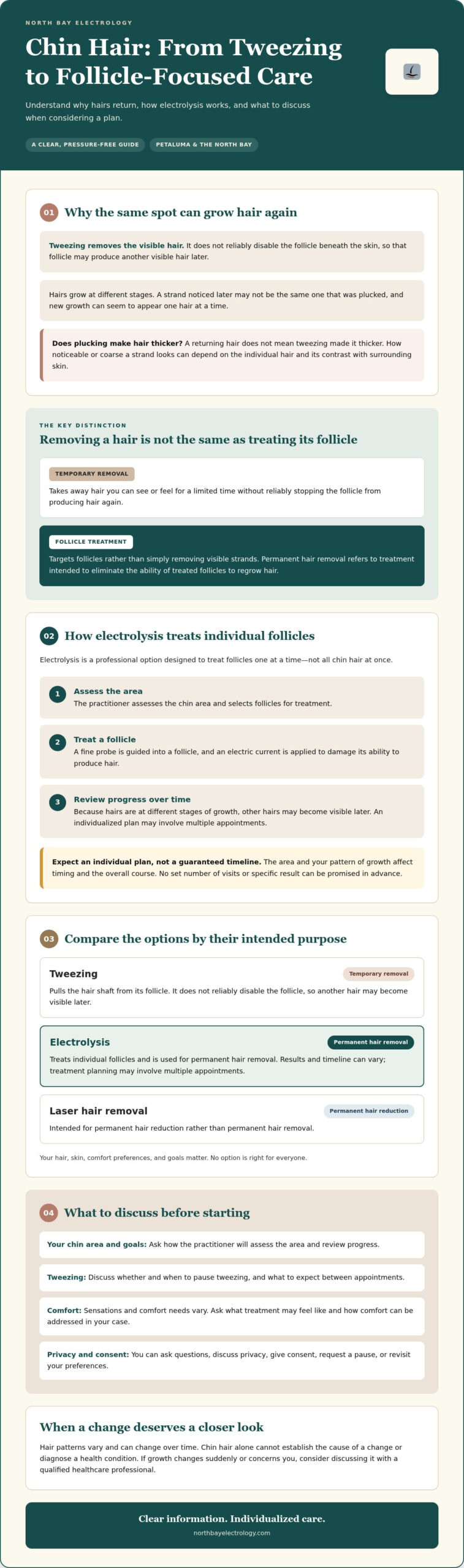
Searching for and plucking the same noticeable chin hairs can become tiring. Tweezing removes the visible hair, but it doesn’t reliably disable the follicle beneath the skin. That follicle can continue its growth cycle, so another hair may become visible there later. Other follicles can produce hairs at different times, too, which can make new growth seem to appear one strand at a time.
Temporary hair removal takes away hair you can see or feel for a limited time without reliably stopping the follicle from producing hair again. Permanent hair removal refers to treatment intended to eliminate the ability of treated follicles to regrow hair. This distinction helps when comparing grooming methods with professional treatments.
What tweezing does to an individual hair
A tweezer grips and pulls the hair shaft from its follicle. It doesn’t necessarily remove or permanently disable the follicle, so that follicle may produce another visible hair. Growth can be difficult to track because individual hairs are at different stages. A strand you notice later may not be the same one you plucked.
A returning hair doesn’t mean tweezing made it thicker. How coarse or noticeable a strand looks can depend on the individual hair and how it contrasts with the surrounding skin. Plucking alone shouldn’t be assumed to create extra follicles or cause increased growth.
When chin hair changes deserve closer attention
Hair patterns vary from person to person and can change over time. Chin hair alone can’t establish the cause of a change or diagnose a health condition. If growth changes suddenly or concerns you, consider discussing it with a qualified healthcare professional, who can assess your situation and advise whether further evaluation is appropriate.
For readers curious about how professional electrolysis works, Electrology offers an overview of methods that use electrical current to treat follicles. Understanding the difference between removing visible hair and treating its follicle can clarify what to look for if your goal is to stop tweezing chin hair permanently.
How Electrolysis Can Help You Stop Tweezing Chin Hair Permanently
If your goal is to stop tweezing chin hair permanently, electrolysis is a professional option designed to treat individual hair follicles rather than simply remove visible strands. During treatment, a practitioner guides a fine probe into a follicle and applies an electric current to damage the follicle’s ability to produce hair. Electrolysis is used for permanent hair removal, but that doesn’t mean every person will have the same outcome or timeline.
Permanent hair removal targets follicles to prevent treated hairs from growing back; temporary hair removal removes visible hair without reliably disabling the follicle. This distinction helps set expectations: electrolysis treats follicles one at a time, not all chin hair at once.
What happens during chin electrolysis
The practitioner assesses the area and treats selected follicles individually. The process is precise, and the approach can be adjusted to the person and area being treated. Sensations and comfort needs vary, so ask what treatment may feel like and how comfort can be addressed in your case. You should have the opportunity to discuss privacy, give consent, and ask questions before treatment begins. Speak up if you need a pause or want to revisit your preferences.
Why a series of appointments may be part of the plan
Hair grows in cycles, and not every hair is at the same stage at the same time. Some follicles may be easier to identify and treat during one appointment, while other hairs become visible later. That’s why an individualized plan may involve multiple appointments. The timing and overall course depend on factors such as the area and your pattern of growth. No set number of visits or specific result can be promised in advance.
At a consultation, ask how the practitioner will assess your chin area, what to expect between appointments, and how progress will be reviewed. For an overview of treatment for facial areas, explore face and neck electrolysis appointment information from North Bay Electrology. Care is by appointment, and a conversation can help you decide whether the service aligns with your goals.
Tweezing, Electrolysis, and Other Chin-Hair Removal Options Compared
Different methods serve different needs. Some remove or disguise visible hair temporarily; others target follicles and are intended to reduce or permanently remove hair. Your hair, skin, comfort preferences, and goals all matter, so no option is right for everyone. Use this comparison to prepare questions for a qualified practitioner.
Which methods remove hair temporarily, and which target follicles?
| Method | What it does | Duration and practical considerations |
|---|---|---|
| Tweezing | Pulls individual hairs from their follicles. | Temporary. Useful for a few hairs, but growth can return and repeated grooming may be needed. |
| Shaving | Cuts visible hair at the skin’s surface. | Temporary. Quick for surface hair, but it doesn’t treat the follicle. |
| Depilatory products | Dissolve hair at or near the skin’s surface. | Temporary. Follow product directions and check whether it’s suitable for facial use, since skin may react. |
| Laser | Uses light energy to target hair and reduce growth. | Intended for permanent hair reduction, not permanent hair removal. Suitability and results vary, so discuss your hair and skin with a qualified provider. |
| Electrolysis | Uses an electric current to treat individual follicles. | Used for permanent hair removal. Treatment planning and outcomes vary by person. |
Laser and electrolysis aren’t interchangeable. Laser is intended for permanent hair reduction, while electrolysis is used for permanent hair removal. Neither label guarantees a specific outcome or timeline for every person. If you’re weighing ways to stop tweezing chin hair permanently, ask what the method can reasonably achieve for your particular hair and skin.
Questions to ask before choosing a chin-hair treatment
Before deciding, ask the practitioner to explain expected results and limitations for your situation. You can also ask:
- What training or qualifications do you have for this treatment?
- What precautions should I follow, and what aftercare may be needed?
- How will you plan treatment, and how will we review progress?
- What should I expect in terms of sensation, privacy, and consent?
Take time to consider the answers. For provider-evaluation guidance and information about face and neck electrolysis, see choosing a professional electrolysis clinic. North Bay Electrology provides face and neck electrolysis, including chin-area treatment. Individual plans and outcomes vary.
How to Transition From Tweezing to a Chin Electrolysis Plan
Moving from a quick grooming routine to planned treatment can raise practical questions. You don’t have to guess how to prepare or stop grooming without guidance. A conversation with an electrologist can help you understand what may work for your chin area and what to expect before you decide whether to begin.
Before the first appointment
A little preparation can make the discussion more useful. Note how you currently remove chin hair, any concerns about treatment, and what you hope to change. Ask whether recent tweezing affects the practitioner’s ability to assess or treat the hairs, and whether they recommend pausing before an appointment. There’s no universal waiting period, and you don’t need to assume you must leave unwanted hair untouched before asking about suitable options.
- Clarify your goal. Decide what matters most to you, such as reducing the grooming routine or pursuing permanent hair removal.
- Share your grooming habits. Explain how and how often you tweeze, shave, or use other methods.
- Arrange a consultation. Use the conversation to ask about the process, comfort, privacy, and an individualized plan.
- Follow practitioner guidance. Ask specifically whether and when to pause tweezing, then follow the advice given for your situation.
During treatment planning and between visits
Planning should cover more than the treatment itself. Ask about comfort options, the pace of appointments, how scheduling will be determined, and what aftercare instructions may apply. If you’re unsure about any step, say so. A respectful practitioner should make room for questions and explain recommendations clearly.
Between visits, follow the practitioner’s instructions rather than relying on a generic online schedule. Ask before changing your grooming routine, especially if you’re unsure how removing a hair might affect the next appointment. Your preferences matter, and the plan can be discussed in a way that respects your comfort and daily life.
For additional area-specific context, see permanent hair removal for face and neck. A consultation can clarify whether electrolysis aligns with your goal to stop tweezing chin hair permanently and what planning may look like for you.
Finding Professional Chin Electrolysis in the North Bay
Choosing someone to work on a sensitive facial area is a personal decision. You deserve clear answers, respectful communication, and a treatment plan shaped around your needs. Before booking, ask whether the practitioner has experience with face and neck electrolysis and how they’ll assess your chin area. Their responses can help you decide whether you feel informed and comfortable enough to proceed.
What to look for in a professional electrolysis provider
Ask about the practitioner’s training, hygiene practices, and approach to treating facial hair. You can also ask how they explain the process, discuss consent, and adapt planning to individual needs. Share any skin sensitivities or concerns, and say what boundaries would help you feel at ease. A thoughtful conversation should leave room for questions before treatment begins, without pressure to proceed.
For a broader checklist of questions, see this guide to choosing a professional electrolysis clinic. Use it to compare how providers communicate about treatment planning, precautions, and what to expect. The right choice is one that takes your concerns seriously and explains recommendations in a way you can understand.
Booking chin electrolysis with North Bay Electrology
North Bay Electrology provides face and neck electrolysis, including chin-area hair removal, for people seeking a professional option to stop tweezing chin hair permanently. Individual treatment plans and outcomes vary, so ask about your goals and circumstances rather than relying on a promised timeline or result.
The clinic serves Petaluma and communities across the North Bay. Appointments are required, and North Bay Electrology doesn’t accept walk-ins. Use the booking page to review current appointment options and prepare questions about the service, consent, or treatment planning.
If you’re ready to explore a next step, you’re welcome to request an appointment and discuss whether chin electrolysis fits your goals.
Take a Thoughtful Next Step Toward Less Grooming
Tweezing removes visible hairs, but it doesn’t reliably stop follicles from producing new growth. Electrolysis treats individual follicles and is used for permanent hair removal, though the process and results vary from person to person. Other options, including laser, have different goals, such as longer-term hair reduction, so choose based on your needs and ask a qualified professional about realistic expectations.
If you want to stop tweezing chin hair permanently, an individualized plan can help you understand the treatment, discuss comfort and timing, and decide what feels right for you. North Bay Electrology specializes in face and neck electrolysis, including chin-area treatment. The clinic serves Petaluma and communities across the North Bay by appointment only, with no walk-ins.
You can take this one question at a time. A respectful conversation is a meaningful first step toward care that fits your goals.
Frequently Asked Questions
Can electrolysis permanently stop chin hair from growing back?
Electrolysis is used for permanent hair removal by treating follicles individually, and treated hairs may be permanently removed. It can’t guarantee that every chin hair will be gone or that new hair won’t appear from other follicles. The number of appointments and the outcome vary with individual growth patterns and treatment needs. Ask a qualified electrologist to assess your chin area and explain a realistic plan before you begin.
Does tweezing chin hair make it grow back thicker or darker?
Tweezing isn’t known to make chin hair grow back thicker or darker. It pulls a hair from its follicle but doesn’t reliably disable that follicle, so another hair may become visible later. A strand can also seem more noticeable because of its contrast with surrounding skin or because you’ve become familiar with checking the area. If you’re concerned about a change in hair growth, discuss it with a healthcare professional.
Should I stop tweezing before starting chin electrolysis?
Ask your electrologist whether and when to pause tweezing, since recommendations can depend on your treatment plan and the area being assessed. There isn’t one waiting period that applies to everyone. Before a consultation, note your usual grooming routine and bring any questions about hair length or recent plucking. You don’t need to decide on your own to leave unwanted hair untouched; ask the practitioner what will work for your situation.
How many electrolysis sessions does chin hair removal take?
There’s no fixed number of sessions that applies to everyone. Hair grows in cycles, so individual hairs may become visible and available for treatment at different times. The area, hair-growth pattern, and personal treatment needs can all affect the plan. A qualified electrologist can assess your chin area and discuss likely appointment planning, but be cautious of promises of a specific timeline or result before an individualized assessment.
Is electrolysis or laser better for chin hair?
Neither option is best for every person. Electrolysis treats individual follicles and is used for permanent hair removal, while laser is intended for permanent hair reduction. Your hair, skin, goals, and comfort preferences can help guide the choice. Ask a qualified provider what results each method can reasonably offer in your case, what precautions and aftercare may apply, and how treatment would be planned.
Can hormonal changes cause chin hair to keep returning?
Hormonal changes can be one possible influence on facial hair patterns, but chin hair alone can’t identify a cause or diagnose a condition. Hair growth also varies between individuals and can change over time. If you notice a sudden change or feel concerned, consider discussing it with a qualified healthcare professional. They can review your overall health and advise whether further evaluation is appropriate.
Where can I book chin electrolysis in the North Bay?
North Bay Electrology provides face and neck electrolysis, including chin-area hair removal, by appointment only; walk-ins aren’t accepted. The service area includes Petaluma, Novato, Cotati, Rohnert Park, Santa Rosa, Sonoma, Napa, Vallejo, San Rafael, Sebastapol, American Canyon, Terra Linda, Corte Madera, Windsor, and Healdsburg. Review current options and request an appointment through the booking page. You can also prepare questions about consultation and treatment planning.

Article by
Madison Hanselman
As a trans woman and owner of North Bay Electrology in Petaluma, I bring a deep personal empathy and love for technical systems to my practice. My own transition fuels my passion for permanent hair removal, making my clinic a proud partner and safe haven for the LGBTQ+ community. Balancing rigorous analytics with heartfelt care, I approach electrology as both a precise science and a life-changing path to self-actualization.