

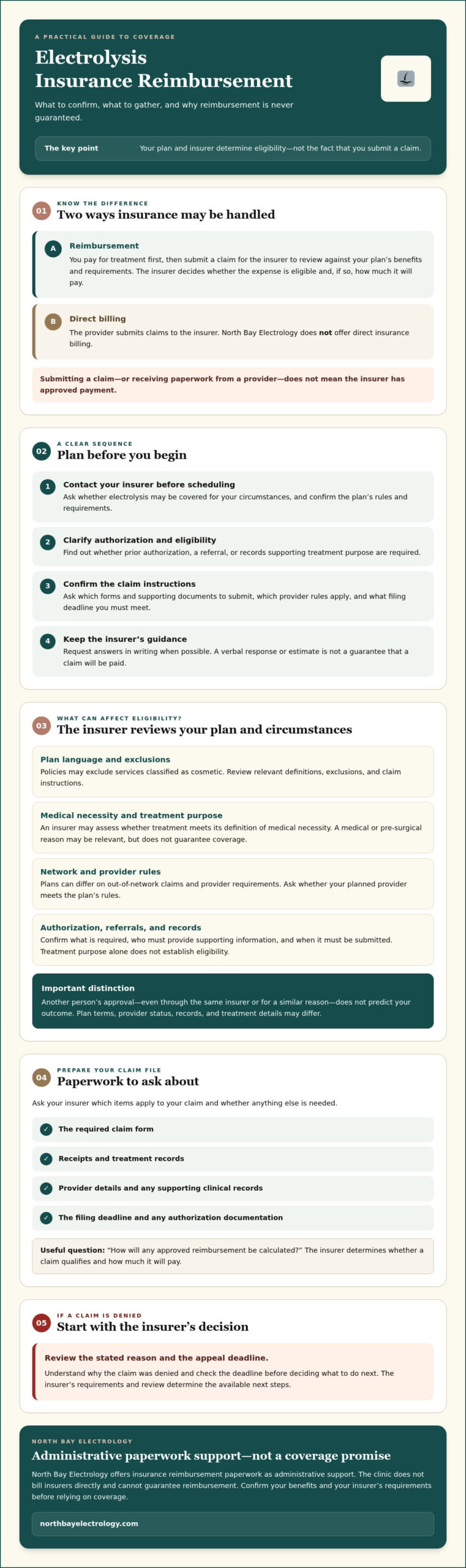
Could your plan reimburse electrolysis if you pay for treatment upfront? It depends on your specific benefits, provider requirements, and paperwork, so don’t assume electrolysis insurance reimbursement will be available before you begin. Reimbursement and direct billing are different: with reimbursement, you pay first and submit a claim; with direct billing, the provider submits claims to the insurer.
Before scheduling treatment, contact your insurer and ask whether electrolysis may be covered for your circumstances. Find out whether you need prior authorization, how the plan defines medical necessity, which forms and records to submit, and what deadlines or provider rules apply. Request answers in writing when possible. A verbal response or estimate is not a guarantee that a claim will be paid.
This guide explains what can affect reimbursement, what to confirm before treatment, and how to organize paperwork. North Bay Electrology offers insurance reimbursement paperwork as administrative support, but does not bill insurers directly or guarantee reimbursement. Understanding the process can help you plan and ask more specific questions.
Key Takeaways
- Electrolysis insurance reimbursement depends on your individual plan, and submitting a claim does not guarantee payment.
- Check exclusions, network rules, prior authorization requirements, and how your insurer evaluates medical necessity.
- Ask which claim form, receipts, treatment records, provider details, and filing deadline apply to your claim.
- If your claim is denied, review the stated reason and appeal deadline before deciding what to do next.
- North Bay Electrology offers reimbursement paperwork, but confirm your benefits and insurer’s requirements before relying on coverage.
Electrolysis insurance reimbursement: what coverage can and cannot mean
Reimbursement means you pay for treatment and submit a claim for your insurer to review against your plan’s benefits and requirements. The insurer decides whether the expense is eligible and, if so, how much it will pay. Submitting a claim does not mean it has been approved.
Electrolysis is a method of hair removal, but the way a procedure is described does not determine whether an insurer will cover it. The Electrology overview provides background on the practice; your policy and the insurer’s review determine how a claim is assessed. Treatment purpose, exclusions, provider rules, authorization, and supporting records may all affect the decision.
Does health insurance cover electrolysis?
There is no single answer for every plan. Some policies exclude services they classify as cosmetic. A request connected to documented medical or pre-surgical needs may be reviewed under different criteria, but that does not guarantee coverage. The insurer applies the terms of your policy to your circumstances and the documentation submitted.
Ask your insurer for a written explanation of relevant benefits, exclusions, and authorization requirements before budgeting around reimbursement. Another person’s approval, even through the same insurer or for a similar reason, does not predict your outcome. Their plan terms, provider status, records, or treatment details may differ.
Reimbursement versus direct insurance billing
With reimbursement, you generally pay the provider and submit a claim yourself for the insurer to review. Direct billing is different: the provider submits claims to the insurer. North Bay Electrology does not offer direct insurance billing.
A provider’s paperwork can support a claim, but it cannot guarantee insurance payment. North Bay Electrology offers insurance reimbursement paperwork as administrative support. Ask the clinic what it can prepare, then check with your insurer about anything else you must submit.
Before scheduling or planning around possible benefits, ask your insurer:
- Does my plan consider out-of-network claims for electrolysis?
- Are there exclusions or prior authorization requirements?
- What documentation is needed to assess my treatment purpose?
- How will any approved reimbursement be calculated?
These questions can clarify the process, but only the insurer can determine whether your specific claim qualifies.
What affects electrolysis reimbursement eligibility?
Eligibility depends on your plan, not on a general rule that applies to every electrolysis claim. Policy definitions, exclusions, network rules, and authorization requirements can differ, even among plans from the same insurer. Coverage depends on your contract and the insurer’s review.
An insurer may assess whether treatment meets its definition of medical necessity. That is a review criterion, not a promise of coverage. A medical or pre-surgical reason may be relevant, but it does not override a policy exclusion or replace required authorization and records. Check your plan’s terms before making financial or treatment decisions.
How treatment purpose and plan language may matter
Review the policy’s definitions, exclusions, and claim instructions. Look for terms related to cosmetic services, medical necessity, out-of-network providers, referrals, and prior authorization. If the wording is unclear, ask whether the plan distinguishes cosmetic care from treatment connected to documented medical needs. Request the applicable policy language or written clarification when possible. A phone conversation can help you identify questions, but it does not guarantee that a future claim will be approved.
Describe the planned treatment when you contact the insurer, rather than relying on a broad question such as “Is electrolysis covered?” Record the date of the conversation and the guidance you receive. Ask what steps to take next and, when possible, get those instructions in writing. The final claim review may still depend on the records submitted and the terms of your contract.
Pre-surgical and gender-affirming electrolysis questions
For pre-surgical or gender-affirming care, ask the plan what criteria apply to your situation. Treatment purpose alone does not establish eligibility. Find out whether the insurer requires a referral, prior authorization, or supporting clinical records, who must provide them, and when they need to be submitted.
Before treatment begins, clarify whether authorization applies to a defined course of care, a specific provider, or particular claim periods. For treatment-planning context, review information about pre-surgical electrolysis with North Bay Electrology, then verify your benefits directly with your insurer. Requirements vary, so another person’s diagnosis, referral, or approval may not determine your outcome.
What paperwork should you gather before submitting a claim?
Start with your insurer’s current instructions rather than a generic checklist. Before treatment, ask which claim form to use, how to submit it, and the filing deadline. Check whether the insurer requires original documents, accepts digital copies, or needs supporting records sent separately. Use the current instructions for your plan, since requirements may differ.
Questions to ask your insurer before treatment
Specific questions can help you identify what to collect and avoid gaps in your electrolysis insurance reimbursement claim. Ask whether the plan considers electrolysis for your treatment purpose, whether the provider meets its requirements, and whether you need a referral or prior authorization. Confirm any visit or benefit limits, the claim deadline, and whether out-of-network benefits apply.
Then ask exactly which supporting documents are required. Depending on the plan, these could include an itemized receipt, provider details, treatment records, a referral, or other clinical documentation. Do not assume every item is required or that paperwork used for another claim will meet your insurer’s rules. Ask the insurer and provider what billing codes or descriptions, if any, apply; do not select codes yourself.
A client-led submission checklist
Once you have the plan’s instructions, gather the materials it requests. Your file may include:
- The insurer’s current claim form and submission instructions
- Requested receipts, provider information, treatment records, referrals, or other supporting documents
- Any written confirmation or authorization from the insurer
Before submitting, check that the form is complete and the information matches your records. Keep a copy of every document, along with the submission date and any reference number. If the insurer requests more information, note what it needs and the response deadline.
North Bay Electrology offers insurance reimbursement paperwork, but the documents required depend on your insurer. Confirm what the clinic can prepare, then compare that with your plan’s instructions. The provider may offer administrative support; the insurer decides what it needs to review the claim and whether benefits apply.
What if your electrolysis reimbursement claim is denied?
A denial can be discouraging, but it is a decision about a particular claim, not proof that every future claim will be denied. Start by reading the explanation of benefits (EOB) or denial notice. It can help you understand how the insurer applied your plan and whether the issue involves eligibility, missing information, or another requirement.
How to understand the explanation of benefits
Look for the stated reason, any allowed amount, your member responsibility, and notices about missing documents. An EOB may explain how a claim was processed without being a bill. Check the document’s instructions and contact the insurer if you are unsure what you owe or what the decision means.
Ask the insurer to explain unfamiliar terms and confirm the deadline and process for correcting the claim or filing an appeal. Keep the notice and the insurer’s clarification with your claim records. If information is missing or incomplete, ask exactly what is needed and how to submit it.
When to ask for help with the paperwork
Contact your insurer about plan rules, the denial reason, and the appeal process. The insurer makes coverage decisions, and an appeal does not guarantee a different result. If you appeal, respond to the criteria in the notice and provide accurate records the insurer requests. Avoid substituting unrelated documents for the specific information it needs.
The clinic may be able to clarify which reimbursement paperwork it can provide, but confirm what is available before requesting particular forms or records. North Bay Electrology offers reimbursement paperwork as administrative support; it does not determine benefits or bill insurance directly. If you compare providers, you can ask how they handle paperwork while directing coverage questions to your insurer.
Keep the denial notice, submitted claim, supporting documents, contact dates, and reference numbers together. An organized file can help you address the insurer’s stated concerns and track the next step in your electrolysis insurance reimbursement process. It cannot ensure approval, but it can help you respond with accurate information.
Planning electrolysis reimbursement with North Bay Electrology
For clients in the North Bay, planning ahead can make the paperwork process clearer. North Bay Electrology offers insurance reimbursement paperwork but does not bill insurance directly. Ask your insurer about benefits and claim requirements, then submit the claim yourself if your plan allows it.
Before scheduling or relying on possible benefits, check how your insurer handles your treatment purpose, whether the provider meets the plan’s requirements, and which documents must accompany a claim. The insurer’s guidance can help you prepare, but it is not a promise of payment. Confirming these details early can help you make informed decisions about treatment and reimbursement.
What to confirm with the clinic before your appointment
Ask which reimbursement documents North Bay Electrology can provide for your situation. The clinic’s paperwork is administrative support, and the specific materials available should be confirmed rather than assumed. You can also ask about appointment availability and preparation for your visit. The clinic sees clients by appointment, so check availability before planning around a particular date.
If treatment relates to a surgical timeline, raise that context while planning. Review the clinic’s pre-surgical electrolysis information and consider how your insurer’s requirements, any authorization steps, and your personal timeline fit together. Confirm benefits directly with the insurer, since the clinic cannot determine coverage.
A low-pressure next step for North Bay clients
You do not need to have every detail settled before asking about the clinic’s process. Reviewing appointment information can help you understand how to inquire about availability and reimbursement paperwork. Keep your questions focused: what the clinic can prepare, what to confirm with your insurer, and how to arrange an appointment.
Whether you are planning from Petaluma or another North Bay community, verify benefits before relying on them. Your next step can simply be reviewing appointment information and deciding whether you are ready to request a booking. Scheduling an appointment does not mean your insurance claim will be covered.
Take the Next Step with Clear Information
Electrolysis insurance reimbursement depends on your plan, its requirements, and the insurer’s review. Before treatment, confirm coverage criteria, authorization rules, and claim deadlines directly with your insurer. Keep required paperwork and written responses organized. A provider’s paperwork may support a claim, but cannot guarantee payment.
North Bay Electrology provides face, neck, body, sensitive-area, and pre-surgical electrolysis, along with insurance reimbursement paperwork. Services are by appointment, and the clinic does not bill insurance directly. Clients in Petaluma, Novato, Cotati, Rohnert Park, Santa Rosa, Sonoma, Napa, Vallejo, San Rafael, Sebastapol, American Canyon, Terra Linda, Corte Madera, Windsor, and Healdsburg can review appointment details and ask about paperwork support while planning.
Taking time to ask questions can make the process more manageable. Verify benefits with your insurer, then contact North Bay Electrology to ask about appointment availability and reimbursement paperwork.
Frequently Asked Questions
Is electrolysis covered by health insurance?
Some plans may cover electrolysis, but coverage depends on your policy and the insurer’s review of your circumstances. A plan may exclude services it considers cosmetic, while documented medical or pre-surgical needs may be assessed under different criteria. Ask your insurer to explain applicable exclusions, authorization rules, and documentation requirements in writing. Another person’s approval does not establish that your plan will cover treatment.
Can I get reimbursed for electrolysis if I pay upfront?
You may be able to submit a claim after paying if your plan considers the expense eligible. This is reimbursement, not direct billing, and payment is not automatic. Ask your insurer whether it reviews client-submitted claims for your treatment purpose and whether out-of-network benefits apply. Confirm the form, submission method, and deadline. Keep the receipt and any other requested records, but do not rely on reimbursement until you understand your benefits.
What paperwork do I need to submit for electrolysis reimbursement?
Requirements vary by insurer, so request the current claim form and instructions directly from your plan. Ask whether it needs an itemized receipt, provider details, treatment records, a referral, prior authorization, or other supporting information. Do not assume every document is necessary or select billing codes yourself. North Bay Electrology offers reimbursement paperwork; ask what the clinic can prepare and compare that with your insurer’s requirements.
Does North Bay Electrology bill insurance directly?
No. North Bay Electrology does not offer direct insurance billing. The clinic offers insurance reimbursement paperwork, while clients should ask their insurer about benefits and submit claims themselves if their plan allows it. Services are by appointment for clients in Petaluma, Novato, Cotati, Rohnert Park, Santa Rosa, Sonoma, Napa, Vallejo, San Rafael, Sebastapol, American Canyon, Terra Linda, Corte Madera, Windsor, and Healdsburg. Confirm appointment availability with the clinic.
Can pre-surgical electrolysis qualify for insurance reimbursement?
An insurer may consider it, but a pre-surgical purpose does not guarantee reimbursement. Ask your plan whether it requires a referral, prior authorization, or supporting clinical records, and what criteria apply to your treatment. Confirm requirements before scheduling or relying on benefits, since policies differ. If treatment planning involves a surgical timeline, coordinate timing questions with your care team and verify coverage details directly with your insurer.
What should I do if my electrolysis claim is denied?
Read the explanation of benefits or denial notice to identify the reason, any missing information, and the deadline to correct or appeal the claim. Ask the insurer to explain unclear language and outline its appeal process. If you respond, address the stated criteria with accurate records the plan requests. A denial does not prove that every future claim will fail, but an appeal may not change the decision. Keep copies of notices and correspondence.
How much will insurance reimburse for electrolysis?
There is no single reimbursement amount for every plan. Any payment depends on your contract, the insurer’s review, and factors such as eligible expenses, network rules, deductible, and coinsurance. Ask your insurer how it calculates reimbursement for your situation and whether benefit limits apply. A general estimate or another member’s payment may not match your outcome. Confirm the details before budgeting around expected reimbursement.

Article by
Madison Hanselman
As a trans woman and owner of North Bay Electrology in Petaluma, I bring a deep personal empathy and love for technical systems to my practice. My own transition fuels my passion for permanent hair removal, making my clinic a proud partner and safe haven for the LGBTQ+ community. Balancing rigorous analytics with heartfelt care, I approach electrology as both a precise science and a life-changing path to self-actualization.