
Despite what years of aggressive aesthetic marketing have led consumers to believe, federal regulators recognize only one modality as true FDA approved permanent hair removal: electrolysis. If you’ve spent significant emotional energy and thousands of dollars on laser packages only to watch sensitive facial or hormonal growth slowly return, your frustration is completely valid. Deceptive industry phrases like “permanent reduction” routinely blur regulatory truth, leaving you feeling exhausted and understandably protective of your time and body.
You deserve compassionate clarity and complete transparency about what actually happens beneath the surface of your skin. In this clinical guide, you’ll uncover the definitive legal standards established by medical device authorities, the cellular science behind destroying the dermal papilla, and the peace of mind that comes with selecting the proper modality. We’ll outline the regulatory classifications, biological mechanisms, and professional consultation roadmaps designed to help you achieve permanent, validating results.
Key Takeaways
- Understand the regulatory standards defining FDA approved permanent hair removal, clarifying why federal oversight classifies electrolysis alone as true permanent removal rather than reduction.
- Discover the cellular science behind micro-epilation, specifically how direct energy disables the regenerative dermal papilla across all skin tones and hair textures.
- Explore the clinical necessity of electrology for managing endocrine-related growth patterns like PCOS and achieving permanent clearance for gender-affirming pre-surgical care.
- Learn how to approach your personalized treatment plan with confidence, prioritizing comfort-first techniques and psychological safety throughout your hair clearance journey.
What Qualifies as FDA Approved Permanent Hair Removal?
Walking into an aesthetic consultation often feels like deciphering a completely different language. Commercial marketing frequently promises effortless, lasting smoothness, but the medical reality enforced by federal oversight tells a much stricter story. Under official United States Food and Drug Administration (FDA) classifications, there is a clear legal divide between lasting reduction and true permanence. The FDA explicitly recognizes only needle-type epilators used in modern electrology as true FDA approved permanent hair removal.
Understanding this distinction protects both your emotional well-being and your investment. When a clinic advertises freedom from unwanted growth, knowing the regulatory framework ensures your expectations align with biological facts.
The FDA Regulatory Framework: Approval vs Clearance
Medical device terminology matters significantly when evaluating hair removal methods:
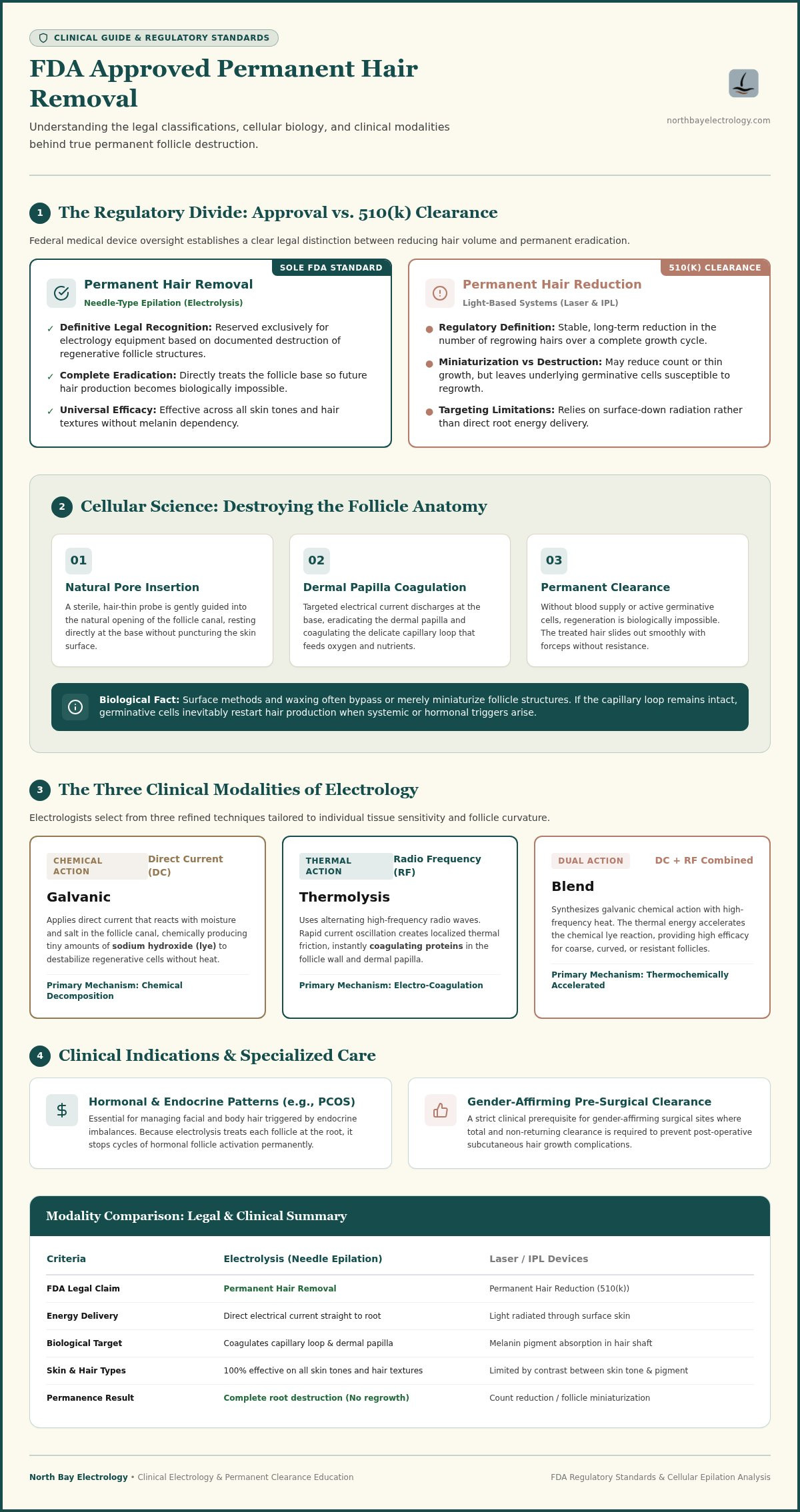
- FDA Clearance (510(k)): Granted to light-based systems like lasers and IPL devices. The FDA legally permits these manufacturers to claim “permanent hair reduction,” defined as a stable, long-term reduction in the number of regrowing hairs over a complete growth cycle. It does not mean all follicles are destroyed.
- FDA Recognition for Permanent Removal: Reserved exclusively for electrolysis equipment. Through rigorous clinical documentation, the FDA recognizes that needle epilation destroys the underlying regenerative structures, preventing future hair production entirely.
Advertising standards strictly regulate these terms to prevent deceptive consumer outreach. While commercial medspas often conflate clearance with total eradication, the legal standard remains uncompromised: lasers reduce hair counts, whereas electrolysis eliminates them permanently.
The Biology of Permanent Follicle Destruction
Achieving true permanence requires reaching deep beneath the visible skin layer. Inside each follicle canal sits the hair bulb, surrounded by active germinative cells and the dermal papilla. The papilla acts as the lifeblood of the follicle, housing the delicate capillary loop that supplies oxygen and vital nutrients necessary for cell division and hair synthesis.
Surface treatments, waxing, and standard light therapies often bypass these foundational elements or merely miniaturize them. If the vascular connection remains intact, those germinative cells inevitably restart hair production when systemic or hormonal triggers arise. Electrolysis succeeds because a skilled practitioner introduces targeted electrical current straight to the base of the follicle. This direct application coagulates the capillary supply and eradicates the dermal papilla. Without a blood supply, follicle regeneration becomes biologically impossible, providing verified FDA approved permanent hair removal that lasts a lifetime.
How Electrolysis Achieves Complete Permanent Hair Removal
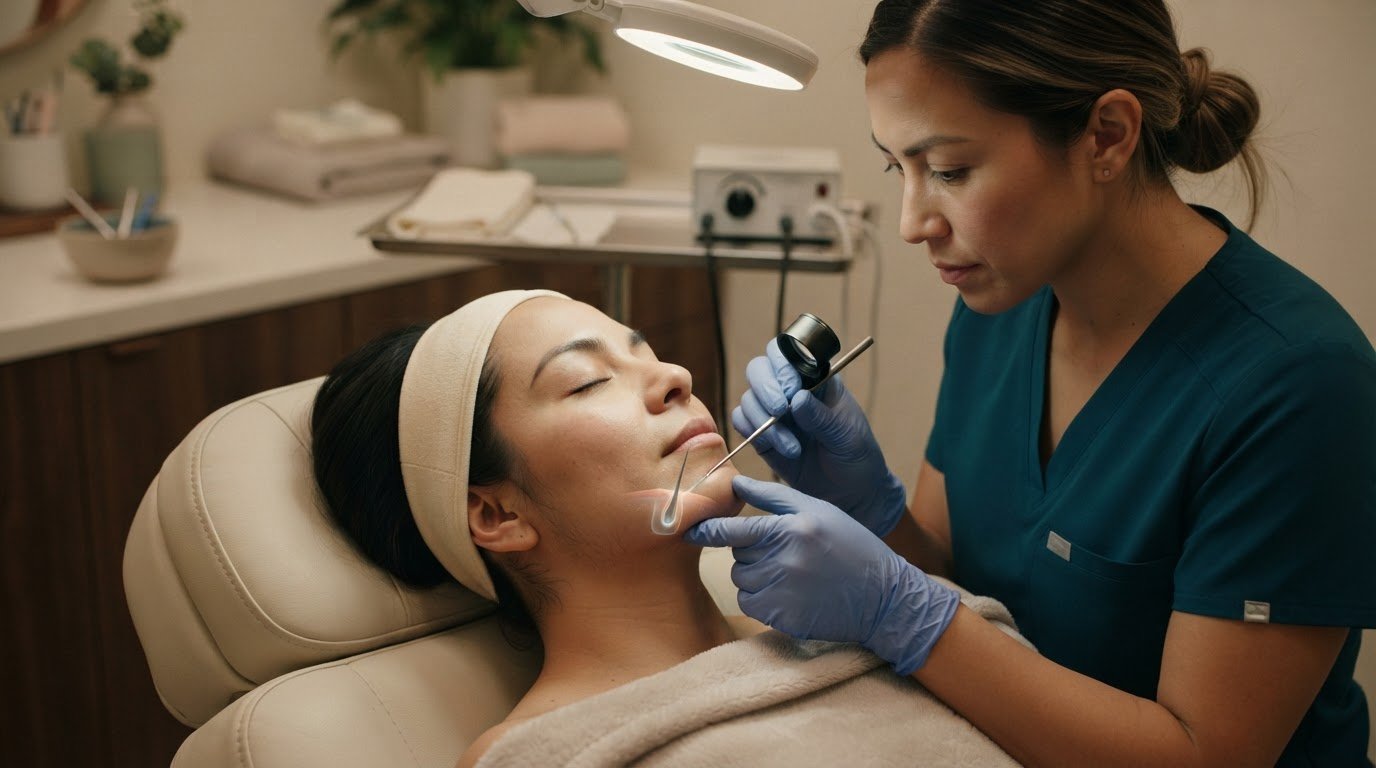
Precision lies at the heart of genuine follicle eradication. During a treatment, an electrologist guides a hair-thin, sterile probe directly into the natural opening of the follicle canal. Because the insertion follows the pre-existing pore, it never punctures the skin surface. Once the probe rests at the base, calibrated electrical current discharges directly into the target zone, disabling the regenerative structures. When treated correctly, the hair releases smoothly with forceps without any plucking sensation or mechanical resistance.
This physical pathway explains why independent clinical resources reviewing Electrolysis vs. Laser Hair Removal confirm needle epilation as the unmatched standard for true permanence. By delivering energy directly inside the follicle rather than radiating light through surface tissue, electrology achieves complete root destruction safely.
The Three Clinical Modalities: Galvanic, Thermolysis, and Blend
Modern practitioners select from three refined techniques depending on your unique tissue sensitivity and hair curvature:
- Galvanic: Applies a direct electrical current that reacts with moisture and salt in the follicle. This reaction chemically produces tiny amounts of sodium hydroxide (lye), completely destabilizing the regenerative cells without heat.
- Thermolysis: Uses alternating high-frequency radio waves. The current oscillates rapidly, generating localized thermal friction that coagulates the proteins in the follicle wall and dermal papilla instantly.
- Blend: Synthesizes galvanic chemistry with the rapid action of thermolysis. The localized warmth makes the chemical reaction significantly more efficient, offering superior destruction for coarse, deep, or curved roots.
Why Multiple Sessions are Biologically Mandatory
Permanence requires patience because your follicles operate on distinct, asynchronous timelines. Human hair cycles through three distinct phases: anagen (active growth), catagen (transition), and telogen (dormancy). Permanent cellular destruction occurs only during the active anagen phase, when the hair shaft remains physically attached to the vascular papilla.
At any given moment, a substantial portion of your hair rests beneath the surface in dormancy. Recurring appointments systematically catch these alternating waves as they wake up and enter anagen. Over a consistent series of visits, every follicle across the area is treated in its optimal state, delivering lasting FDA approved permanent hair removal.
If you’re ready to create a tailored strategy for your skin, you can explore treatment options and schedule an appointment for a private consultation.
Electrolysis vs Laser: Why Regulatory Distinctions Matter
Choosing between light-based therapy and needle epilation shapes your long-term results and peace of mind. While both technologies hold medical clearance, their physical interactions with your tissue differ fundamentally. Laser systems rely on selective photothermolysis, projecting broadband light through the epidermis to heat melanin pigment inside the hair shaft. Electrolysis bypasses surface pigment entirely, delivering targeted current straight to the germinative cells at the follicle base. This physical difference explains why electrolysis holds the singular legal status of FDA approved permanent hair removal, while laser treatments remain classified as hair reduction.
For individuals seeking absolute clarity, our guide on permanent hair removal for face and neck explores these technical considerations in greater depth.
The Melanin Factor: The Universal Advantage of Electrolysis
Because laser technology searches for dark pigment contrast, its efficacy drops significantly when treating non-pigmented hair. Blonde, red, gray, white, and peach fuzz (vellus) strands lack sufficient melanin to absorb optical energy, rendering laser devices ineffective for these hair types.
Electrolysis operates independently of pigment. Whether treating coarse dark terminal hair or fine translucent growth, the micro-probe reaches the dermal papilla mechanically. This mechanical precision also protects melanin-rich complexions. Because optical energy is not absorbed by epidermal melanin, electrolysis carries no risk of post-inflammatory hyperpigmentation or thermal burns on deeper skin tones.
Understanding Paradoxical Hypertrichosis and Laser Limitations
One of the most distressing adverse effects of light-based therapy is paradoxical hypertrichosis, a phenomenon where sub-therapeutic heat unintentionally stimulates dormant vellus hairs into thick, terminal growth. This reaction occurs most frequently in androgen-sensitive zones:
- The lower jawline and chin perimeter
- The anterior neck and throat
- The lateral cheeks and sideburn borders
Sub-optimal laser energy increases vascular perfusion to nearby dormant follicles instead of disabling them. Electrolysis eliminates this risk entirely. Because treatment energy remains strictly isolated within an individual follicle canal, adjacent dormant structures experience zero heat transfer. This targeted precision protects sensitive facial regions, ensuring true FDA approved permanent hair removal without triggering unexpected new growth.
Clinical Applications: From Hormonal Imbalances to Gender-Affirming Care
Permanent follicle clearance frequently serves as a critical medical necessity rather than a simple cosmetic preference. Board-certified dermatologists, endocrinologists, and reconstructive surgeons routinely refer clients to electrology because it offers total cellular destruction. When tissue must be entirely free of regenerative roots, relying on temporary reduction techniques simply isn’t an option. Choosing FDA approved permanent hair removal ensures that treated follicles will not compromise surgical outcomes or cause recurring emotional distress.
For those preparing for gender-affirming procedures, our clinical guide to pre-surgical electrolysis details regional protocols, surgical site mapping, and long-term timelines.
Managing Hormonal Hair Growth and PCOS Safely
Endocrine fluctuations can profoundly alter follicle biology. Conditions such as Polycystic Ovary Syndrome (PCOS), thyroid irregularities, or natural transitions elevate circulating androgens. These systemic hormone surges trigger vasodilation around the follicle bulb, transforming soft, almost invisible vellus strands into coarse, dark terminal hairs across the chin, neck, chest, and abdomen.
Because the body continuously stimulates new follicle sites under hormonal influence, managing hirsutism demands consistent, trauma-informed care. Electrolysis addresses these active hairs one by one, permanently cauterizing their blood supply so that treated follicles never produce hair again. This provides deep psychological relief and lasting control in a safe, non-judgmental clinical setting.
Pre-Surgical Clearance for Gender Affirming Reconstruction
Reconstructive procedures such as vaginoplasty or phalloplasty demand absolute follicle eradication. During bottom surgery, surgeons utilize donor tissue from the genital area to create internal structures, including the vaginal canal or neourethra. Once that tissue is inverted surgically, treating hair follicles becomes extremely difficult, if not impossible.
Relying on reduction methods leaves dormant follicles capable of reactivating inside internal cavities. This can cause severe post-operative complications:
- Internal follicle cysts and abscesses
- Chronic mucosal infections and discharge
- Stone formation along hair shafts in the neourethra
- Painful corrective surgical procedures
Surgeons generally require a dedicated clearance window of 6 to 12 months before the scheduled surgery date. This timeline ensures all staggered hair growth cycles are identified, treated, and completely disabled. Through methodical needle epilation, patients secure true FDA approved permanent hair removal, protecting their health and confirming surgical readiness.
What to Expect During Your Professional Treatment Journey
Beginning a permanent hair clearance plan is a personal, vulnerable step. Clinical consultations start with an in-depth assessment of your skin health, hair density, growth directions, and underlying health history. Your practitioner uses these biological details to create a realistic, compassionate schedule. For guidance on vetting a qualified practitioner, consult our recommendations on choosing a professional electrolysis clinic. A clinical setting that respects your boundaries ensures peace of mind from your first appointment through full clearance.
Preparing for Your Session and Managing Skin Comfort
Client comfort relies on thorough preparation and advanced instrumentation. Simple pre-session habits help minimize nerve sensitivity while improving current conductivity:
- Systemic Hydration: Drink ample water throughout the 24 hours prior to your session. Well-hydrated follicles release hairs more smoothly with lower electrical settings.
- Caffeine Avoidance: Skip coffee, tea, and energy drinks on appointment days. Stimulants increase neurological sensitivity and muscle tension.
- Insulated Micro-Probes: High-grade medical epilators utilize medical-grade insulated probes. These shield the delicate upper epidermis, concentrating curative currents strictly at the follicle base.
- Calming Aftercare: Apply chilled witch hazel, aloe vera, or cold compresses post-treatment. Avoid heavy makeup, direct sun exposure, and friction for the first 24 to 48 hours.
Why Appointment-Only Specialized Clinics Ensure Superior Care
A strictly appointment-only structure provides the quiet atmosphere necessary for high-precision electrology. Unlike busy walk-in medspas where staff face constant commercial sales quotas, a private practice gives you an unhurried environment centered on safety and technical focus.
Treating delicate areas like the neck, upper lip, chest, or bikini line requires discretion. Private appointments ensure zero waiting-room exposure or unexpected foot traffic, preserving personal dignity. This structure also maintains strict hospital-grade sterilization protocols. Probes remain single-use and pre-sterilized, equipment surfaces undergo medical disinfection between visits, and session times cater entirely to your comfort threshold.
Achieving true FDA approved permanent hair removal requires clinical consistency, patience, and mutual trust. When your electrologist has the freedom to tailor each pulse to your tissue response, you achieve optimal skin healing and permanent follicle clearance without unnecessary stress. To explore personalized treatment options in a calm, welcoming setting, you can schedule your consultation to plan your hair removal journey.
Reclaim Confidence with Proven Permanent Results
Making informed choices about your skin starts with looking past confusing marketing claims and relying on verified biological science. When you need genuine, lasting follicle eradication rather than unpredictable cycles of reduction, electrolysis remains the only legally recognized solution for FDA approved permanent hair removal. By eliminating the vascular supply of the dermal papilla directly, electrology liberates you from endless maintenance across every skin tone and hair color.
North Bay Electrology provides dedicated, one-on-one care in a private clinical setting strictly by appointment only. Whether you’re navigating sensitive facial growth caused by PCOS, preparing for gender-affirming pre-surgical clearance, or seeking lasting relief for sensitive areas, your care is always grounded in trauma-informed precision and unconditional respect.
Your journey toward lasting peace of mind begins with compassionate, unhurried care designed entirely around you.
Frequently Asked Questions
Is electrolysis really the only FDA approved permanent hair removal method?
Yes, electrolysis is the only method legally classified by the FDA as true permanent hair removal. The federal regulatory administration explicitly limits needle-type epilators to this category because clinical evidence confirms they eliminate the dermal papilla. Other optical devices are strictly classified as reduction methods rather than permanent solutions.
Can laser hair removal legally be advertised as permanent hair removal?
No, federal regulations forbid laser manufacturers and medical clinics from marketing laser treatments as permanent hair removal. The FDA grants laser devices clearance only for “permanent hair reduction.” Legally, this reduction describes a significant, long-term decrease in hair count across active growth cycles, but it does not equate to total, irreversible eradication.
How many electrolysis sessions are required to achieve 100% permanence?
Achieving total clearance typically requires a tailored series of consistent visits spanning 12 to 18 months. Because follicles mature along alternating, unsynchronized growth cycles, multiple treatments are biologically required to treat every hair during its active anagen phase. Your dedicated appointment schedule adapts to your individual tissue density, hormonal factors, and target clearance areas.
Does FDA approved electrolysis work on gray, blonde, or fine facial hair?
Electrolysis works completely reliably on every hair pigment, diameter, and curl pattern. Unlike light-based treatments that require dark melanin pigment inside the shaft to generate heat, electrology delivers electrical energy straight into the follicle pore. This mechanical approach destroys peach fuzz, red strands, pure white roots, and coarse gray hairs with equal clinical efficacy.
What does electrolysis treatment feel like compared to waxing or laser?
Most clients describe electrolysis as a brief, warm sensation or localized tingling rather than the sharp snap associated with laser pulses. The hair slides out effortlessly without the mechanical pulling or surface tearing common in waxing. Using modern computerized epilators and insulated micro-probes ensures energy stays focused deep below, keeping your epidermis calm and comfortable.
Is electrolysis safe for deeper skin tones without causing dark spots?
Electrolysis provides exceptional safety for melanin-rich skin tones across Fitzpatrick types IV through VI. Because the current bypasses epidermal melanin entirely, it eliminates the common risks of optical burns or hyperpigmentation seen with light therapies. Dedicated North Bay electrology practices serving communities like Petaluma, Santa Rosa, and Novato provide gentle, unhurried care tailored specifically to delicate skin barrier health.
Why do surgeons require electrolysis instead of laser for pre-surgical clearance?
Reconstructive surgeons require electrology because inverted donor grafts must be 100% hairless to prevent severe internal complications. If dormant follicles reactivate after bottom surgery, hairs can grow inside internal cavities, causing chronic infections or stone formations. Electrolysis guarantees the total cellular destruction demanded by surgical teams throughout the North Bay and greater San Francisco Bay Area.

Article by
Madison Hanselman
As a trans woman and owner of North Bay Electrology in Petaluma, I bring a deep personal empathy and love for technical systems to my practice. My own transition fuels my passion for permanent hair removal, making my clinic a proud partner and safe haven for the LGBTQ+ community. Balancing rigorous analytics with heartfelt care, I approach electrology as both a precise science and a life-changing path to self-actualization.