

Full body electrolysis in Windsor treats follicles individually. A fine probe delivers electrical current to disable each treated follicle’s ability to grow hair. Electrolysis uses three modalities: shortwave (thermolysis), galvanic, and blend. Treatment takes place over time, so planning and consistent care between sessions matter.
It’s understandable to want clear answers before starting treatment across multiple body areas. This guide explains how electrolysis works, how to prepare, whether you can shave between sessions, and what aftercare may involve. You’ll also learn what to consider when choosing Windsor-area care, so you can approach your next step with a clearer picture of the process.
Key Takeaways
- Prepare for a session with simple steps that can support comfort and help you arrive ready for treatment.
- Learn how to manage hair between appointments without disrupting your longer-term treatment plan.
- Know what temporary skin reactions may occur and how gentle aftercare can support recovery.
- Understand how electrolysis methods differ and what can shape a treatment plan for multiple body areas.
- See what to consider when seeking Windsor-area care and how North Bay Electrology’s body and sensitive-area services may fit your needs.
Preparation before treatment
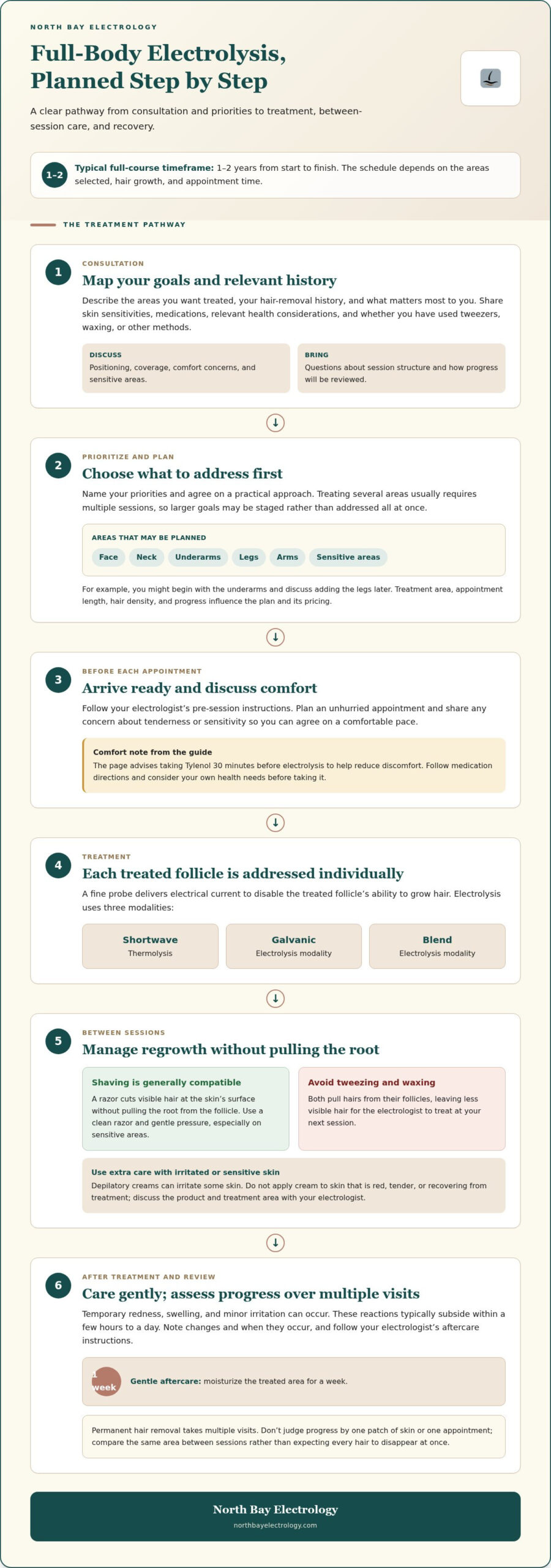
A focused consultation can turn a broad goal into a practical plan. Before your first session, describe the areas you want treated, your hair-removal history, and what matters most to you. You might prioritize the face before planning treatment for larger body areas. Clear priorities help shape an approach around your needs and comfort.
Use the consultation to discuss skin sensitivity, medications, and relevant health considerations. Share whether you have used tweezers, waxing, or other hair-removal methods. These details help the electrologist understand your hair growth and plan the appointment. You can also discuss positioning and coverage, especially for sensitive areas.
Ask how the plan may change as treatment progresses. Electrolysis works on individual follicles, so treating several body areas usually requires multiple sessions. A full course typically takes 1-2 years from start to finish. The schedule depends on the areas selected, hair growth, and the time available for each appointment. Larger treatment goals may need a staged plan, rather than trying to address every area at once.
Prepare for possible discomfort by planning a calm, unhurried appointment. The page advises taking Tylenol 30 minutes before electrolysis to help reduce discomfort. Follow medication directions and consider your own health needs before taking it. During the consultation, describe the sensations you are concerned about, such as tenderness or sensitivity in a particular area. That conversation helps set expectations and gives you a chance to agree on a comfortable pace.
Think through which areas you want included. Electrolysis can be planned for the face, neck, underarms, legs, arms, and sensitive areas, depending on your goals. If you’re seeking treatment before a procedure, identify the specific area and explain the timing. For a larger goal, such as treating the legs and underarms, naming priorities helps make each session purposeful.
Before the appointment, write down your questions and treatment priorities. Your list might cover the areas to address, session structure, comfort concerns, and how progress will be reviewed. This preparation gives the consultation a clear starting point and helps you understand the next steps.
Can I shave between electrolysis sessions?
Yes, shaving is generally compatible with electrolysis between sessions. A razor cuts visible hair at the skin’s surface without pulling the root from the follicle. If unwanted hair grows before your next appointment, ask your electrologist how to manage it. Use a clean razor and gentle pressure, especially on sensitive areas.
Avoid tweezing and waxing treated areas between appointments. Both methods pull hairs from their follicles, leaving less visible hair for the electrologist to treat at your next session. For example, a tweezed chin hair may take time to grow back above the skin, making it unavailable to treat during the scheduled visit.
Depilatory creams remove visible hair without tweezing, but they can irritate some skin. Don’t apply cream to skin that is already red, tender, or recovering from treatment. If you’re considering a cream between sessions, discuss the product and treatment area during your consultation. Shaving is a practical option unless your electrologist has advised another method for your circumstances.
Consider the treatment area when choosing how to manage regrowth. Shaving the legs may feel straightforward, while shaving a small facial area or sensitive skin may require extra care. Avoid scraping irritated skin, and stop if shaving causes discomfort. If you’re unsure whether an area is ready for shaving, describe any reaction at your next appointment.
Session pricing also matters when planning ongoing hair removal. The price depends on your case and is given after a quote request; treatment area, appointment length, hair density, and progress influence the plan. A small area and a larger body area require different amounts of treatment time. Rather than comparing a single session alone, consider how the planned areas and repeat visits fit your priorities.
Before scheduling, list the areas you want treated and rank them by importance. For example, you might begin with the underarms, then discuss adding the legs later. This helps clarify how appointment time will be used and which areas take priority. If you want to review appointment details, see the electrolysis appointment information.
Keep the appointment plan and the condition of your skin in view when deciding how to manage regrowth. Shaving clears visible hair while leaving the follicle available for treatment. If the area feels irritated, pause and ask your electrologist how to proceed. You can mention whether shaving has caused discomfort so the advice can reflect the treatment area and your response.
Discuss how much time to reserve for the areas you’ve prioritized. Ask how the treatment plan fits the appointment, and continue to avoid methods that pull hair from the follicle between visits.
Possible side effects and aftercare
Follow your electrologist’s pre-session instructions and share any skin sensitivities during your consultation. After treatment, care for the area gently and moisturize it for a week.
Possible Skin Side Effects
Temporary redness, swelling, and minor irritation can occur after electrolysis. These reactions typically subside within a few hours to a day. The treatment area and your skin’s response can affect how it looks afterward, so note any changes and when they occur.
Temporary redness after a session is different from lasting hair growth. Electrolysis treats individual follicles, and permanent hair removal takes multiple visits. Don’t judge progress by one patch of skin or one appointment. Instead, compare the same area between sessions rather than expecting every hair to disappear at once.
Think about your recent hair-removal methods when planning treatment. Waxing pulls hair from the follicle, while shaving leaves the root in place. Laser hair removal is a different method from electrolysis. Tell the electrologist which methods you’ve used and whether they irritated your skin. This history helps explain what you’re seeing and provides context for your treatment plan.
Aftercare and Skin Healing
Moisturize the treated area for a week after treatment. Apply moisturizer gently, without rubbing or scratching irritated skin. If your face was treated, use a light touch around the treated spots. For a larger area, such as a leg, apply it evenly.
Give your skin time to settle before adding products or hair-removal methods. Follow the aftercare guidance for your session, and avoid picking at visible irritation. If a product stings, stop using it on that area and mention the reaction at your next appointment. These steps keep care focused on your skin’s response.
During your consultation, describe any concerns about discomfort, skin sensitivity, or past reactions. Electrolysis can feel painful or uncomfortable for some people, and discussing this beforehand can help you plan a manageable session. After treatment, note when redness or swelling appears and how long it lasts. A clear record makes it easier to describe your experience at the next visit.
Aftercare supports skin comfort, while electrolysis addresses hair follicles over repeated sessions. Moisturizing for a week and observing temporary reactions are practical ways to care for treated skin between appointments.
How electrolysis works
Electrolysis treats each hair follicle individually rather than a broad patch of skin at once. The electrologist inserts a fine probe into the follicle and applies electrical current to disable its ability to produce hair. Each visible hair needs individual attention, which is why treatment uses repeated sessions rather than one visit.
Electrolysis uses three modalities: shortwave (thermolysis), galvanic, and blend. Shortwave, also called thermolysis, uses high-frequency current to create heat. Galvanic electrolysis uses direct current to create a chemical reaction within the follicle. Blend combines both approaches. The method selected depends on the treatment area, hair, and the electrologist’s assessment.
During treatment, the electrologist works follicle by follicle across the chosen area. A treated hair should release from its follicle without forceful pulling. You may feel brief warmth, tingling, or a pinch, and sensations can vary between areas. Describing what feels comfortable helps the electrologist respond during the session.
Hair grows in cycles, so every follicle is not equally ready for treatment at the same time. Electrolysis typically destroys about 35% of hair follicles per session. That figure helps explain why a course involves repeat visits, not a promise that a single appointment clears an entire area. Treatment typically takes 1-2 years from start to finish.
The method can treat all hair colors and skin tones. Unlike laser hair removal, which works best on dark hair, electrolysis does not depend on hair pigment in the same way. This difference can matter for someone treating light, grey, or red hair. The American Medical Association and FDA recognize only electrolysis as a permanent method of removing hair.
Electrolysis is precise, but treatment time depends on the number of follicles and the size of the area. A few hairs on the chin involve fewer follicles than both legs. Your priorities can help the electrologist plan which areas receive attention during each appointment.
Skin may show temporary redness, swelling, or minor irritation after a session. These reactions typically subside within a few hours to a day. Follow the aftercare instructions for the treated area, and moisturize for a week after treatment. Keeping notes about comfort and skin response can help you discuss adjustments at your next visit.
Windsor-area electrolysis providers
Age and health considerations are handled individually, rather than by applying one rule to everyone. During a consultation, describe relevant health conditions, skin sensitivities, and the area you want treated so the electrologist can plan appropriately.
Start by matching the provider’s experience to your treatment goal. For example, permanent hair removal on the face may involve different planning from treating a broad body area or preparing skin before surgery. If you want eyebrow shaping, explain the outline you prefer and which hairs you want removed. Clear descriptions help keep the plan focused on your priorities.
Ask how the electrologist explains the method and session plan. A useful consultation should clarify how individual follicles are treated, which modality may be used, and how progress will be reviewed. Electrolysis uses shortwave (thermolysis), galvanic, and blend methods. Understanding the approach helps you discuss comfort and expectations before treatment begins.
Credentials are another practical point to understand. Ask what training or certification the electrologist holds, and what the credential represents. The Certified Professional Electrologist credential, or CPE, is associated with the American Electrology Association. A clear explanation of qualifications can help you understand the practitioner’s professional background without confusing certification with a state licensing rule.
Discuss treatment boundaries and privacy during your consultation. This matters for areas such as the face, underarms, and other sensitive regions. You can describe what would make an appointment comfortable, discuss how the treatment area will be approached, and agree on which areas to address first. A respectful conversation leaves room for your preferences and questions.
Consider how appointments can be organized around your goals. If you want several areas treated, discuss how to divide priorities across sessions. You might choose the chin first and plan for the legs later. Treatment time depends on the area and follicles being treated, so a staged plan can make a larger goal easier to organize.
Before your consultation, write down your target areas, past hair-removal methods, and any health or skin concerns. Bring the list with you so you can describe your needs clearly and discuss how the proposed plan fits your priorities. Your electrologist should explain the process in understandable terms, including what to expect during sessions and how to raise concerns.
For Windsor-area care, look for an appointment process that allows time for discussion, individualized planning, and informed consent. You should understand the treatment steps before work begins, whether your focus is eyebrows, facial hair, or multiple body areas.
North Bay Electrology: Face & Neck Electrolysis
North Bay Electrology provides Face & Neck Electrolysis for people seeking focused treatment in those areas. If your goals include other treatment areas, Body Hair Removal and Sensitive Area Electrolysis may also be relevant, while Pre-surgical Electrolysis addresses hair removal before surgery.
A conversation about your priorities can help identify which area to address first and what to discuss before treatment. North Bay Electrology also offers insurance reimbursement paperwork assistance if you need documentation for a reimbursement claim. Care is provided by appointment, allowing time for dedicated attention.
To discuss your treatment goals, contact North Bay Electrology.
Choose a next step that fits your goals
Planning full body electrolysis in Windsor starts with deciding what matters most to you. You might focus on one area first or discuss how several areas could fit into a longer-term plan. Bringing your priorities and questions to a consultation can make the next step feel more manageable.
North Bay Electrology offers Face & Neck Electrolysis, Pre-surgical Electrolysis, and Body Hair Removal. These services can support different goals, from addressing facial hair to planning treatment for body areas or before surgery. Share which area you’re considering and what you hope to achieve.
Your goals are personal, and you can move forward at a pace that feels right for you.
Frequently Asked Questions
What is Electrolysis?
FDA-approved electrolysis targets individual follicles using electrical current. The electrologist places a fine probe into each follicle and applies current to disable its ability to produce hair. Electrolysis is the only FDA-approved method for permanent hair removal. For example, treating chin hair means addressing follicles individually, rather than treating the entire skin surface at once.
How long does it take?
A complete electrolysis treatment course typically takes 1-2 years. The timeframe reflects hair growth cycles and the need to treat follicles individually across repeat visits. Someone treating a small area, such as the upper lip, has a different plan from someone addressing several body areas. Your chosen areas and treatment priorities help shape the schedule and how appointments are organized.
How many sessions are needed for permanent hair removal?
The number of sessions depends on the area being treated, hair growth, and how many follicles need attention. Electrolysis typically destroys about 35% of hair follicles per session, so repeat appointments are part of treating an area over time. A person treating the chin may need a different course from someone treating their legs and underarms. The overall course typically spans 1-2 years.
Is electrolysis suitable for all skin and hair types?
Yes. FDA-approved electrolysis can treat all hair colors and skin tones. This can be useful for someone with light, grey, or red hair, or for someone whose skin and hair combination makes laser treatment less suitable. Electrolysis treats follicles individually rather than relying on hair pigment. During planning, identify the hair colors and areas you want treated.
What electrolysis clinics offer full-body hair removal in Windsor, Ontario?
The Windsor-area service discussed here is in Windsor, California, not Windsor, Ontario. For full body electrolysis in Windsor, California, North Bay Electrology provides Body Hair Removal in its local service area. That area includes Petaluma, Novato, Cotati, Rohnert Park, Santa Rosa, Sonoma, Napa, Vallejo, San Rafael, Sebastopol, American Canyon, Terra Linda, Corte Madera, and Healdsburg. Treatments are by appointment.
What does full-body electrolysis cost in Windsor?
For full body electrolysis in Windsor, California, the price depends on the case and is given after a quote request. Cost factors include treatment areas, hair density, appointment length, and how the plan is organized. A plan for several body areas differs from one focused on a smaller area. Discussing your priorities helps establish the scope of treatment before considering cost.
How many hours or sessions does full-body electrolysis typically require?
There is no single session count or appointment length for every full-body plan. Time depends on the size of each area, hair density, and which areas you prioritize. For example, treating the legs and underarms involves more area than focusing on a small patch. Electrolysis courses typically take 1-2 years, with repeat sessions planned around hair growth.
Which Windsor providers offer electrolysis for large body areas or full-body packages?
North Bay Electrology provides Body Hair Removal for people seeking treatment across body areas. Its local service area includes Windsor, Petaluma, Santa Rosa, Rohnert Park, and Healdsburg. A full-body goal may involve multiple areas and a staged treatment plan. Discuss the areas you want addressed and their priority to understand how treatment can be organized.

Article by
Madison Hanselman
As a trans woman and owner of North Bay Electrology in Petaluma, I bring a deep personal empathy and love for technical systems to my practice. My own transition fuels my passion for permanent hair removal, making my clinic a proud partner and safe haven for the LGBTQ+ community. Balancing rigorous analytics with heartfelt care, I approach electrology as both a precise science and a life-changing path to self-actualization.