
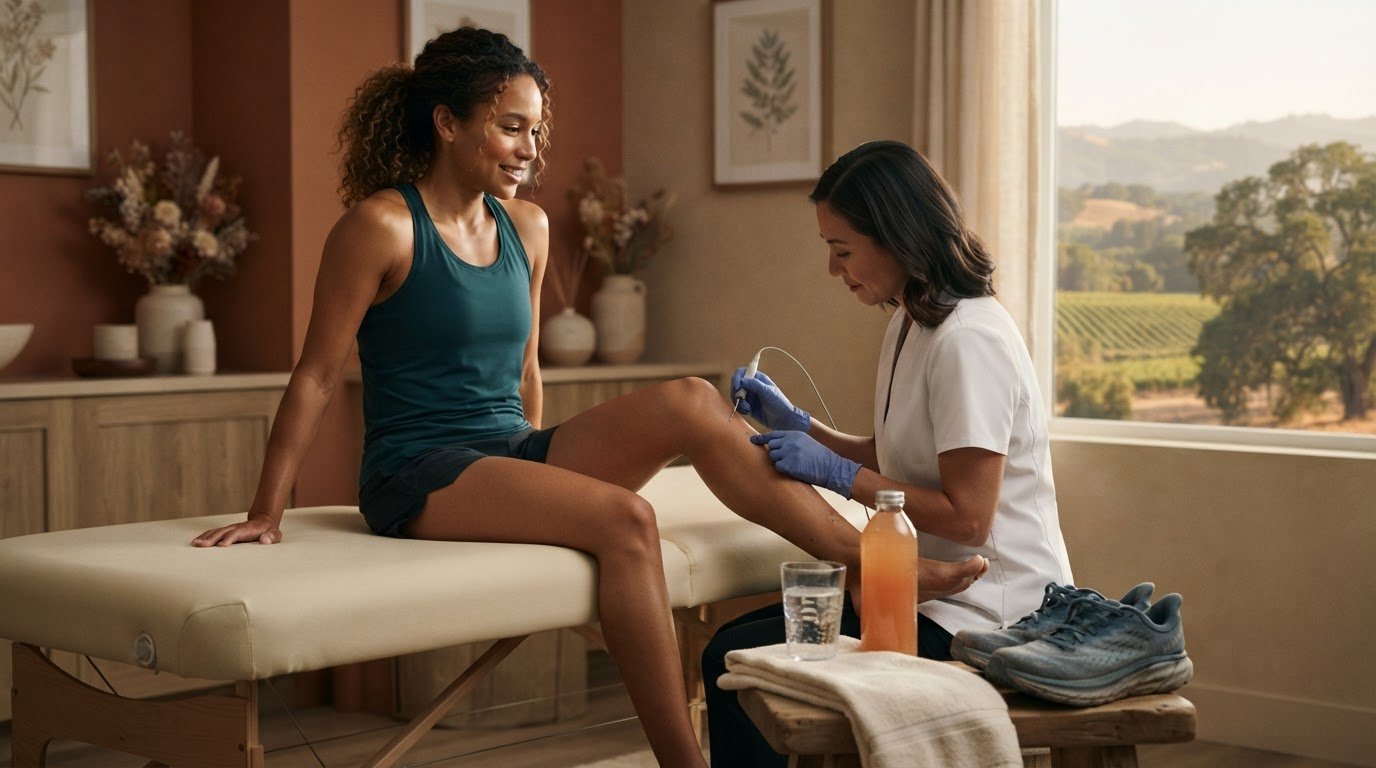
For athletes seeking lasting hair removal, electrolysis is a practical option: this FDA-approved method treats individual follicles, and multiple sessions are needed because hair grows in cycles. It can also address unwanted hair in areas prone to sports-related chafing. Plan treatment around training and allow the skin to settle afterward.
Hydration is a separate consideration. Water is usually sufficient for a light workout under an hour when sweat losses are low, while an electrolyte drink can be useful during exercise lasting over an hour or in intense heat. The right choice depends on effort, climate, and how much you sweat.
This guide explains how to match drink ingredients to training conditions, when electrolytes matter, and how to prepare for electrolysis while caring for treated skin afterward. It also clarifies the difference between electrolysis, a hair-removal treatment, and electrolytes, minerals lost through sweat that support hydration.
Key Takeaways
- Plan workouts around treatment, especially if heat and heavy sweating tend to irritate your skin.
- Arrive with clean skin, stay hydrated, and avoid waxing or tweezing before treatment; shaving is permitted.
- After treatment, keep the area clean, avoid picking, and limit sun, heat, and sweating while your skin settles.
- Match hydration to the session: water may suit light, shorter workouts, while heat, intensity, and longer effort can make electrolyte replacement more relevant.
- Consider the drink’s sodium and carbohydrate content alongside your sweat losses and training demands.
How long should athletes wait before training, swimming, or competing after electrolysis?
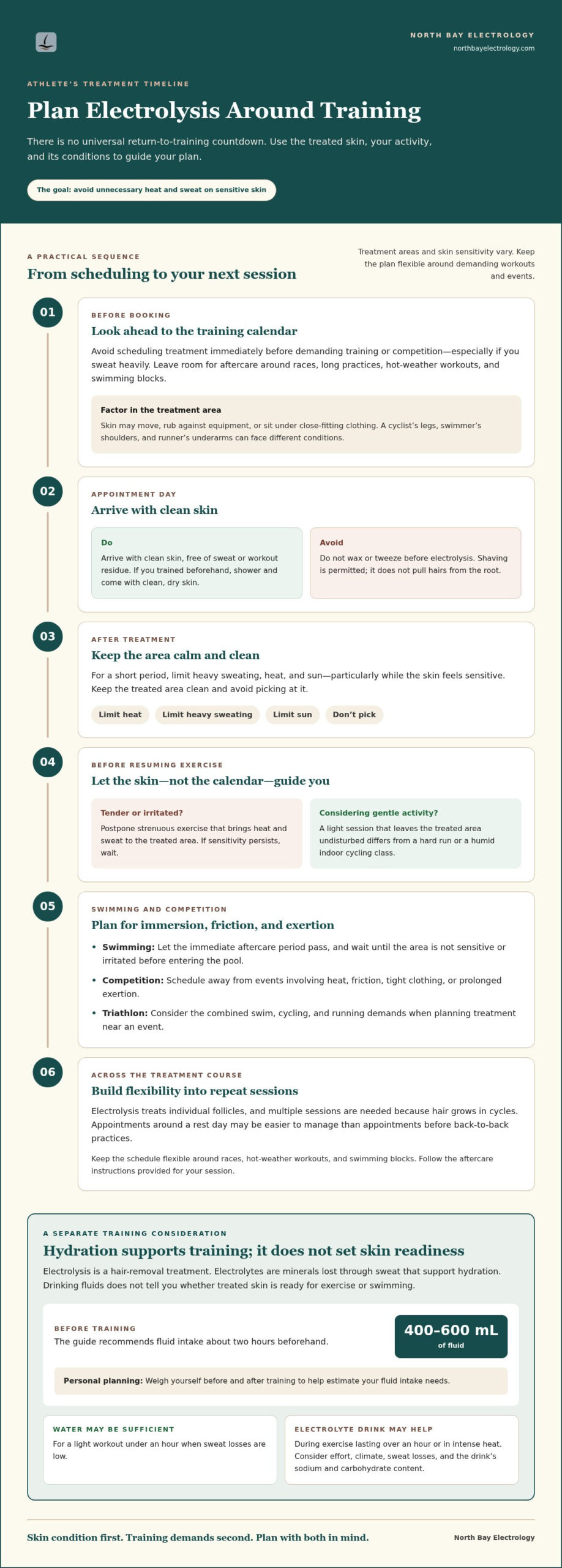
There isn’t one fixed countdown for every athlete after electrolysis. Limit heavy sweating, heat, and sun for a short period after treatment, particularly while the skin feels sensitive. The treated area and planned activity both matter: a light session that barely raises a sweat differs from a hard interval workout in warm conditions.
Electrolysis treats individual follicles, so athletes may have sessions on areas that move, rub against equipment, or sit beneath close-fitting clothing. A cyclist’s legs, a swimmer’s shoulders, and a runner’s underarms each face different conditions. Plan the appointment around your next demanding session, rather than immediately before a race or long practice.
Use the skin’s condition as a practical guide to training. If the area feels tender or looks irritated, postpone strenuous exercise that brings heat and sweat to it. If you’re sensitive after treatment, avoid heavy sweating immediately afterward. Gentle activity that leaves the area undisturbed differs from a humid indoor cycling class or a hard run.
Swimming needs special consideration because it immerses the treated skin. Schedule a swim after the immediate aftercare period, and avoid entering the pool while the area remains sensitive or irritated. Keep the area clean and don’t pick at treated skin. If a competition is approaching, leave room for aftercare instead of treating the appointment as an ordinary training day.
Competition can create pressure to return quickly, but the event calendar shouldn’t override skin care. A race may involve sustained effort, tight clothing, sun exposure, or repeated contact with equipment. A triathlete, for example, faces swimming, cycling, and running conditions in one event. Treating a high-friction area just beforehand may make post-treatment care harder to manage.
Consider the treatment area, workout intensity, temperature, and your usual skin sensitivity. A face treatment before low-sweat technique practice differs from body treatment before a hot-weather endurance session. The aim is to avoid unnecessary heat and sweat on sensitive treated skin while keeping the area clean and treating it gently.
Use these scheduling principles when arranging sessions around sport:
- Before a demanding workout: Avoid placing treatment immediately before intense training, especially if you tend to sweat heavily.
- Before swimming: Allow the immediate aftercare period to pass, and wait until the area isn’t sensitive or irritated.
- Before competition: Plan treatment away from events involving heat, friction, or prolonged exertion.
- After treatment: Keep the area clean, avoid picking, and limit heat, sun, and sweating for a short period.
These principles help athletes plan without relying on a fixed number of hours or days. The post-treatment period is short, but its practical length varies with the treated area, skin sensitivity, and workout demands. An appointment before a rest day may be easier to manage than one before back-to-back practices.
For electrolysis for athletes at North Bay Electrology, consistency matters: multiple sessions are needed because hair grows in cycles. Scheduling appointments around training demands can make aftercare more manageable throughout treatment. Keep the plan flexible around races, hot-weather workouts, and swimming blocks, and follow the aftercare instructions provided for your session.
Allow adequate time for the treated area to settle before getting into the pool, and don’t use hydration as a substitute for checking whether the skin remains sensitive or irritated. Hydration planning is a separate part of preparing for training: the page recommends consuming 400 to 600 mL of fluid about two hours before training. It also recommends weighing yourself before and after training to estimate personal fluid intake needs. These measures can help athletes plan fluid intake, but they do not establish when treated skin is ready for exercise or swimming.
Swimmers, cyclists, and triathletes are the athletes most commonly associated with widespread body hair removal, so scheduling around demanding sessions may be especially relevant to them. Electrolysis is preferred by clients seeking long-term relief, including some people with conditions such as PCOS that cause unusual hair growth. The electrologist featured on the page trained for 1100 hours in Boston. For younger athletes, the page states that children are considered dehydrated after losing 1% of their fluid levels. That hydration information is not a timetable for returning to sport after electrolysis; use the treated area’s condition and the demands of the planned activity when deciding whether to resume. If sensitivity or irritation persists, wait rather than letting competition plans dictate the timing.
How should athletes prepare for electrolysis and care for skin afterward?
Prepare for your appointment by avoiding hair-removal methods that interfere with treatment. Don’t tweeze or wax before electrolysis. Shaving is permitted, so if you prefer a smooth surface, shave rather than pulling hairs from the root. Arrive with clean skin, free of sweat or residue from a recent workout.
Hydration is another useful part of preparation. Drink fluids as part of your usual routine, especially if training has left you thirsty. Don’t arrive directly from a demanding session with sweat still on the treatment area. For example, a runner having their legs treated can shower and arrive with clean, dry skin rather than applying a fragranced product afterward.
Plan the appointment around training, not simply around an open space in your calendar. A hard practice immediately afterward can bring heat and sweat to treated skin. If your schedule includes a race, long ride, or intense team session, leave room for the short aftercare period before the event. If you’re sensitive to sweating, avoid heavy perspiration immediately after treatment.
Before the appointment, use this simple preparation sequence:
- Stop tweezing and waxing. Don’t pull hairs from the root before treatment. Shaving is allowed and can be used instead.
- Arrive with clean skin. Wash away sweat and residue from training, then leave the treatment area free of products.
- Maintain hydration. Drink as you normally would, especially after practice, without arriving overheated from exercise.
- Review your training calendar. Identify demanding workouts, swimming, and competition that could expose the area to sweat or friction.
After electrolysis, keep the treated area clean and don’t pick at it. Picking can disturb skin that is settling after treatment. Keep your hands away, even if you notice temporary texture or small visible changes. If you’ve had facial treatment, avoid rubbing the area with a towel after practice. Gently keeping it clean is better than scrubbing.
Limit sun, heat, and sweating for a short period after treatment. These conditions can make aftercare harder, particularly when the area is sensitive. A hot-weather run, sauna, or heated training room may bring more warmth and perspiration than an easy indoor session. Choose lighter activity or rest when the treated skin needs a break.
Clothing and equipment also affect comfort. Snug cycling shorts can rub treated leg skin, while a swim cap or strap may touch treated areas around the head or neck. Avoid unnecessary friction and keep gear from pressing against sensitive skin. If your sport requires contact with the area, schedule treatment away from that practice where possible.
Return to your usual routine according to how your skin feels, rather than following a fixed timetable. Sensitivity, treatment location, workout intensity, and heat all affect how manageable activity feels. A gentle session that keeps clothing and equipment off the area differs from a long, sweaty practice. For electrolysis for athletes, this distinction helps connect preparation with realistic training plans.
Use the electrolysis appointment page to arrange a session with your training calendar in mind.
A swim cap or helmet may also press against treated skin. Choose clothing and equipment that don’t rub or squeeze the area, and consider whether your usual gear will touch it as you move. If it will, plan a different activity or use more comfortable gear. If you’re sensitive to perspiration, schedule electrolysis around intense workouts and avoid heavy sweating immediately afterward. This can make aftercare easier to manage. Consider the whole session, including travel to practice, changing clothes, and equipment contact, as each can affect comfort.
When planning your return to activity, pay attention to how the area feels rather than treating the calendar as the only guide. Keep your first activity compatible with keeping the skin clean and avoiding friction, heat, and heavy perspiration. If your usual workout involves rubbing, tight gear, or substantial sweating, choose a lighter option or rest. Keep aftercare simple: leave the area alone, keep it clean, and avoid adding products that could complicate care. Ask your electrolysis practitioner for guidance tailored to the treatment area and your training plans if you’re unsure how a sport or piece of equipment may affect it.
North Bay Electrology: Face & Neck Electrolysis
North Bay Electrology offers Face & Neck Electrolysis for athletes seeking permanent hair removal in these areas. Your treatment plan can take your training routine into account, including practices that cause sweat, heat, or equipment friction around the face and neck. Scheduling with those demands in mind can make aftercare easier to follow while maintaining your usual routine.
Electrolysis treats individual follicles, so treatment involves multiple sessions as hair grows in cycles. Athletes can plan appointments around competition periods and demanding workouts, then keep treated skin clean and avoid picking afterward. If facial or neck hair removal is part of your personal goals, this service may be a relevant next step.
Contact North Bay Electrology or visit northbayelectrology.com to learn more.
Make a Plan That Fits Your Training
Choosing hair removal is personal, and fitting treatment into an athletic routine takes thoughtful planning. Consider which areas matter to your comfort, equipment, or personal goals, then schedule appointments around the demands of your season. A manageable plan can help you approach treatment and recovery with greater clarity.
North Bay Electrology offers Face & Neck Electrolysis, Pre-surgical Electrolysis, and Body Hair Removal. These services address different needs, from facial hair removal to body treatment and preparation before surgery. If you’re exploring electrolysis for athletes, identify the areas you want treated and consider how training affects your schedule.
A conversation can help you understand which service aligns with your goals and plan around your sport. There’s no need to rush the decision. Take the next step when you feel ready.
Your athletic routine and personal care goals can move forward together, one considered step at a time.
Frequently Asked Questions
What is electrolysis hair removal and how does it work for athletes?
Electrolysis is an FDA-approved method of permanent hair removal that treats individual hair follicles. For athletes, it can target areas where unwanted hair contributes to rubbing during activities such as cycling or running. The treatment is precise rather than applied broadly to the skin. Because hairs grow in cycles, treatment takes multiple sessions, with the area and hair growth pattern shaping the plan.
What are the risks and side effects of electrolysis for athletes?
Soon after treatment, skin sensitivity or irritation can make heavy sweating, heat, and sun exposure uncomfortable. For example, an athlete with outdoor practice may want to avoid scheduling treatment immediately beforehand. Keep the area clean and don’t pick at it. Athletes in Petaluma, Novato, Cotati, Rohnert Park, Santa Rosa, Sonoma, Napa, Vallejo, San Rafael, Sebastapol, American Canyon, Terra Linda, Corte Madera, Windsor, and Healdsburg can factor local training conditions into session planning.

Article by
Madison Hanselman
As a trans woman and owner of North Bay Electrology in Petaluma, I bring a deep personal empathy and love for technical systems to my practice. My own transition fuels my passion for permanent hair removal, making my clinic a proud partner and safe haven for the LGBTQ+ community. Balancing rigorous analytics with heartfelt care, I approach electrology as both a precise science and a life-changing path to self-actualization.