
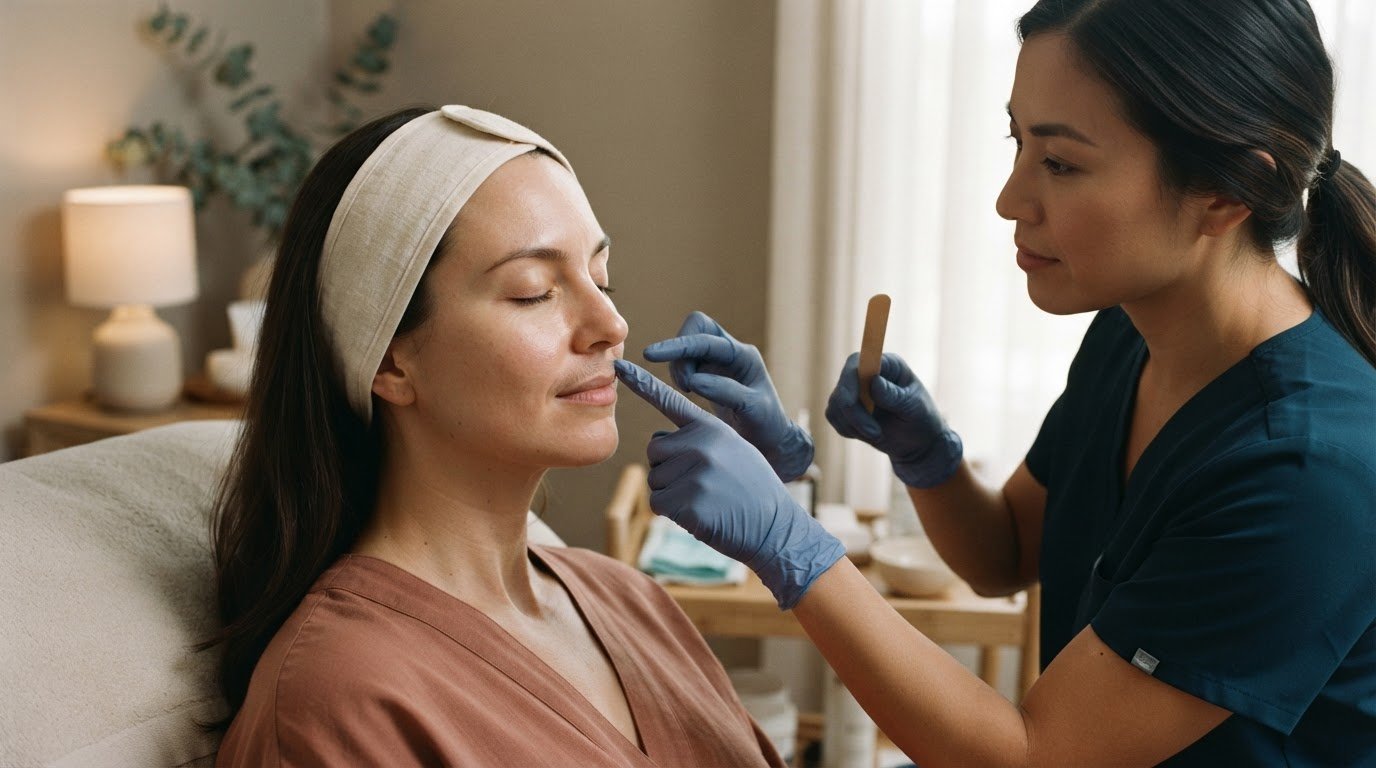
A few hairs left behind don’t automatically mean waxing has failed. If waxing is not working for my facial hair, check two practical factors: hair length and the direction of application and removal. Hair should be about ¼ inch long for wax to grip. Apply wax with the direction of growth, then pull it off against the direction of growth. Facial hair can grow in different directions, making clean removal more challenging.
It’s frustrating to wax and still see hairs, especially when you’re trying to manage chin or upper-lip hair comfortably. Leftover strands don’t mean you did anything wrong, and repeatedly waxing the same spot can irritate delicate facial skin.
This guide explains how to adjust hair length and waxing technique, what to do when a few hairs remain, and when a change in chin hair may be worth discussing with a doctor. It also covers when facial electrolysis may be a useful longer-term option for unwanted hair.
Key Takeaways
- Keep facial skin clean and dry before waxing, and test the wax temperature to help reduce the risk of burns or irritation.
- Retinoids and chemical exfoliants can make waxing riskier; the guidance recommends stopping them at least 5 days before waxing.
- Avoid heat, friction, intense exercise, fragranced products, and exfoliation during the first day after waxing to give skin time to recover.
- If chin hair becomes noticeably more abundant, a doctor can assess whether an underlying medical condition may be involved.
- For a longer-term approach to unwanted facial hair, learn how Face & Neck Electrolysis may fit when repeated waxing feels difficult to maintain.
1. Hair length and growth direction
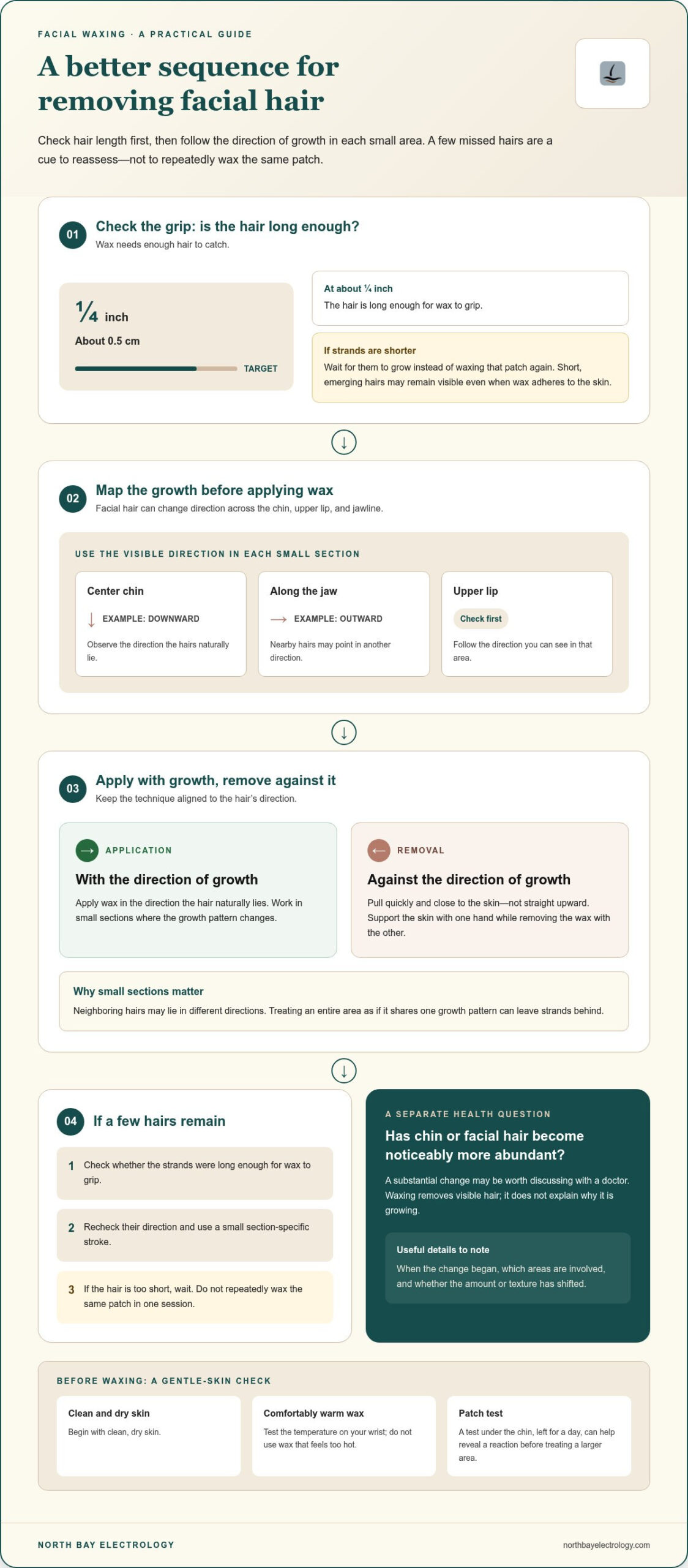
Wax needs enough hair to grip. Aim for facial hair about ¼ inch (0.5 cm) long before a session. If strands are shorter, the wax may pass over them or fail to pull them out. Hair that has just started emerging can therefore remain visible after removal, even when the wax seems to have adhered to the skin.
Giving hair time to grow before waxing can help it reach a grippable length. Check the area in good light rather than judging by one prominent hair: facial hair may emerge at different times and lengths. If some strands are still too short, waiting gives them time to grow instead of repeatedly treating the same patch.
Length isn’t the only factor. Hair growth can vary across the chin, upper lip, and jawline, and neighboring hairs may lie in different directions. Wax applied against the grain may miss hairs or fail to grip them well. Observe each small area first, then apply wax in the direction the hair naturally lies.
Pull the wax quickly against hair growth and close to the skin, rather than lifting it straight upward. Support the skin with one hand while removing the wax with the other. This pulling direction helps the wax catch hairs at their base. A slow or upward pull can tug the skin without removing every strand.
Work in small sections where facial hair changes direction. For example, chin hairs near the center may lie downward, while hairs along the jaw may point outward. Treating both areas as if they share one growth pattern can leave hairs behind. Use the visible direction in each section to guide application and removal instead of repeating one stroke across the whole face.
Hair growth can also change for reasons beyond waxing technique. A substantial amount of chin or facial hair may sometimes be associated with an underlying medical condition. Waxing removes visible hair but doesn’t identify why it’s growing. If facial hair becomes noticeably more abundant, consider discussing the change with a doctor rather than relying only on repeated waxing.
If waxing is not working for my facial hair, check these factors in order: make sure the strands are about ¼ inch long, note their direction, apply wax with growth, then pull quickly against it and close to the skin. If the hair is too short, wait rather than waxing the patch again. If you have a substantial amount of chin hair, treat that as a separate health question.
2. Managing chin hair and when to see a doctor
Chin hair can be a grooming concern, but a noticeable increase deserves attention beyond waxing technique. Removing a large amount of chin or facial hair may warrant a doctor’s visit because an underlying medical condition could be present. The amount and pattern matter more than whether waxing leaves the skin smooth.
Before an appointment, make a brief record of what has changed. Note when you first noticed the hair, which areas are involved, and whether its amount or texture has shifted. For example, distinguish a few familiar chin strands from new growth across the chin and jaw. These observations can help you explain the change clearly during a medical visit.
Waxing removes visible hair; it doesn’t explain why hair is growing. A doctor can assess the pattern and consider whether a health issue may be involved. Bring your notes and describe any related changes you’ve observed, without assuming facial hair alone identifies a particular condition. The purpose of the visit is to assess the change, not judge your appearance.
Keep hair removal gentle while deciding what to do next. For a small area, follow the facial product directions and avoid applying wax repeatedly to irritated skin. Facial skin is more delicate than areas commonly waxed with bikini products, so don’t assume the same product or technique suits both. Wax should feel comfortably warm, not uncomfortably hot. Test its temperature before applying it.
Consider these practical steps:
- Record where the hair appears and how its pattern changes over time.
- Describe the amount of growth plainly, including whether it remains limited to the chin.
- Tell the doctor about other changes you’ve noticed, rather than trying to diagnose the cause yourself.
- Pause waxing on skin that is irritated, and avoid using a warmer product to compensate for missed hairs.
Waxing is a personal grooming choice, not a substitute for assessing a substantial change in facial hair. Smooth skin after removal doesn’t rule out an underlying cause, and recurring growth doesn’t prove one. Focus on the change you can describe and the questions you want answered.
If you’re considering a longer-term approach to persistent facial hair, you can explore facial hair removal options alongside a doctor’s assessment. The medical conversation and your personal hair-removal preferences address different needs, and both can inform your next steps.
4. What are the risks of waxing facial hair, including burns, skin lifting, and ingrown hairs?
Facial skin can react to heat and pulling, so careful preparation matters. Wax that feels uncomfortably hot can burn. Test its temperature on your wrist before applying it to your face, and don’t use it if it feels too hot. A patch test under the chin, left for a day, can help reveal a reaction before you treat a larger area.
Skin lifting happens when wax pulls at the skin’s surface along with the hair. Repeatedly waxing one patch causes unnecessary tugging, so don’t wax the same area twice in one session. Support the skin during removal, and pull the strip parallel to the skin rather than upward. Let hard wax cool and fully harden before removing it.
Skin condition and preparation can affect how waxing feels. Start with clean, dry skin, and avoid lotions, oils, and hot showers immediately beforehand. Don’t wax skin that is irritated or broken. If a patch test causes a reaction, don’t proceed over a larger facial area. These steps can help you notice sensitivity before exposing more skin.
Ingrown hairs can develop when regrowing hair curls or becomes trapped beneath the skin. Gentle exfoliation one or two days before waxing can help prepare the area, but exfoliating immediately beforehand may aggravate skin. After waxing, wait 24-48 hours before using an exfoliant. Later, exfoliating a few times a week may reduce the likelihood of ingrown hairs.
For the first day after waxing, give facial skin a quiet recovery period. Avoid heat, friction, intense exercise, fragranced products, and exfoliation. Excessive exercise, steam, and hot tubs should also be avoided for at least 24 hours. If wax residue remains, use an appropriate post-wax oil or treatment instead of scraping the skin.
Use a fresh tool for each application. A waxing stick should be used only once. Putting a used stick back into the wax can introduce bacteria and may lead to skin infection. Don’t share applicators between areas, either. Careful handling matters as much as wax temperature when working close to delicate facial skin.
If skin looks lifted or becomes irritated, stop waxing that patch rather than trying to smooth it with another pass. Avoid picking at bumps or ingrown hairs, which can further disturb the area. Give your skin time without additional waxing or exfoliation, and note whether the reaction worsens or persists. Repeated irritation is a reason to reconsider the method.
Choose caution over a closer result: test the temperature, use single-use applicators, and avoid repeat passes. Aftercare also matters. Waiting 24-48 hours before exfoliation and avoiding heat and friction during the first day can reduce extra stress on freshly waxed skin.
5. Can retinoids, acne medications, or skin conditions make facial waxing unsafe?
Yes, skin-care ingredients and the condition of your skin can affect whether facial waxing is appropriate. Retinoids and chemical exfoliants are particular concerns because waxing pulls at the skin as well as the hair. The guidance for waxing recommends stopping retinoids and chemical exfoliants for at least 5 days before waxing. This interval applies before the session, not just on the day itself.
Check the ingredient lists of products used around the chin, upper lip, or cheeks. Retinoids and exfoliating acids may appear in acne products, anti-aging creams, and leave-on treatments. Read the label, since a product’s marketing name may not make its active ingredients obvious. If a prescribed medication contains a retinoid, ask the prescribing clinician how to manage it before waxing. Don’t change a prescribed routine without their advice.
Acne medication isn’t one uniform category. Some products are applied to the skin, while others are taken by mouth, and their instructions can differ. Identify the medication’s name and whether it’s topical or oral before planning facial hair removal. If you’re unsure whether it affects waxing, discuss that specific medication with the prescriber. Don’t assume an acne product is safe simply because you use it on a small area.
Skin condition matters, too. Avoid applying wax to skin that is visibly irritated, broken, or unusually tender. For example, if your upper lip is peeling after using an exfoliating product, wait rather than pulling wax across that patch. Redness, discomfort, or a reaction after using a product are good reasons to pause and review your routine before waxing.
Make a simple preparation check before waxing:
- Read the labels of products used on the face, including acne treatments and exfoliants.
- Allow at least 5 days without retinoids or chemical exfoliants before waxing.
- Look closely at the intended area for peeling, irritation, or broken skin.
- Ask the prescribing clinician about a medication when its waxing precautions are unclear.
Keep the five-day interval in perspective: it addresses retinoids and chemical exfoliants, not every medication or skin concern. It also doesn’t mean you should stop prescribed treatment without guidance. If your skin is calm and your product routine is clear, you can make a more informed choice about facial waxing. If waxing has irritated the area before, note which products you used and where the reaction appeared.
When facial hair remains after waxing, another pass isn’t always the answer. If retinoids, exfoliants, acne treatments, or irritation are part of your routine, first assess your skin’s readiness and review medication instructions. Protecting your skin takes priority over removing every visible hair in one session.
5. Hair removal
If waxing keeps leaving facial hair behind, compare methods by how they remove hair and how long results may last. Shaving cuts hair at the skin’s surface, and facial hair typically grows back within one to three days. Tweezing pulls individual hairs out and can last up to 6 weeks. Epilation removes hair for up to four weeks.
These timeframes can help you match a method to the area and your routine. Tweezing suits a few stray chin hairs, but treating a larger area takes more effort. Shaving is quick for a broad patch, though regrowth returns sooner. An epilator removes multiple hairs mechanically, unlike waxing, which uses an adhesive layer.
Depilatory creams dissolve hair at the skin’s surface. Facial products require particular care: leave a patch test in place for at least 24 hours before applying cream over a larger facial area. Follow the product’s directions, including its stated contact time.
Sugaring is another option that can keep facial hair away for about 3-4 weeks. Like waxing, it removes hair from the root, but the material and application differ. Choose a method based on the size of the area, your skin’s response, and how much maintenance you’re comfortable doing. A small chin patch and widespread facial growth may call for different practical choices.
For a longer-term approach, electrolysis is the only FDA-approved method for truly permanent hair removal. It treats hair follicles with an electric current and can remove unwanted hair of all types, including fine or light-colored hairs that lasers can’t target. This makes it a distinct option when repeated surface or root removal doesn’t meet your needs. Unlike waxing, its aim is follicle treatment rather than temporary removal.
Use these distinctions to decide what to try next:
- Choose tweezing for isolated hairs, and shaving for quick surface removal.
- Consider depilatory cream only with a facial product and its patch-test directions.
- Compare sugaring and waxing if you prefer root removal but want to assess another technique.
- Explore electrolysis if you want a permanent hair removal approach for unwanted hair.
The most useful comparison isn’t simply which method lasts longest. Consider the area, hair type, skin response, and whether you want temporary maintenance or follicle treatment. These factors can help you move beyond repeating a session that leaves the same concern unresolved.
Electrolysis is the only FDA-approved method for truly permanent hair removal. It treats follicles with an electric current and can remove all hair types, including fine or light-colored hairs that lasers can’t target. It may suit facial hair that is too fine or light for laser treatment.
North Bay Electrology: Face & Neck Electrolysis
North Bay Electrology offers Face & Neck Electrolysis for people seeking a longer-term approach to unwanted facial hair. Electrolysis uses an electric current to damage hair follicles, unlike waxing, which removes visible hair temporarily. It can address different hair types, including fine or light-colored hairs.
If repeated waxing leaves you managing the same chin, upper-lip, or neck hair, electrolysis may be worth considering. It’s a different approach, focused on treating follicles rather than repeating surface removal. A doctor’s assessment is still important if facial hair has increased substantially, since hair removal doesn’t identify an underlying medical cause.
For a supportive conversation about Face & Neck Electrolysis, contact North Bay Electrology.
Choose a next step that feels right for you
If waxing is not working for your facial hair, you don’t have to keep repeating a routine that leaves you dissatisfied. Consider what matters most to you: less frequent upkeep, a different removal method, or guidance about a change you’ve noticed. Your preferences and comfort are valid parts of that decision.
There’s no need to settle every question at once. Start with the option that best fits your needs today, and take the next step at your own pace. A conversation can help you explore whether a different approach makes sense for your hair-removal goals.
You deserve a plan that respects your comfort and priorities. Small, thoughtful decisions can help you move forward with greater confidence.
Frequently Asked Questions
What If Some Hair Is Still There?
Don’t wax the same patch again immediately; wait at least 24 hours before another waxing attempt. A few isolated hairs may be easier to manage individually than by treating the whole area again. Tweezers can remove stubborn strays, but avoid picking at irritated skin. If the remaining hairs are very short, give them time to become long enough for wax to grip rather than making repeated passes.
How do I stop chin hair from growing?
Waxing removes visible hair but doesn’t treat the follicle, so it can’t stop future growth. Electrolysis is the only FDA-approved method for truly permanent hair removal, treating hair follicles with an electric current. For chin hair, it offers a different approach from repeated waxing. North Bay Electrology provides Face & Neck Electrolysis. A doctor’s assessment is also appropriate if you’re concerned about a substantial amount of facial hair.
Why might facial waxing not remove all hair or stop working?
Waxing may leave hairs behind when they’re too short to grip, when application misses a section, or when hair lies in different directions. It removes existing hairs rather than preventing new growth, so fresh strands may become visible afterward. For example, short hairs along the chin may appear after longer hairs were removed. Check whether the missed hairs are new or were left behind during removal.
Which facial hair removal methods work better than waxing?
No single method suits every facial area or preference. Tweezing can work for a few stray chin hairs, while shaving removes hair at the surface. Depilatory creams dissolve hair, and sugaring also removes it from the root. Electrolysis treats follicles rather than temporarily removing visible hair. Consider whether you’re managing a small patch, seeking less frequent upkeep, or looking for a longer-term approach.
When should unwanted facial hair be evaluated for hormonal causes such as PCOS?
Arrange a doctor’s visit if you’re removing a large amount of chin or facial hair, especially if the growth pattern concerns you. An underlying medical condition could be present, and a clinician can assess your situation. If you’re wondering about PCOS, mention that concern directly and describe where the hair appears and how its pattern has changed. Waxing can manage hair, but it can’t identify its cause.

Article by
Madison Hanselman
As a trans woman and owner of North Bay Electrology in Petaluma, I bring a deep personal empathy and love for technical systems to my practice. My own transition fuels my passion for permanent hair removal, making my clinic a proud partner and safe haven for the LGBTQ+ community. Balancing rigorous analytics with heartfelt care, I approach electrology as both a precise science and a life-changing path to self-actualization.