
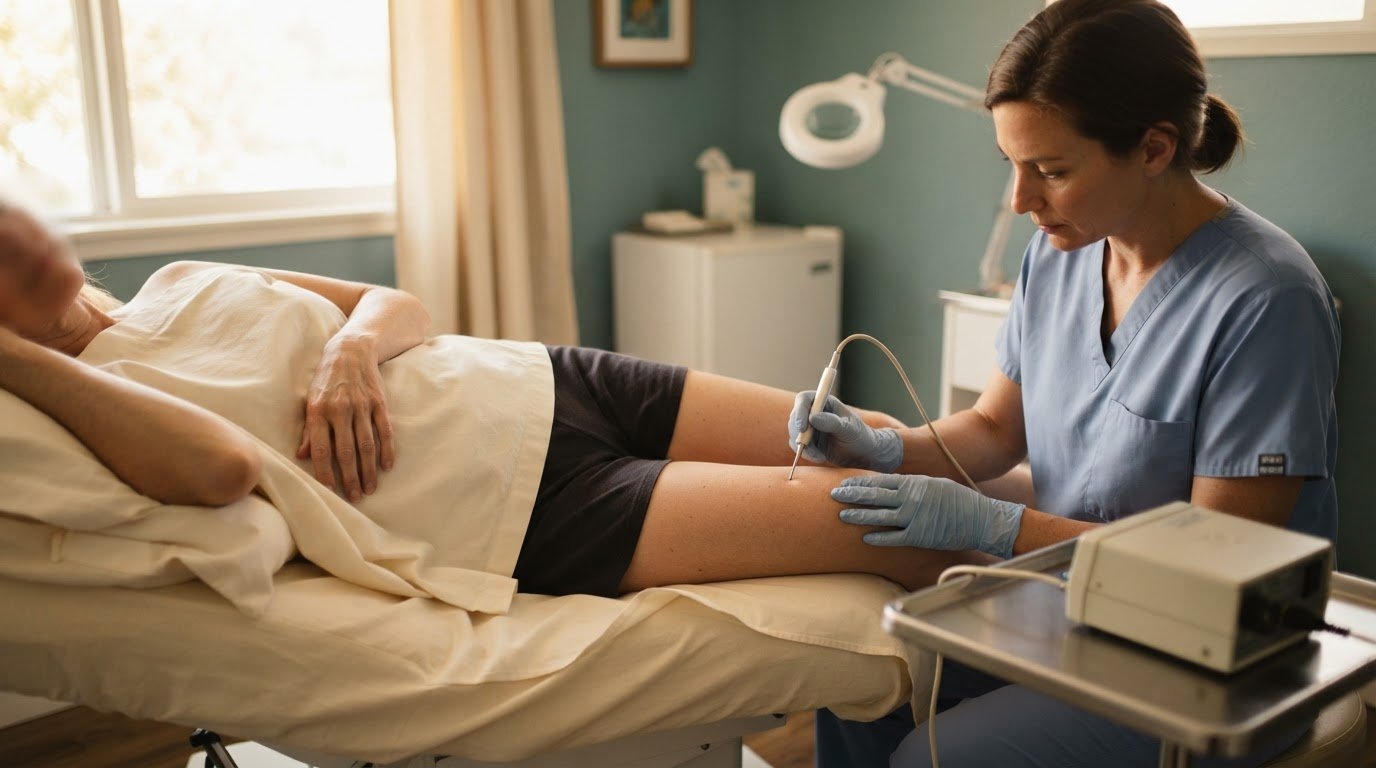
Less removal can mean less irritation. For private and discreet hair removal, trimming is a gentle starting point: it shortens hair without removing it completely and has minimal irritation risk. The U.S. Food and Drug Administration warns against waxing genital areas.
Choosing a method for intimate skin is personal. Comfort, privacy, and skin sensitivity all matter. There isn’t one approach that suits everyone, but understanding how each method works can help you make a considered choice.
This guide compares trimming, depilatory creams, and electrolysis, and explains what to expect from regrowth, timing, and maintenance. It also covers practical ways to reduce irritation and protect sensitive skin, so you can choose an approach that fits your preferences and comfort.
Key Takeaways
- Trimming shortens hair without removing it at the root, making it a gentle option to consider for sensitive skin.
- Intimate-area hair removal creams need careful use: patch-test first and follow the product’s instructions to reduce the risk of irritation.
- Electrolysis is a permanent hair removal method, while other approaches vary in how quickly hair becomes visible again.
- Plan timing and aftercare around your chosen method, since regrowth patterns and skin comfort can affect maintenance.
- Learn which safety precautions can help lower the risk of irritation, burns, ingrown hairs, and other unwanted reactions.
1. Gentle techniques for sensitive intimate skin
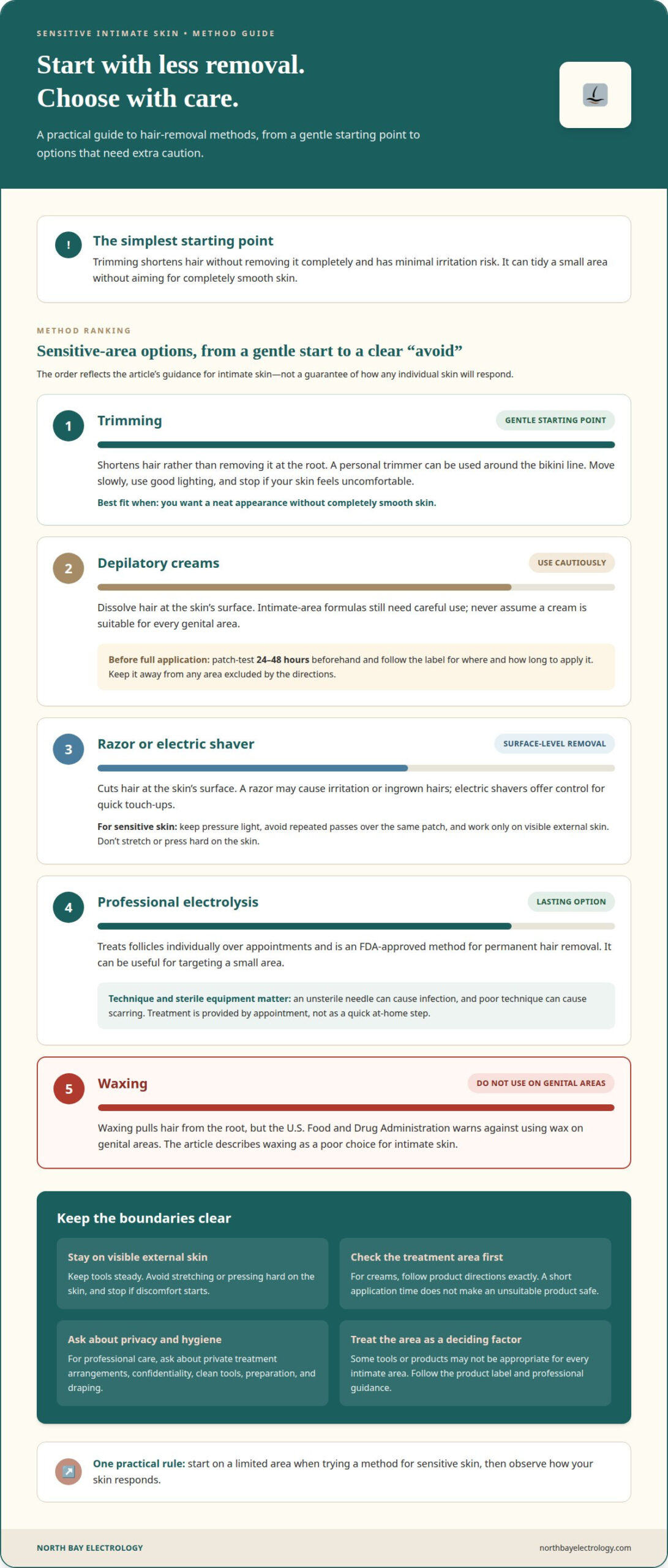
For private and discreet hair removal, start with a method that removes less hair and involves less contact. Trimming shortens hair without removing it completely and carries minimal irritation risk. It can suit a small area when you want a neat appearance without aiming for completely smooth skin. Move slowly, use good lighting, and stop if your skin feels uncomfortable.
Small, sensitive areas need careful handling. A personal trimmer can shorten hair around the bikini line, while a razor cuts hair at the skin’s surface and may cause irritation or ingrown hairs. Keep the tool steady and work only on visible external skin. Avoid stretching or pressing hard on the skin. If trying a method for sensitive skin, start on a limited area and observe how your skin responds.
Depilatory creams dissolve hair at the skin’s surface, but intimate-area formulas still need cautious use. Patch-test the product 24-48 hours before full application, and follow its label for where and how long to apply it. Don’t assume a cream is suitable for every genital area. If the directions exclude a particular area, keep the product away from it. A short application time does not make an unsuitable product safe.
Waxing pulls hair from the root, but the U.S. Food and Drug Administration warns against using wax on the face, nipples, genital areas, irritated or sunburned skin, varicose veins, moles, or warts. This makes waxing a poor choice for intimate skin. Do not apply it to genital areas, even if a home kit describes the process as gentle. Smooth results are not worth disregarding the safety warning.
What methods offer the most privacy and discretion? Trimming at home lets you choose when and how much hair to remove. Creams may also be used privately, but only on areas permitted by the product instructions. For lasting hair removal, professional electrolysis is another option, provided by appointment rather than as a quick at-home step.
To find a nearby provider, decide which method and treatment area you want, then look for a local service that clearly explains intimate-area care and appointments. Before booking, ask how private treatment is arranged, who can access your personal information, and how confidentiality is handled. A clear explanation helps you understand the process before you decide.
At a salon or clinic, ask whether the treatment room is private, what preparation and draping involve, and how personal records are protected. You can also ask how tools are kept clean and whether each step will be explained before it begins. Specific answers help you make an informed choice and set boundaries that support your comfort.
2. Electrolysis
Electrolysis treats follicles individually and is a lasting option for people seeking permanent hair removal. Unlike a razor, it doesn’t simply cut hair at the skin’s surface. Treatment takes place over appointments because each follicle is addressed separately. This precision can be useful when you want to target a small area rather than remove hair across a broad region.
What should you expect from electrolysis? A practitioner treats individual hairs with a fine probe, unlike home devices that shave or pull hair. Technique and sterile equipment matter: an unsterile needle can cause infection, and poor technique can cause scarring. Careful professional treatment is an important consideration for sensitive areas.
How does electrolysis compare with laser hair removal for permanent results? Electrolysis is an FDA-approved method for permanent hair removal that treats follicles individually; laser hair removal uses light-based treatment. The methods target hair differently, so the choice depends on the treatment area and your preferred approach.
Electric shavers cut hair at the surface and offer control for quick touch-ups. Epilators pull hair from the root, and regrowth may take several weeks to become visible. Some epilators can remove hairs as short as 0.5 mm, but the research facts advise using them only on legs and forearms. They are not an intimate-area tool. For sensitive skin, keep electric shaving pressure light and avoid repeated passes over the same patch.
Manual and electric tools also differ in how their costs accrue. A manual razor usually requires replacement blades, while an electric device has an upfront purchase cost and may need replacement parts over time. The total depends on the device, replacement schedule, and how often you use it. For a first electric razor or epilator, choose a product with at least a 30-day money-back guarantee, as advised in the research facts.
Waxing also removes hair from the root, but it isn’t equivalent to electrolysis: regrowth can return, and the U.S. Food and Drug Administration warns against waxing genital areas. For a lasting option in a sensitive area, Sensitive Area Electrolysis offers a professional alternative to at-home devices. Consider how much hair you want treated, where it grows, and whether individual follicle treatment fits your goals.
Choosing between these options also depends on the result and process you prefer. Electrolysis targets individual follicles and is a lasting approach, while an epilator removes hair from the root without treating follicles individually. Hair removed by an epilator may take several weeks to become visible again. That interval can help set expectations, but it is not the same as electrolysis’s permanent result. Consider whether you want to address selected follicles over appointments or use an at-home device, and keep the treatment area in mind.
3. Hair regrowth and treatment timing
Hair does not return on the same schedule after every method. A razor cuts visible hair at the surface, while root-removal methods pull hair from beneath the skin. After shaving, cut hair can reappear sooner; waxing may leave more time before new growth shows. The treated area, hair growth pattern, and technique all affect when you notice regrowth.
Facial hair can need frequent upkeep after dermaplaning. The method may need repeating 1-4 times monthly, depending on how quickly facial hair regrows. That range isn’t a calendar rule for every person; it reflects variation in growth. Track when visible hair returns after each session, then use that pattern to plan the next one. Avoid repeating a treatment simply because a specific date has arrived.
With IPL, noticeable hair reduction can take up to 3 weeks. That timing matters when you’re assessing results: an early view may not show the full effect. Keep treatment timing consistent with the device’s instructions, and don’t add extra sessions to speed up a change. Hair growth and the response of the treated area influence what becomes visible and when.
When shaving, let skin comfort guide you rather than following a fixed regrowth interval. Underarms, for example, may feel irritated after repeated passes, so pause if the skin is tender. Use a clean blade and a light touch instead of pressing harder against short stubble. Electric devices also cut at the surface, so visible regrowth can still call for regular touch-ups.
Creams dissolve hair at the surface, but the timing depends on the product’s directions. Leaving a cream on longer does not delay regrowth, and exceeding its application time can increase irritation. For a practical schedule, note when you use it and when hair becomes visible again. If irritation develops, wait until the skin has settled before considering another application, and follow the product label.
Compare methods by noting the treatment date, when you first notice regrowth, and any skin reaction. A simple calendar entry can show whether shaving, creams, or another technique fits your routine. If hair returns before an event, for example, plan around recovery time as well as smoothness. A personal record makes recurring maintenance more predictable without assuming every area responds alike.
4. Hair removal timing and maintenance
Build your schedule around the method and how quickly hair becomes visible again. Facial waxing may last 4-6 weeks between sessions, while other root hair removal methods can keep skin smooth for up to 4 weeks. These are useful planning ranges, not a reason to repeat treatment automatically. Record the date and area treated, then use visible regrowth and skin comfort to guide your next step.
Waxing removes hairs at the roots, so new growth may take several weeks to become visible. A suggested waxing interval is every 3-6 weeks, depending on preference and method. Leave enough time for hair to grow between sessions, rather than applying wax to skin repeatedly before regrowth. For routine maintenance, note where growth returns first, since one area may need attention sooner than another.
Hair length affects waxing results. General waxing guidance calls for about 2 mm of growth for optimal results, while intimate-area waxing guidance gives about 6 mm. However, the U.S. Food and Drug Administration warns against using wax on genital areas. Don’t treat a hair-length target as permission to disregard that warning; choose a different method for genital skin.
Prepare skin by cleansing and gently exfoliating 24-48 hours before waxing. This gives skin time between exfoliation and hair removal. Afterward, wait 48 hours before exfoliating again. For example, if waxing is planned for Saturday, schedule exfoliation no later than the preceding Thursday, then resume only after the post-wax interval. Keep the skin clean and avoid rough scrubbing around the treatment area.
After waxing, avoid tight clothing, sun exposure, and heavy sweating for 24 hours. Fragranced products, hot baths, and intense exercise can also irritate freshly treated skin, so avoid them immediately after hair removal. These steps help limit friction and extra heat while the area settles. If a garment rubs a freshly waxed patch, choose looser clothing during that first day.
For creams, follow the product label; hair removal formulas are usually left on for 5-10 minutes, subject to their instructions. Don’t extend application to chase smoother results. With shaving, use a clean razor and replace an electric razor blade annually. Gentle exfoliation to help prevent ingrown hairs is recommended 2-3 times per week, but wait 48 hours after waxing before starting again. A simple calendar can keep each method’s timing clear.
Epilator results for intimate hair removal last about 2-4 weeks, so include that range when comparing maintenance options. Treat it as a planning guide rather than a fixed appointment rule: note when regrowth becomes noticeable and consider how comfortable the skin feels before deciding whether to use the epilator again.
Keeping a separate record for intimate areas makes it easier to distinguish one method’s timing from another’s. If regrowth appears earlier or later than expected, adjust your next session based on what you observe rather than relying only on a preset calendar. Leave enough time between treatments for your skin to settle, and choose a schedule that suits your preferred level of smoothness.
5. Hair-removal safety warnings
Choose a hair removal method based on the treatment area, your skin’s condition, and the product or device instructions. A bikini-line routine should not automatically extend to genital skin, especially when product warnings exclude that area. Avoid treating irritated, sunburned, or broken skin. If a method causes burning or a rash, stop using it and follow the product directions for removing it.
Depilatories can cause burns, blisters, rashes, and peeling skin, according to the U.S. Food and Drug Administration. Test the cream on a small area of your forearm before use, then wait 24 hours before applying it elsewhere. Use it only on areas permitted by the label, and remove it as directed. Don’t leave cream on longer to dissolve more hair.
Shaving can contribute to ingrown hairs and underarm irritation. Use a clean razor, avoid pressing hard, and move carefully rather than scraping the same spot repeatedly. Tweezers may help remove an isolated stray hair, but digging into the skin can worsen irritation. If hair grows in a clear direction, shave in that direction rather than against it.
For waxing, follow the FDA warning: do not use wax on genital areas, irritated or sunburned skin, varicose veins, moles, or warts. Pulling strips against the direction of hair growth can be painful, but changing technique does not make waxing suitable for an area covered by the warning. Choose another approach for genital skin, and avoid repeating any method on inflamed or tender patches.
Laser hair removal can cause scars or skin discoloration, according to the research facts. IPL-treated areas should be kept out of the sun for six weeks before and after treatment. Plan sessions around expected sun exposure, and do not treat these precautions as interchangeable with the instructions for another device or method.
Electrolysis also requires careful technique and sterile equipment. An unsterile needle can cause infection, while poor technique can cause scarring. Ask how the practitioner maintains sterile tools and explains each step before treatment begins. These practical safety questions are especially relevant for intimate skin, where privacy and clear communication can help you feel prepared.
Age and consent questions are separate from product safety. FDA warnings about depilatories address skin reactions, not who may receive treatment. Applicable requirements depend on the state and treatment setting. A product label can guide safe use, but it does not answer consent questions for a professional service.
North Bay Electrology: Body Hair Removal
North Bay Electrology provides Body Hair Removal for people seeking professional care for unwanted body hair. For a longer-term approach to an intimate area, Sensitive & Gender-Affirming Electrolysis includes focused treatment of individual follicles, including bikini and genital areas. Electrolysis may suit people seeking an alternative to repeated shaving, creams, or waxing, particularly when attentive care for a sensitive area matters.
Choosing a method depends on your goals, the area you want treated, and your comfort with a series of appointments. You can discuss your preferences and questions before deciding what feels right. Contact North Bay Electrology to discuss Body Hair Removal or Sensitive & Gender-Affirming Electrolysis.
Choose a next step that feels right for you
Your approach to private and discreet hair removal can reflect your comfort, preferences, and the areas you want treated. You do not need to settle on a complete routine all at once. Start by identifying what matters most, such as reducing at-home upkeep, addressing a specific area, or exploring a longer-term option. A clear conversation can help you understand how professional electrolysis may fit those goals.
North Bay Electrology offers Face & Neck Electrolysis, Pre-surgical Electrolysis, and Body Hair Removal. If you are considering treatment, you can discuss your goals and questions in a supportive setting, then decide what feels appropriate for your needs. The next step can be a conversation, not a commitment.
Take your time, honor your boundaries, and choose the approach that supports your comfort.
Frequently Asked Questions
How much do at-home and professional hair removal methods cost in the United States?
Costs depend on the method, treatment area, and whether you are buying supplies or receiving professional treatment. At home, compare the initial cost of a reusable electric device with recurring purchases such as blades, creams, or waxing strips. Professional hair removal pricing depends on the case and is given after a quote request; relevant factors include the area treated and the method. For electrolysis, North Bay Electrology also offers insurance reimbursement paperwork assistance.
What are the risks and side effects of hair removal for sensitive areas?
Possible reactions include irritation, ingrown hairs, burns, blisters, rashes, and peeling, depending on the method and your skin’s response. The U.S. Food and Drug Administration has received reports of burns, blisters, rashes, and peeling caused by depilatories. Stop using a product if a reaction develops and follow its label. For persistent, severe, or worsening symptoms, a dermatologist can assess your skin and advise on appropriate care.

Article by
Madison Hanselman
As a trans woman and owner of North Bay Electrology in Petaluma, I bring a deep personal empathy and love for technical systems to my practice. My own transition fuels my passion for permanent hair removal, making my clinic a proud partner and safe haven for the LGBTQ+ community. Balancing rigorous analytics with heartfelt care, I approach electrology as both a precise science and a life-changing path to self-actualization.