
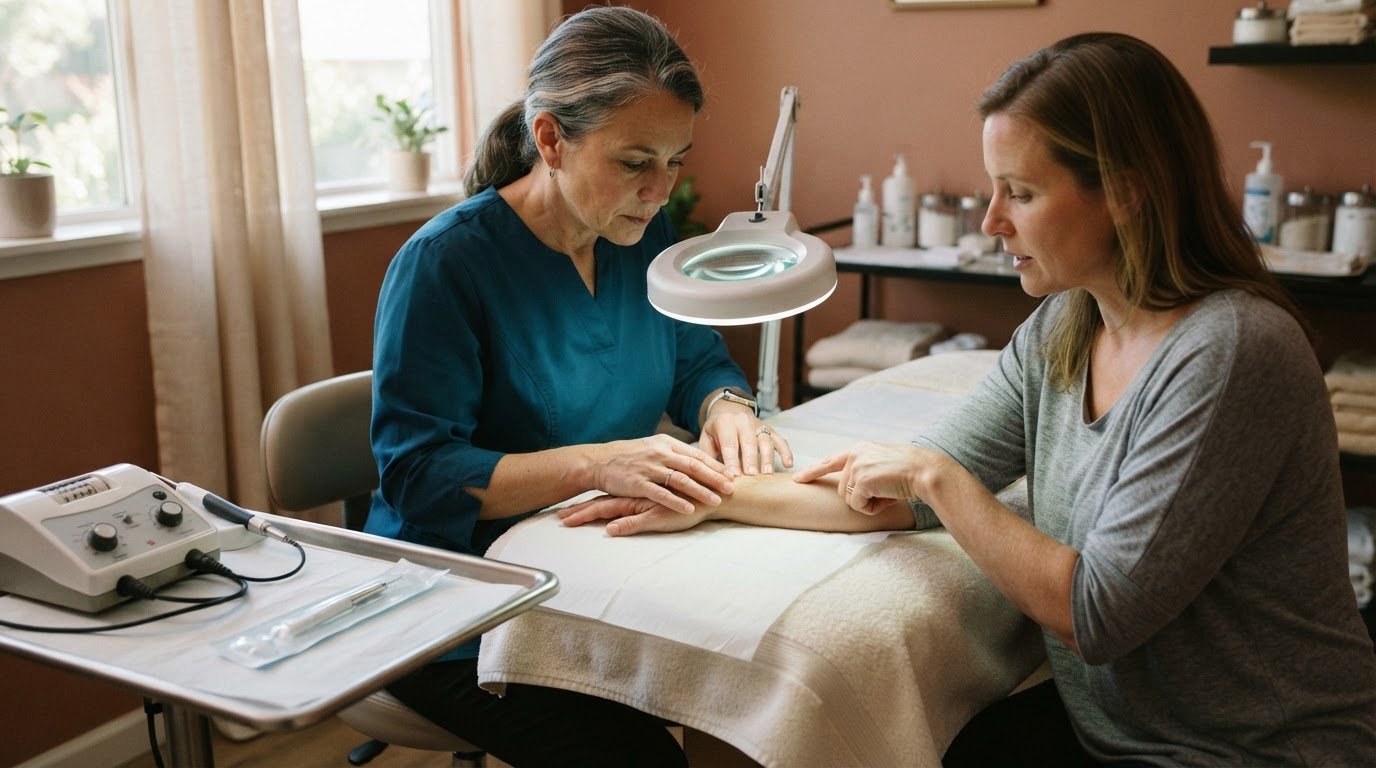
A credential alone doesn’t tell you everything. What to look for in an electrologist includes relevant training, careful hygiene, and a consultation that leads to a plan suited to your hair, skin, and goals. Credential requirements vary by state, so consider training and experience alongside applicable state requirements.
It’s reasonable to want clear answers before starting a personal treatment. Electrolysis treats individual hair follicles, and appointments may be part of a longer course of care. You should feel comfortable discussing your questions, preferences, and goals.
This guide explains how to assess an electrologist’s education and experience, what clean practices look like, and what a thoughtful consultation and treatment plan should cover. You’ll also learn what to discuss when planning treatment, so you can make an informed choice at a pace that feels right for you.
Key Takeaways
- Assess training and practical experience alongside any credential required where the electrologist practices.
- Look for clear hygiene practices, including handwashing, gloves, and single-use equipment.
- A useful consultation considers hair and skin type and medical history before shaping a tailored treatment plan.
- Electrolysis takes multiple sessions because hair grows in cycles; a thoughtful plan explains timing and likely treatment range.
- Compare reviews with care, and look for realistic discussion of results rather than exact promises about appointment counts.
Electrolysis consultation and treatment planning
A useful consultation connects your hair removal goals with a practical treatment plan. The electrologist assesses your hair and skin, discusses relevant medical history, and identifies the area you want treated. For example, planning for facial hair may differ from planning for a larger body area. You can also share sensitivities, concerns, and preferences before treatment begins.
Ask how the electrologist’s training prepared them for the work, including their electrology school, apprenticeship, and any applicable certificate. You can also ask about their experience and the treatment areas they work with. These questions help you understand their background without treating a certificate as the only measure of skill. A clear answer should explain their training in plain language and connect it to your goals.
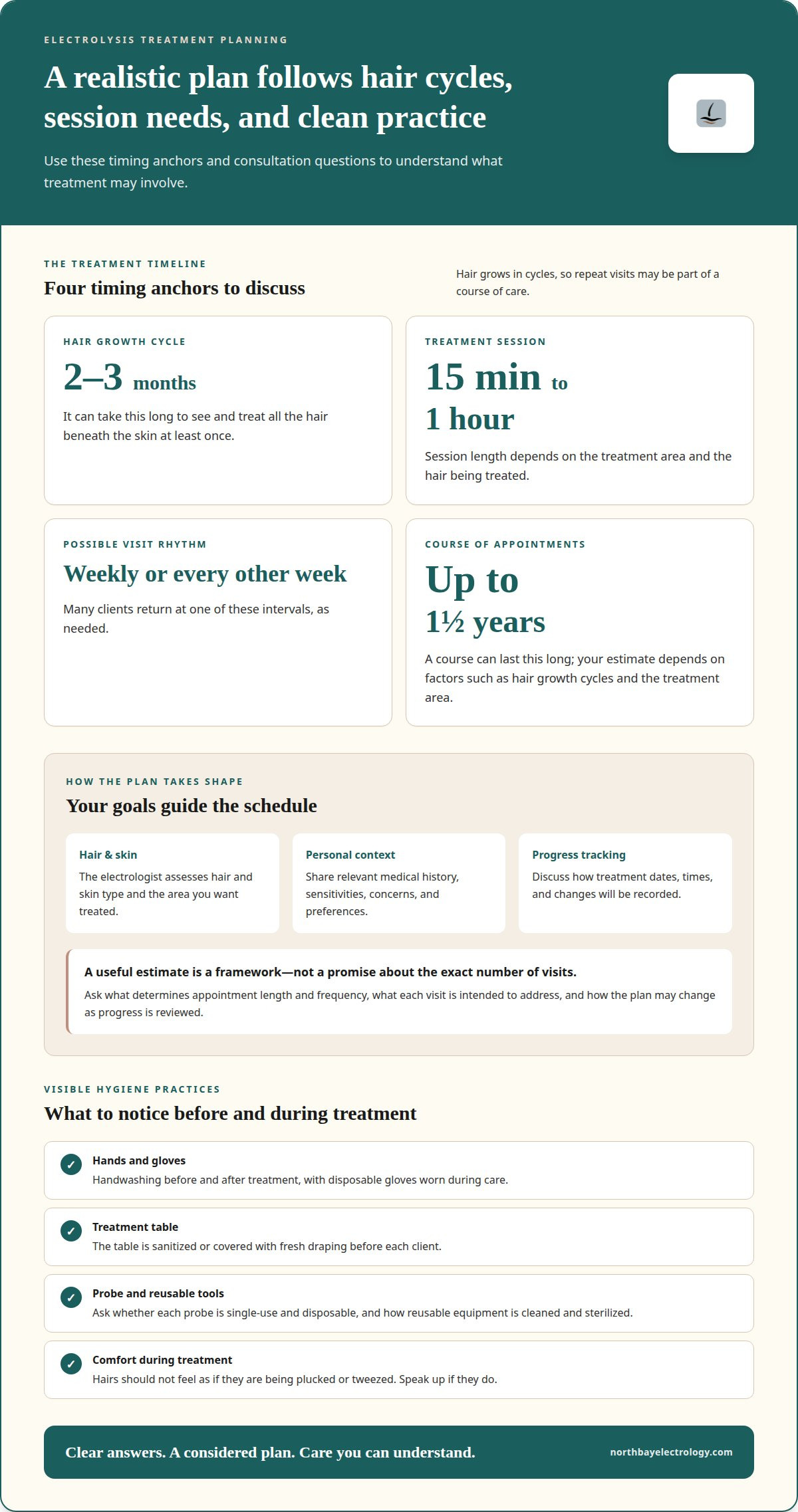
The consultation should also explain how electrolysis works. A fine needle enters an individual hair follicle and delivers a small electrical current. Because hairs grow in different cycles, one visit cannot treat every hair at its ideal growth stage. It can take 2-3 months to see and treat all the hair beneath the skin at least once, so a plan should account for repeat visits.
Ask how long appointments may last and how often you might return. Treatment sessions can range from 15 minutes to one hour, while appointment length depends on the area and hair being treated. Many clients return once a week or every other week as needed. A course of appointments can last up to a year and a half. These details help you consider the time involved before committing to a schedule.
- Planning: How will hair and skin type shape my plan?
- History: What medical-history details affect treatment?
- Experience: How long have you practiced, and how many people have you treated?
- Scheduling: What determines appointment length and frequency?
- Progress: How will we track treatment dates, times, and changes?
Notice the consultation setting, too. The treatment area should look clean, and the electrologist should wear disposable gloves and use a single-use probe. These visible practices help show how cleanliness is built into care. If you’re unsure what you’re seeing, ask the electrologist to explain how the area is prepared before treatment.
A sound plan gives you a realistic framework, not a promise about the exact number of visits. The electrologist can provide an estimate because hair growth cycles and the treatment area affect progress. Before leaving, make sure you understand the proposed schedule, how progress will be recorded, and what the next appointment is intended to address.
Cleanliness, sterilization and disposable equipment
Clean technique should be visible throughout treatment, not just described during consultation. Notice whether the electrologist washes their hands before and after treatment and wears disposable gloves. The treatment table should be sanitized or covered with fresh draping before each client. These steps show how the workspace is prepared between appointments.
Pay attention to items that touch your skin. Electrolysis uses a probe in an individual follicle, so ask whether each probe is single-use and disposable. A used probe should never be set aside for another client. Ask how the practice cleans and sterilizes reusable equipment and handles tools and surfaces. A clear explanation should distinguish disposable items from reusable ones.
Ask direct, practical questions such as, “How is the treatment table prepared between sessions?” and “Which items are disposable?” You can also ask how reusable equipment is cleaned and sterilized. The answer should clearly distinguish single-use items from reusable tools. If the process isn’t clear, pause and ask for an explanation before treatment.
Technique and equipment matter, but a device’s specifications don’t replace careful practice. Electrolysis sends current through a probe positioned in a follicle. Ask which method the electrologist uses, why it suits the treatment area, and what sensations you may notice. Hairs shouldn’t feel as if they’re being plucked or tweezed during treatment. Speak up if they do, so the electrologist can assess the technique.
Epilator frequency is one equipment detail you may hear discussed. The highest epilator frequency currently on the market is 27 MHZ. That figure alone doesn’t tell you whether a session is appropriate for your needs. Ask how the equipment and method inform treatment choices, rather than judging care by a device number alone.
- Before treatment: Look for handwashing and fresh gloves.
- At the table: Check for sanitizing or clean, fresh draping.
- For probes: Ask whether each one is single-use and disposable.
- For reusable tools: Ask how they’re cleaned and sterilized.
- During treatment: Share concerns about sensation promptly.
These details can make hygiene practices easier to understand without requiring you to assess technical procedures yourself. If you’d like to continue planning, review electrolysis appointment information and bring any equipment or cleanliness questions to your appointment.
Professional trade groups and certifications
Electrologist qualifications can include state credentials, professional certification, and formal training. The right combination depends partly on where the practitioner works.
Trade Group Membership
A professional trade group connects practitioners in a shared field, such as electrology. Membership can show engagement with the profession, but it isn’t the same as a state license or individual certification. The American Electrology Association governs the Certified Professional Electrologist (CPE) certification, while the Society of Clinical and Medical Electrologists governs the Certified Clinical Medical Electrologist (CCE) certification.
Ask what a listed membership or credential represents. For example, membership in a trade group and a CPE credential are different types of professional information. Understanding the distinction helps you assess qualifications without assuming one title reflects every aspect of training or experience.
Licensing and Certification
Licensing and certification may demonstrate that a practitioner meets particular requirements. In the United States, many states require electrologists to have a license or certification, while over one-third of states don’t require electrologist certification. Requirements depend on the state where treatment takes place.
In a state that regulates electrolysis, the required certificate should be displayed, current, and dated. A displayed document lets you see the credential and its date rather than relying only on a verbal claim. Ask which state requirement applies and what credential satisfies it. This keeps the conversation focused on the practitioner’s qualifications for that location.
Training and State Requirements
Formal education and supervised practice offer different evidence of preparation. Ask whether the electrologist attended an accredited electrology school and what training or apprenticeship they completed with an experienced electrologist. In states that don’t regulate electrology, school attendance can provide useful context when assessing a practitioner’s preparation.
These details matter because electrolysis treats individual follicles, and clients have different hair types and treatment goals. Ask what the electrologist’s training covered and how it informs their work. A straightforward explanation should connect education or apprenticeship to the skills used to treat unwanted hair.
Use a simple comparison when reviewing credentials:
- State: Identify whether the practice location regulates electrology.
- Credential: In a regulated state, note whether the required certificate is displayed, current, and dated.
- Education: Ask about an accredited electrology school.
- Professional standing: Distinguish trade-group membership from certification.
- Practice: Ask about training or apprenticeship and how it supports treatment.
A credential is one part of assessing care, not a measure of every practical skill. Consider state-specific requirements alongside education, certification, and experience. If the state doesn’t require certification, school attendance and apprenticeship provide useful context. If it does, understanding the required current certificate is essential before treatment begins.
What are the risks and side effects of electrolysis, and how can they be reduced?
Electrolysis may cause temporary skin reactions around treated follicles. Slight redness can appear during treatment or immediately afterward. Redness or swelling typically subsides within a day, though redness can last a day or two. Knowing what may happen helps you discuss comfort and aftercare before a session.
A mild warming sensation or pinch may occur as the electrologist treats individual follicles. Pain deserves attention, not endurance. Tell the electrologist to stop if treatment hurts. Pausing gives them a chance to assess the sensation and can help avoid over-treatment and injury. Agree on a clear way to communicate discomfort before treatment, especially if the area feels sensitive.
People with darker skin may develop temporary dark spots after electrolysis, which fade over time. Mention concerns about skin changes during the consultation, and ask what reactions may occur in the area being treated. Discussing your skin and goals helps set expectations without assuming everyone responds in the same way.
After treatment, avoid activities that may irritate hair follicles for the first 24 hours. Ask the electrologist which activities could irritate the treated area, since the location and your usual routine matter. For example, after a session on a sensitive area, discuss how to avoid friction or other irritation during that first day. Follow the specific aftercare advice given for your treatment.
- Before treatment: Discuss comfort concerns and agree how you’ll signal discomfort.
- During treatment: Ask the electrologist to stop if you feel pain.
- After treatment: Avoid activities that may irritate follicles for 24 hours.
- As skin settles: Note redness, swelling, or temporary dark spots and discuss concerns.
Good communication supports safer, more comfortable treatment. Tell the electrologist how you’re feeling during the session rather than waiting until it ends. A warming sensation or pinch can occur, but painful treatment should prompt a pause. This gives the electrologist a chance to assess your experience and adjust the approach as needed.
Visible changes can guide a useful follow-up conversation. Slight redness immediately after a session is a possible short-lived response, though redness may sometimes last a day or two. Swelling or redness typically subsides within a day. Temporary dark spots can fade over time. Share any changes that concern you so your experience informs the next treatment discussion.
Before leaving a session, make sure you understand the aftercare guidance for the first day and how to communicate discomfort at your next visit. Clear expectations about follicle irritation, skin reactions, and pain help you take part in treatment decisions with confidence and care.
How do I compare electrologists’ reviews, results, and treatment plans?
Read reviews for specific details about communication, comfort, and follow-through, rather than relying on overall ratings alone. A review explaining how an electrologist discussed a treatment plan offers more useful context than a brief statement of satisfaction. Look for recurring themes across different accounts, and consider whether reviewers describe goals similar to yours.
Results deserve context, too. Hair removal progress varies with treatment history and individual hair growth, so a single before-and-after image can’t show the full course. If an electrologist discusses completed results, those clients should ideally be at least 12 months past their final treatment. That interval offers a more meaningful view of how results held after appointments ended.
Compare treatment plans by their reasoning, not by which promises the fastest finish. Electrolysis addresses individual hairs, and the exact date or number of appointments needed for permanent results can’t be predicted. An electrologist may estimate a range of treatments. A useful estimate explains the factors behind that range instead of presenting an exact appointment count as certain.
Check whether the plan reflects your treatment area and goals. A plan for a small facial area, for example, may differ from one for a larger body area. The electrologist should explain what the proposed appointments are intended to address and how progress will be reviewed. Ask what changes in hair growth or treatment response might lead to a revised plan.
- Reviews: Look for specific comments about communication and treatment experience.
- Results: Give more weight to results discussed at least 12 months after final treatment.
- Estimates: Prefer a reasoned range over an exact appointment count.
- Planning: Compare how clearly the plan connects to your area and goals.
- Follow-up: Ask how progress informs future treatment decisions.
Reviews can suggest topics to discuss, but they don’t replace an individualized plan. During consultation, notice whether the electrologist listens to your priorities and explains the reasoning behind recommendations. If a review praises something specific, such as clear explanations or respectful communication, consider whether that matters to you. Use it to guide your own conversation.
A thoughtful plan should be understandable and adaptable as treatment progresses. It can outline an estimated treatment range while acknowledging that exact timing and appointment counts can’t be predicted. Compare how the electrologist explains that uncertainty, connects the plan to your goals, and discusses progress. Clear reasoning gives you a better basis for deciding whether the approach feels right.
North Bay Electrology
North Bay Electrology provides FDA-approved electrolysis for people seeking a thoughtful, professional approach to permanent hair removal. Services include Face & Neck Electrolysis, Pre-surgical Electrolysis, Body Hair Removal, and Sensitive Area Electrolysis. The right fit depends on your treatment area and goals, along with the training, hygiene practices, and planning discussed in this guide.
If you’re considering treatment, use what you’ve learned to guide a conversation about your needs and questions. You can contact North Bay Electrology to discuss whether electrolysis fits your goals and which treatment area you’d like to address.
Take the Next Step at Your Own Pace
Knowing what to look for in an electrologist can help you begin your first conversation with clearer priorities. You don’t need every answer before reaching out. Start with what matters most, such as your treatment goals, comfort, or questions about the process. A conversation can help you decide whether the approach feels right for you.
North Bay Electrology offers Face & Neck Electrolysis, Pre-surgical Electrolysis, and Body Hair Removal. If you’re considering electrolysis, share your goals and the questions you’d like to discuss. You can take the next step without feeling rushed, and make decisions with the information that matters to you.
Your questions are a meaningful place to begin. Move forward when you feel ready.
Frequently Asked Questions
What qualifications and licenses should an electrologist have in the United States?
Required credentials depend on the state where the electrologist practices. Many states require a license or certification, while over one-third of U.S. states don’t require electrologist certification. In regulated states, the practitioner should have the required credential. You may also encounter professional certifications, such as Certified Professional Electrologist (CPE) or Certified Clinical Medical Electrologist (CCE), governed by different professional organizations.
How can I verify an electrologist’s license and professional credentials?
Ask to see the electrologist’s current certificate and identify which organization issued it. In a state that regulates electrology, the required certificate should be displayed, current, and dated. Compare its credential type with the requirements for the practice location by consulting the relevant state licensing authority. For professional certifications, ask which organization governs the credential and what it represents.
What training, experience, and specialties should I look for in an electrologist?
Look for education from an accredited electrology school, relevant practical experience, and training or apprenticeship with an experienced electrologist. Ask how long the practitioner has worked in electrology and how many people they’ve treated. You can also ask about experience with your treatment area, hair type, or goals. For example, someone planning pre-surgical hair removal may want to discuss the practitioner’s experience with that treatment context.
What infection-control and sterilization practices should an electrologist follow?
Look for handwashing before and after treatment, disposable gloves, and a treatment table that’s sanitized or freshly draped between clients. The CDC recommends disposable gloves during treatments. Ask how the practice handles single-use probes and reusable tools, including their cleaning and sterilization process. A useful answer distinguishes disposable items from reusable equipment and explains how the workspace is prepared before your session.
What equipment and electrolysis methods do reputable electrologists use?
A reputable electrologist should explain the equipment and method used and why they suit your hair and goals. Electrolysis involves applying electrical current to individual hair follicles. Probes should be single-use and disposable. North Bay Electrology offers the blend method for deep, coarse follicles as part of its FDA-approved electrolysis. Ask what sensations to expect and how the method is selected.
What should I expect during an electrolysis consultation and treatment?
Expect the consultation to cover your treatment area, hair and skin type, relevant medical history, and goals. The electrologist should use those details to shape a plan and discuss appointment timing. During FDA-approved electrolysis, a fine probe is placed in individual follicles, and you may feel warmth or a pinch. Agree on how to communicate discomfort, and ask what aftercare applies to the treated area.
What questions should I ask before choosing an electrologist?
Ask which credentials apply in the practice’s state, what electrology training and experience the practitioner has, and how your treatment area will be planned. Include questions about disposable probes, glove use, and equipment sterilization. Ask how progress is recorded and how the estimated treatment range is developed. These questions help you understand the care and reasoning behind the proposed approach before deciding.

Article by
Madison Hanselman
As a trans woman and owner of North Bay Electrology in Petaluma, I bring a deep personal empathy and love for technical systems to my practice. My own transition fuels my passion for permanent hair removal, making my clinic a proud partner and safe haven for the LGBTQ+ community. Balancing rigorous analytics with heartfelt care, I approach electrology as both a precise science and a life-changing path to self-actualization.