
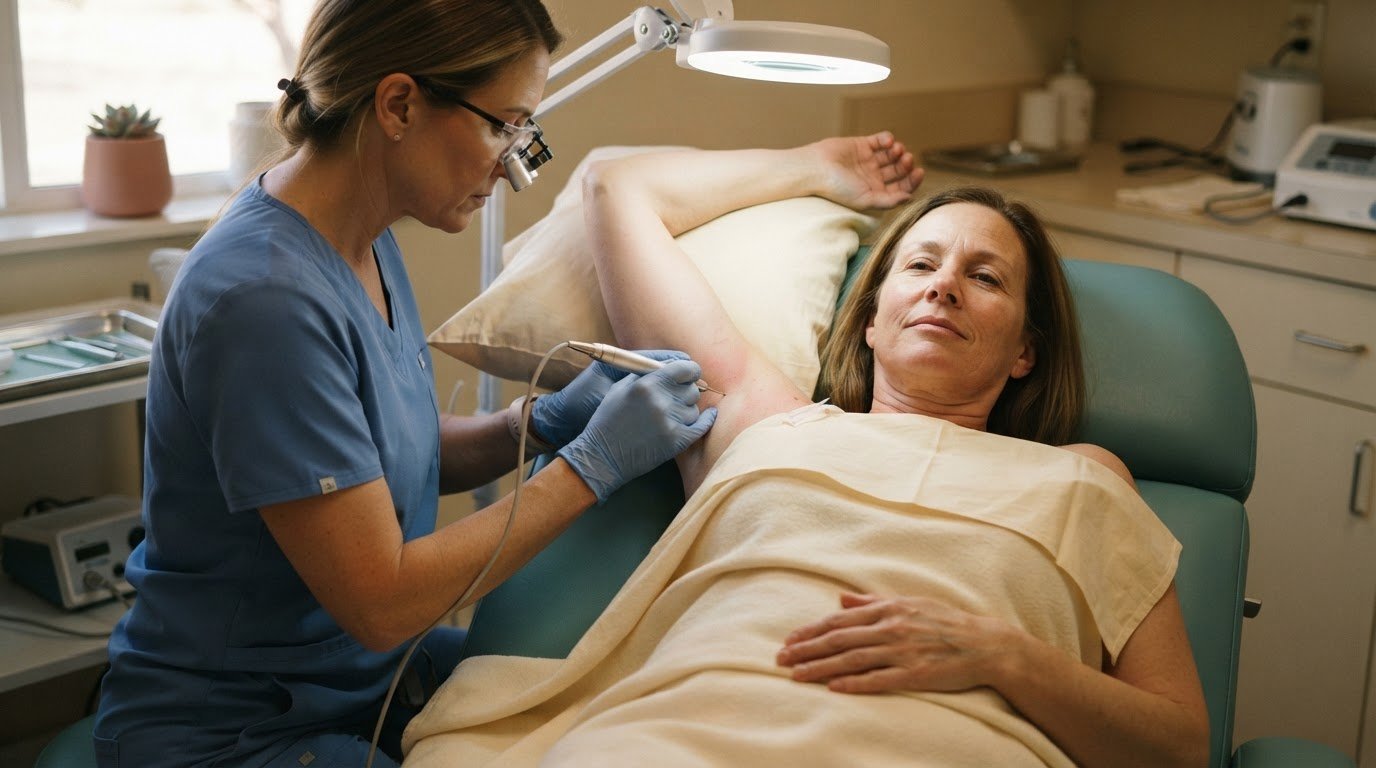
Permanent hair removal works one follicle at a time. A clinical electrolysis treatment uses a fine probe to deliver electrical energy into an individual hair follicle, disabling the cells responsible for hair growth. Because hairs grow in cycles, treatment usually requires multiple appointments rather than a single session.
Unwanted hair can have different causes, and seeking removal is a personal choice. It’s natural to want to know which areas electrolysis can treat and whether it may feel uncomfortable. Electrolysis can address hair on many areas of the body, and sensations vary depending on the area being treated.
This guide explains common reasons for unwanted hair growth, which areas electrolysis can treat, and how galvanic, thermolysis, and Blend methods differ. You’ll also learn why appointments are spaced over time, what a session may feel like, and what to expect, so you can better consider what may suit your needs.
Key Takeaways
- Hair growth can be shaped by factors such as hair-growth cycles, heredity, and hormone function, so treatment needs vary from person to person.
- Electrolysis can treat areas including the face, underarms, legs, and bikini line; temporary redness or tenderness may follow, so gentle aftercare matters.
- Galvanic electrolysis uses a chemical reaction, thermolysis uses heat, and the Blend method combines both approaches.
- Appointments are commonly spaced every week or every other week, and multiple sessions are needed because hairs emerge at different stages of growth.
- A session may feel like a brief pinch or momentary warmth, with sensitivity varying by treatment area.
What causes unwanted hair growth?
Hair growth varies with heredity, hormone function, certain medications, and stress. Growth cycles matter too: follicles move through different stages, so hairs on the same area don’t all appear at once. Hair quantity and structure, including whether hairs are fine or coarse, can shape a treatment plan. Previous temporary removal can also influence what grows back. These factors help explain why unwanted hair may be more noticeable in one area or change over time, without making it a personal failing.
Electrolysis treats one follicle at a time. A fine sterile probe enters the follicle opening and delivers electrical current to destroy the cells responsible for hair growth. This targeted approach is why electrolysis can work across a wide range of hair colors and skin tones. Each visible hair needs individual treatment, and hairs in other growth stages may need attention later. A clinical electrolysis treatment therefore addresses follicles directly rather than relying on a hair’s color.
Laser hair removal differs in how it selects hair for treatment. Electrolysis targets individual follicles and can treat hair regardless of color or skin type, while laser is commonly recommended for darker hair and may be less suitable for blonde, gray, or red hair. That distinction can matter for people whose hair lacks the pigment laser treatment relies on. Electrolysis is also used when someone wants permanent removal of specific hairs rather than broad reduction across an area.
Ingrown hairs happen when a growing hair curls or grows back into the skin. Electrolysis works within the follicle, so it may be considered for unwanted hairs that repeatedly become ingrown; the hair’s direction and the condition of the surrounding skin affect treatment. Hormonal changes can influence new growth, including coarse facial hairs. Treating an individual follicle addresses that hair, while hormone-related changes may influence future growth elsewhere.
Hair color and skin tone don’t prevent FDA-approved electrolysis from targeting a follicle. Dark, light, gray, and red hairs can all be treated, and the method works across a wide range of skin types. For example, someone with light facial hair may seek removal even when laser is a poor match. The individual follicle, hair structure, and growth cycle guide treatment, not a single combination of skin tone and hair color.
To prepare, avoid shaving for at least a week before an appointment, and allow the hair to grow to about 1/8 inch, as Caddell’s advises. Marmur Medical advises avoiding retinoids and sun exposure for approximately a week before treatment.
What parts of the body can electrolysis treat?
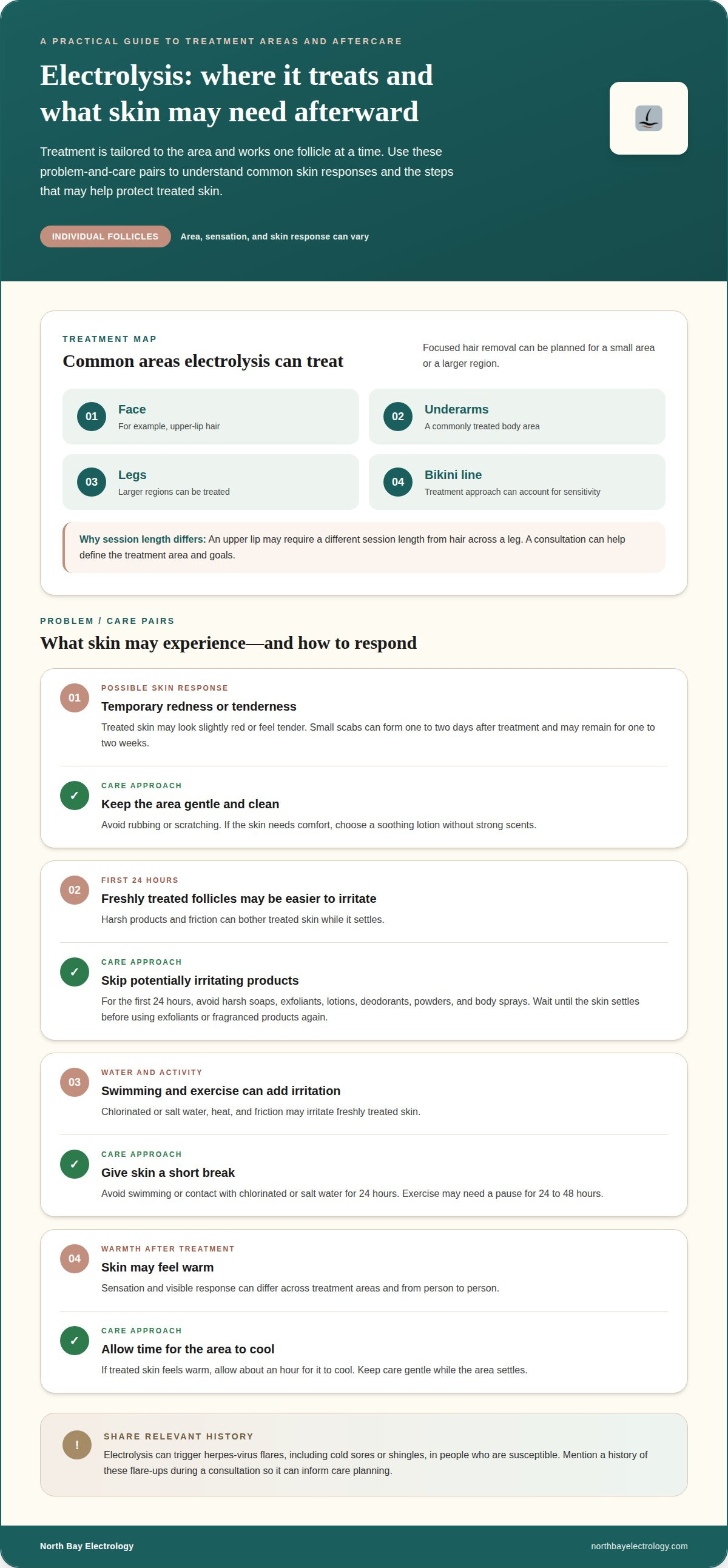
Electrolysis can treat most body areas, including the face, underarms, legs, and bikini line. It addresses individual follicles, making it suitable for focused hair removal on small areas as well as larger regions. A consultation can help define the area and treatment goals. For example, upper-lip hair may require a different session length from hair across a leg. Sensitive skin or a sensitive treatment area can also shape how an appointment is approached.
After treatment, the skin may look slightly red or feel tender. Treated skin may show temporary changes that fade over time. Small scabs can form one to two days after electrolysis and may remain for one to two weeks, according to Marmur Medical. Reactions can vary by area and skin response. Although not every method involves a chemical process, treated follicles still need gentle care.
For the first 24 hours, avoid activities that may irritate treated follicles. Marmur Medical also advises avoiding harsh soaps, exfoliants, lotions, deodorants, powders, and body sprays during that period. Swimming or contact with chlorinated or salt water is also best avoided for 24 hours, according to Marmur Medical. Exercise may need a pause for 24 to 48 hours, since heat and friction can irritate freshly treated skin.
- Keep the treated area clean and avoid rubbing or scratching it.
- Choose a soothing lotion without strong scents if the skin needs comfort.
- Allow about an hour for treated skin to cool, if it feels warm.
- Wait until the skin settles before using exfoliants or fragranced products again.
These steps apply whether treatment targets the face, underarms, legs, or bikini line. Sensation and visible response can differ across areas, so aftercare should account for the treated skin rather than follow a one-size-fits-all approach. Electrolysis can also trigger herpes-virus flares, including cold sores or shingles, in people who are susceptible. Mentioning a history of these flare-ups during a consultation helps inform care planning.
Electrolysis is a permanent hair removal method, but aftercare supports the skin while it recovers from each session. If you’re considering treatment for a particular area, you can explore electrolysis appointment options as a next step.
Galvanic electrolysis, thermolysis, and the Blend method
FDA-approved electrolysis uses different techniques to disable hair follicles, but each works on individual hairs. Understanding the current and action involved can clarify what each treatment method does.
Galvanic Electrolysis
Galvanic electrolysis uses direct current to create a chemical reaction inside the follicle. That reaction produces sodium hydroxide, also known as lye, which damages the cells responsible for hair growth. This method destroys the follicle through chemical action rather than heat. The probe is placed in the follicle opening, making precise placement central to treating each hair.
Thermolysis
Thermolysis uses high-frequency alternating current to generate heat within a hair follicle. The heat disables the cells that produce hair growth. Unlike galvanic electrolysis, this technique relies on thermal action rather than a chemical reaction. A practitioner applies the current through a fine probe positioned in the follicle. This distinction helps explain why electrolysis methods may feel and work differently during an appointment.
The Blend Method
The Blend method combines galvanic current with thermolysis current. It brings together the chemical action of galvanic electrolysis and the heat generated by thermolysis to destroy the hair follicle. This technique uses both actions in one method rather than relying on either alone. As with the other approaches, each follicle is treated individually.
These methods share a key feature: they direct treatment into the follicle instead of targeting hair pigment across an area. Laser hair removal works differently, using light absorbed by pigment in the hair. This distinction makes FDA-approved electrolysis relevant for hair colors that may not respond well to laser, including gray, blonde, or red hair. Electrolysis methods vary in how they deliver energy, not in whether they treat a single follicle.
No one technique should be described as universally best based on its name alone. Hair structure, the treatment area, and the practitioner’s assessment can inform which approach is used. A consultation may include discussion of hair and skin type, medical history, and a tailored plan. These factors put the differences into context without assuming that one current suits every person or follicle.
Knowing the distinction can make treatment discussions clearer. If someone describes a brief heat sensation, that aligns with thermolysis’s use of heat, while galvanic electrolysis relies on chemical action inside the follicle. The Blend method combines both. Each is an FDA-approved electrolysis technique intended to disable hair-growth cells through precise follicle treatment.
How far apart are treatments spaced?
Electrolysis appointments are typically scheduled every week or every other week. This rhythm allows treatment to address hairs as they become available during different growth cycles. Because not every hair is present at the surface at the same time, one visit cannot treat every follicle in an area. Several appointments are usually needed, with the schedule adjusted to the amount and structure of unwanted hair.
The total number of sessions depends on the area and the hairs being treated. Marmur Medical estimates that patients typically need 10 to 14 electrolysis sessions. Caddell’s estimates that a small area such as the upper lip might need 8-15 sessions. These figures offer planning context, not a fixed count for every person. A larger area with more hairs generally requires more treatment time than a small, focused area.
Hair growth cycles explain why appointments continue over time. Hairs emerge at different stages, so a follicle that wasn’t ready during one appointment may need treatment later. Deeper, coarser hairs may also require more than one treatment to disable their growth cells. Temporary removal methods can affect the visible hair pattern, while hair quantity and structure influence how much work each session involves.
Appointment length also varies by treatment area. An electrolysis session can last from 15 minutes to one hour. Marmur Medical says smaller areas, such as the upper lip or underarms, may take 15 to 30 minutes. A larger area may take up to an hour, while an individual follow-up treatment can take only a few minutes. The appointment’s duration depends on how many individual hairs are ready for treatment.
Most people following a recommended treatment plan can expect to be done or nearly done within 18 months. This timeline reflects repeated visits, rather than a single long appointment. A compact area may need shorter sessions, while broader coverage can require longer appointments or continued treatment as new hairs emerge. Consistent spacing helps address follicles during successive growth stages.
To understand the schedule, consider an upper-lip area: a visit may take 15 to 30 minutes, and Caddell’s estimates 8-15 sessions for small areas such as this. A larger area can take up to an hour per appointment. The schedule and session length are related but distinct: frequency describes the time between visits, while duration describes the time spent treating hairs during each visit.
FDA-approved electrolysis therefore involves a series of focused appointments, not one procedure that removes all visible hair at once. The number of visits and their spacing reflect growth cycles, hair quantity, and the size of the area being treated.
Treatment sensations and pain management
During FDA-approved electrolysis, a fine probe enters a follicle and delivers a controlled electrical current. People may notice brief warmth or a pinch, followed by temporary skin redness or tenderness.
Sensations and Discomfort During Treatment
A brief heat sensation or pinch can occur as each follicle is treated. The probe’s insertion and the treated hair’s removal shouldn’t feel like a distinct pull. Sensation can be stronger in areas with more nerve endings, including the upper lip or genital region. Knowing these differences can help you describe what you feel and pace the appointment comfortably.
Session length depends on the area and the number of hairs being treated. An electrolysis appointment may last from 15 minutes to one hour. Smaller areas, such as the upper lip or underarms, may take 15 to 30 minutes, according to Marmur Medical. A larger treatment area may take up to an hour. These timeframes include the work planned for that visit, not a promise about how every appointment will feel.
Pain Management
Comfort planning means making treatment manageable while allowing precise work on individual follicles. Numbing cream may be part of an appointment, and time spent reapplying it or waiting counts toward appointment time. The treated area matters: a session for the upper lip may feel more intense than one on an area with fewer nerve endings. Sharing how the sensation feels can help the practitioner respond during treatment.
Comfort can also involve setting a manageable pace. For example, a longer appointment for a larger area can be divided into focused periods, with a pause if needed. Sensation is not identical across sessions because the area and number of hairs treated can change. Discussing sensitivity before treatment helps clarify expectations, especially for a more sensitive region.
After a session, slight redness or tenderness commonly settles within a couple of hours. Redness or swelling may take up to a day to subside. Skin can react differently across treatment areas, so a small patch on the upper lip may look more noticeable than a broader area. Electrolysis is the only FDA-approved method for permanent hair removal, but each appointment treats follicles individually.
Normal activities can resume immediately after treatment. Give the treated skin time to settle, and avoid irritation during the first 24 hours. This matters even when the appointment was brief: a short session still treats follicles and can leave temporary sensitivity. Gentle handling is useful after treatment, particularly where clothing or movement may rub the area.
North Bay Electrology
North Bay Electrology provides FDA-approved electrolysis for face, neck, and body hair, including pre-surgical and sensitive-area treatment. If you’re considering treatment, a conversation about the area, hair growth, and your goals can clarify next steps. This service can suit focused facial hair removal, body treatment, or electrolysis before surgery. Questions about timing, methods, and sensations are also useful to raise when discussing a treatment plan. North Bay Electrology also provides insurance reimbursement paperwork assistance. For a supportive discussion about your electrolysis goals, contact North Bay Electrology.
Take the Next Step at Your Own Pace
Your reasons for considering hair removal are personal, and your priorities can guide the conversation. You might want to address a specific area, understand how treatment fits around another procedure, or feel more prepared for your first appointment. Sharing those priorities can make the plan clearer and more relevant to you.
A clinical electrolysis treatment is a considered process, not a decision you need to rush. It’s reasonable to talk through your goals, concerns about sensation, and questions about what treatment may involve. The next step can simply be a conversation to help you decide whether electrolysis aligns with what you want.
Whatever you decide, you deserve information and care that respect your comfort and personal goals.
Frequently Asked Questions
What is electrolysis?
Electrolysis is the FDA-approved method for permanent hair removal. It treats follicles individually, making it an option for people whose hair color or skin tone may limit other removal approaches. For example, someone seeking to remove light-colored hairs from the chin can discuss electrolysis as a targeted option. A treatment plan also considers the area, hair growth pattern, and personal goals, rather than relying on hair pigment alone.
Who Is a Good Candidate for Electrolysis Hair Removal?
People seeking permanent hair removal for personal comfort, gender affirmation, medical reasons, or pre-surgical preparation may consider electrolysis. It can treat a range of hair colors and skin tones, including light, gray, or red hair. A useful starting point is identifying the specific area and reason for treatment. Hair growth patterns, relevant medical history, and the person’s goals help shape an appropriate plan.
Are all hairs eliminated in one treatment or is regrowth to be expected?
One appointment doesn’t remove every hair that may eventually grow in an area. Follicles become active at different times, so hairs that aren’t visible or ready during a session can emerge later. A hair may also need more than one treatment, particularly if it’s deeper or coarser. If new growth appears between visits, it doesn’t necessarily mean previously treated hairs have returned.
How do I care for my skin afterward?
Keep treated skin gentle and avoid unnecessary friction while it settles. For example, after facial treatment, use care with fragranced products or exfoliants; after underarm treatment, avoid deodorant during the advised recovery period. Avoid swimming for 24 hours, and follow the practitioner’s specific aftercare guidance for the area. If a product stings or increases irritation, stop using it on the treated skin.
What are the side effects?
Temporary redness, tenderness, or swelling can occur after treatment. Small scabs may also develop, and people with darker skin may notice temporary dark spots that fade over time. Skin responses differ between individuals and treatment areas. People susceptible to herpes-virus outbreaks, including cold sores or shingles, should mention this before treatment, since electrolysis can trigger a flare. Avoid picking at irritated or scabbed skin.
What do I need to know after the procedure?
Most people can resume normal activities immediately, while taking care not to irritate treated follicles during the first 24 hours. Skip activities or products that create friction, heat, or irritation around the area. A brief facial session, for example, may leave visible redness even when you feel ready to continue your day. Follow any individualized aftercare directions, especially for sensitive or recently treated skin.
What is clinical electrolysis hair removal and how does it work?
Clinical electrolysis hair removal is a professional process that applies electrical energy through a fine probe placed in an individual follicle. The current disables hair-growth cells, and the hair can then be removed. Galvanic treatment uses chemical action, thermolysis uses heat, and Blend combines both. This distinguishes FDA-approved electrolysis from laser hair removal, which targets hair pigment rather than treating each follicle directly.
Who is qualified to perform electrolysis in the United States?
An electrologist performs electrolysis, and requirements vary across the United States. Many states require electrologists to hold a license or certification. North Bay Electrology serves people in Petaluma, Novato, Cotati, Rohnert Park, Santa Rosa, Sonoma, Napa, Vallejo, San Rafael, Sebastapol, American Canyon, Terra Linda, Corte Madera, Windsor, and Healdsburg. Its FDA-approved electrolysis services include face, neck, body, sensitive-area, and pre-surgical treatment.

Article by
Madison Hanselman
As a trans woman and owner of North Bay Electrology in Petaluma, I bring a deep personal empathy and love for technical systems to my practice. My own transition fuels my passion for permanent hair removal, making my clinic a proud partner and safe haven for the LGBTQ+ community. Balancing rigorous analytics with heartfelt care, I approach electrology as both a precise science and a life-changing path to self-actualization.