What if the anxiety you feel while researching permanent hair removal is actually more taxing than the procedure itself? It’s the most common question we hear in our Petaluma studio: does electrolysis hurt? You’ve likely encountered conflicting reviews online, with some clients describing a mild tingle while others use more intimidating words like “stinging” or “zapping.” It’s natural to feel protective of your skin, especially when you’re focusing on sensitive areas like the face or neck. We understand that the thought of electrical currents can feel overwhelming, but your comfort shouldn’t be a barrier to the confidence you deserve.
This guide provides an honest look at what you’ll truly feel during your sessions. We’ll explore why sensations vary between individuals and how our clinical, trauma-informed approach in the North Bay ensures you never feel rushed or ignored. You’ll discover practical steps to minimize discomfort and learn about the specialized care we provide for pre-surgical clearance and delicate facial work. By the end of this article, you’ll have a realistic roadmap for your journey toward FDA-approved permanent results. You deserve to feel supported by an expert who prioritizes your physical and psychological safety above all else.
Key Takeaways
- Understand why the sensation of electrolysis is often described as a manageable tingle or brief warmth rather than a sharp pain.
- Discover how clinical preparation, including hyper-hydration and topical numbing agents, can significantly transform your treatment experience.
- Get a realistic answer to the question “does electrolysis hurt” by learning how your unique anatomy and the chosen modality affect what you feel.
- Compare the precise, localized sensation of electrolysis with other methods to see why it remains the gold standard for permanent results.
- Learn how a trauma-informed, appointment-only approach in Petaluma provides the quiet environment necessary for your comfort and peace of mind.
Does Electrolysis Hurt? Setting Realistic Expectations for 2026
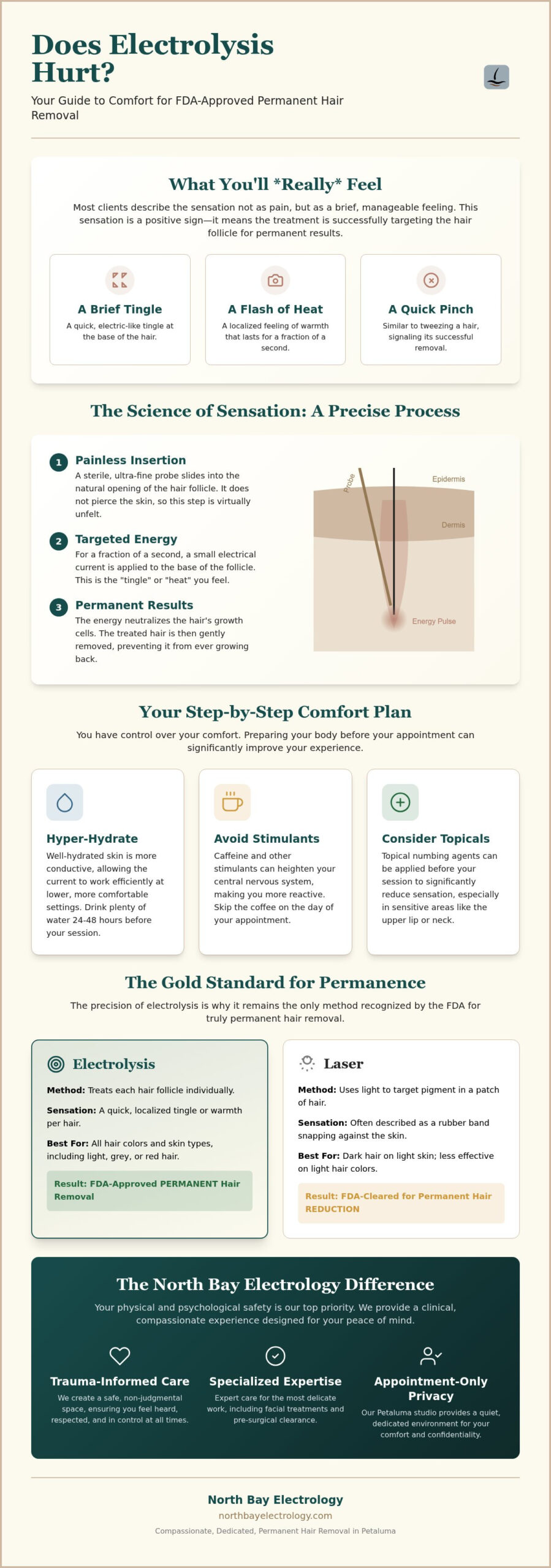
When you’re considering permanent hair removal, the most pressing question on your mind is likely: does electrolysis hurt? It’s a valid concern, especially if you’ve spent hours reading conflicting horror stories or overly clinical descriptions online. We believe in transparency and psychological safety. At our Petaluma studio, we define the sensation as a brief flash of heat or a “tingle” followed by a quick, localized pinch. This feeling is a positive signal. It means the energy has reached the base of the follicle to prevent future growth. While we can’t promise a completely sensation-free experience, understanding that the question “does electrolysis hurt” has a very manageable answer helps many clients move forward with confidence.
Pain is deeply personal and subjective. What one person describes as a minor annoyance, another might find more intense. This is why we prioritize a compassionate, clinical approach that validates your individual threshold. As a discipline, Electrology involves the precise application of current to the hair follicle, which is why you feel a localized sensation. It’s okay to be nervous. Our goal is to transform that anxiety into empowerment through education and specialized care.
Common Descriptions: Zap, Pinch, or Heat?
Many clients compare the sensation to a mosquito bite or a quick “zap.” It’s helpful to distinguish between the two parts of the process. The insertion of the sterile probe is typically painless because we use the natural opening of the follicle. You only feel the sensation when the current is briefly applied. Interestingly, the first ten minutes of a session are often the most challenging. Your nervous system is on high alert as it encounters a new stimulus. Once your brain realizes the sensation is repetitive and safe, most people settle into a rhythm and find the rest of the appointment significantly easier to navigate.
Factors That Influence Your Sensitivity
Your body’s internal state plays a massive role in how you perceive the treatment. We focus on three main variables that you can control to ensure a more comfortable experience:
- Hydration Levels: Well-hydrated skin is more conductive. This allows the current to work efficiently at lower settings, which reduces discomfort.
- Caffeine and Stress: Stimulants like coffee can heighten your central nervous system, making you more reactive to touch. We recommend skipping the espresso before your visit.
- Hormonal Cycles: For many clients, the menstrual cycle can lower pain thresholds. Timing your appointments around these fluctuations can make a noticeable difference.
Our appointment-only studio in Petaluma is designed to be a sanctuary where you can book a session and discuss your comfort needs without feeling rushed or judged. Your dignity is always our priority.
The Science of Sensation: What Happens Under the Skin
Every hair follicle is a complex structure nestled within the dermis, surrounded by a network of sensory nerves known as the hair follicle plexus. These nerves are responsible for detecting movement and touch, which is why you feel a sensation when the follicle is treated. While you might wonder “does electrolysis hurt” because of this proximity to nerve endings, the experience is a controlled clinical response. As Cleveland Clinic explains electrolysis, the process typically causes a slight tingling rather than significant pain. Understanding the anatomy helps demystify why you feel a brief pulse of energy during your session.
The probe itself is a critical part of your comfort. It isn’t a needle that pierces the skin; instead, it’s a smooth, sterile filament that slides into the natural opening of the hair follicle. Because a skilled electrologist uses this existing pathway, the insertion should be virtually unfelt. The sensation only begins when the current is activated to target the germ cells at the base of the hair. The threshold of sensation is the point where permanent destruction occurs without unnecessary discomfort.
Thermolysis vs. Blend: Which Feels Better?
Thermolysis is the most common modality used in 2026. It utilizes a high-frequency current to create a localized burst of heat. This method is incredibly fast, often taking only a fraction of a second per hair. Most clients describe this as a quick, warm “snap.” It’s ideal for clearing larger areas efficiently while maintaining a high level of comfort through speed.
Galvanic and Blend modalities work differently. Galvanic electrolysis uses a direct current to create a chemical reaction within the follicle, which some people describe as a “fizzy” or slightly metallic sensation. The Blend method combines both heat and chemical action. While these methods take longer per hair, they’re often the preferred choice for distorted follicles or very thick hair. We match the modality to your specific hair type and sensitivity to ensure the most gentle experience possible.
Why Precision Matters for Comfort
Achieving permanent results requires a high degree of technical skill. An accurate insertion ensures the energy is delivered exactly where it’s needed, avoiding damage to the surrounding skin tissue. This precision is what prevents the “burning” sensation many people fear. When the current is perfectly placed, the skin remains healthy and the recovery time is minimal.
Modern equipment now allows for micro-adjustments in current that were previously impossible. These AI-assisted settings help us find your unique comfort level with extreme accuracy, preventing over-treatment. If you’re curious about how this precision-focused care can help you reach your goals, you can book an appointment at our Petaluma studio to experience the difference firsthand.
Electrolysis vs. Laser: A Comparison of Discomfort
Comparing these two popular methods requires looking at the type of sensation rather than just the intensity. Laser treatments are often described as a hot rubber band snapping against the skin over a broad area. While this is faster for large surfaces, it relies on pigment contrast. This means it’s less effective for those with light, red, or grey hair. In contrast, when asking “does electrolysis hurt,” it’s important to recognize that the sensation is much more localized. Instead of a broad snap, it’s a pinpoint pulse that targets one follicle at a time. This precision is why electrolysis is the only method the FDA recognizes for permanent hair removal, whereas laser is classified as permanent hair reduction.
The trade-off between the two often comes down to duration versus intensity. A laser session might be over in minutes, but the sensation covers a wider field of skin. Electrolysis requires more time because of its meticulous nature, but the discomfort is contained to a tiny, specific point. For those who cannot utilize laser due to hair color or skin tone, electrolysis offers a manageable and necessary path to smooth skin. The sensation is brief, targeted, and indicates that the follicle is being permanently treated.
Area Sensitivity: Face, Neck, and Body
Sensitivity varies significantly depending on where the work is being done. The upper lip is widely considered the zingiest area because it has a high density of nerve endings and very thin skin. In contrast, the chin and jawline tend to be more manageable because the skin is thicker and the nerves are less concentrated. We also specialize in pre-surgical hair removal for gender-affirming care. These sites have unique sensitivities, both physical and emotional. We take extra time to ensure these sessions are paced comfortably, recognizing the profound importance of this step in your transition. Our quiet, appointment-only environment helps reduce sensory anxiety during these sensitive treatments.
The Permanency Payoff
Any short-term discomfort is a small investment in long-term freedom. Unlike waxing or shaving, which require a lifetime of maintenance and recurring irritation, electrolysis provides a definitive end date for hair growth. There is a specific psychological relief that comes with seeing permanent clearance over time. You stop worrying about five o’clock shadows or skin damage from razors. The empowerment of permanent results far outweighs the temporary sensation of the treatment. If you’re ready to start this journey, you can view our availability in Petaluma and begin your path toward permanent results with a provider who prioritizes your dignity.
How to Minimize Discomfort: A Step-by-Step Comfort Plan
Preparation is the bridge between a stressful appointment and a manageable one. While the technical answer to does electrolysis hurt involves several variables, your proactive steps can significantly tilt the scales toward comfort. We view the treatment as a partnership. Your role begins at home, ensuring your body is in the best possible state to receive care. By following a structured timeline, you can arrive at our Petaluma studio feeling calm and physically prepared.
Your journey begins 24 hours before your session with hyper-hydration. Well-hydrated skin is more conductive, which allows the current to travel efficiently to the base of the follicle. When skin is dry, it acts as an insulator, often requiring higher settings to achieve the same permanent result. Drink plenty of water throughout the day preceding your visit. This simple step plumps the skin cells and makes the insertion of the sterile probe even smoother.
Topical Numbing Strategies
Proper numbing can change your entire perspective on the treatment. We recommend using an over-the-counter lidocaine cream, ideally a 5% formulation, which is the highest strength available without a prescription. For maximum efficacy, apply a thick layer to the treatment area about one hour before your appointment. Many clients find success with the “plastic wrap” trick. By covering the cream with a small piece of plastic wrap, you prevent the product from drying out or rubbing off on your clothing. This creates an occlusive barrier that forces the lidocaine deeper into the skin. Don’t hesitate to talk to us about adjusting the settings if you feel more than a brief tingle. Your feedback is essential for maintaining your comfort.
Lifestyle Adjustments for a Better Session
Small changes to your daily routine can lower your sensitivity. We suggest skipping your morning espresso or any caffeinated drinks in Santa Rosa before heading to your session. Caffeine is a stimulant that can heighten your central nervous system, making you more reactive to touch and heat. A good night’s sleep is equally vital. Fatigue lowers your pain threshold, making minor sensations feel more intense. If you’re a beginner, we often suggest starting with shorter sessions of 15 to 30 minutes. This allows you to acclimate to the process without feeling overwhelmed. The answer to does electrolysis hurt often depends on how well you’ve rested and nourished your body.
Preparing for Your Visit
Arriving at your appointment should feel like entering a sanctuary. We recommend wearing loose, comfortable clothing and bringing a pair of headphones if listening to music or a podcast helps you relax. Our appointment-only model is designed to reduce sensory overload. There are no crowded waiting rooms or ringing phones; it’s just a quiet, dedicated space focused on your care. After your session, we apply soothing agents to calm the skin and reduce any temporary “sunburn” feeling. This ensures you leave feeling empowered and one step closer to your permanent hair removal goals.
The North Bay Electrology Difference: Compassionate, Dedicated Care
Choosing a provider for permanent hair removal is a deeply personal decision. At North Bay Electrology, we operate with an “Affirming Expert” philosophy. This means we view our technical work as a form of advocacy and care. We prioritize your psychological safety as much as the efficacy of the treatment itself. If you’re asking, does electrolysis hurt, you deserve an answer that acknowledges both the physical sensation and the emotional context of the procedure. We create an environment where your dignity is the foundation of every session. Our approach is steady, methodical, and designed to make you feel secure through every step of the process.
Our Petaluma clinic is strictly appointment-only. We made this choice to ensure a quiet, dedicated space for every client. There are no walk-ins or interruptions to distract from your care. This methodical pace allows us to focus entirely on your comfort and the precision of the work. For those who experience sensory anxiety, this calm atmosphere makes a significant difference in how the treatment is perceived. You aren’t just another slot on a busy schedule; you’re a person deserving of unhurried, expert attention.
Tailored Treatments for Sensitive Needs
We understand that some hair removal journeys are more than just cosmetic. We provide specialized support for PCOS and other hormonal hair growth conditions with a non-judgmental attitude. Our studio is also a trusted space for gender-affirming care. We follow a clinical guide to pre-surgical electrolysis to ensure you meet the requirements for your procedure with as much comfort as possible. Whether we’re working on the face, neck, or other sensitive areas, our trauma-informed communication ensures you feel in control of the process at all times. We adjust our techniques to your specific anatomy and sensitivity levels.
Booking Your Path to Permanent Smoothness
Because we value your privacy and comfort, we don’t accept walk-in appointments. This policy ensures that when you’re in the treatment room, you have our full, undivided focus. We take the time to listen to your concerns and adjust our equipment settings to match your unique needs. Scheduling your consultation or session is simple through our GlossGenius booking portal. It allows you to choose a time that fits your life without the pressure of a phone call. You’re stronger than you think. While the question of “does electrolysis hurt” is a natural starting point, we’re here to help you reach the finish line of permanent smoothness with compassion and clinical expertise.
Your Journey to Permanent Confidence Starts Here
Permanent hair removal is a transformative journey that rewards your patience with lifelong freedom from daily maintenance. We’ve explored the science behind the follicles and the practical steps you can take to ensure your sessions are as gentle as possible. While the question does electrolysis hurt often stems from a place of uncertainty, it’s actually a manageable, brief sensation that signals the end of unwanted growth. By prioritizing hydration, utilizing topical numbing, and choosing a dedicated specialist, you can navigate this process with ease.
Our Petaluma studio provides a quiet, appointment-only environment designed specifically for your privacy and sensory comfort. We specialize in sensitive face and neck care, offering an inclusive and trauma-informed space for every client. You deserve a provider who views your dignity as a clinical priority rather than an afterthought.
You have the strength to invest in your long-term well-being. We are here to guide you every step of the way toward the permanent results you deserve.
Frequently Asked Questions
Is electrolysis more painful than a tattoo?
Most clients find electrolysis less painful than a tattoo because it involves a single, sterile probe rather than multiple vibrating needles. While a tattoo creates a constant abrasive sensation across the skin, electrolysis is a localized pulse targeting one follicle at a time. The sensation is brief and lacks the deep, lingering ache often associated with tattoo work. In our quiet Petaluma studio, we ensure the pace matches your comfort level to minimize any sensory distress.
Can I take ibuprofen or Tylenol before my electrolysis session?
Taking over-the-counter pain relievers like ibuprofen or Tylenol approximately 45 minutes before your appointment can be very helpful. These medications help take the edge off the “zap” sensation by lowering your body’s inflammatory response. However, you should avoid aspirin, as it can thin the blood and increase the risk of pinpoint bruising. Always consult with your primary care physician before starting a new medication routine to ensure it is safe for your specific health needs.
Does the pain get worse the more sessions I have?
No, the sensation typically becomes much more manageable over time. As you progress through your treatment plan, the hair follicles become finer and the roots grow shallower. This means we can often achieve permanent results with lower energy settings in later sessions. Many of our North Bay clients report that their anxiety about the question does electrolysis hurt fades after the first few visits once they realize the discomfort actually decreases as the hair weakens.
What happens if I need to stop the session because of the pain?
If you need to stop at any point, we pause the treatment immediately without judgment. Your psychological safety and physical comfort are our highest priorities at North Bay Electrology. We can take a break, adjust the machine settings, or focus on a less sensitive area for the remainder of the hour. Our trauma-informed approach ensures that you are always in control of your session, allowing for a collaborative and respectful hair removal experience.
How long does the ‘stinging’ last after the treatment is over?
The mild stinging or “sunburn” sensation usually dissipates within 30 minutes to two hours following your session. You might notice some temporary redness or slight swelling, which is a normal part of the skin’s healing response. We apply professional-grade soothing agents immediately after treatment to calm the area. Most clients in Santa Rosa find they can return to their daily activities right away, as the surface irritation is brief and manageable with basic aftercare.
Are there certain parts of the face that hurt more than others?
Yes, certain areas have a higher density of nerve endings. The upper lip and the area directly under the nose are generally the most sensitive parts of the face. In contrast, the cheeks and jawline are often described as much more comfortable due to thicker skin and fewer sensory receptors. When considering does electrolysis hurt, remember that we can adjust our technique and timing based on the specific zone we are clearing to ensure you feel supported throughout.
Will numbing cream make the electrolysis less effective?
Numbing cream has no impact on the technical efficacy of your treatment. Topical lidocaine only desensitizes the sensory nerves near the surface of the skin; it doesn’t interfere with the electrical current’s ability to reach and destroy the germ cells within the follicle. Using a 5% lidocaine formulation is a highly effective way to manage discomfort without compromising your progress. This allows us to work efficiently while you remain relaxed and comfortable in our dedicated Petaluma facility.
How does North Bay Electrology help clients with needle phobias?
We help clients by clarifying that we use a smooth, blunt probe rather than a hollow surgical needle. This probe slides into the natural opening of the hair follicle without piercing the skin. Our appointment-only model in Petaluma provides a quiet, low-stimulus environment that significantly reduces the anxiety often triggered by medical settings. By combining clinical precision with empathetic care, we create a safe space where you can focus on your transformation without fear.

Article by
Madison Hanselman
As a trans woman and owner of North Bay Electrology in Petaluma, I bring a deep personal empathy and love for technical systems to my practice. My own transition fuels my passion for permanent hair removal, making my clinic a proud partner and safe haven for the LGBTQ+ community. Balancing rigorous analytics with heartfelt care, I approach electrology as both a precise science and a life-changing path to self-actualization.