What if the success of your reconstructive surgery depended not just on the surgeon’s skill, but on the meticulous preparation of your skin months before the first incision? It’s completely natural to feel a sense of urgency and perhaps a bit of anxiety when preparing for a life-changing procedure. You likely worry about potential surgical delays or the distressing possibility of hair growing internally after a graft is placed. Professional electrolysis for skin graft sites is the only way to ensure those concerns never become a reality for your donor areas.
We understand that sites like the inner forearm or thigh are deeply sensitive; you deserve care that prioritizes your comfort alongside clinical results. In this article, you’ll discover why electrolysis is the clinical gold standard for surgical preparation and how to plan a timeline that aligns with your surgeon’s requirements. We will walk through the necessity of total hair clearance, the technical precision of our process, and the affirming, professional support available to you throughout this transformative journey.
Key Takeaways
- Understand why total follicle destruction is a clinical requirement to prevent post-surgical complications like internal hair growth or cysts.
- Learn how to manage hair density on common donor areas, such as the forearm or thigh, through specialized electrolysis for skin graft sites.
- Discover why the FDA distinction between permanent removal and permanent reduction makes electrolysis the only safe choice for graft preparation.
- Establish a realistic 12-to-18 month timeline that respects natural hair growth cycles and prevents stressful surgical delays.
- Explore how clinical expertise combined with insurance reimbursement support creates a more manageable and dignified preparation process.
The Medical Necessity of Electrolysis for Skin Graft Sites
When preparing for reconstructive or gender-affirming surgery, your focus is often on the final outcome. However, the success of that outcome depends heavily on the preparation of the donor tissue. Skin moved from one part of the body to another retains its original biological properties, including its hair-bearing characteristics. If you move a patch of skin from your forearm to a new site, the hair follicles move with it. This biological reality is at the heart of What is Skin Grafting?. This is why electrolysis for skin graft sites is a non-negotiable step in your surgical journey. In a clinical setting, “permanent” cannot simply mean a reduction in hair density; it must mean the total, irreversible destruction of every hair follicle within the graft area.
Your electrologist functions as a vital member of your surgical preparation team, working in tandem with your surgeon’s specific protocols. We provide the precision needed to ensure the donor site is medically ready for harvest. Without this meticulous clearance, the graft remains a “living” site for hair growth in its new location, which often leads to significant medical complications that are difficult to treat once the surgery is complete.
Preventing Post-Surgical Complications
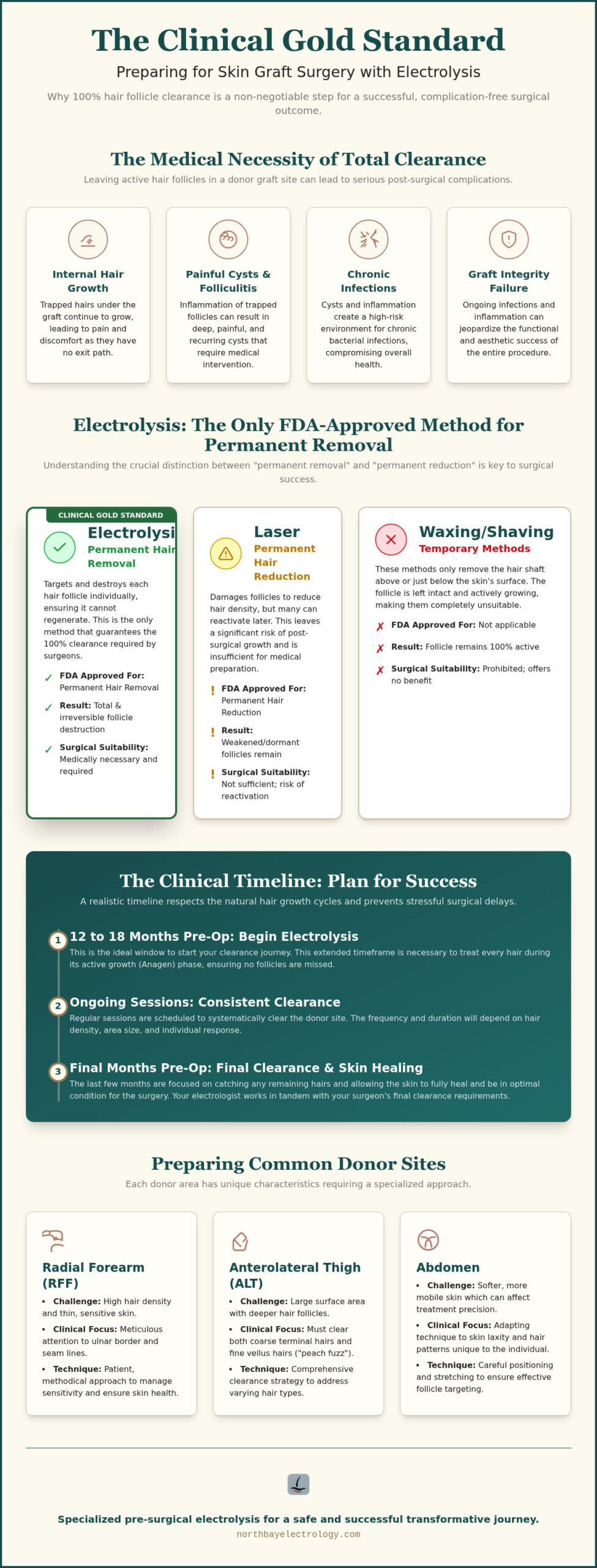
The primary risk of leaving hair follicles intact is the development of internal hair growth. When a graft is placed, any remaining follicles will continue their natural growth cycle. Because the hair often has no exit path through the skin’s surface in its new position, it becomes trapped. This leads to post-surgical folliculitis, a painful inflammation of the hair follicle, and the formation of deep-seated cysts. These issues aren’t just uncomfortable; they can cause chronic infections that compromise the integrity of the graft. Surgeons across the North Bay area typically insist on 100% hair clearance because even a few remaining follicles can jeopardize the functional and aesthetic success of the entire procedure.
Electrolysis vs. Other Methods for Grafts
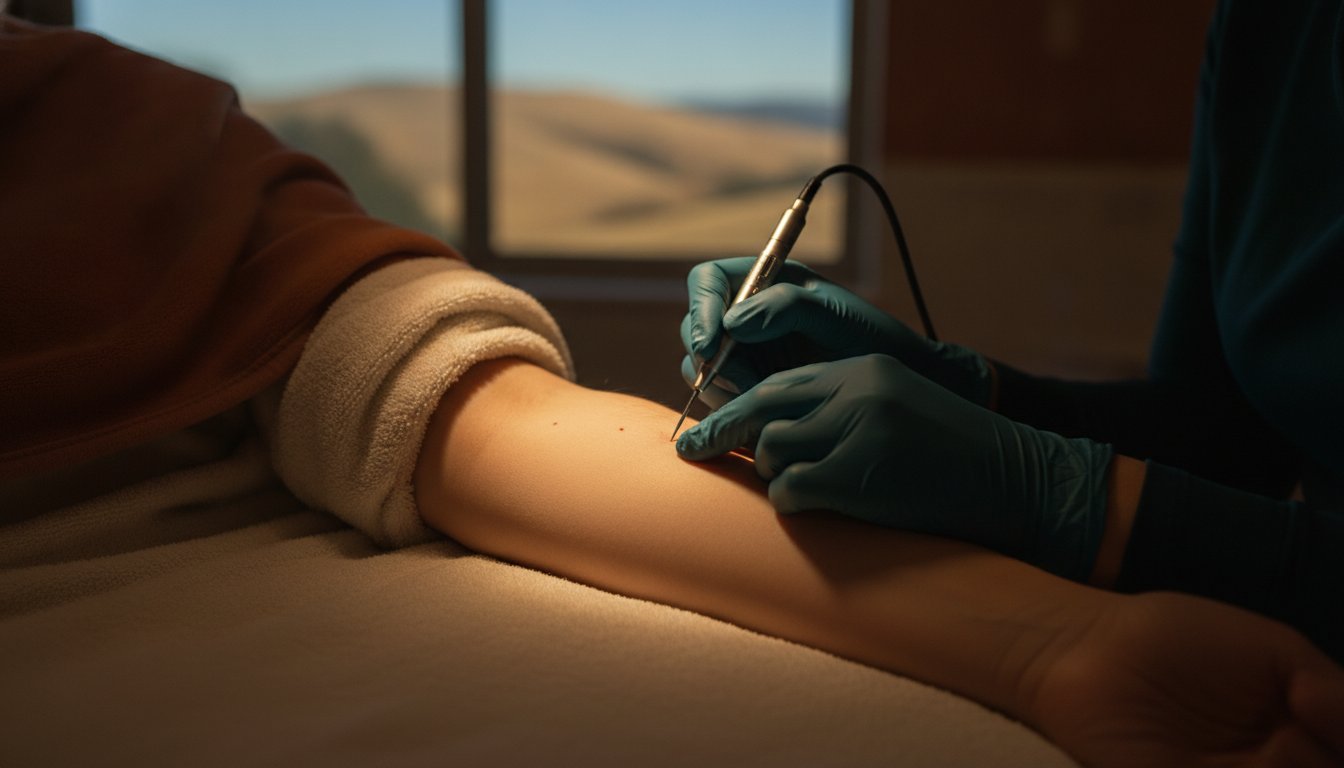
It’s vital to understand why temporary methods like waxing or shaving are strictly prohibited for surgical preparation. These methods only remove the hair shaft, leaving the follicle alive and ready to regenerate. Even laser treatments, which the U.S. Food and Drug Administration (FDA) classifies as “permanent hair reduction,” are insufficient for this specific medical need. Laser can leave behind dormant or weakened follicles that may reactivate months or years later. Electrolysis is the only FDA-approved method for permanent hair removal, making it the clinical gold standard. By targeting each follicle individually, we ensure the skin tissue remains healthy and completely clear, providing the best possible foundation for an optimal graft take. To begin your preparation, you can schedule a consultation at our Petaluma office.
Common Donor Sites: Preparing the Arm, Thigh, and Abdomen
Every surgical plan is unique. The choice of donor site depends on the specific requirements of the procedure and your individual anatomy. Whether your surgeon has selected the forearm, thigh, or abdomen, the preparation process remains a cornerstone of surgical success. We work closely with your surgical team to identify the exact boundaries of the harvest area. This precision ensures that electrolysis for skin graft sites is focused exactly where it’s needed most, protecting your time and resources while respecting the sensitive nature of these areas. We view ourselves as your dedicated guides, ensuring the skin is medically prepared for its new role.
The Radial Forearm (RFF) Preparation
The radial forearm is a frequent choice for phalloplasty due to its excellent nerve and blood vessel supply. However, the inner arm often presents a high density of hair and thinner, more sensitive skin. We pay special attention to the ulnar border and the specific seam lines where the tissue will be joined. Managing this sensitivity requires a patient, methodical approach. We use specialized techniques to maintain skin health while ensuring every single follicle is deactivated. This level of detail prevents future complications in highly visible or functional graft areas, giving you peace of mind as you approach your surgery date.
Thigh and Abdominal Site Nuances
Anterolateral Thigh (ALT) grafts involve much larger surface areas and typically deeper hair follicles compared to the arm. We must address both terminal hairs and finer vellus hairs, as even “peach fuzz” can cause issues if it becomes trapped internally after surgery. For abdominal grafts, we focus on the softer, more mobile skin of the midsection. These areas require a balance of efficiency and clinical precision to stay on track with your surgical timeline. Between sessions, we provide guidance on maintaining the skin’s integrity to ensure it’s in peak condition for the harvest. We don’t just clear hair; we care for the health of the tissue that will soon become a vital part of your body.
Precise mapping is essential for a safe outcome. Many surgeons provide templates or specific medical markings to guide our work. By following these clinical landmarks, we ensure 100% clearance within the surgical margins. This collaborative approach reduces the risk of remaining hair at the edges of the graft. We’re here to support you with a steady, calming rhythm that moves you closer to your goals. If you’re ready to begin this essential preparation, you can view our availability and schedule your first session at our Petaluma clinic.
Why Electrolysis is the Only Safe Choice Over Laser
Choosing a hair removal method for surgical preparation often feels like a choice between speed and precision. While laser treatments are frequently marketed for their ability to cover large areas quickly, they are medically insufficient for the rigorous requirements of donor site preparation. The U.S. Food and Drug Administration (FDA) maintains a strict distinction between these technologies. Electrolysis is the only method classified for “permanent hair removal,” while laser is limited to “permanent hair reduction.” For most aesthetic goals, reduction is enough. For a surgical graft, anything less than 100% permanent removal is a clinical risk. Using electrolysis for skin graft sites ensures that the follicles are not just stunned or thinned, but completely destroyed.
The danger of dormant follicles cannot be overstated. Laser energy relies on pigment to target hair, which often leaves lighter or finer hairs untouched. Even more concerning is the potential for laser to leave follicles in a weakened, dormant state. These follicles may not produce hair for months, appearing clear during your final pre-op check, only to reactivate after the graft has been placed. Once that tissue is relocated, those reactivated hairs can grow internally, leading to the complications we discussed previously. In some cases, laser can even trigger paradoxical hypertrichosis, a condition where the light energy stimulates dormant follicles to produce thicker, more terminal hair. This is the opposite of what any surgical candidate needs.
The Science of Follicle Destruction
Electrolysis works by delivering a precise amount of energy directly into the hair follicle, targeting the germative cells responsible for growth. Unlike laser, which is a broad-spectrum light approach, electrolysis is an individual, follicle-by-follicle process. This methodical nature is exactly why it’s the gold standard. We don’t guess if a follicle is destroyed; we treat each one until the regenerative ability is gone. This level of certainty is the only way to guarantee the internal surfaces of a graft remain hair-free for life. It’s a steady process that requires patience, but the safety it provides for your long-term health is invaluable.
Safety for All Skin Tones and Hair Colors
One of the most significant advantages of electrolysis is its universal efficacy. Laser is often limited by the contrast between hair color and skin tone, making it less effective or even unsafe for certain individuals. Electrolysis doesn’t rely on pigment. It’s the only reliable solution for blonde, red, or grey hair on donor sites. Furthermore, it’s completely safe for all skin tones, including dark skin that might be at risk for burns or pigment changes with laser. We’re committed to providing a trauma-informed, inclusive environment where every surgical candidate feels seen, respected, and clinically protected. If you’re ready to plan your clearance, you can schedule an appointment at our Petaluma office to begin your journey.
The Clinical Timeline: Planning Your Pre-Op Hair Clearance
Timing is everything in surgical preparation. You can’t force biology to move faster than its natural rhythm. Achieving total clearance via electrolysis for skin graft sites requires a minimum of 12 to 18 months for most patients. This timeline isn’t just a suggestion; it’s a clinical necessity based on the human hair growth cycle. We work with you to map out a schedule that respects these biological stages while keeping you on track for your surgical goals. This methodical approach ensures that when your surgery date arrives, your donor site is medically ready.
Hair moves through three distinct phases: Anagen, Catagen, and Telogen. Electrolysis is most effective during the Anagen phase, which is the period of active growth when the hair is connected to the follicle’s nourishing structures. Because a significant percentage of your hair is “resting” in the Telogen phase at any given time, those follicles are invisible to us. We must wait for them to cycle back into active growth before they can be treated. This is why a single clearance is never enough; we must catch every follicle as it enters its active stage over the course of a full year or more.
Phase 1: Initial Clearance and Thinning
The first 6 months of your journey are focused on “clearing and thinning.” During this stage, appointments are typically more frequent and longer to manage the initial density of the donor site. You’ll likely see the most dramatic visible change during this period as we remove the bulk of the terminal hair. We prioritize your skin’s health during these intensive sessions, providing guidance on post-treatment care to ensure the tissue heals beautifully between visits. Consistency is your greatest ally during this phase; missing sessions can allow hairs to move past their ideal treatment window.
Phase 2: Maintenance and Final Sweep
The final 6 months are dedicated to the “maintenance and sweep” phase. This is where we catch the late-emerging hairs that were previously dormant. We also employ a “Clear and Wait” strategy. This involves achieving a completely hair-free state and then observing the site for several weeks to ensure no new growth appears. A site is considered “surgically ready” when it has remained 100% clear through a full growth cycle. We recommend coordinating with your surgeon early in this phase. Many surgeons in the North Bay require a final confirmation of clearance before they will finalize your procedure date.
Specialized Pre-Surgical Electrolysis at North Bay Electrology
Choosing a provider for electrolysis for skin graft sites is a decision that impacts both your surgical safety and your personal comfort. At North Bay Electrology, we’ve designed our Petaluma practice to meet the rigorous standards required by surgeons while maintaining a space of deep, empathetic warmth. We understand that preparing for a major procedure can be overwhelming. Our role is to provide the clinical precision you need and the emotional support you deserve. By operating on a strictly by-appointment-only basis, we ensure that every session is a dedicated, uninterrupted block of time focused solely on your individual surgical goals.
Our expertise extends beyond the technical application of electrolysis. We’re deeply familiar with pre-surgical protocols and the specific requirements of surgeons in the San Francisco and Santa Rosa areas. We also recognize the financial complexities of medical transition and reconstructive surgery. To support your journey, we provide the necessary insurance reimbursement paperwork for your sessions. While we don’t offer direct billing, these documents are vital for clients seeking to have their medically necessary hair removal covered by their provider. We’re here to help you navigate the administrative side of your care with transparency and professionalism.
A Supportive and Affirming Environment
Dignity and respect are the foundations of our practice. We provide a trauma-informed, inclusive environment for all residents of the North Bay, from Santa Rosa to San Rafael. Whether you’re seeking gender-affirming care or preparing for a reconstructive graft following an injury, your journey is met with a non-judgmental attitude. We view our work as advocacy. We take the time to listen to your concerns, explain every step of the process, and celebrate the milestones of your clearance alongside you. Your psychological safety is as important to us as the technical efficacy of the treatment itself.
Next Steps for Your Surgical Preparation
Taking the first step toward surgical readiness is simple. We recommend scheduling your consultation as soon as you have a tentative surgical plan or donor site identified by your surgeon. During this initial meeting, please bring any documentation regarding your surgeon’s specific requirements and your anticipated timeline. We’ll assess the donor area, discuss the density of the hair, and create a realistic plan that aligns with your goals. We’re honored to be part of your surgical team and look forward to supporting your path to a successful outcome.
Securing Your Surgical Future with Precision Care
Preparing for a skin graft is a journey that requires patience, but the peace of mind it provides is essential for your long-term recovery. You now understand that electrolysis for skin graft sites isn’t just a cosmetic step; it’s a vital medical prerequisite for a safe outcome. By committing to a 12 to 18 month timeline, you ensure that every follicle is permanently destroyed before your procedure. This meticulous preparation prevents the distressing risks of internal hair growth and chronic folliculitis after your graft is placed.
At North Bay Electrology, we combine specialized pre-surgical hair clearance expertise with FDA-approved permanent results. Our Petaluma clinic provides inclusive, affirming care designed to support your dignity and psychological safety at every stage. We’re here to guide you through every growth cycle with clinical precision and empathetic warmth, ensuring you feel empowered as you move toward your surgical goals.
You’ve done the important work of researching how to protect your health and your results. We’re ready to help you take the next step toward a safe, successful, and permanent surgical outcome.
Frequently Asked Questions
How long before my surgery should I start electrolysis on the graft site?
You should begin your treatments at least 12 to 18 months before your scheduled surgery date. This duration is necessary to address every follicle through its various growth cycles. Starting early at our Petaluma clinic allows us to achieve total clearance without rushing the skin’s natural healing process. Most surgeons in the North Bay area require a donor site to be completely clear for several months to ensure the results are truly permanent.
Can I use laser hair removal for my skin graft donor site instead?
Laser is not a safe alternative for pre-surgical preparation because it only offers permanent hair reduction. For a graft to be successful, you need the total follicle destruction provided by electrolysis for skin graft sites. Laser can leave dormant hairs that may regrow internally after the skin is moved. Electrolysis is the only FDA-approved method for permanent hair removal, making it the clinical gold standard for preparing donor tissue safely.
Is electrolysis on the inner arm or thigh more painful than the face?
Sensitivity is personal, but many clients find the inner arm or thigh more sensitive than the face. These areas often have thinner skin and a higher concentration of nerve endings. We prioritize your comfort and dignity during every session in Petaluma. We can discuss various comfort measures and adjust our pace to ensure you feel supported. Our focus is on maintaining a calming rhythm that respects both your physical and emotional well-being.
Will my insurance cover electrolysis for a medically necessary skin graft?
Many insurance plans cover electrolysis when it’s a medical prerequisite for surgery. While we don’t offer direct insurance billing, North Bay Electrology provides the specialized insurance reimbursement paperwork you need to seek coverage. We suggest reviewing your policy’s requirements for gender-affirming or reconstructive care. Having this documentation ready helps you navigate the financial side of your journey while receiving expert care from our professional clinical team in the North Bay.
What happens if there is still hair on the donor site on the day of surgery?
Remaining hair can lead to significant surgical complications or even the postponement of your procedure. If hair is present during the graft harvest, it may grow internally at the new site, causing chronic infections or cysts. This is why we work so meticulously to achieve 100% clearance. Surgeons from Santa Rosa to San Rafael rely on our precision to ensure the graft is medically ready for a successful harvest.
How often do I need appointments for pre-surgical hair clearance?
Most clients require weekly or bi-weekly appointments during the initial clearing phase. As hair density decreases, we can often space sessions further apart. Staying consistent is the best way to ensure we catch every follicle during its active growth stage. We’ll help you plan a manageable schedule at our Petaluma office that aligns with your surgeon’s timeline, ensuring your donor site is ready well before your surgery date arrives.
What is the “clear and wait” period for skin grafts?
The “clear and wait” period is a crucial observation phase at the end of your treatment timeline. During this time, we achieve a completely hair-free state and then monitor the site for several months. This confirms that no dormant follicles are waiting to regrow. It’s the most reliable way to ensure electrolysis for skin graft sites has been successful, giving you and your surgeon total confidence in the readiness of the donor tissue.
Does North Bay Electrology work with my surgeon’s specific requirements?
We frequently collaborate with surgical teams to ensure our treatments meet their exact specifications. If your surgeon provides a template or specific markings for the donor site, we follow those landmarks with clinical precision. Whether you’re seeing a specialist in Santa Rosa or San Francisco, we act as a supportive ally in your preparation. Our goal is to ensure your donor area meets the highest medical standards for a safe and successful surgical outcome.
Article by
Madison Hanselman
As a trans woman and owner of North Bay Electrology in Petaluma, I bring a deep personal empathy and love for technical systems to my practice. My own transition fuels my passion for permanent hair removal, making my clinic a proud partner and safe haven for the LGBTQ+ community. Balancing rigorous analytics with heartfelt care, I approach electrology as both a precise science and a life-changing path to self-actualization.