Have you ever been told that your skin tone makes you a “high-risk” candidate for permanent hair removal, or worse, been turned away by a laser clinic entirely? It’s a frustrating and isolating experience to feel like the professional beauty industry wasn’t built with your needs in mind. If you’ve been searching for electrolysis for dark skin, it’s likely because you’re tired of struggling with painful ingrown hairs, folliculitis, and the constant fear that treatments might cause permanent scarring. You deserve a solution that honors your skin’s unique biology without forcing you to choose between safety and results.
Electrolysis is the only FDA-approved method for 100% permanent hair removal that’s safe for every skin tone. Unlike light-based treatments that can struggle to distinguish between hair and skin pigment, this method targets the follicle directly rather than the melanin in your skin. In this guide, we’ll explore why this clinical gold standard is the superior choice for deep complexions and how it provides a clear path to smooth skin without the risk of post-inflammatory hyperpigmentation. You’ll discover the science behind the process and how to find a practitioner who prioritizes your safety and long-term well-being.
Key Takeaways
- Understand why electrolysis for dark skin is the only FDA-approved method that offers 100% permanent results by targeting the follicle directly without affecting surface melanin.
- Learn why electrolysis succeeds where laser often fails, specifically by removing the requirement for color contrast between your hair and skin.
- Gain clarity on managing common concerns like post-inflammatory hyperpigmentation and how a professional assessment protects your skin’s health.
- Discover the essential roles that hydration and sun protection play in ensuring a comfortable treatment and preventing long-term discoloration.
- Explore the benefits of receiving treatment in a dedicated, inclusive clinical environment that prioritizes your psychological safety and physical comfort.
Why Electrolysis is the Gold Standard for Melanin-Rich Skin
For individuals with deeper skin tones, the search for hair removal is often fraught with anxiety. You might’ve spent years managing thick, stubborn hair on the face or neck, only to be told that modern technology isn’t safe for your complexion. This is where electrolysis for dark skin changes the narrative. It stands as the only method recognized by the FDA for true, permanent hair removal. Unlike other options that offer only temporary relief, electrolysis provides a definitive end to the cycle of unwanted growth while protecting the integrity of your skin.
The Science of Follicle-Targeted Treatment
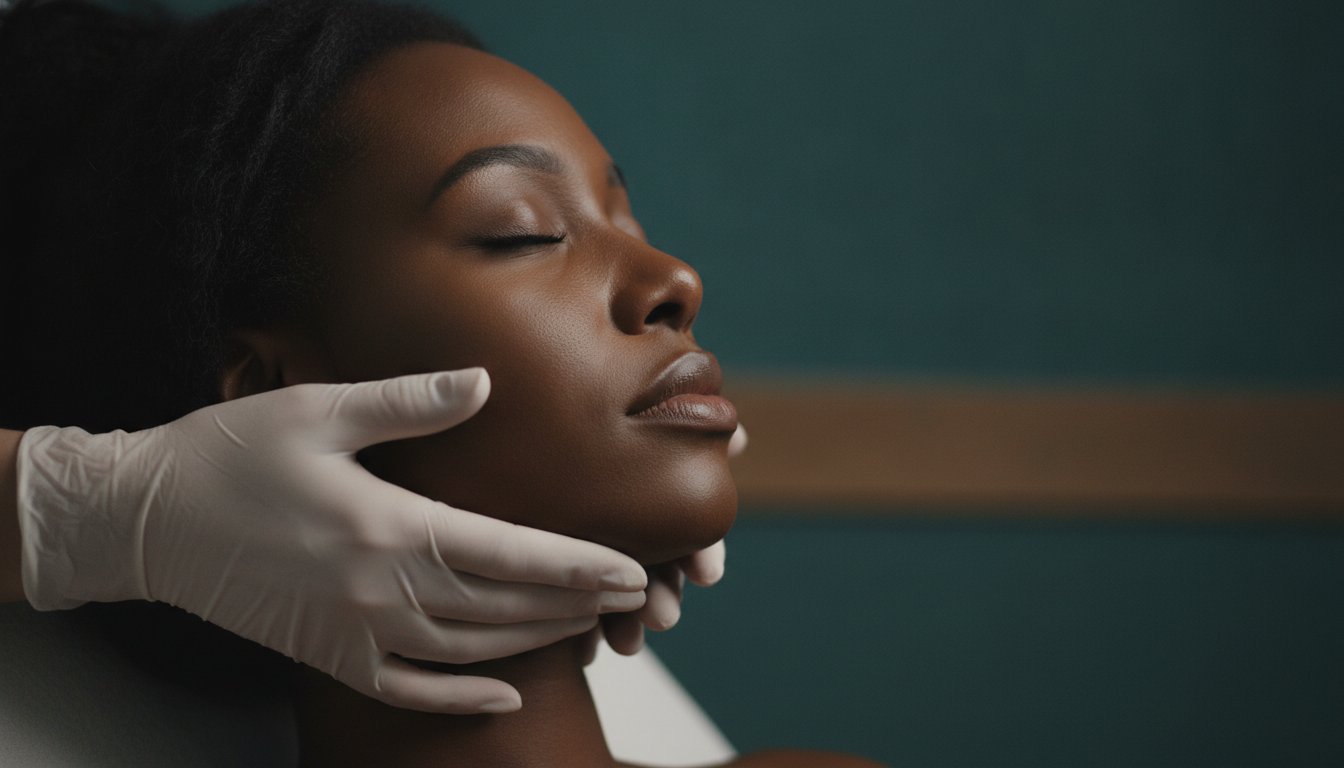
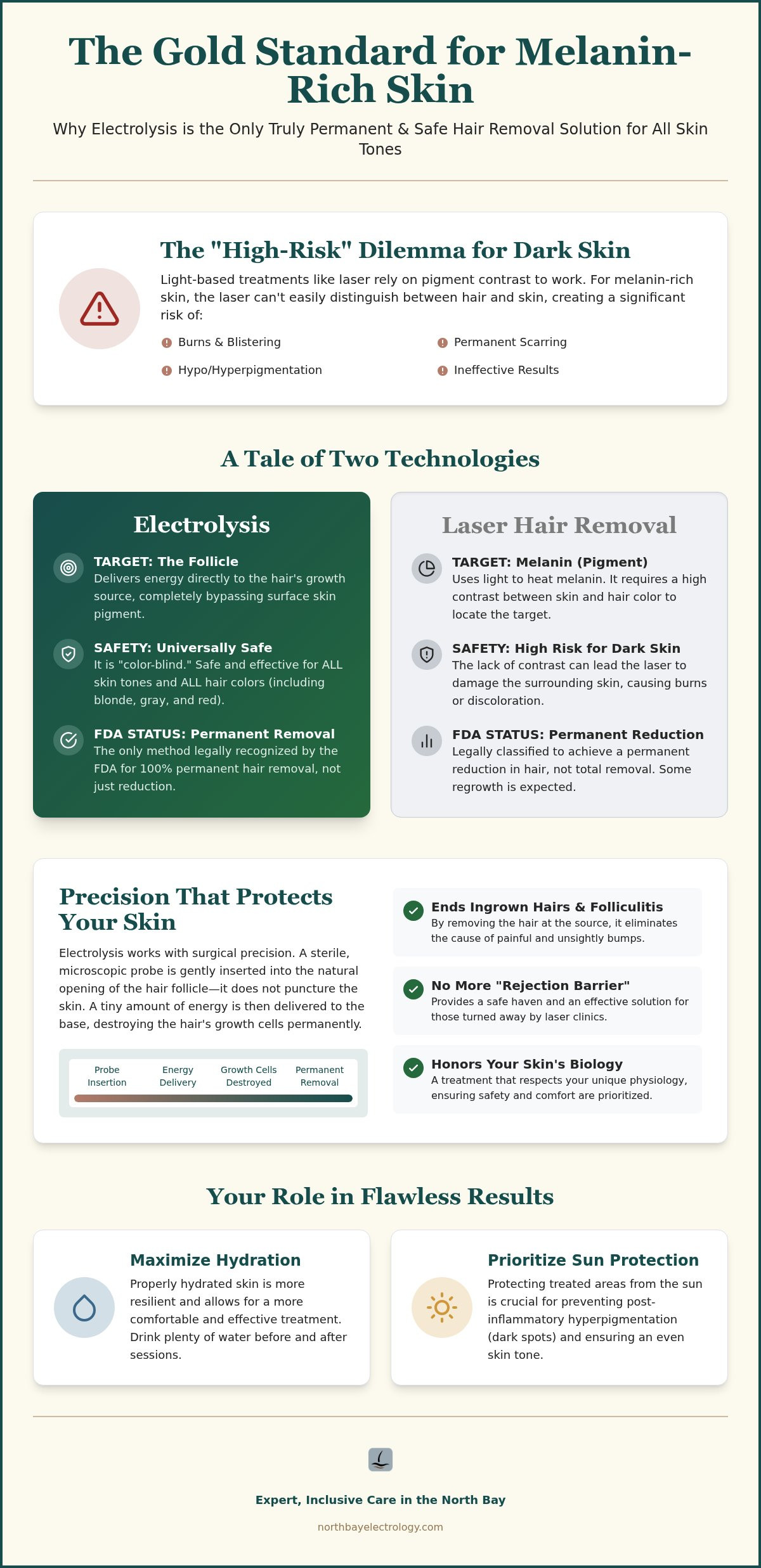
The effectiveness of this treatment lies in its surgical precision. A professional electrologist uses a microscopic, sterile probe that’s inserted into the natural opening of the hair follicle. It doesn’t puncture the skin. Once in place, a small amount of electrical energy or heat is delivered directly to the hair’s growth center. This process destroys the germinative cells responsible for hair regeneration. Because the energy is contained within the follicle, it bypasses the surface melanin entirely. To better understand the technical history of this practice, you can read more about What is Electrolysis and its clinical evolution. This direct targeting is why the FDA classifies it as permanent removal, whereas laser is legally limited to the term permanent reduction. Selecting a practitioner who understands the unique physiology of melanin-rich skin ensures these technical steps are performed with the necessary care.
Overcoming the ‘Laser Rejection’ Barrier
Many of our clients come to us after being turned away by laser clinics. It’s a common, yet disheartening experience. Traditional laser technology relies on a stark contrast between dark hair and light skin to work safely. When that contrast isn’t present, the laser can’t distinguish between the hair follicle and the surrounding skin. This creates a high risk for burns or long-term discoloration. Electrolysis is completely “color-blind.” It doesn’t matter if your hair is black, brown, or grey, or if your skin is rich in melanin. We focus on the individual follicle, providing a safe haven for those who’ve been excluded from other professional treatments. Moving away from the temporary irritation of waxing or tweezing allows your skin to finally heal. If you’re ready for a supportive, appointment-only clinical environment, we’re here to guide you through a transformation that respects your skin’s integrity.
Electrolysis vs. Laser: Why Contrast Doesn’t Matter for Success
Laser hair removal and electrolysis are often discussed in the same breath, yet they function on entirely different scientific principles. Laser utilizes light energy to target pigment. It’s essentially a search-and-destroy mission that relies on color contrast. Electrolysis, however, relies on chemical or heat energy delivered directly into the follicle. This distinction is vital for anyone seeking electrolysis for dark skin because it removes the risk of the technology “confusing” your skin for your hair. While laser is a broad-spectrum approach, electrolysis is a focused, individual treatment that respects the unique biology of your complexion.
The Pigment Problem in Light-Based Therapies
Laser technology operates by seeking out high-contrast pigment. If you have dark hair and very light skin, the laser sees the target clearly. For those with melanin-rich complexions, the laser often cannot distinguish the hair follicle from the surrounding skin. This “blind spot” is why so many people of color experience surface burns or ineffective treatments in traditional clinics. In some cases, improper laser settings can even cause paradoxical hypertrichosis, a distressing condition where the light energy actually triggers dormant follicles to grow more hair. Electrolysis ignores skin color entirely to focus on the dermal papilla. By bypassing the surface skin and delivering energy only where it’s needed, we ensure that your skin remains protected while the hair is permanently addressed.
Choosing Permanency Over Reduction
There’s a significant legal and clinical difference between “permanent reduction” and “permanent removal.” The FDA only grants the title of permanent hair removal to electrolysis. Laser is classified as permanent reduction because it can only thin out hair or delay its growth. For many, this leads to a cycle of endless “touch-up” appointments that never quite solve the problem. This is particularly concerning for those dealing with hormonal growth or sensitive areas where precision is paramount. We focus our expertise on permanent hair removal for the face and neck, providing a definitive end to the daily struggle of grooming.
From a cost-benefit perspective, electrolysis is often the more economical choice over time. While laser might seem faster, the need for lifelong maintenance means the expenses never truly stop. Electrolysis requires a commitment to a series of appointments, but once a follicle is treated successfully, that hair is gone forever. This makes it the superior choice for those who want a clinical solution rather than a temporary fix. If you’ve been disappointed by light-based therapies in the past, you can book an appointment to experience a method designed to work for everyone, regardless of pigment.
Managing Side Effects: Hyperpigmentation and Keloid Prevention
One of the most common anxieties for clients seeking electrolysis for dark skin is the fear of leaving the office with more marks than they started with. It’s a valid concern. Melanin-rich skin is highly reactive, and any form of stimulation can trigger a protective response from the skin. However, when performed with clinical precision, these reactions are manageable and temporary. Our goal is to ensure that your journey toward permanent hair removal is as gentle on your complexion as it is effective on the follicle.
Understanding Post-Inflammatory Hyperpigmentation (PIH)
If you notice small, dark spots in the treated area after a session, don’t panic. This is known as Post-Inflammatory Hyperpigmentation, or PIH. On deeper skin tones, PIH is essentially the equivalent of the redness that lighter skin tones experience. These aren’t permanent scars; they’re temporary pigment deposits that occur as the skin heals. Typically, these spots fade within 3 to 6 months as your skin cells naturally regenerate. Ironically, consistent electrolysis is often the best cure for chronic PIH. By permanently removing the hair, we stop the recurring cycle of ingrown hairs and folliculitis that cause long-term discoloration. Once the hair is gone, your skin finally has the opportunity to heal completely and maintain an even tone.
Keloid Assessment and Safety Protocols
Keloids, which are raised, thickened scars, are a primary concern for many of our clients. Because keloids are more common in deep skin tones, a thorough assessment of your scarring history is a non-negotiable part of our process. During your initial appointment, we’ll discuss how your skin has responded to past injuries. We often look at “litmus tests” for healing, such as:
- How your skin reacted to ear or body piercings.
- The appearance of childhood vaccination scars, such as the small mark often left by the BCG or smallpox vaccine.
- The healing process of any past surgical incisions or deep scratches.
If there’s a history of keloid formation, we proceed with extreme caution. We typically perform a patch test on a small, inconspicuous area to observe how your skin responds over several weeks. By adjusting the current intensity and the timing of the electrical pulse, we can minimize the inflammatory response. This tailored approach allows us to provide safe electrolysis for dark skin while prioritizing your skin’s structural integrity. We use specific clinical parameters to ensure the energy is sufficient to destroy the follicle without over-treating the surrounding tissue. This careful balance is what separates professional, specialized care from a standard one-size-fits-all treatment.
Your Treatment Journey: Preparation and Aftercare for Deep Skin Tones
Preparing for electrolysis for dark skin starts long before you step into the clinic. It’s a collaborative process where your daily habits directly influence the comfort and speed of your results. One of the most important factors is internal hydration. When your skin is well-hydrated, the hair follicles are more conductive, allowing the electrical current to work efficiently at lower intensities. This not only makes the treatment more comfortable but also minimizes the heat impact on the surrounding tissue. By drinking plenty of water in the days leading up to your appointment, you’re helping your skin recover more quickly.
Pre-Treatment Protocols for Success
The most difficult part of the journey for many is stopping the “big three”: tweezing, waxing, and threading. These methods temporarily remove the hair, but they also distort the follicle and stimulate blood flow, which can lead to thicker regrowth. More importantly, we need a visible hair to serve as a guide for the probe. If you need to manage growth between appointments, please only use clean safety shears or a razor to trim the hair at the surface. To ensure a successful electrolysis session, the hair should be roughly one-eighth of an inch long, providing enough length for the forceps to gently lift the treated hair out.
Post-Treatment: Protecting the Healing Follicle
After your session, the treated follicles are essentially small, open pathways that need time to close and heal. For the first 24 to 48 hours, it’s vital to keep the area clean and avoid touching it with unsanitized hands. We recommend using soothing topicals like pure aloe vera or alcohol-free witch hazel to calm any minor swelling. Avoid heavy makeup, scented lotions, or intense workouts that cause excessive sweating, as these can trap bacteria and lead to folliculitis. Keeping the area calm and clean is the best way to ensure the skin returns to its natural state without irritation.
While we discussed the temporary nature of PIH in the previous section, sun protection is your strongest defense against making those spots permanent. Melanin-rich skin is prone to darkening when exposed to UV rays during the healing phase. Applying a broad-spectrum SPF 30 or higher every morning is a non-negotiable step in your aftercare routine. This ensures that as your skin heals from electrolysis for dark skin, it remains even and radiant. If you experience persistent crusting or swelling that doesn’t subside within two days, please reach out to us immediately so we can adjust your future treatment parameters.
Expert Electrolysis in Petaluma: Inclusive Care for the North Bay
Living in the North Bay means having access to exceptional wellness services, yet finding a provider who truly understands the nuances of melanin-rich skin can still feel like a challenge. Whether you’re traveling from Santa Rosa, Novato, or right here in Petaluma, the search for permanent hair removal shouldn’t be one of trial and error. We’ve built North Bay Electrology to be a clinical sanctuary where technical skill meets empathetic, human-centered care. Specializing in electrolysis for dark skin allows us to offer a reliable, safe solution for those who’ve felt overlooked or underserved by traditional beauty clinics and light-based therapies.
A Safe Space for Diverse Communities
Our commitment to your well-being goes far beyond the technical application of a probe. We provide trauma-informed care that acknowledges the deeply personal, and sometimes sensitive, nature of hair removal. This is especially vital for our clients seeking LGBTQ+ and gender-affirming electrolysis. We recognize that for many, removing facial or body hair is a critical step in their transition or a necessary way to manage the symptoms of PCOS. Our “by appointment only” policy isn’t just about scheduling efficiency; it’s a deliberate choice to ensure your complete privacy and psychological safety. In our clinical setting, you won’t encounter a crowded waiting room. Instead, you’ll enter a dedicated space where your individual journey and comfort are our only priorities.
Booking Your Consultation in the North Bay
Your first visit to our Petaluma clinic is designed to build a foundation of trust and clarity. We don’t believe in one-size-fits-all treatments, especially when it comes to electrolysis for dark skin. During your initial consultation, we’ll examine your skin’s unique characteristics, discuss your medical history, and answer any questions you have about the process. We often perform a small patch test during this visit to observe exactly how your skin responds to the treatment parameters. This methodical approach allows us to create a customized plan that maximizes your results while protecting your skin’s integrity. Whether you’re looking for face and neck treatments or pre-surgical clearance, we’re here to act as your knowledgeable guide. When you’re ready to begin your journey at North Bay Electrology, we’re here to welcome you into a space where you’re seen, respected, and expertly cared for.
Embarking on Your Path to Lasting Confidence
Choosing permanent hair removal is a significant step toward reclaiming your time and your self-image. For too long, the technical limitations of light-based therapies have left many people of color without safe or effective options. By focusing on the individual follicle rather than surface pigment, electrolysis for dark skin provides a definitive, FDA-approved solution that honors your skin’s unique biology. You don’t have to settle for the ongoing irritation of temporary fixes or the risks of improper clinical settings.
At our Petaluma clinic, we provide a private and trauma-informed environment where your specific needs are deeply understood. From the initial patch test to the final stages of your customized treatment plan, we prioritize your physical safety and psychological comfort. We combine clinical precision with a gentle, inclusive approach to ensure your results are both permanent and beautiful. Your skin deserves a provider who views their work as a form of advocacy and specialized care.
We’re here to support you through every stage of this transformation. Your journey to smooth, healthy skin is a collaborative process, and we look forward to being your trusted partner in care.
Frequently Asked Questions
Is electrolysis safe for very dark skin tones?
Yes, electrolysis is entirely safe and effective for very dark skin tones because it works independently of skin color. Unlike light-based treatments that can struggle to differentiate between hair and melanin, electrolysis uses a tiny probe to deliver energy directly into the hair follicle. This precision ensures the surrounding skin is protected. It remains the only FDA-approved method for permanent hair removal on all complexions, including deep and dark skin.
Will electrolysis leave permanent dark spots on my skin?
Electrolysis does not cause permanent dark spots when performed by a skilled specialist using proper clinical techniques. You might experience temporary post-inflammatory hyperpigmentation (PIH), which appears as small dark spots during the healing process. These spots are a natural protective response and typically fade within 3 to 6 months. Consistent sun protection and following our clinical aftercare protocols are essential steps to ensure your skin heals evenly.
How many sessions will I need for permanent results on dark skin?
The total number of sessions varies for each individual based on hair density and your specific growth cycles. Since hair grows in different stages, we can only treat the follicles that are currently in the active phase. Most clients require a series of appointments over several months to achieve complete permanency. During your initial consultation, we’ll create a customized timeline that reflects your goals and the unique characteristics of your hair.
Can electrolysis cause keloid scarring?
While the risk is low, we prioritize safety by thoroughly assessing your skin’s scarring history before beginning any treatment. If you have a known history of keloid formation, we typically perform a small patch test to observe your skin’s response. By adjusting the current intensity and the duration of the pulse, we can minimize inflammation. This careful clinical approach allows us to provide safe electrolysis for dark skin while protecting your skin’s integrity.
Does electrolysis hurt more on dark skin?
No, the sensation of electrolysis is not influenced by the amount of melanin in your skin. Sensitivity levels vary from person to person and depend on the area being treated rather than your complexion. Most clients describe the feeling as a quick heat or a mild stinging sensation. We use modern equipment and precise techniques to ensure your session is as comfortable and efficient as possible, prioritizing your psychological safety throughout.
Can I get electrolysis if I have ingrown hairs or razor bumps?
Yes, electrolysis is often the best clinical solution for chronic ingrown hairs and razor bumps. By permanently destroying the follicle, we stop the hair from curling back into the skin and causing inflammation. As the hair is removed, the skin finally has the opportunity to heal and smooth out. Many of our clients see a significant reduction in folliculitis and skin irritation early in their treatment journey, leading to clearer skin.
What is the difference between electrolysis and laser for dark skin?
The primary difference lies in how each method identifies the hair. Laser uses light energy that searches for pigment, which can make it risky for deeper complexions where the skin also contains high melanin. Electrolysis for dark skin uses a probe to deliver chemical or heat energy directly to the root, ignoring skin color entirely. This makes it the safer and more reliable choice for achieving 100% permanent results without risking surface burns.
How should I prepare my skin for an electrolysis appointment?
Preparation begins with internal hydration and stopping all temporary hair removal methods like waxing or tweezing. Please ensure you drink plenty of water in the days leading up to your visit, as well-hydrated follicles are easier to treat. You should also have about one-eighth of an inch of hair growth visible so we can accurately guide the probe. Arriving with clean skin, free of heavy lotions or oils, ensures the most effective treatment.

Article by
Madison Hanselman
As a trans woman and owner of North Bay Electrology in Petaluma, I bring a deep personal empathy and love for technical systems to my practice. My own transition fuels my passion for permanent hair removal, making my clinic a proud partner and safe haven for the LGBTQ+ community. Balancing rigorous analytics with heartfelt care, I approach electrology as both a precise science and a life-changing path to self-actualization.