
Daily plucking isn’t the only way to describe or manage unwanted hair. Related terms include tweezing, pulling, and extracting; alternatives to daily plucking include shaving, threading, and waxing. The word plucking also has other uses, such as plucking fruit or a string.
It’s understandable to look for language that captures both a repeated routine and the options beyond it. This guide explains how related terms differ and how plucking is used in everyday contexts. You’ll see when words such as tweezing are close substitutes, when they describe a specific action, and how to distinguish hair removal from other meanings. These examples make the vocabulary practical, whether you’re describing a grooming habit or clarifying what “plucking” means in context.
Key Takeaways
- Understand how threading and tweezing differ in technique, upkeep, and cost considerations.
- Recognize signs that frequent hair removal may be irritating the skin, and learn how to reduce unnecessary pulling.
- Use your skin’s sensitivity and preferred brow shape to guide your choice of hair-removal method.
- Learn simple at-home habits that help keep brows tidy between professional appointments.
- Explore when Face & Neck Electrolysis may be a suitable option for reducing repeated hair-removal routines.
How does eyebrow threading compare with tweezing for results and cost?
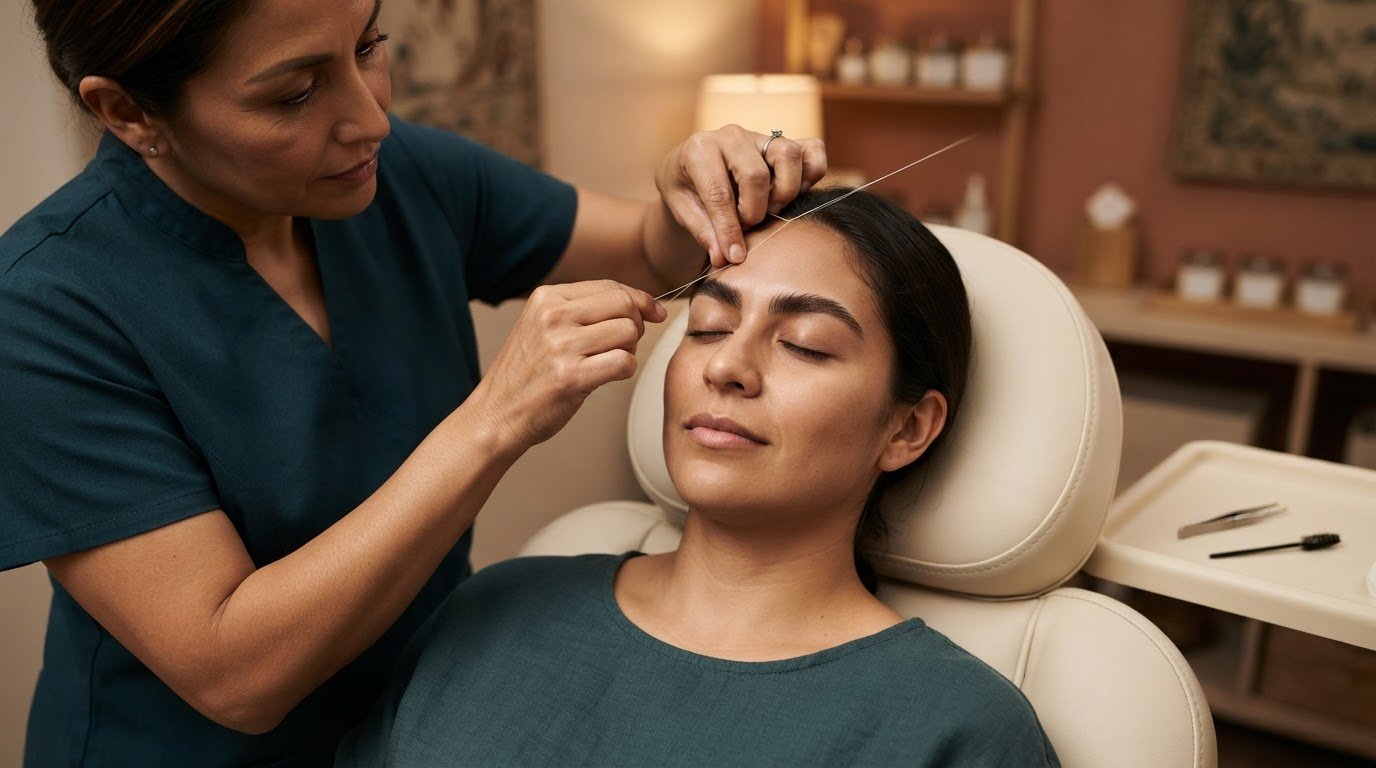
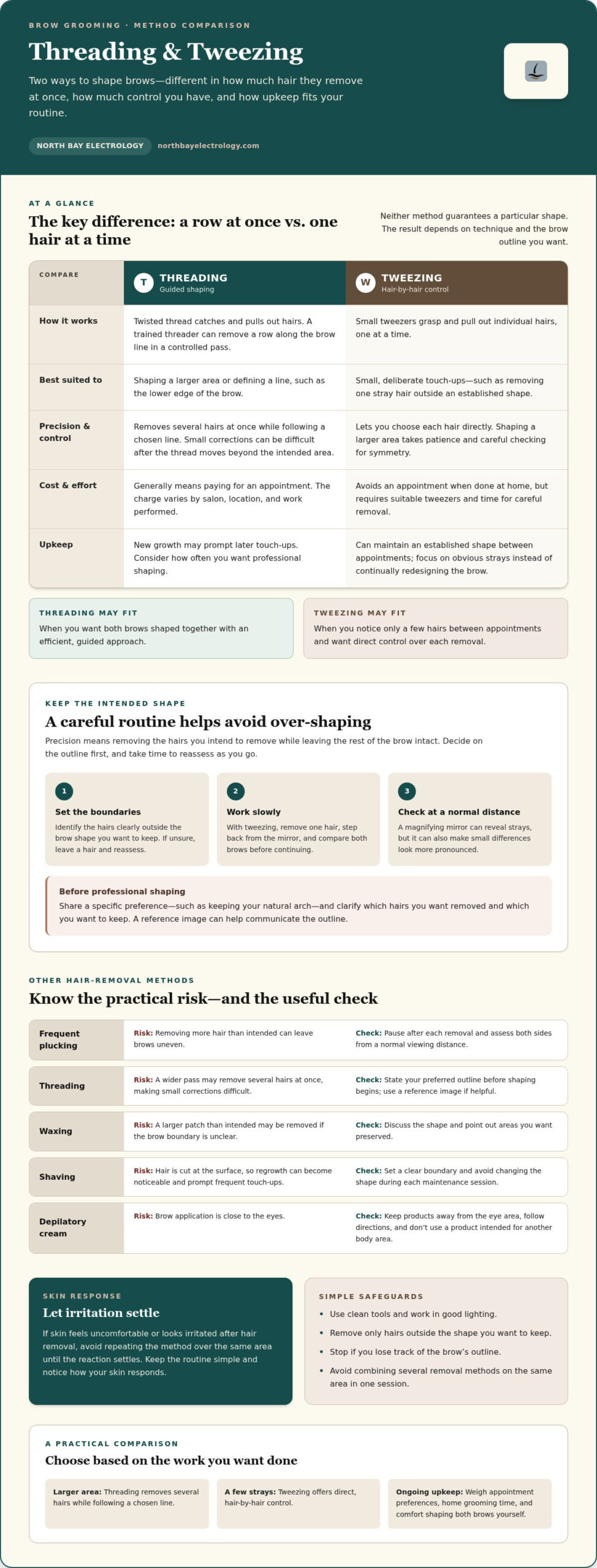
Eyebrow threading uses twisted thread to catch and pull out hairs. A trained threader can remove a row of hairs along the brow line to create a defined outline. For example, threading can shape the lower edge of an eyebrow in one controlled pass.
The result depends on the threader’s technique and the brow shape you want. Threading can remove several hairs at once while following a chosen line. Before the appointment, share a specific preference, such as keeping your natural arch. A clear reference helps show which hairs you want removed and which you want to keep.
Tweezing uses a small pair of tweezers to grasp and pull out individual hairs. It offers direct control over each removal, making it useful for isolated hairs between appointments. For example, you can remove one stray hair outside your established brow shape without reshaping the whole brow.
Because tweezing requires attention to each hair, shaping a larger area takes patience. Work slowly to preserve symmetry: remove one hair, step back from the mirror, and compare both brows before continuing. Avoid removing several hairs from one side before checking the other. Tweezing suits small, deliberate touch-ups better than removing a row at once.
Precision means removing the intended hairs while leaving the rest of the brow intact. Threading offers a broader, continuous action; tweezing allows hair-by-hair control. Neither guarantees a particular shape. To define an arch, identify its boundaries first and remove only hairs clearly outside them. A magnifying mirror can reveal stray hairs, but it can also make small differences look more pronounced.
Cost includes the money and effort involved in using a method over time. Threading generally means paying for an appointment; the charge varies by salon, location, and work performed. Tweezing at home avoids an appointment but requires suitable tweezers and time for careful removal. There is no single price comparison for every salon or brow routine, so weigh the actual appointment charge against the tools and upkeep you choose.
For example, someone who wants both brows shaped together may value threading’s efficient, guided approach. Someone who notices only a few hairs between appointments may prefer the control of tweezing. Consider how often you want professional shaping, how much time you want to spend grooming at home, and whether you feel comfortable shaping both brows yourself. These choices affect the practical cost more than the method’s name alone.
Upkeep is the repeat work needed to maintain a chosen brow shape. Both threading and tweezing remove visible hairs, so new growth may prompt later touch-ups. One simple plan is to establish a shape, then tweeze only obvious strays instead of continually redesigning the brow. If repeated upkeep is your concern, compare methods by the control they offer, your appointment preferences, and the effort you’re willing to maintain.
What are the risks of frequent eyebrow plucking and other hair-removal methods
Eyebrow plucking means pulling individual hairs out with tweezers. A practical risk is removing more hair than intended, especially if the shape changes with every touch-up. For example, repeatedly thinning the arch to remove stray hairs can leave the brows uneven. Pause after each removal and assess both sides from a normal viewing distance.
Over-shaping means removing hairs that belong to the brow’s intended outline. It can happen when a close mirror makes fine hairs look more prominent than they do at conversational distance. Before tweezing, identify the hairs clearly outside your chosen shape. If you’re unsure about a hair, leave it until you can reassess the overall brow.
Threading uses twisted thread to remove hairs along a line. A wider pass may remove several hairs at once, making small corrections difficult after the thread moves beyond the intended area. For example, you might request a narrower arch without specifying which edge should stay full. State your preference before shaping begins, and use a reference image if it helps clarify the outline.
Waxing removes multiple hairs by applying and lifting away wax. For brows, the main risk is removing a larger patch than intended, particularly when the boundary between the brow and surrounding skin is unclear. Discuss the shape before treatment and point out areas you want preserved. This helps distinguish removing isolated strays from changing the brow’s width or arch.
Shaving cuts visible hair at the skin’s surface rather than pulling it out. The hair remains beneath the surface, so regrowth can become noticeable and prompt frequent touch-ups. Repeatedly shaving around an unclear outline can also make the brow look less even. Set a clear boundary and avoid changing the shape during each maintenance session.
Depilatory cream removes hair at the skin’s surface. Applying it near the brows carries a placement risk because the treatment area is close to the eyes. Keep products away from the eye area, follow the directions, and don’t use a product intended for another body area. A tidy brow isn’t worth careless application.
Skin sensitivity describes how readily skin responds to contact or hair removal. If your skin feels uncomfortable or looks irritated after a method, avoid repeating it over the same area until the reaction settles. For example, don’t tweeze freshly threaded brows to remove every remaining fine hair. Keep your routine simple and notice how your skin responds.
- Use clean tools and work in good lighting.
- Remove only hairs outside the shape you want to keep.
- Stop if you lose track of the brow’s outline.
- Avoid combining several removal methods on the same area in one session.
If you’re considering a different routine for areas beyond the brows, explore professional body hair removal as one possible next step.
How do I choose a brow shape and hair-removal method for sensitive skin?
Sensitive skin feels uncomfortable or shows a visible response during or after grooming. Consider your own experience: note whether tweezing, threading, waxing, or a skincare product has bothered the brow area before. For example, if waxing has left your skin uncomfortable, don’t assume another session will feel different. Choose a gentle approach and pause any method that causes a reaction.
Brow shape is the outline created by your brows and the hairs around them. Following your existing growth pattern may require less removal than a dramatic redesign. Look at both brows in ordinary lighting, then identify the arch and lower edge you want to preserve. If you’re unsure whether a hair belongs to the shape, leave it in place rather than removing it to force symmetry.
Natural growth pattern describes the direction and density of your brow hairs. It’s a practical starting point for choosing a shape. For example, if the front of your brow grows upward and the tail grows outward, avoid removing hairs simply because they don’t match a sharply drawn outline. A softer shape can retain more of your existing brow and reduce repeated corrections.
Method selection means matching a hair-removal technique to your desired result and your skin’s response. Tweezing targets individual hairs, threading removes hairs along a line, and waxing removes a broader area at once. If you want to remove one obvious stray, tweezing gives you control over that hair. If you’re considering a larger change, describe the outline you want before choosing a method.
Use this simple decision sequence before grooming:
- Identify the exact area you want to tidy, such as the space between the brows.
- Choose the shape you want to keep, including the arch and tail.
- Recall how your skin responded to each method you’ve tried.
- Select the least extensive approach that suits the planned change.
- Stop if discomfort or visible irritation begins during grooming.
Product sensitivity is an unwanted response associated with a skincare or grooming product. Keep your brow routine simple when trying a new product. Follow its label, avoid applying it near the eyes unless directed, and don’t introduce several new products alongside a hair-removal session. For example, changing your cleanser, exfoliant, and brow product together makes it harder to identify what may have bothered your skin.
Shape maintenance is the small amount of grooming needed to preserve an established outline. If your skin is sensitive, avoid turning each stray hair into a full reshaping session. Compare both brows from a normal viewing distance before removing anything, and focus on hairs clearly outside the chosen shape. If the area remains uncomfortable, pause grooming and seek guidance from a qualified healthcare professional.
Long-term hair removal can suit people who want to reduce repeated grooming routines. If brow-area grooming is part of a broader concern about unwanted facial hair, consider whether alternatives to daily plucking better fit your preferences and skin history. Start by clarifying your goal, choosing a method you can tolerate, and respecting the shape you want to retain.
What at-home steps help maintain eyebrows between professional appointments?
Brow maintenance is the small amount of grooming needed to preserve an established eyebrow shape. Start with clean hands, a clean mirror, and good lighting. Brush the hairs upward and outward with a clean spoolie, a small brow-grooming brush. This reveals the outline and helps distinguish stray hairs from the main shape. Before removing hair, look at both brows from a normal viewing distance.
A spoolie is a small brush that guides eyebrow hairs into place. Use it to see which hairs extend beyond your intended outline instead of relying on a close-up mirror alone. For example, brush the tail outward before deciding whether a hair is genuinely outside its shape. If a brow product helps hold hairs in place, apply it lightly and follow its label. Don’t introduce a new product and a new grooming method at the same time.
Targeted tweezing means removing only individual hairs that clearly fall outside the shape. Use clean tweezers and work slowly: grasp one stray hair near its base, remove it in the direction of growth, then reassess both brows. Stop when the outline looks balanced. Don’t pull hairs from the arch or tail simply to make both sides identical. Natural brows can differ, and repeated corrections may change the shape you wanted to maintain.
Trimming shortens the tips of long brow hairs without removing them from the root. Brush the hairs upward, then trim only tips that extend noticeably beyond the brow line. Make small, careful cuts and reassess before continuing. Don’t cut across the entire brow in a straight line, as this can create an abrupt edge. If you can’t clearly see which tips need trimming, leave them for your next appointment.
A maintenance boundary is the outline you choose to preserve between appointments. Use a photo of your brows after professional shaping as a visual reference, especially if you’re tempted to change the arch. Compare your current brows with the image in similar lighting. Focus on the space between the brows or isolated hairs well outside the outline. Avoid repeatedly removing hair along the top and bottom edges, where small changes can alter the shape.
Skin observation means noticing how the brow area feels and looks during grooming. If tweezing leaves the area uncomfortable or visibly irritated, stop instead of continuing to remove every stray. Keep the routine simple: don’t combine tweezing, trimming, and unfamiliar products in one session. For example, brush the hairs into place and leave a borderline hair untouched. A lighter touch-up can preserve the shape without turning maintenance into a full reshaping.
A grooming note is a brief record of what you changed and what you want to keep. After grooming, note whether you tweezed, trimmed, or used a styling product, and record any areas you left alone. Bring that reference to your next appointment. It helps communicate preferences, such as keeping a fuller arch or letting the tail grow, and reduces guesswork during future upkeep.
Trimming shortens the tips of long brow hairs without removing them at the root: brush the hairs upward and carefully snip only tips that extend noticeably beyond the brow line. The section doesn’t specify how often to trim.
North Bay Electrology: Face & Neck Electrolysis
North Bay Electrology offers Face & Neck Electrolysis for people seeking a longer-term approach to unwanted facial or neck hair. It may suit you if repeated grooming no longer fits your preferences or routine. Electrolysis treats individual hairs, while brow shaping and at-home grooming maintain a chosen outline. Consider the area you want treated and the result you’re working toward when deciding whether this service fits your needs.
For example, Face & Neck Electrolysis may be relevant if you’re managing unwanted hair beyond the brow line. North Bay Electrology also offers Body Hair Removal, Sensitive Area Electrolysis, and Pre-surgical Electrolysis for their respective needs.
Contact North Bay Electrology to discuss Face & Neck Electrolysis and how it may fit your hair-removal goals.
Choose the routine that fits your next step
Clear language makes it easier to express what you want from a grooming routine. “Plucking eyebrows” describes pulling hairs out, while “brow shape” describes the outline you want to maintain. Naming your goal helps distinguish a small touch-up from a broader hair-removal decision.
Choosing alternatives to daily plucking starts with identifying what you want to change: how often you groom, which method you use, or the area involved. You don’t have to settle on a long-term plan all at once. A considered next step could be recording your preferences and deciding which approach suits your needs.
For unwanted facial or neck hair, explore whether Face & Neck Electrolysis aligns with your goals and preferences.
Take the time you need to choose a routine that feels comfortable and reflects what matters to you.
Frequently Asked Questions
What are alternatives to daily eyebrow plucking?
Alternatives include threading or waxing to remove hair, and brow pencil to add definition without pulling hairs out. If some hairs seem too long, careful trimming can change their appearance without removing them from the root. For example, someone keeping a full brow can use pencil to define a sparse tail while leaving nearby hairs untouched. Choose based on whether you want hair removed, shortened, or simply less noticeable.
How can eyebrow hair be removed permanently or reduced with laser or electrolysis?
Laser may be considered for hair reduction; electrolysis is the only FDA-approved method for truly permanent hair removal. North Bay Electrology provides Face & Neck Electrolysis for the chin, lip, sideburns, jawline, and neck. People in Petaluma, Novato, Cotati, Rohnert Park, Santa Rosa, Sonoma, Napa, Vallejo, San Rafael, Sebastapol, American Canyon, Terra Linda, Corte Madera, Windsor, and Healdsburg can explore this facial-hair option.

Article by
Madison Hanselman
As a trans woman and owner of North Bay Electrology in Petaluma, I bring a deep personal empathy and love for technical systems to my practice. My own transition fuels my passion for permanent hair removal, making my clinic a proud partner and safe haven for the LGBTQ+ community. Balancing rigorous analytics with heartfelt care, I approach electrology as both a precise science and a life-changing path to self-actualization.