

What if the simplest way to protect your electrolysis progress is to do less between appointments? It’s understandable to wonder what to do between electrolysis appointments, especially when treated skin looks red or feels irritated, or new hairs appear before your next visit. Gentle care can help keep your skin comfortable without disrupting your treatment plan.
You don’t need a complicated routine. This guide explains how to care for treated skin, how shaving or trimming differs from removing hair at the root, and which habits may be best paused while your skin settles. You’ll also learn what to note and discuss with your electrologist.
Follow the aftercare instructions you received, since your skin and treatment area may have specific needs. If something concerns you or you’re unsure how to proceed, ask your electrologist for individualized guidance. A simple routine can help you feel more prepared for your next appointment.
Key Takeaways
- Keep between-session care simple and follow the instructions for your treatment area.
- New hairs can appear between visits because follicles become active at different times. Their appearance alone doesn’t mean treatment has failed.
- Shaving and trimming shorten visible hair without removing it from the root; tweezing and waxing do remove hair from the root.
- Use gentle everyday skin care, and make brief notes about changes or questions for your next visit.
- Ask your electrologist for guidance if a skin response concerns you or you’re unsure whether a grooming method suits your plan.
Between Electrolysis Appointments: Start With Your Skin
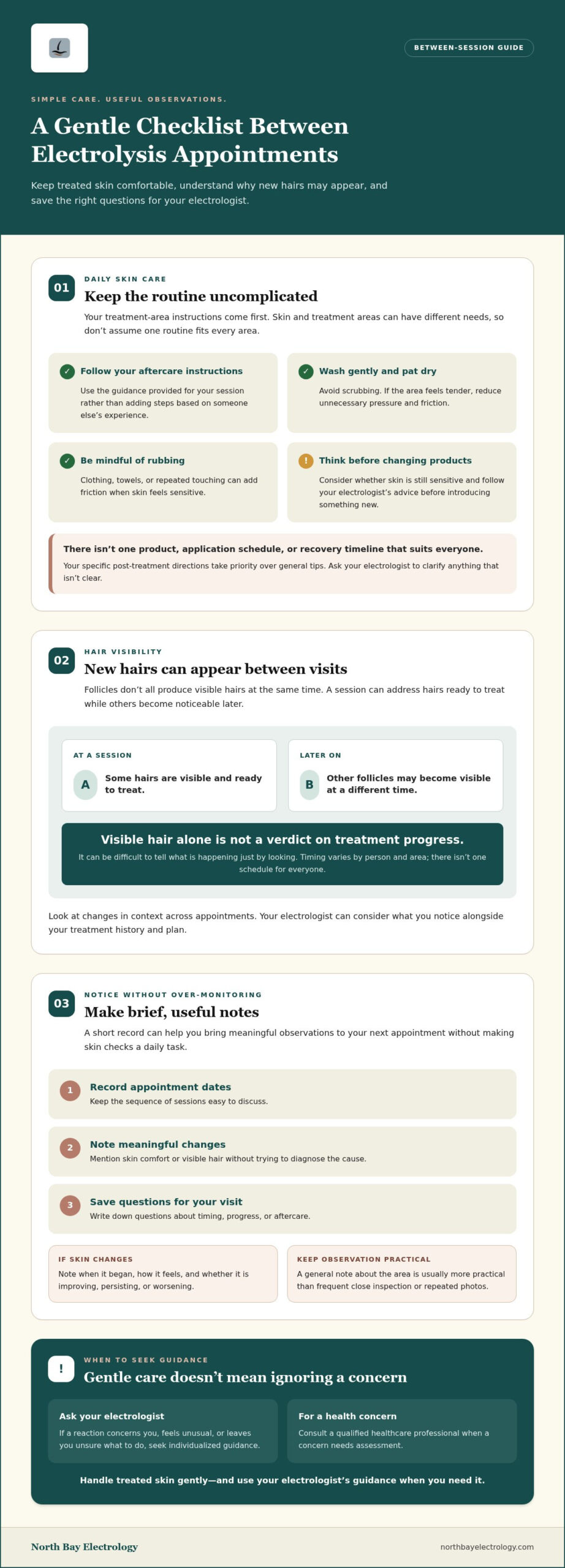
Between-session care can be straightforward. The goal is to keep treated skin comfortable and follow the plan you’ve made with your electrologist, not to build an elaborate skin-care routine. Your needs may vary by treatment area and skin response, so use your personalized instructions as your guide.
The interval between appointments is the time from one electrolysis session to the next. It’s separate from the specific aftercare instructions you receive immediately after treatment. For a broader overview of the methods involved, see Electrology: The Science of Permanent Hair Removal. Between visits, keep to this principle: Follow your electrologist’s instructions and handle treated skin gently.
A simple daily routine for treated skin
Keep your routine comfortable and uncomplicated. Cleanse gently, avoid scrubbing, and reduce friction from clothing, towels, or repeated touching if the area feels sensitive. Don’t assume that a product or technique suitable for one treatment area will also suit another.
- Follow your aftercare instructions. Use the guidance provided for your session rather than adding steps based on someone else’s experience.
- Handle the area gently. Wash carefully and pat the skin dry instead of rubbing. Avoid unnecessary pressure or friction if the area feels tender.
- Be cautious about changes. Before introducing a new skin-care product or changing your routine, consider whether the skin is still sensitive and follow your electrologist’s advice.
There isn’t one product, application schedule, or recovery timeline that suits everyone. Your specific post-treatment directions take priority over general tips, including anything you read online. If an instruction isn’t clear, ask your electrologist to explain how it applies to the area treated.
What normal variation can look like
Skin responses vary between people, treatment areas, and sessions. You might notice redness, bumps, or tenderness, but a short description can’t determine what caused a change or whether it needs treatment. Avoid comparing your response with someone else’s or assuming each session will feel the same.
If a reaction concerns you, changes in a way that feels unusual, or leaves you unsure what to do, seek individualized guidance from your electrologist. For a health concern that needs assessment, consult a qualified healthcare professional. When describing a change, note when it began, how it feels, and whether it is improving, persisting, or worsening.
Gentle care doesn’t mean ignoring a concern. It means avoiding unnecessary irritation while knowing where to turn for guidance.
Why Hair-Growth Cycles Matter Between Electrolysis Sessions
Seeing hairs appear between appointments can be unsettling if you expected the area to look unchanged. But visible hair doesn’t automatically mean electrolysis hasn’t worked. Follicles don’t all produce visible hairs at the same time, so a session can address hairs that are ready to treat while others become noticeable later.
Individual follicles become active at different times, which is why repeated appointments can address hairs as they become visible and treatable. An electrolysis plan may therefore involve ongoing sessions rather than a single visit that treats every hair in an area at once. Timing is individualized, and there isn’t one schedule that applies to everyone.
Why some hairs seem to return after treatment
A hair you notice later may have become visible after the session; its appearance alone doesn’t prove that a follicle treated earlier has recovered. It can be difficult to tell what’s happening just by looking. Visibility and treatment timing vary by area and individual, so new growth by itself doesn’t show whether a session succeeded or failed.
Look at changes in context across appointments instead of judging progress from one glance. Your electrologist can consider what you’re seeing alongside your treatment history and plan. Avoid changing your appointment schedule or removing hairs from the root based only on new growth.
How to track changes without over-monitoring
A brief record can help you bring useful observations to your next appointment without making skin checks a daily task. Note the session date, any skin response that stood out, and questions you want answered. If you notice visible hair, a general note about the area is usually more practical than frequent close inspection or repeated photos.
- Record appointment dates to make it easier to discuss the sequence of sessions.
- Note meaningful changes in skin comfort or hair visibility without trying to diagnose their cause.
- Save questions about timing, progress, or aftercare for your next conversation with your electrologist.
For people preparing for surgery, timing and treatment planning may involve additional considerations. The pre-surgical electrolysis guidance offers information for that context. Whatever your reason for seeking electrolysis, your observations and your electrologist’s guidance are more useful than comparing your progress with someone else’s.
Understanding hair cycles can also make planning an electrolysis appointment feel more grounded. Each visit is part of an individualized process, not a promise that every hair will be visible at once. If you’re unsure how to interpret a change, raise it at your next session.
Which Hair-Removal Methods Should You Avoid Between Appointments?
The method you use to manage visible hair can affect what’s available for your electrologist to treat at a later visit. The key distinction is whether a method removes hair from the root or shortens the part above the skin. Tweezing and waxing pull hair from the root; shaving and trimming shorten visible hair without pulling it from the root.
Your preferred grooming approach is worth discussing with your electrologist. The best option for you may depend on your treatment area, skin comfort, and care plan. If you’re deciding what to do between electrolysis appointments, start by considering how each method works.
Why tweezing and waxing can complicate a treatment plan
Tweezing, waxing, threading, and epilating remove hairs from the root. A removed hair may be less visible or unavailable for treatment at your next session, which can make it harder for your electrologist to work with visible hairs in the area. These methods may therefore interfere with your plan.
If you’ve used one of these methods, you haven’t ruined your progress. Tell your electrologist what you used and when at your next appointment. That context can help them understand what’s visible and discuss next steps. There’s no need to feel embarrassed or to compensate by removing more hair.
- Tweezing and waxing pull hairs from the root, as do threading and epilating.
- Shaving and trimming shorten hair at or above the skin’s surface rather than pulling it out.
Can you shave or trim between sessions?
Shaving or careful trimming may be options if you want to manage visible hair without removing it from the root. These methods don’t guarantee that skin won’t become irritated. Follow your aftercare instructions, and avoid grooming over skin that still feels sensitive or hasn’t settled after treatment.
Choose based on what feels comfortable for the area and how much grooming you want to do. For example, you might prefer trimming rather than shaving near a sensitive area, or choose not to groom until treated skin feels comfortable. These are options to discuss, not universal instructions. Your electrologist can help you fit a grooming choice into your individual care plan.
If you’re unsure about your routine, bring it up at your next visit. Discussing your hair-removal habits can help you make a practical plan that accounts for skin comfort and treatment goals. You can also schedule an electrolysis appointment to continue your individualized care.
Build a Gentle Between-Appointment Routine That Fits Your Skin
A useful routine doesn’t need to be complicated or identical for everyone. Your face, body, and sensitive areas may have different needs, and your skin may respond differently after separate sessions. Follow the instructions for the area treated. Between visits, focus on consistent, gentle care rather than adding steps or trying to manage every change on your own.
Keep immediate post-treatment directions distinct from your ongoing routine. Follow any instructions your electrologist gave you for the hours or days after a session. In everyday care, be cautious about changing products or grooming habits on recently treated or sensitive skin if the change may cause irritation.
A practical checklist for the days between visits
Use this sequence to decide what to do between electrolysis appointments. Adapt it to your treatment area and personal instructions rather than treating it as a universal prescription.
- Check your instructions. Follow the guidance your electrologist provided for the treated area, especially if it still feels sensitive.
- Keep care gentle. Cleanse without scrubbing, and avoid unnecessary friction or repeated touching. Be cautious about introducing a new product or routine to recently treated skin.
- Avoid removing hair from the root. Don’t tweeze, wax, thread, or epilate unless your electrologist advises otherwise as part of your plan.
- Make a brief note. Record grooming choices, skin changes that concern you, or questions for your next appointment. You don’t need to inspect the area constantly.
Adjust your routine to your comfort and circumstances. You may choose different approaches for facial and body hair while keeping your electrologist’s instructions central. There’s no need to feel judged for past grooming choices or for asking what feels right for you.
When should you ask for individualized guidance?
Reach out to your electrologist if a skin change persists, worsens, concerns you, or makes you uncertain about whether a routine is appropriate for a particular area. Explain where the change is, when you noticed it, and whether it seems to be changing. That information can help your electrologist give guidance relevant to your treatment and care instructions.
If you need medical assessment for a health concern, consult a qualified healthcare professional. For ongoing electrolysis support, professional electrolysis care can include individualized guidance as your plan progresses.
Keep Your Electrolysis Plan on Track With Support in the North Bay
A steady routine can make the time between sessions more manageable: follow your personalized instructions, handle skin gently, and avoid removing hairs from the root unless your electrologist advises otherwise. Questions are a normal part of an ongoing electrolysis plan. You don’t need to have every detail figured out before bringing up a concern or change at your appointment.
North Bay Electrology provides appointment-based electrolysis for the face, neck, body, sensitive areas, and pre-surgical needs. Individualized guidance can help you understand how skin-care choices and grooming habits fit into your plan. The aim is to make informed decisions that suit your treatment area and comfort, not to follow a rigid routine.
How to make the next appointment more useful
A few brief notes can help you describe what has happened since your previous visit. A detailed diary isn’t necessary. Focus on information that may help your electrologist understand your experience and discuss practical next steps.
- Note grooming methods. If you shaved, trimmed, tweezed, waxed, threaded, or used an epilator, mention what you used and when. Share it without worry or judgment.
- Describe skin responses. If a change concerned you, note where it appeared and whether it improved, persisted, or worsened.
- Bring your questions. Write down anything you’re unsure about, such as managing visible hair or changing your routine.
- Share relevant changes. Mention anything new that may affect the area being treated or your comfort during care.
This information can support a useful conversation, but it doesn’t need to become a daily monitoring task. Your treatment plan is personal. Visible hair, skin responses, and appointment timing can differ, so don’t assume your experience should match someone else’s or follow a fixed schedule. If something concerns you between sessions, seek individualized guidance rather than worrying alone.
Book supportive electrolysis care
Knowing what to do between electrolysis appointments can help you feel informed, but you don’t have to resolve every question on your own. A conversation with your electrologist can connect your everyday choices with the care plan for your treatment area. Share what’s working, what feels uncomfortable, and what you’d like clarified.
Consistent, attentive care can help you make informed decisions as your treatment progresses. Your comfort and individual needs matter.
Take Your Next Step With Confidence
Your next step doesn’t need to be perfect. Use what you’ve learned about what to do between electrolysis appointments as a flexible guide, and let your comfort and questions shape the conversation with your electrologist. If your needs or preferences change, discuss them as part of your care plan.
North Bay Electrology focuses exclusively on electrolysis, providing care for clients across the North Bay. An appointment is an opportunity to discuss your goals and receive guidance suited to your individual treatment.
Small, thoughtful choices can help you feel more grounded as you continue. You deserve care that meets you with patience and respect.
Frequently Asked Questions
What should I avoid doing between electrolysis appointments?
Generally, avoid tweezing, waxing, threading, or using an epilator on the treatment area unless your electrologist advises otherwise. These methods remove hair from the root and may affect what’s available to treat at your next visit. Avoid picking or scratching treated skin as well. If you’ve already used a root-removal method, let your electrologist know. It’s useful context, not a reason to feel you’ve failed or ruined your progress.
Can I shave between electrolysis appointments?
Shaving may be an option because it shortens hair at the skin’s surface instead of pulling it from the root. Whether it suits you depends on your skin and treatment area. Shaving over skin that still feels sensitive, for example, could cause discomfort. Follow your personal aftercare instructions, and discuss your preferred grooming method with your electrologist if you’re unsure.
Why do I see new hair between electrolysis sessions?
Newly visible hair can appear because follicles don’t all produce visible hairs at the same time. Seeing hair between sessions doesn’t, on its own, show that a treated follicle has recovered or that treatment has failed. If you’re concerned about a particular area, note what you’ve observed and raise it at your next appointment. Your electrologist can consider it alongside your treatment history and plan.
Should I let the hair grow before my next electrolysis appointment?
Ask your electrologist what’s suitable for your treatment area rather than assuming you need to let all the hair grow. Root-removal methods can make hairs less visible for a time, while shaving or trimming shortens hair without pulling it from the root. If you prefer to groom, mention that choice at your next visit so your electrologist can guide you based on your plan.
Is redness after electrolysis normal between appointments?
Skin responses vary, and redness can occur after treatment, but a brief description isn’t enough to assess a specific reaction. Notice whether the change is improving, persisting, or worsening. If it concerns you or doesn’t seem to be settling as expected, contact your electrologist for individualized guidance. For health concerns that need assessment, consult a qualified healthcare professional.
Can I use skincare products on treated skin between appointments?
Follow the instructions for your treatment area, and don’t assume a product that suits one area will suit another. If you’re considering a new product, changing your routine, or applying something while skin still feels sensitive, ask your electrologist for guidance. Having the product or its ingredient list available can help you explain what you’re considering without relying on a general recommendation.
What should I tell my electrologist at my next appointment?
Share any grooming methods you used, changes in skin comfort, and questions you had between visits. Note when a change started and whether it improved or worsened; a detailed diary isn’t necessary. Mention plans that may affect the treatment area, including surgery preparation. North Bay Electrology provides appointment-based care for clients in Petaluma, Novato, Cotati, Rohnert Park, Santa Rosa, Sonoma, Napa, Vallejo, San Rafael, Sebastapol, American Canyon, Terra Linda, Corte Madera, Windsor, and Healdsburg.

Article by
Madison Hanselman
As a trans woman and owner of North Bay Electrology in Petaluma, I bring a deep personal empathy and love for technical systems to my practice. My own transition fuels my passion for permanent hair removal, making my clinic a proud partner and safe haven for the LGBTQ+ community. Balancing rigorous analytics with heartfelt care, I approach electrology as both a precise science and a life-changing path to self-actualization.