
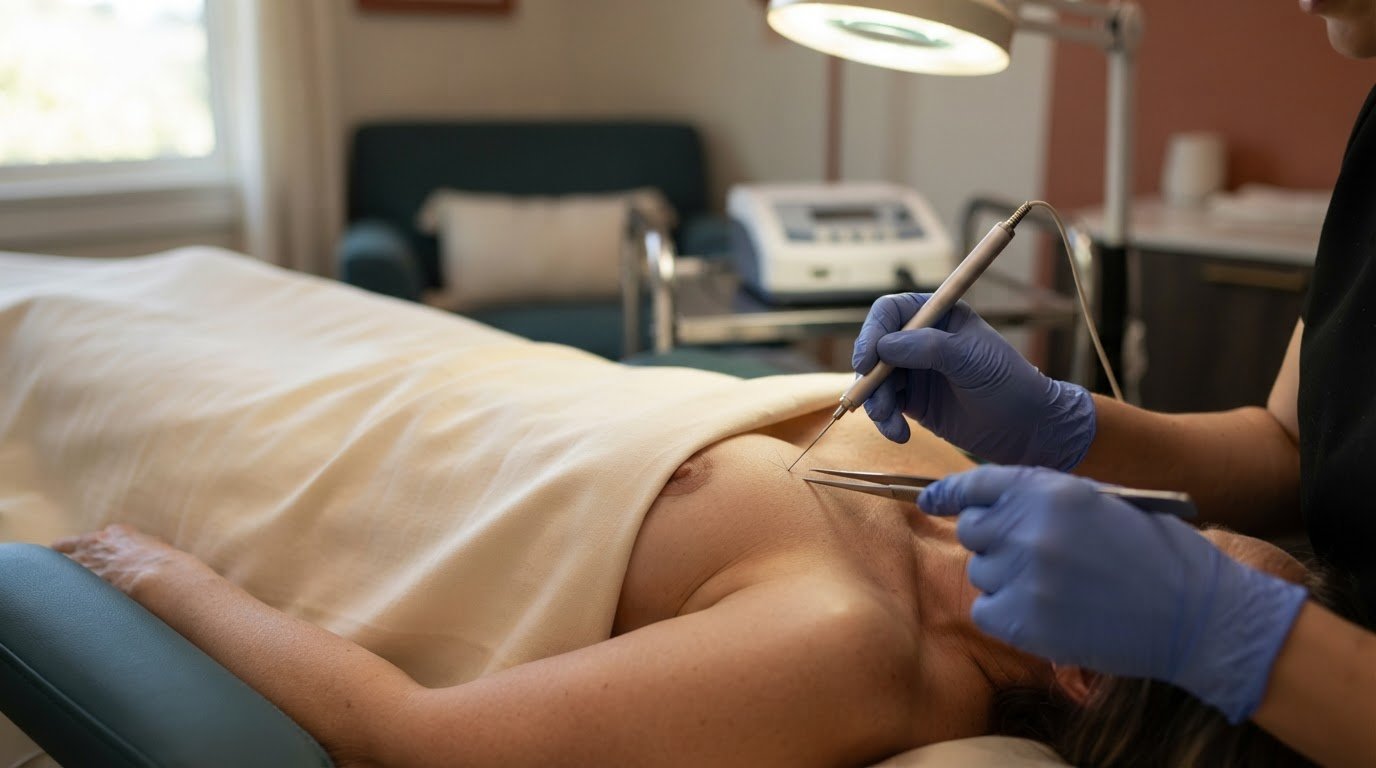
Hair around the breasts and areola is often normal, even when it feels unexpected. Electrolysis for areola and nipple hair can permanently remove treated hairs, but multiple sessions are needed because only active follicles can be treated. Hair growth may also change during puberty, pregnancy, or menopause.
It’s understandable to want a clear explanation before choosing how to manage hair in such a sensitive area. Areola hair is generally harmless, though a sudden change alongside other signs of hormonal imbalance may be worth discussing with a healthcare professional.
This article explains common reasons breast and nipple hair appears, what electrolysis involves, and how it compares with waxing and laser hair reduction. You’ll also learn why results take time, what can affect the treatment plan, and what to consider when deciding whether electrolysis feels right for you.
Key Takeaways
- Breast and areola hair is common and may change with life stages such as puberty, pregnancy, or menopause.
- Electrolysis treats hairs individually, making it an option for small areas and hairs of different colors.
- Waxing removes visible hair temporarily, while electrolysis works across multiple sessions to treat active follicles.
- Learn what may affect treatment timing and why the number of sessions varies from person to person.
- North Bay Electrology’s Sensitive Area Electrolysis and Body Hair Removal can support people seeking professional care for breast hair.
Common causes of nipple hair
Hair on the breasts is a common concern for women of different ages. Nipple hair often grows on or just outside the areolas, the darker circles surrounding the nipples. A few visible hairs can feel unexpected, especially when they appear in a sensitive area. Their presence alone is generally harmless, and unwanted hair can be managed in different ways.
Hormonal changes during puberty, pregnancy, and menopause may affect nipple hair growth. These life stages can change the amount or visibility of hair around the breasts. For example, someone who notices new hairs during pregnancy may find they become less noticeable afterward. Patterns differ, so one person’s experience cannot predict another’s.
Pregnancy offers a clearer example of how hormones can affect hair growth. Increased estrogen can prolong and intensify anagen, the active phase of the hair-growth cycle. As a result, hair may remain in its growing phase longer. Breast or areola hair may seem more prominent without necessarily indicating a health problem.
It can help to notice the timing and pattern of a change rather than focusing on one hair. Consider whether the growth appeared during a life-stage change, such as puberty, pregnancy, or menopause, and whether other symptoms appeared alongside it. These details provide a clearer starting point for a conversation with a healthcare professional.
Discuss new or excessive nipple hair with a doctor if it occurs alongside other symptoms consistent with hormonal imbalance. Nipple hair by itself is generally not a cause for concern, but a change accompanied by other symptoms deserves medical discussion.
Repeated tweezing and shaving, along with tight clothing, can contribute to hairs becoming trapped beneath the skin in the breast area. If a hair seems ingrown, avoid repeatedly digging at the skin to remove it. Note where irritation occurs and whether it follows hair removal; those details can help guide a discussion about suitable care.
If unwanted hair remains a personal concern, hair removal is a choice, not a requirement. FDA-approved electrolysis is one option for addressing individual hairs, while other methods have different effects and limitations. The following sections explain how these approaches compare and what to consider before choosing a method for the areola.
Electrolysis compared with waxing and laser hair reduction
These methods differ in what they target and how long their effects last. FDA-approved electrolysis treats individual follicles, waxing removes visible hairs, and laser hair reduction targets hair through light energy. For a small area such as the areola, the number and color of hairs can help shape the comparison. Your preference for gradual, targeted treatments or broader hair reduction matters, too.
FDA-approved electrolysis works on hairs individually and can treat all hair colors and skin tones. That makes it an option for light, dark, or scattered hairs that may not provide a consistent target for laser treatment. Because each follicle is addressed separately, it can suit a small area or occasional stray hairs. Multiple treatments are needed to address hairs as they become active and available for treatment.
Waxing removes several visible hairs at once, which may appeal when you want to clear a small patch in one session. It doesn’t permanently disable the follicles, so hair can grow back and the process may need repeating. Waxing also doesn’t target each follicle for permanent removal. If repeated hair removal leaves a hair trapped beneath the skin, electrolysis can treat ingrown hairs and may help ease irritation over time.
Laser hair reduction takes a different approach, using hair color and skin-to-hair contrast as part of its target. Dark nipple hair tends to respond better to laser than light hair. The comparison describes laser as a possible option when skin and hair colors have little contrast, but suitability varies with hair patterns. Laser is also described as less painful than electrolysis, though comfort is personal.
For a few distinct hairs, individual treatment may be a more direct fit than targeting a broader area. Laser may be worth considering for darker hairs that form a clear target, while FDA-approved electrolysis can address hair regardless of color. Waxing may suit someone seeking temporary removal without treating follicles individually. These are different trade-offs, not a ranking: permanence, hair characteristics, treatment approach, and comfort all matter.
Before choosing, consider whether you want temporary removal or a method designed to permanently remove treated hairs. Also note whether the hairs are isolated or cover a broader area, and whether their color makes them a clear laser target. If individual treatment for a sensitive area fits your priorities, sensitive-area electrolysis is a relevant option to explore.
Electrolysis for hair on the breasts and areola
FDA-approved electrolysis can address individual hairs on the breast and areola, but the area’s sensitivity and treatment schedule matter. A consultation helps set expectations about comfort, timing, and care around pregnancy.
Expected Results and Permanence
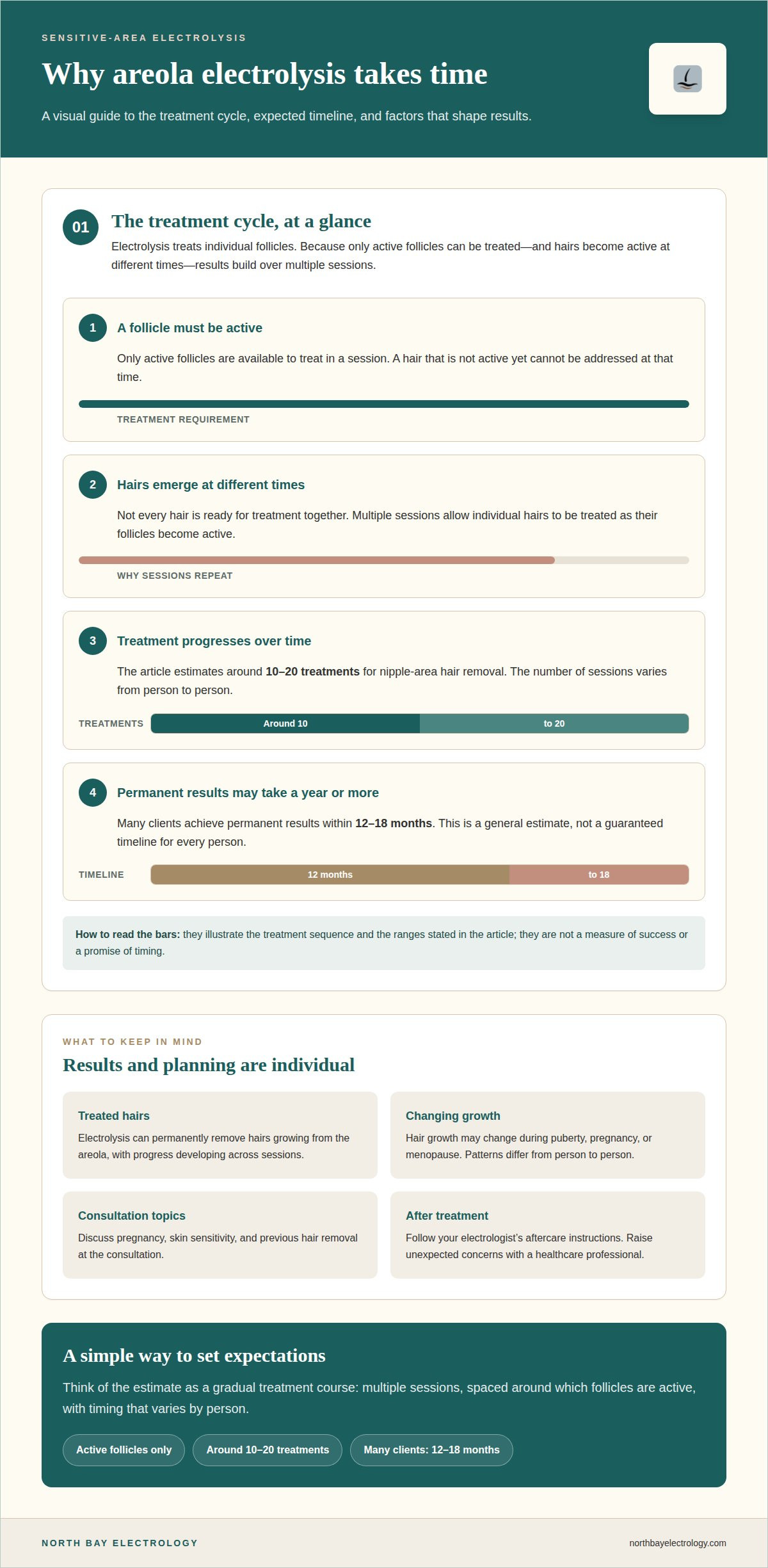
Electrolysis can permanently remove hair growing from the areola, but results develop over multiple sessions. Only active follicles can be treated, and hairs emerge at different times. Nipple-area hair removal is estimated to take around 10-20 treatments, while many clients achieve permanent results within 12-18 months. Consider both the gradual process and the individual hairs being treated when assessing progress.
Preparation and Aftercare
Before treatment, discuss pregnancy, skin sensitivity, and previous hair removal at your consultation. Afterward, follow your electrologist’s aftercare instructions and raise any unexpected concern with a healthcare professional. Mentioning repeated tweezing is useful because it can conceal the amount of hair and make hairs coarser over time. These details help frame a clear plan for the breast and areola.
The areola can be sensitive to touch, yet many people tolerate breast electrolysis well. Comfort is personal, so share concerns during the consultation and discuss how the treatment area will be approached. This conversation can also clarify what to expect without assuming everyone experiences the same level of sensitivity.
Timing matters during pregnancy. Breast electrolysis is generally avoided during the last trimester. If pregnancy is relevant to your plans, raise it during the consultation so it can be considered when discussing treatment timing. This is a specific consideration for the breast area, not a reason to assume everyone has the same treatment needs.
Electrolysis carries a risk of scarring, so a careful, individualized approach is important for the delicate areola. Discuss the treatment area, skin response, and any concerns before beginning. Clear communication helps you understand the procedure and possible risks, rather than relying on assumptions based on hair removal elsewhere on the body.
Treatment frequency can change as hair becomes thinner. One suggested approach is to begin with sessions twice a month, then move to monthly sessions as hair thins. The schedule is intended to address emerging hairs over time. Follow your electrologist’s recommended schedule, and discuss changes in hair growth or comfort at later appointments.
Nipple hair growth is generally harmless and can be managed. A forum respondent suggested more frequent, shorter sessions when only about one week each month is hair-free.
How electrolysis works
Electrolysis treats individual hair follicles rather than removing only the visible hair. An electrologist directs a fine probe into the follicle and applies electrical energy to disrupt its ability to produce hair. The process is repeated for each selected hair, making it a precise approach for small areas such as the areola. Electrolysis has been used for over 100 years.
The basic sequence stays consistent, even when the treatment area is small. The electrologist assesses visible hairs, treats follicles individually, and considers how the skin responds. For example, a few scattered hairs require attention to separate follicles rather than a broad sweep across the surrounding breast tissue. This individual focus is central to FDA-approved electrolysis.
- Identify the hair. The electrologist locates a visible hair and its follicle, distinguishing the target from the surrounding skin.
- Treat the follicle. A fine probe enters the follicle, and electrical energy is applied to impair its hair-producing capacity.
- Assess the treated area. The electrologist continues with other selected hairs, observing the skin and adjusting the approach as needed.
Hair grows in cycles, so a follicle is not always in the same stage when you attend. Only active follicles can be treated, which means one visit cannot address every hair that may later become visible. A clear patch after treatment, for example, does not mean every follicle in that area has been permanently treated. Return visits address hairs as they emerge.
That cycle also explains why a treatment plan considers more than the number of hairs visible at one appointment. The area being treated, the pattern of regrowth, and changes in the skin help shape the electrologist’s approach. Hormonal changes can affect hair growth over time, so newly visible hairs may not be hairs missed during an earlier session.
FDA-approved electrolysis targets hair follicles without depending on hair color, allowing treatment of light or dark hairs. Its one-follicle-at-a-time method can be especially relevant around the areola, where a small number of distinct hairs may be the concern. The method is precise, but the electrologist must treat each selected hair rather than cover a broad area in one pass.
Understanding the follicle-by-follicle process helps set realistic expectations: FDA-approved electrolysis involves a series of targeted treatments, not a single removal step. The pace depends on which hairs are present and ready for treatment at each visit. For a small area, the focus remains on carefully addressing visible hairs while respecting the surrounding skin.
Does electrolysis permanently remove nipple hair, and what results can you expect?
FDA-approved electrolysis can permanently remove treated hairs growing from the areola. Results develop over multiple sessions because only active follicles can be treated at a given time. Hair-free areas can appear between appointments, but newly emerging hairs may still need treatment.
Nipple-area hair removal is estimated to take around 10-20 treatments. Many clients achieve permanent results within 12-18 months, though the exact number of treatments depends on how hairs grow and become available for treatment. These estimates describe a general course, not a fixed schedule for every person.
The growth cycle explains why progress can feel uneven. An electrologist can treat existing hairs while other follicles become active later. A hair that appears after an appointment is not necessarily a treated hair returning. It may come from a previously inactive follicle producing a visible hair for the first time.
To track progress, note where hairs remain and how they change between visits. For example, compare whether the same visible hairs persist or new hairs appear in different spots. This record can help distinguish ongoing treatment needs from new growth and make conversations about your schedule more specific.
Some people see limited hair-free time during treatment. One reported experience was being hair-free for about one week each month while treatment continued. That example shows why temporary regrowth does not, by itself, establish whether electrolysis is working. The treatment course needs to account for hairs emerging across growth cycles.
Future hair growth can also affect expectations. Electrolysis treats existing hairs, but it does not prevent every new hair from appearing later. With hereditary new growth, periodic appointments can remain part of ongoing hair management. Hormonal changes can also affect hair patterns, so a later hair may represent new growth rather than failure to treat a previously targeted follicle.
A course of electrolysis for areola and nipple hair is best understood as gradual: existing hairs are treated as they become active, and results build over repeated visits. Follow the recommended schedule so emerging hairs can be addressed consistently. At each appointment, discuss changes in the pattern, areas of regrowth, or your hair-free time to keep expectations aligned with actual progress.
North Bay Electrology: Body Hair Removal
North Bay Electrology provides Body Hair Removal and Sensitive & Gender-Affirming Electrolysis for people seeking professional care for breast and areola hair. The clinic offers individualized, trauma-informed care in a respectful setting for this sensitive area.
At a consultation, you can discuss your goals, the hairs you want treated, and any questions about the process or timing. Treatment is tailored to the area and your needs, with care focused on respectful, comfortable support. If you’d like to talk about electrolysis for breast or areola hair, contact North Bay Electrology.
Take the Next Step at Your Own Pace
Deciding whether electrolysis for areola and nipple hair feels right is personal. Start by clarifying what you want from treatment, what questions you still have, and what would help you feel comfortable discussing this sensitive area. A conversation can help turn those priorities into a thoughtful next step without requiring you to rush a decision.
If you’re ready to explore treatment, share your goals and concerns with North Bay Electrology. You deserve care that treats your questions with respect and gives you space to make an informed choice.
Whatever you decide, your comfort and confidence matter. Move forward when you feel ready.
Frequently Asked Questions
Is it normal to have hair on your breasts or areola?
Yes, breast and areola hair is common and generally harmless on its own. A few hairs may appear on or just outside the areola, and growth can change during puberty, pregnancy, or menopause. If a noticeable increase appears alongside other symptoms that could suggest hormonal imbalance, discuss the changes with a doctor. Hair removal is a personal choice, and having these hairs doesn’t mean you need treatment.
What is nipple hair?
Nipple hair grows on or near the nipple, often on the areola, the pigmented circle around it. It may appear as a few isolated strands rather than a broad patch. Hair can vary in color and thickness, so one person may notice fine, light hairs while another sees darker, coarser strands. That variation is normal; the term describes the location of the hair, not a diagnosis.
Can electrolysis safely treat the areola and nipple area?
FDA-approved electrolysis can be used on the areola, but treatment carries a risk of scarring and requires careful work in this sensitive area. Discuss your skin concerns and treatment goals during a consultation. Breast electrolysis is generally avoided during the last trimester of pregnancy. If you’re pregnant or concerned about a change in breast skin, speak with a healthcare professional before deciding on treatment.
Do women really ever have electrolysis treatments on their breasts?
Yes. People receive professional electrolysis around the nipples and on the breasts to address unwanted hair. The area can be sensitive to touch, yet many people tolerate treatment well. Discuss the specific area, comfort concerns, and treatment approach before proceeding. There’s no need to justify wanting hair removal; personal comfort is a valid reason to explore it.
How Much Time Do I Need?
A small area, such as a few hairs around an areola, may take about 5-30 minutes to treat. That estimate applies to small areas such as the lip, chin, eyebrows, or fingers, so the time for breast treatment depends on the number and location of hairs. A larger area like the chest may take 60 to 120+ minutes. The actual appointment focuses on the selected treatment area.
How many sessions do I need?
Plan for multiple sessions rather than expecting one appointment to treat every hair. Follicles become active at different points in the growth cycle, so later visits address hairs that weren’t ready during an earlier treatment. The number depends on the amount of hair, its growth pattern, and how it responds over time. Following the recommended schedule helps keep treatment focused as new hairs become visible.
How many sessions does breast and areola electrolysis take?
Removing hair in the nipple area is estimated to take around 10-20 treatments. That estimate gives a general range, not a guaranteed count for every breast or areola. The area’s hair pattern and the timing of hair growth affect how many visits are needed. Permanent results commonly take 12-18 months, since active follicles are treated across repeated appointments as hairs emerge.
How does electrolysis remove hair around the areola and nipples?
An electrologist treats individual follicles using a fine probe and electrical energy. The probe is placed into the hair follicle, and energy is applied to impair its ability to produce hair. The electrologist repeats this process for each selected hair, working carefully around the areola. Because FDA-approved electrolysis treats follicles one at a time, the number of visible hairs and the size of the area influence treatment time.

Article by
Madison Hanselman
As a trans woman and owner of North Bay Electrology in Petaluma, I bring a deep personal empathy and love for technical systems to my practice. My own transition fuels my passion for permanent hair removal, making my clinic a proud partner and safe haven for the LGBTQ+ community. Balancing rigorous analytics with heartfelt care, I approach electrology as both a precise science and a life-changing path to self-actualization.