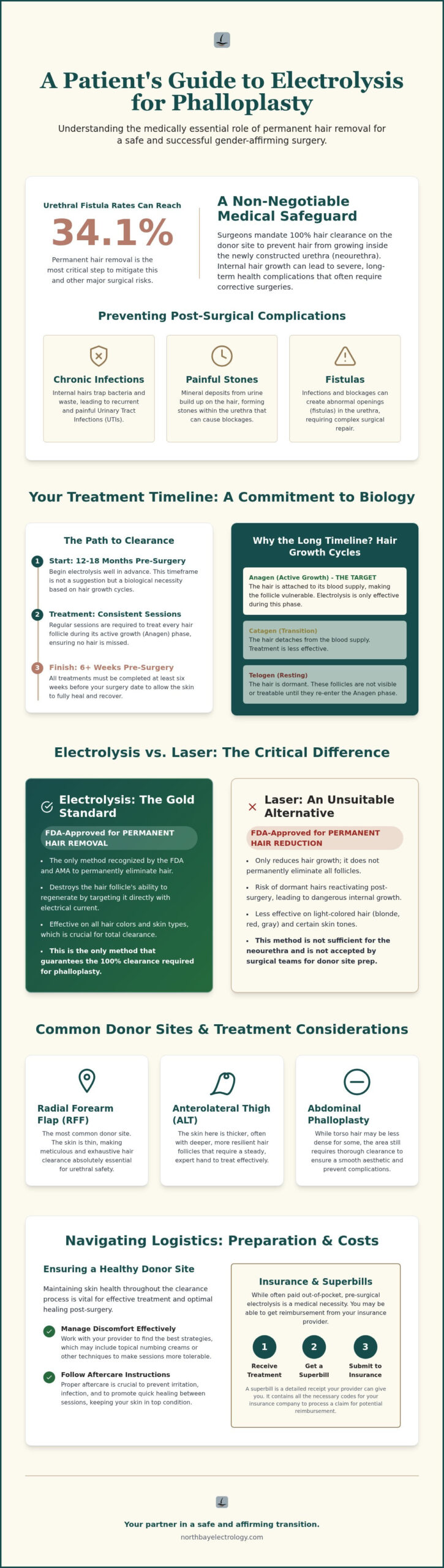
With urethral fistula rates reaching as high as 34.1% in phalloplasty cases, the precision of your donor site preparation is much more than a cosmetic choice; it’s a critical medical safeguard. We understand that preparing for gender-affirming surgery is a monumental journey that often comes with a complex mix of hope and logistical stress. It’s completely natural to feel anxious about the timeline or the discomfort of treatment, especially when your surgical outcome depends on the total clearance provided by electrolysis for phalloplasty. You deserve a process that honors your identity while meeting the highest clinical standards.
This article explains why permanent hair removal is medically essential to prevent complications like stones or infections within the reconstructed urethra. You’ll learn how to navigate your treatment timeline, which typically requires six to ten months of consistent sessions and must be completed at least six weeks before your surgery date. We’ll also explore how working with an affirming, expert provider in the Petaluma area can help you achieve a smooth recovery and a successful transition. By the end of this guide, you’ll have a clear, manageable plan to ensure your donor site is ready for the next step in your journey.
Key Takeaways
- Understand the vital role of permanent hair removal in preventing serious post-surgical complications such as urethral stones and chronic infections.
- Learn why you should begin your journey with electrolysis for phalloplasty 12 to 18 months in advance to align with natural hair growth cycles.
- Discover why FDA-approved electrolysis is the only reliable method for the neourethra, offering permanent results that laser treatments cannot guarantee.
- Identify effective ways to maintain skin health and manage discomfort to ensure your donor site remains healthy throughout the clearance process.
- Get clarity on navigating the financial aspects of your care, including how to utilize superbills for potential insurance reimbursement.
Why Electrolysis for Phalloplasty is a Medical Necessity
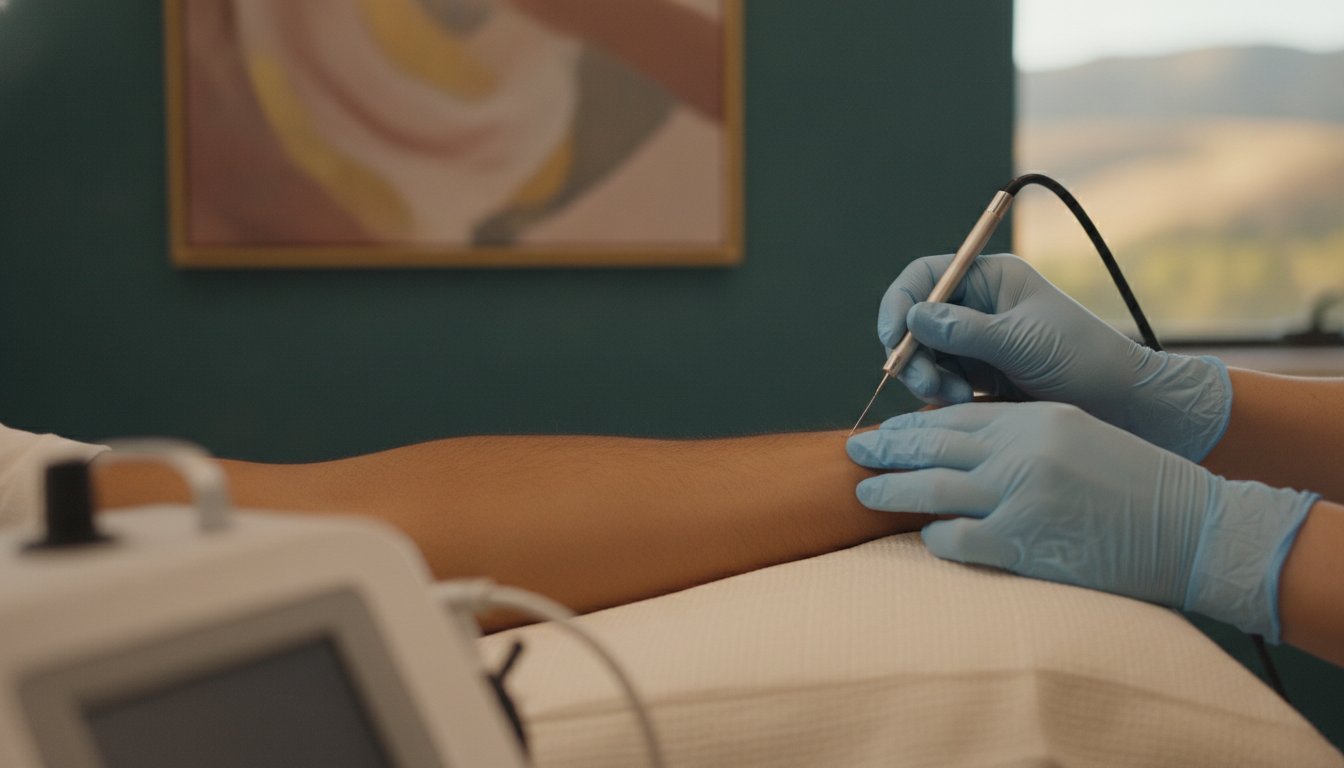
Pre-surgical electrolysis is the permanent removal of hair from donor sites, such as the arm, leg, or abdomen, used to create the new phallus and urethra. For many individuals, What is electrolysis is one of the first questions they ask when starting their surgical transition. It’s a clinical process that uses a fine probe and electrical current to destroy the hair follicle’s ability to regenerate. In the context of gender-affirming care, this treatment isn’t a cosmetic preference. It’s a fundamental requirement for a safe and successful surgical outcome.
The primary reason surgeons mandate electrolysis for phalloplasty is to prevent the growth of hair inside the newly constructed urinary channel. When hair remains on the donor skin, it continues to grow within the urethra after surgery. This internal hair acts like a “hair sieve,” trapping waste and minerals from urine. Over time, these deposits lead to the formation of painful stones, chronic urinary tract infections (UTIs), and fistulas. Because these complications often require corrective surgeries, achieving total hair clearance is the most effective way to protect your long-term health.
Understanding the Neourethra
During the surgical procedure, a skin flap is harvested and carefully rolled to create the neourethra. If follicles are still active on that flap, hair will grow into the path of your urinary stream. These internal hairs are nearly impossible to remove once the surgery is complete. To prevent this, most surgical teams require a formal “clearance letter” from your electrologist. This document serves as professional verification that the specific donor area is entirely hair-free and ready for the surgical team to proceed.
Donor Sites: RFF vs. ALT
The intensity and duration of your treatment often depend on which donor site your surgeon selects. Each area presents unique challenges that require a specialized approach.
- Radial Forearm Flap (RFF): This is the most common donor site. Because the forearm skin is thin and used for the urethra, it requires the most meticulous and exhaustive hair clearance to ensure safety.
- Anterolateral Thigh (ALT): The skin on the leg is typically thicker. It often contains deeper, more resilient follicles that require a steady, expert hand to treat effectively without damaging the surrounding tissue.
- Abdominal Phalloplasty: While torso hair may be less dense for some, the area still requires thorough clearance to ensure the final aesthetic is smooth and helps alleviate gender dysphoria.
Beyond the clinical safeguards, there’s a significant psychological benefit to this process. Knowing that your donor site is clear provides peace of mind and allows you to focus on your recovery rather than worrying about future complications. Starting your journey with a specialized partner at North Bay Electrology ensures your preparation is handled with clinical precision and empathetic care.
Planning Your Treatment Timeline: When to Start
Time is the most significant factor in your surgical preparation. While it’s tempting to rush toward your surgery date, the success of your neourethra depends on catching every hair during its active growth phase. Most surgeons recommend a timeline of 12 to 18 months for electrolysis for phalloplasty. This duration isn’t a suggestion; it’s a requirement dictated by human biology. Because hair follicles operate on independent schedules, only a portion of your hair is visible at any given time. Rushing the process increases the risk of dormant hairs waking up after your skin flap has been harvested, which can lead to the complications discussed in the previous section.
Effective treatment relies on understanding the three stages of hair growth: anagen, catagen, and telogen. Electrolysis is most effective during the anagen phase, when the hair is actively growing and remains attached to the follicle’s blood supply. Since different hairs enter this phase at different times, we must treat the donor site repeatedly over many months. This ensures we catch every follicle in its vulnerable state. Leading medical centers emphasize that total clearance is a medical necessity for phalloplasty to ensure the long-term viability of the donor tissue.
The Step-by-Step Phalloplasty Clearance Schedule
Your journey typically follows a three-phase progression. During Phase 1 (Months 1 to 6), the focus is on the initial clearing of all visible hair and identifying your specific growth patterns. Phase 2 (Months 6 to 12) involves thinning out the first waves of regrowth and targeting stubborn, deep-rooted follicles. Finally, Phase 3 (Months 12 to 18) is the “Search and Destroy” period. This final stage is dedicated to catching stray hairs that were dormant during earlier sessions, ensuring the site is pristine before your “stage one” surgery date.
Frequency of Sessions
Consistency is your best ally in this process. In the beginning, weekly or bi-weekly sessions are necessary to manage the initial density of the donor site. As we successfully destroy more follicles, your session length will naturally decrease. For our clients traveling from Napa, Vallejo, or Santa Rosa, we often coordinate “marathon sessions” to maximize progress in a single visit. This methodical approach helps you stay on track with your surgical team’s requirements without feeling overwhelmed. If you’re ready to map out your specific timeline, you can book an initial consultation to begin this vital part of your journey.
Electrolysis vs. Laser for Gender-Affirming Surgery
Choosing the right technology for your donor site is a pivotal decision in your surgical preparation. While laser hair removal is often marketed for its speed, it’s frequently insufficient for the specific clinical demands of gender-affirming surgery. The FDA maintains a strict distinction between these methods; laser is categorized as “permanent hair reduction,” while electrolysis is the only method recognized as “permanent hair removal.” This difference is vital when you’re preparing for a procedure where regrowth isn’t just an aesthetic concern, but a potential medical complication.
The Science of the Follicle
Electrolysis works by targeting the follicle with clinical precision. A fine, sterile probe is inserted into the hair follicle, where it delivers a small amount of energy to destroy the germ cells responsible for hair growth. This level of accuracy is necessary because laser technology relies on pigment to function. If your hair is blonde, red, gray, or simply very fine, most lasers won’t “see” it. For electrolysis for phalloplasty, we treat every single hair individually. This ensures total destruction of the follicle regardless of hair color or skin tone, which is essential for preventing internal growth after your surgery.
Surgeon Preferences and Requirements
Most top gender surgeons are very specific about their requirements for hair clearance. They frequently mandate electrolysis for the “urethral strip,” which is the portion of the donor skin that will form the internal urinary channel. Using laser in this area carries too much risk because even a small amount of regrowth can lead to the formation of stones or infections. According to the Hair Removal for Phalloplasty guide from Boston Children’s Hospital, electrolysis is often required to ensure the skin used for the urethra is completely and permanently hair-free.
Some patients consider a combination approach, using laser for the outer shaft and electrolysis for the urethral strip. However, we focus exclusively on electrolysis for surgical prep to provide the highest level of certainty for every square inch of your donor site. We don’t want to leave your surgical success to chance or “reduction” statistics. By choosing electrolysis for phalloplasty, you’re opting for a clinical standard that guarantees a hair-free result, both inside and out. If you’re ready to begin your clearance with a specialized partner, you can schedule your first session to get started.
How to Prepare for Your Phalloplasty Electrolysis Sessions
Preparing for your sessions is a collaborative effort that ensures both your comfort and the efficacy of the treatment. While the technical work happens in our clinic, the state of your skin before you arrive significantly impacts how smoothly the process goes. Healthy, hydrated skin allows for easier probe insertion and faster healing, which is vital when you’re undergoing electrolysis for phalloplasty over several months. Think of this preparation as an investment in the quality of the donor tissue that will eventually become a part of your body.
Clothing choices also play a practical role in your comfort. For Radial Forearm Flap (RFF) preparation, wear a shirt with loose sleeves that can be easily pushed up or a tank top. For Anterolateral Thigh (ALT) sessions, loose-fitting shorts or pajama bottoms are ideal. You want to ensure that nothing constricts the treated area immediately after the session, as the skin will be sensitive and needs to breathe to begin the healing process properly. Aftercare is equally important; keeping the area clean and avoiding harsh chemicals or sun exposure ensures the skin heals perfectly for your future surgery.
Pre-Session Checklist
- Hydration: Drink plenty of water in the 24 to 48 hours leading up to your appointment. Well-hydrated follicles are more conductive and allow the hair to slide out more easily, often reducing the amount of energy needed for effective treatment.
- Numbing Creams: Many clients find relief using a topical lidocaine cream. For the best results, apply the cream 60 to 90 minutes before your session and cover it with plastic wrap, a process called occlusion, to keep the product active.
- Hair Length: We need to be able to see the direction of hair growth and grip the hair with forceps. Please ensure there is about 1/8th of an inch of growth, which usually means stopping shaving three to five days before your visit.
Managing Discomfort and Anxiety
It’s normal to feel anxious about the sensation of electrolysis, especially during longer marathon sessions. We prioritize a trauma-informed environment where your psychological safety is just as important as the clinical results. You’re always in control of the pace of your session. Many clients find that listening to a favorite podcast or calming music helps them stay relaxed. Deep, rhythmic breathing can also help manage the body’s natural response to the treatment. If you have questions about specific preparation steps for your donor site, we can discuss a personalized plan during your initial consultation.
Navigating the Logistics: Costs, Insurance, and Booking
Managing the logistical side of your surgical preparation is just as vital as the clinical sessions themselves. While the financial commitment for electrolysis for phalloplasty is significant, it’s helpful to view these costs as a fundamental investment in your surgical success. Because urethral complications have a high occurrence rate, achieving total hair clearance is the most effective way to protect your health and your financial investment in the surgery itself. By prioritizing this step now, you’re actively reducing the risk of needing expensive corrective procedures or hospital stays in the future.
Our clinic in Petaluma operates on an appointment-only basis to ensure that every client receives dedicated, uninterrupted care. This structure is particularly important for our pre-surgical clients who may be traveling from Santa Rosa, Napa, or beyond for longer sessions. We provide a private, professional environment where your time is respected and your surgical goals are our primary focus. We don’t accept walk-ins, which allows us to maintain a calm, trauma-informed atmosphere for everyone who walks through our doors.
Insurance and Paperwork Support
Understanding insurance coverage for gender-affirming care can be complex, especially with shifting regulations. While we don’t offer direct insurance billing, we’re committed to helping you navigate the reimbursement process. Many insurance providers, including Kaiser Permanente, Blue Cross Blue Shield, and Aetna, have inclusive policies that recognize electrolysis for phalloplasty as a medical necessity rather than a cosmetic service. To support your claim, we provide detailed “superbills” that include necessary clinical descriptions and CPT codes.
You’ll typically need a letter of medical necessity from your surgeon or a mental health professional to secure reimbursement. This documentation helps prove to your insurer that hair removal is a required safeguard for your specific procedure. We’ll work closely with you to ensure you have the professional documentation needed to seek out-of-network benefits or specialized coverage for your donor site clearance.
Your First Consultation
Your journey begins with a thorough donor site assessment. During this initial visit, we’ll examine the skin health and hair density of your chosen donor area, whether it’s the forearm, thigh, or abdomen. We’ll create a customized “map” of the treatment area, often following the specific ink markings provided by your surgical team. This ensures that every session is targeted and efficient, prioritizing the urethral strip to meet your surgeon’s requirements well before your “stage one” date.
Your Path to a Successful Recovery
Transitioning to the surgical stage of your journey is a significant milestone. By prioritizing thorough donor site preparation, you’re doing more than just meeting a surgeon’s requirement; you’re actively preventing future medical complications. Keep in mind that achieving total clearance takes time and clinical precision. Starting your treatment early ensures that every hair follicle is addressed within its natural growth cycle, giving you the best possible foundation for your new chapter.
Choosing specialized electrolysis for phalloplasty provides the peace of mind that your neourethra will remain healthy and free from internal hair growth. At North Bay Electrology, we provide a private, clinical environment in Petaluma specifically designed for gender-affirming care. We’re here to act as your advocate, offering comprehensive support with insurance reimbursement paperwork to help you navigate the financial side of your treatment.
You’ve worked hard to reach this point, and we’re honored to support you through every step of this vital preparation. Your safety and comfort are our highest priorities as you move toward your surgical goals.
Frequently Asked Questions
Is electrolysis for phalloplasty more painful than regular hair removal?
The sensation is similar to standard treatments, but the sensitive nature of donor sites like the inner forearm or thigh can make it feel more intense. We recommend using topical numbing agents and focusing on deep breathing to manage the sensation during longer appointments. Because these sessions often last several hours to meet surgical deadlines, managing fatigue is just as important as managing the immediate sting of the probe.
How many hours of electrolysis are typically needed for an RFF phalloplasty?
While every individual is different, RFF phalloplasty typically requires between 40 and 80 hours of total clearance time. This range accounts for differences in hair density and the specific dimensions of the skin flap your surgeon requires. It’s essential to plan for a year or more of consistent treatment to ensure every follicle in the urethral strip and shaft area is permanently destroyed before your surgery.
Can I start electrolysis before I have a confirmed surgery date?
Yes, you should absolutely start electrolysis for phalloplasty as soon as you know which donor site you’ll be using. You don’t need a confirmed surgery date to begin, and starting early is the best way to prevent stressful delays. Since the process takes 12 to 18 months, many clients begin their clearance before they even have their first surgical consultation to ensure they’re ready when a date opens up.
Will insurance cover my pre-surgical hair removal in California?
Many California insurance plans, including those from Kaiser Permanente and Blue Shield, cover pre-surgical hair removal when it’s deemed medically necessary. While we don’t bill insurance companies directly, we provide the detailed superbills and CPT codes you’ll need to seek reimbursement. You should check your specific plan’s Evidence of Coverage to understand their requirements for gender-affirming care and how they handle out-of-network claims for electrolysis for phalloplasty.
What happens if I don’t finish my electrolysis before my surgery date?
If hair clearance is incomplete, your surgeon may choose to postpone your procedure to avoid the high risk of internal complications. Having active follicles in the skin used for the neourethra can lead to stones and infections that require corrective surgery later. It’s much safer to delay the surgery by a few months than to proceed with a donor site that still has active, visible hair growth.
Can I use laser hair removal for the outside of the phallus and electrolysis for the inside?
While some surgeons allow laser for the outer shaft, most strictly mandate electrolysis for the urethral strip due to its permanent results. Laser only offers hair reduction, which isn’t sufficient for skin that will be grafted internally. We focus exclusively on electrolysis to provide the most reliable outcome for the entire donor site, ensuring you don’t face regrowth issues on any part of the new phallus.
How do I find a surgeon’s specific requirements for hair removal?
You can find specific hair removal requirements in your surgeon’s pre-operative handbook or by contacting their office directly. Most surgeons provide a map or diagram showing exactly which areas of the arm, leg, or abdomen need to be cleared. It’s helpful to bring these documents to your initial consultation so we can align our treatment plan with your surgical team’s specific clinical protocols and timelines.
Why is North Bay Electrology appointment-only for surgical clients?
We operate on an appointment-only basis to provide the dedicated, private time necessary for complex pre-surgical clearance. This structure ensures that your sessions are never rushed and that we can maintain a calm, trauma-informed environment. For clients traveling from Napa or Santa Rosa for marathon sessions, this guaranteed time allows us to make significant progress without the interruptions common in high-volume, walk-in clinics.

Article by
Madison Hanselman
As a trans woman and owner of North Bay Electrology in Petaluma, I bring a deep personal empathy and love for technical systems to my practice. My own transition fuels my passion for permanent hair removal, making my clinic a proud partner and safe haven for the LGBTQ+ community. Balancing rigorous analytics with heartfelt care, I approach electrology as both a precise science and a life-changing path to self-actualization.