You might be surprised to learn that the “permanent” results often marketed by laser clinics are actually classified by the FDA as temporary reduction, leaving many to face the frustration of regrowth months or years later. If you’ve spent time and money on treatments only to see fine or light hairs persist, you aren’t alone in your search for a final solution. Understanding the nuances of electrolysis vs laser hair removal is essential, especially when your goal is clinical certainty for gender-affirming surgery or the complete clearance of sensitive facial areas. While laser can be a helpful tool for thinning dark hair on light skin, it lacks the precision to guarantee the total elimination of every follicle across all skin tones and hair colors.
We understand that the journey to feeling comfortable in your skin is deeply personal and often requires more than just a quick fix. In this guide, we’ll explore the scientific distinctions between permanent reduction and true permanent removal to help you make an informed decision for your unique needs. We will examine the 2026 clinical standards, the technical limitations of light-based therapies, and why electrolysis remains the only method capable of delivering total, lifelong results. By the end, you’ll have the clarity needed to choose a path that respects your body and your need for lasting peace of mind.
Key Takeaways
- Understand the FDA’s strict classification between permanent hair reduction and true permanent removal to protect your financial and emotional investment.
- Learn why the clinical choice between electrolysis vs laser hair removal often favors electrolysis for those seeking total clearance on all hair colors and skin tones.
- Discover why precise hair removal is a vital requirement for gender-affirming surgical preparation and effectively managing hormonal growth conditions.
- Explore the technical reasons why targeting individual follicles with a precise electric current ensures results that light-based therapies cannot match.
- Identify the essential criteria for selecting a specialized clinic in the North Bay to begin your journey toward lasting skin confidence.
The Science of Permanency: How Electrolysis and Laser Differ
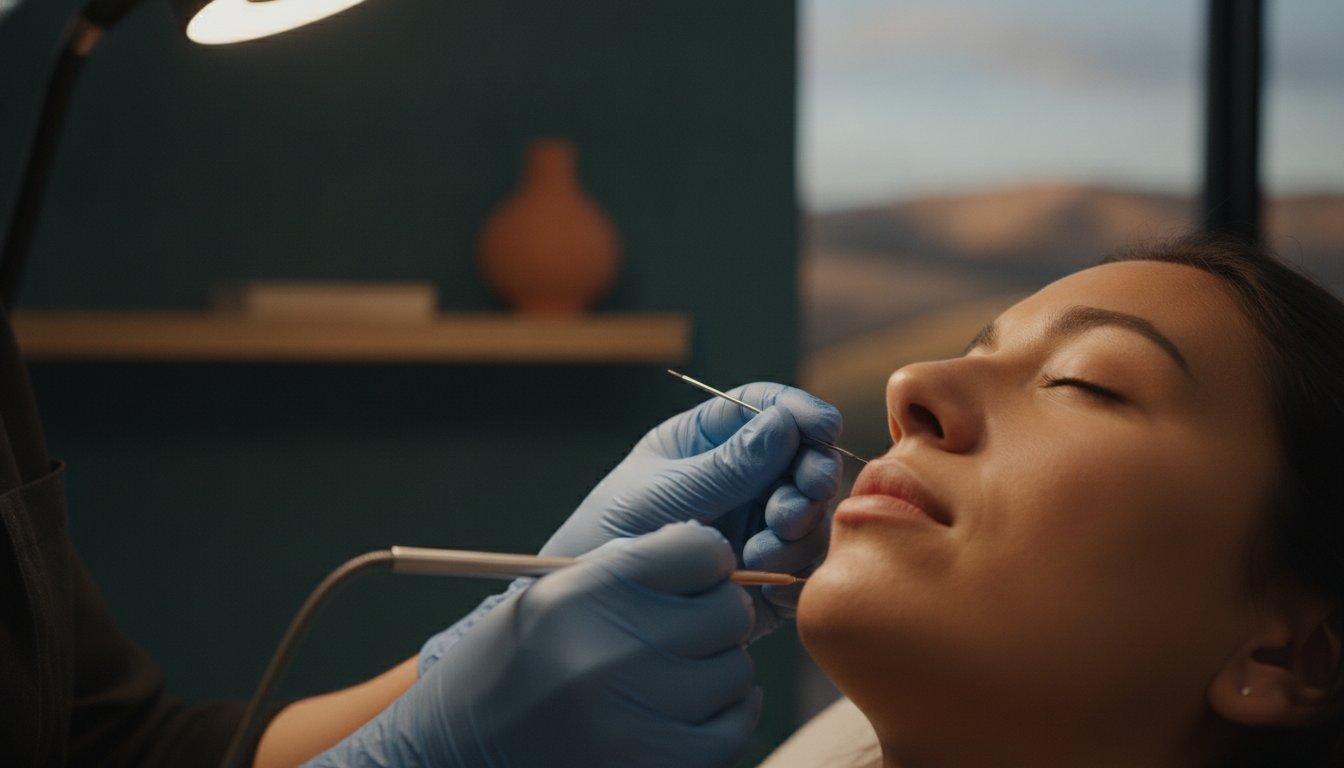
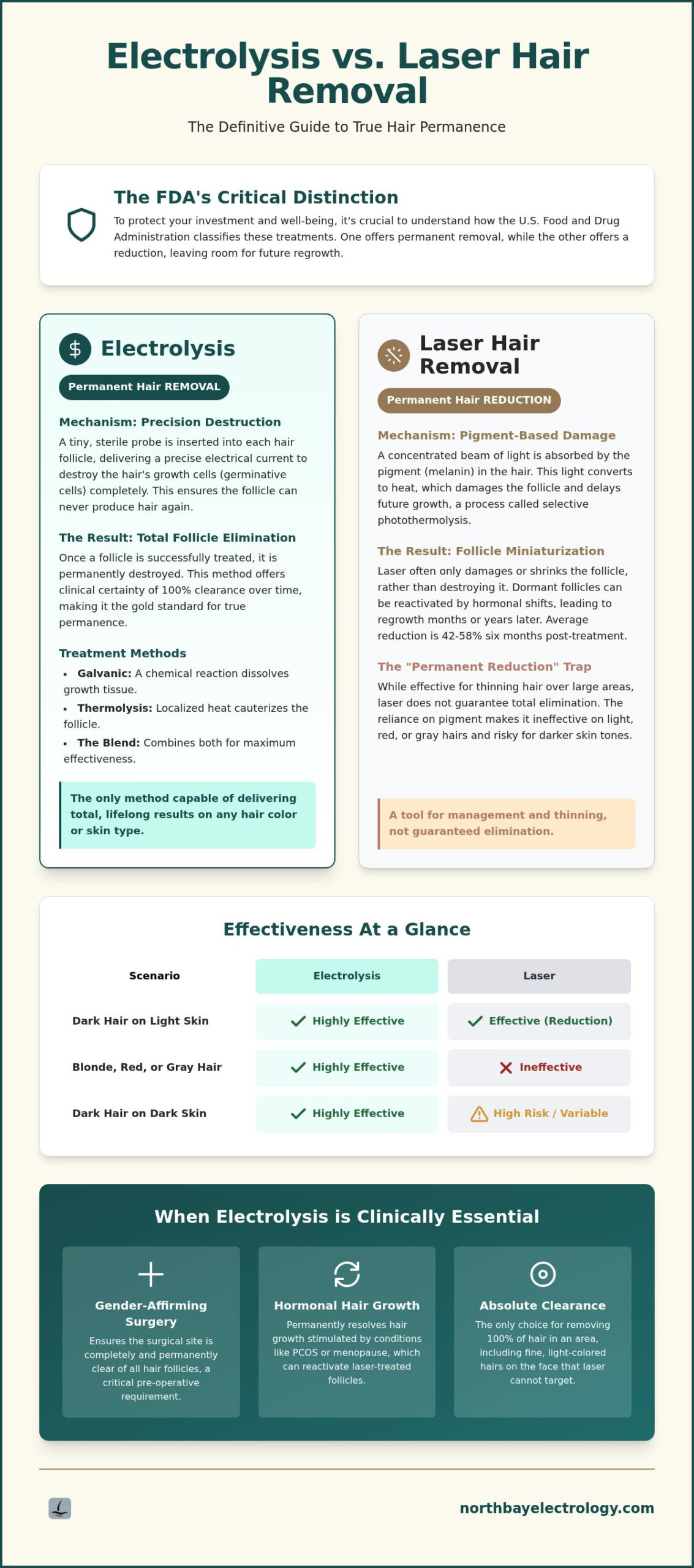
The primary distinction in electrolysis vs laser hair removal lies in how each technology interacts with your biology. Electrolysis is a methodical, follicle-by-follicle process. A tiny, sterile probe is inserted into the natural opening of the hair follicle. Once in place, a precise amount of energy is applied to destroy the germinative cells responsible for hair growth. This results in the total destruction of the follicle’s ability to regenerate. It’s a surgical level of precision that ensures once a follicle is treated successfully, it will never produce a hair again.
In contrast, laser technology uses a process called selective photothermolysis. This involves sending a concentrated beam of light into the skin, which is absorbed by the pigment (melanin) in the hair. This light converts to heat, damaging the follicle to delay future growth. However, because laser targets pigment rather than the follicle’s structure directly, the FDA classifies it as “permanent hair reduction.” It can significantly thin hair, but it doesn’t offer the clinical certainty of total removal. While laser thins the forest, electrolysis removes the roots entirely.
Understanding the Electrolysis Mechanism
To achieve true permanency, we utilize three primary methods: Galvanic, Thermolysis, and the Blend. Galvanic electrolysis creates a chemical reaction in the follicle to dissolve growth tissues. Thermolysis uses high-frequency current to produce localized heat, quickly cauterizing the follicle. The Blend method combines both, offering a highly effective approach for stubborn or distorted follicles. Your electrologist’s expertise is vital here. They must identify hairs in the “anagen” or active growth phase to ensure the most efficient path to permanent results. For those seeking this specialized, appointment-only care, you can schedule your session at North Bay Electrology.
How Laser Technology Functions
Understanding the limitations of electrolysis vs laser hair removal is particularly important for those with light hair or deep skin tones. Laser devices are designed to cover large areas quickly by emitting pulses of light. While efficient, this technology has inherent limitations. Because the light seeks out melanin, it struggles to distinguish between dark hair and dark skin, or it may fail to see light, red, or grey hairs entirely.
This often leads to the permanent reduction trap. Research shows that laser can achieve an average hair reduction of 42.3% to 57.5% six months after treatment, but dormant follicles can reactivate later due to hormonal shifts. For a deeper Comparison with electrolysis, it’s clear that light-based therapies are best suited for initial thinning rather than total clearance. This clinical distinction is why electrolysis remains the gold standard for those who require 100% clearance before surgery or for sensitive facial areas where precision is non-negotiable.
Laser Hair Removal: The Reality of Permanent Reduction
Laser is often the first choice for those looking to manage hair on large areas like the legs or back. Its speed is undeniable. By targeting melanin, laser can achieve an average hair reduction of up to 90% in ideal candidates with light skin and dark hair. However, this is where the permanent reduction trap begins. Unlike the total destruction found in electrolysis, laser often just miniaturizes the follicle. This leaves the door open for regrowth years later. When evaluating electrolysis vs laser hair removal, it’s vital to recognize that laser is a tool for management, not necessarily elimination.
Many clients find that while their legs remain relatively smooth, the results on the face and neck are less predictable. This happens because facial hair is often driven by hormonal fluctuations. Hormonal shifts, such as those related to PCOS or menopause, can reactivate follicles that the laser only temporarily dormantized. This leads to unexpected regrowth even after a full course of expensive sessions. For those who need clinical certainty, especially for surgical preparation, the temporary nature of laser reduction can be a source of significant anxiety.
The Melanin Limitation
Laser technology relies entirely on the presence of pigment. If your hair is blonde, red, gray, or white, the light simply cannot see the target. For individuals with deeper skin tones, the laser may struggle to distinguish between the hair and the skin. This increases the risk of hyperpigmentation or surface damage. This is why a clinical guide to electrolysis is so important for those who fall outside the ideal laser profile. Electrolysis doesn’t rely on pigment, making it the only universally safe and effective option for every skin tone and hair color.
The Transition: From Laser to Electrolysis
It’s common for clients to take a hybrid approach. They may use laser for initial, large scale thinning and then transition to specialized care for the remaining fine or stubborn hairs. This is a practical way to manage the electrolysis vs laser hair removal journey. Transitioning is particularly important for avoiding paradoxical hypertrichosis. This is a distressing condition where laser light actually stimulates dormant follicles to grow thicker, darker hair, often on the face or neck. If you’ve noticed regrowth or new growth after your laser sessions, you can book a precision appointment to finally achieve the total clearance you’ve been seeking. We focus on these stubborn areas to ensure your skin remains smooth permanently.
Why Electrolysis is the Only FDA-Approved Permanent Solution
The historical foundation of electrolysis dates back to 1875, giving it a 140-year track record of clinical safety and efficacy. This longevity is why the medical community views it with such high regard. When debating electrolysis vs laser hair removal, the most significant factor is the FDA’s specific classification. While laser devices were cleared for “permanent hair reduction” in the late 1990s, electrolysis remains the only method legally allowed to claim “permanent hair removal.” This isn’t just a matter of semantics; it’s a reflection of the technology’s ability to provide a final, lifelong result for every client, regardless of their hair or skin type.
Choosing electrolysis is a long-term investment in your comfort and self-image. While laser may require 6 to 8 sessions to thin an area, those results often require maintenance. Electrolysis typically requires 15 to 30 sessions for a single area to reach total clearance, but once that process is finished, the hair is gone forever. For those seeking Permanent Hair Removal for Face and Neck, this clinical certainty provides a sense of relief that temporary methods simply cannot match.
Comparing Results: Removal vs. Reduction
Permanent hair removal is the total destruction of the follicle’s regenerative cells. To help you weigh your options, consider how these methods perform across different criteria:
| Criteria | Electrolysis | Laser Hair Removal |
|---|---|---|
| Permanency Level | Total Removal | Partial Reduction |
| Hair Color Suitability | All (including blonde, red, grey) | Dark hair only |
| Skin Tone Safety | Safe for all skin tones | Higher risk for deep skin tones |
| Treatment Area | Anywhere, including near eyes | Limited near sensitive areas |
The cost-benefit analysis favors electrolysis for anyone who doesn’t want to spend the rest of their life booking “touch-up” appointments. It’s the difference between managing a condition and resolving it.
Precision and Customization
One of the most profound benefits of electrolysis is its unparalleled precision. Because we treat each follicle individually, we can offer meticulous eyebrow shaping and hairline refinement that laser simply isn’t capable of. This level of detail is essential for sensitive facial areas where every hair matters for your desired look. It’s also the safest option for areas where laser light might pose a risk to the eyes or surrounding tissue. Working with a dedicated, appointment-only specialist ensures that your treatment plan is as unique as your skin, providing a supportive environment where your individual goals are the primary focus.
Specialized Care: When Electrolysis is Clinically Essential
While many choose hair removal for convenience, there are clinical scenarios where the debate of electrolysis vs laser hair removal is settled by medical necessity. For individuals preparing for gender-affirming procedures or managing complex hormonal conditions, “reduction” isn’t enough. You need the absolute certainty that every single follicle has been neutralized. Surgeons often insist on electrolysis because it provides a level of permanence that light-based therapies simply cannot guarantee. Precision is the priority here. We provide a supportive, affirming environment where your clinical needs are met with the highest standards of care.
Pre-Surgical Electrolysis for Bottom Surgery
Preparing for gender-affirming surgery requires a meticulous approach to hair clearance. If you’re undergoing a procedure that involves internal tissue grafts, any remaining follicles can lead to serious post-operative complications. Internal hair growth is difficult to treat once the surgery is complete. This is why a Pre-Surgical Electrolysis Guide is an essential resource for your transition timeline. Unlike laser, which may leave dormant follicles that reactivate later, electrolysis ensures the regenerative cells are destroyed. We recommend starting treatments 12 to 18 months before your surgery date. To support your journey, we provide detailed insurance reimbursement paperwork to help you navigate the financial side of these medically necessary treatments.
Hormonal Hair Growth (PCOS)
For those living with Polycystic Ovary Syndrome (PCOS), facial hair growth can be a source of deep emotional distress. In these cases, the choice between electrolysis vs laser hair removal is often influenced by the risk of paradoxical hypertrichosis. This is a condition where laser light can actually stimulate more growth in hormonal areas like the chin or neck. Electrolysis offers a reliable, safe path toward permanent clearance without that risk. We focus on providing a trauma-informed space where you can address these sensitive areas with dignity. It’s about more than just skin; it’s about reclaiming your self-confidence through specialized care that respects your individual journey and health history.
Choosing Your Path to Smooth Skin in the North Bay
Selecting the right practitioner is just as vital as choosing the right technology. When you weigh the options of electrolysis vs laser hair removal, you’re deciding on a long-term relationship with your skin’s health. In Sonoma County, it’s essential to look for a clinic that prioritizes a clinical, appointment-only setting. This private approach ensures that your journey remains a dignified, personal experience rather than a high-pressure sales process. A specialist who focuses exclusively on electrolysis brings a level of expertise and precision that general aesthetic centers simply cannot replicate. By choosing a provider committed to this single, FDA-approved modality, you ensure that every minute of your treatment is directed toward total, permanent clearance.
Preparation is a key part of your success. Before your first appointment, we recommend focusing on hydration. Well-hydrated skin allows the electric current to reach the follicle’s root more effectively, which can improve both the comfort and the efficacy of the treatment. You should also maintain a gentle skincare routine, avoiding harsh actives like retinols or chemical exfoliants on the treatment area for at least 48 hours. For more localized advice, our guide to Electrolysis in Sonoma County offers deeper insights into what to expect in our local clinical environment.
Specialized Electrolysis in Petaluma and Beyond
Our clinic is proud to serve a diverse community of clients from Petaluma, Santa Rosa, Novato, and throughout the greater North Bay. We understand that many of our clients come to us after feeling frustrated by the limitations of electrolysis vs laser hair removal, particularly those with light hair or those seeking gender-affirming care. Our private clinical setting is designed to be a safe, trauma-informed space where your comfort is the priority. We don’t accept walk-in appointments, which allows us to maintain a calm, focused atmosphere for every individual we treat. This exclusivity ensures that you receive the undivided attention of a specialist who views their work as a form of advocacy and care.
Next Steps for Permanent Results
Your path to smooth skin begins with a comprehensive initial assessment. During this time, we will review your health history, discuss any hormonal influences like PCOS, and examine the specific areas you wish to treat. This is a low-pressure opportunity for you to ask questions and understand the methodical pace of the electrolysis process. We’ll create a customized roadmap that respects your timeline and your goals, ensuring you feel supported through every step of the clearance process. Whether you’re preparing for a surgical procedure or simply want the freedom of permanent facial hair removal, we’re here to guide you with precision and empathy.
Embrace the Certainty of Permanent Results
Choosing between electrolysis vs laser hair removal is a decision that impacts your long-term comfort and self-confidence. We have explored how electrolysis stands alone as the only FDA-approved method for true permanent hair removal, providing a level of clinical certainty that temporary reduction methods simply cannot offer. For those requiring meticulous pre-surgical clearance or managing sensitive hormonal growth, the precision of a follicle-by-follicle approach ensures that once a hair is gone, it is gone for good.
At North Bay Electrology, we provide inclusive, affirming care tailored to your unique skin and hair profile. Our specialist focus on face, neck, and pre-surgical treatments means you receive expert attention in a private, supportive environment. You don’t have to settle for the frustration of regrowth or the limitations of light-based therapies. By prioritizing a method with a century-long track record of safety, you are investing in a future of lasting smoothness and peace of mind.
Your journey toward feeling fully at home in your skin is a significant step, and we are here to serve as your knowledgeable and compassionate guide through every session.
Frequently Asked Questions
Is electrolysis more painful than laser hair removal?
Most clients describe the sensation of electrolysis as a localized heat or a quick stinging feeling. While laser often feels like a sharp rubber band snap over a larger area, electrolysis focuses on one follicle at a time. This precision allows us to manage your comfort more effectively. We prioritize your psychological safety and physical ease, ensuring that the process feels manageable and supportive throughout your session.
How many electrolysis sessions do I need for permanent results compared to laser?
A full course of electrolysis typically requires between 15 and 30 sessions to achieve total, permanent clearance. In the debate of electrolysis vs laser hair removal, laser appears faster with only 6 to 8 sessions. However, laser results are often temporary reduction. Electrolysis provides a definitive end date for your treatments. Once we successfully treat a follicle, it will never produce hair again, eliminating the need for future maintenance.
Can I do electrolysis if laser hair removal didn’t work for me?
You can absolutely begin electrolysis if you haven’t seen the desired results from light based therapies. Many of our clients come to us to treat stubborn hairs that laser couldn’t detect or to address regrowth triggered by hormonal shifts. We specialize in clearing the fine, light, or resistant hairs that often persist after laser. It’s a reliable way to finish your journey toward completely smooth skin.
Why is electrolysis recommended for pre-surgical hair removal?
Surgeons require electrolysis because it’s the only method that guarantees 100% hair removal for internal tissue grafts. If hair follicles remain in skin used for surgical reconstruction, they can continue to grow internally, leading to infections or discomfort. Laser only offers reduction, which is a significant clinical risk in these procedures. We work closely with your surgical timeline to ensure your skin is cleared and ready for your procedure.
Does electrolysis work on all hair colors and skin tones?
Electrolysis is effective for every hair color and skin tone without exception. Because we use a precise electric current to target the follicle’s regenerative cells, we don’t rely on melanin or pigment. This makes it the safest and most effective choice for blonde, red, grey, or white hair. It also removes the risk of hyperpigmentation often associated with laser treatments on deeper skin tones, providing inclusive care for everyone.
Is electrolysis more expensive than laser in the long run?
Electrolysis is frequently the more economical choice in the long run because the results are permanent. While the upfront cost of electrolysis vs laser hair removal may seem higher due to the number of sessions, you won’t face the recurring expense of touch up appointments for the rest of your life. Once your clearance is complete, your investment is finished. This provides both financial and emotional relief over time.
What are the side effects of electrolysis vs. laser?
Common side effects of electrolysis are limited to temporary redness, slight swelling, or tiny crusts that heal within a few days. These are normal signs of the body’s healing response. Laser treatments carry different risks, including potential burns, blistering, or paradoxical hypertrichosis if the settings aren’t perfectly calibrated for your skin. We provide detailed aftercare instructions to ensure your skin remains calm and healthy after every specialized appointment.
How should I prepare for my first electrolysis appointment in Petaluma?
Preparation for your first visit to our Petaluma clinic starts with deep hydration. Drink plenty of water in the 24 hours before your session to help the treatment work more efficiently. Please stop plucking, waxing, or threading the area, as we need a small amount of growth to identify the follicle’s direction. Arriving with clean, product free skin ensures we can provide the most accurate and comfortable care possible during your assessment.

Article by
Madison Hanselman
As a trans woman and owner of North Bay Electrology in Petaluma, I bring a deep personal empathy and love for technical systems to my practice. My own transition fuels my passion for permanent hair removal, making my clinic a proud partner and safe haven for the LGBTQ+ community. Balancing rigorous analytics with heartfelt care, I approach electrology as both a precise science and a life-changing path to self-actualization.