
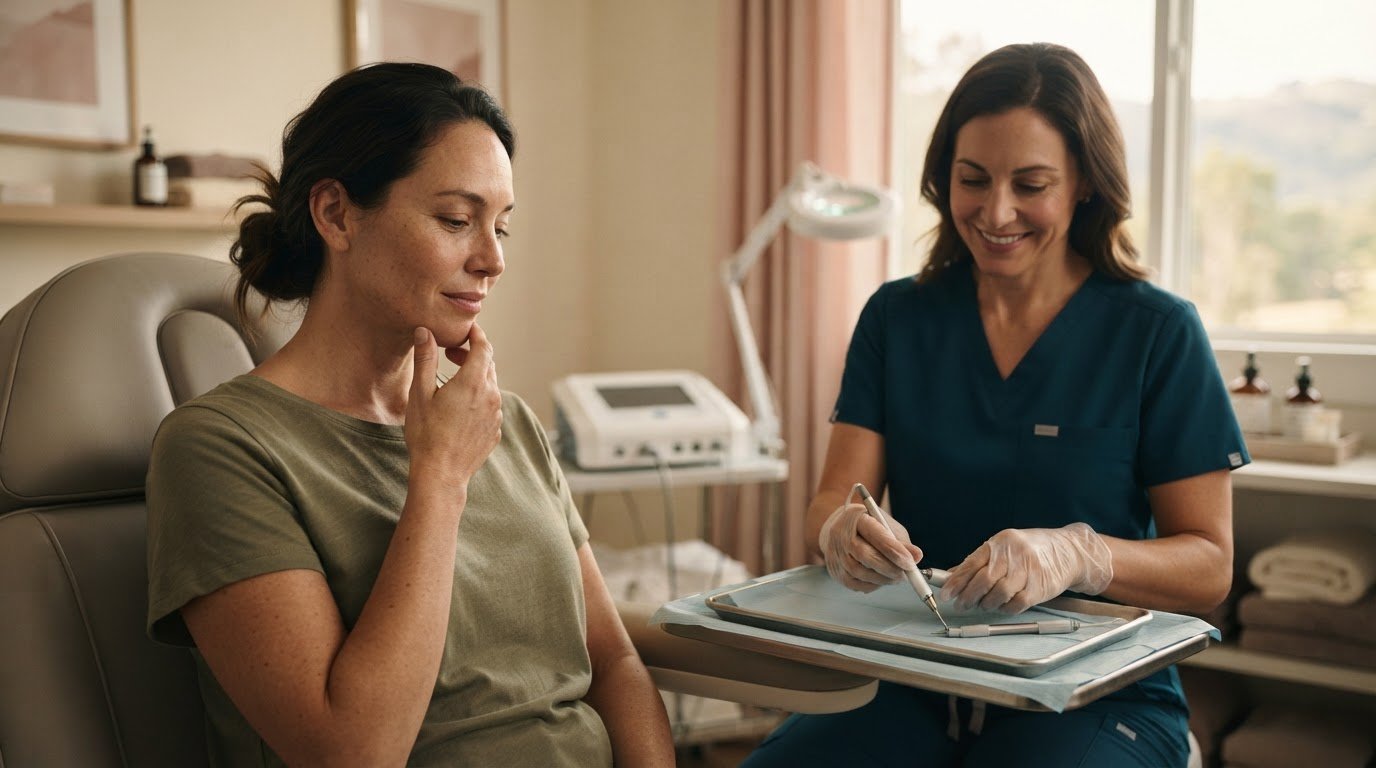
Can you achieve getting rid of hormonal chin hair for good if new hairs may keep appearing? If shaving, waxing, or tweezing leaves you repeating the same routine, it’s understandable to wonder whether lasting results are possible or whether changing hormones make treatment pointless.
The key is to separate two goals: treating existing hair follicles and addressing hormonal factors that may contribute to new growth. Hair removal can treat the follicles producing chin hair, but it doesn’t treat hormonal causes, so other hairs may become visible over time. That doesn’t mean you’re out of options. It means a realistic plan matters.
This guide explains how hormonal chin hair can develop, compares electrolysis with laser hair removal, and outlines what each approach can and can’t do. You’ll also find practical questions to ask when choosing an electrologist and planning appointments. With clear information and individualized professional support, you can make choices that feel manageable without expecting one treatment to solve everything.
Key Takeaways
- Recurring chin hair isn’t a personal failing; hormonal changes may contribute to new growth.
- Getting rid of hormonal chin hair for good means treating existing follicles while recognizing that new hairs may still emerge.
- Compare electrolysis, laser, shaving, waxing, and tweezing to understand what each can realistically do.
- Prepare for a treatment plan by clarifying your goals, noting growth patterns, and bringing questions to a provider.
- Explore appointment-only face and neck electrolysis from North Bay Electrology, serving communities including Petaluma, Novato, Santa Rosa, and Napa.
Why Does Hormonal Chin Hair Keep Coming Back?
It can be discouraging to remove a chin hair and later notice another one, especially when you’ve already tried shaving, waxing, or tweezing. Recurring hair isn’t a personal failing. Chin hair patterns vary from person to person, and facial hair growth may be influenced by hormones, genetics, age, or other individual factors.
“Hormonal chin hair” is a useful everyday phrase, not a diagnosis. A healthcare professional may use the term Hirsutism when discussing excess growth of coarse, dark hair in areas where it’s less common. The term describes a pattern, not its cause. PCOS is one possible context for increased facial hair, but chin hair alone doesn’t establish that someone has PCOS or another condition.
What can make chin hair growth feel hormonal?
Changes in hair texture, density, or the areas where hair appears can prompt questions about hormones. But growth patterns differ widely, and a few persistent hairs don’t automatically point to a medical issue. If growth starts suddenly, changes noticeably, or comes with other symptoms that concern you, discuss it with a qualified healthcare professional. They can consider your personal health context and advise whether evaluation is appropriate. An electrologist can address hair removal, but doesn’t diagnose or treat hormonal causes.
Can permanent hair removal stop every new hair?
Permanent treatment focuses on the follicle being treated. Electrolysis treats individual follicles, but removing existing hairs doesn’t prevent future hormonal changes or guarantee that other hairs won’t become visible later. Some fine or less noticeable hairs may change in appearance over time, and new growth may also emerge. As a result, hair can still appear in an area even after particular follicles have been treated.
Treating a follicle and preventing future growth are separate goals: hair removal addresses the treated follicle, while it can’t control hormonal changes that may affect other hairs.
This distinction helps set realistic expectations when considering getting rid of hormonal chin hair for good. Lasting treatment of existing follicles may be possible, but no hair-removal method can promise that hormones will never influence future growth. If new hairs appear, that doesn’t necessarily mean previously treated follicles have returned. An electrologist can help you understand what’s being treated and what to monitor, while a healthcare professional can discuss concerns about changing growth patterns.
How Electrolysis Treats Existing Hormonal Chin Hair
Electrolysis addresses individual hair follicles rather than treating the chin as one broad area. Electrolysis is a professional hair-removal method in which a trained practitioner treats individual follicles to disable their ability to produce hair. North Bay Electrology uses FDA-approved electrolysis techniques for face and neck hair removal.
One appointment may not address every hair that could become visible over time. Hair grows in different stages, and not every follicle is equally visible or ready to treat at the same time. Repeated appointments allow a practitioner to treat hairs as they emerge. The number and spacing of appointments depend on your hair growth, treatment area, and individual plan. Ask a provider to explain likely expectations without promising a fixed timeline or total.
What happens during chin electrolysis?
A thoughtful appointment begins with a discussion of your goals, the treatment area, and any comfort needs or questions. The practitioner treats individual follicles and provides aftercare guidance suited to the treatment. Facial care should be planned collaboratively, with room to discuss your preferences and adjust the approach to your needs. Before you begin, ask what treatment may feel like and what aftercare steps are recommended for you.
Why can hormonal changes affect the treatment plan?
Electrolysis treats the follicles addressed during treatment. It doesn’t diagnose or change hormonal factors that may influence other hair growth. If you have ongoing concerns about hormonal symptoms, consider discussing them with a qualified healthcare professional. MedlinePlus offers information about the causes of hormonal hair growth, which may help you prepare questions for that conversation.
This distinction can make getting rid of hormonal chin hair for good feel less confusing: treatment can focus on existing follicles, while new growth may need separate attention. If you’re exploring face and neck electrolysis, you can learn more about face and neck electrolysis from North Bay Electrology. Appointments are scheduled, so check current booking details when considering next steps.
Electrolysis, Laser, or Temporary Removal: Which Fits Chin Hair?
The right approach depends on what you want to change, your hair and skin characteristics, and how much upkeep feels manageable. Electrolysis treats individual follicles. Laser uses light to reduce hair growth and is not the same as permanent hair removal. Shaving, waxing, and tweezing temporarily manage visible hair. Use the comparison below to identify questions to ask before choosing a method.
| Method | What it can do | Suitability and upkeep questions |
|---|---|---|
| Electrolysis | Can permanently remove treated follicles. | Ask whether your hair and treatment goals are suitable, what an individualized plan may involve, and how progress will be reviewed. |
| Laser | Can provide lasting hair reduction, but isn’t permanent hair removal. | Ask a qualified laser provider whether your hair and skin characteristics are suitable, what results to expect, and whether maintenance may be needed. North Bay Electrology doesn’t offer laser hair removal. |
| Shaving | Removes visible hair at the skin’s surface; it doesn’t permanently treat follicles. | Consider how often you’re comfortable shaving and whether your skin tolerates your chosen method. |
| Waxing | Temporarily removes visible hair from the root. | Ask about skin-care considerations, especially if you use products or medication that may affect your skin. |
| Tweezing | Temporarily removes individual visible hairs. | Consider whether the time and repeated upkeep suit you, and ask a provider how to care for the area. |
If you’re considering professional electrolysis, explore an electrolysis appointment with North Bay Electrology.
When might electrolysis be worth considering?
If your goal is permanent treatment of individual facial follicles, electrolysis may be an option to discuss with a qualified electrologist. Suitability and planning depend on your needs, so it isn’t a universal recommendation. Ask about the practitioner’s experience with facial hair removal, how they’ll tailor treatment, and how they’ll communicate progress. A respectful provider should welcome your questions and explain the proposed approach clearly.
What should readers know about laser and temporary methods?
Laser and electrolysis work differently, and a provider can explain which approach may suit your hair, skin, health context, and goals. Temporary methods can help manage visible hair, but they don’t permanently treat follicles. If hormonal changes are part of your concern, include that context in conversations with healthcare and hair-removal professionals. Comparing the likely results and upkeep can help you choose without expecting one method to prevent every future hair.

How to Plan a Realistic Chin Electrolysis Treatment Journey
A thoughtful plan helps you make decisions at a pace that feels manageable. Start by identifying what you hope to change, such as reducing the need to tweeze or treating visible chin hairs. Keep notes on where and when you notice growth, how it changes, and questions that come up. This can help you describe your experience to a provider, but it isn’t a way to diagnose a hormonal condition.
Next, share relevant health context with the appropriate professionals. An electrologist can discuss hair-removal goals and treatment planning; a qualified healthcare professional can advise on hormonal concerns. Appointment frequency and the overall course depend on factors such as your hair growth and the practitioner’s assessment. Revisit your expectations as you go rather than relying on a fixed timeline.
What should you ask at a consultation?
A consultation is also a chance to see whether the provider’s approach feels respectful and clear. Consider asking:
- What training and experience do you have with facial electrolysis, and what sanitation practices do you follow?
- How do you plan treatment, follow up, and review progress?
- How might ongoing hormonal concerns affect the plan, and when should I seek medical advice?
- How can we address my comfort, privacy, communication preferences, or sensitivities?
You don’t need to share more personal information than you’re comfortable with. You can ask how sensitive details are handled before discussing them.
How can you prepare for scheduled appointments?
Before each appointment, follow the provider’s specific preparation and aftercare instructions rather than relying on general tips that may not fit your situation. Privately share relevant medications, skin concerns, or health information with the professional so they can consider it when planning care.
Choose an appointment routine that works with your schedule, then check in periodically about what you’re noticing and whether the plan still suits your goals. A simple note of growth patterns, questions, and changes since your last visit can make those conversations more focused. If you’re still comparing providers, the related guide to choosing a professional electrolysis clinic in the North Bay can help you decide what matters to you.
Finding Support for Hormonal Chin Hair in the North Bay
Choosing someone to work on a sensitive facial area is a personal decision. North Bay Electrology provides professional face and neck electrolysis by appointment, not walk-ins, for clients across the North Bay. Its service area includes Petaluma, Novato, Cotati, Rohnert Park, Santa Rosa, Sonoma, Napa, Vallejo, San Rafael, Sebastapol, American Canyon, Terra Linda, Corte Madera, Windsor, and Healdsburg. The service focuses on treating hair follicles. It doesn’t include hormone diagnosis or hormone care, and the business doesn’t offer laser hair removal.
That distinction can help you find the right kind of support. An electrologist can discuss hair-removal goals and an individualized treatment plan. If you have questions about hormonal changes or other health concerns, discuss those separately with a qualified healthcare professional. You don’t need a diagnosis to seek hair removal, and you don’t need to justify your personal reasons for wanting it.
What makes a local electrolysis provider a good fit?
Look for clear, respectful communication and an approach that makes space for your questions. Ask about the provider’s training, professional standards, sanitation practices, and experience with facial treatment. You can also ask how they plan treatment around your comfort, how they handle privacy, and what follow-up may involve. A good fit should leave you feeling heard, not rushed or pressured.
If you’re comparing providers, the North Bay guide to professional electrolysis clinics can help you think through what to ask and what matters most to you. Before deciding whether to proceed, consider how easily you can get clear answers about the treatment approach and appointment process.
How do you take the next step without pressure?
Start by reviewing the appointment information and writing down the questions you want answered. You might note what you hope to change, what you’d like to know about planning, and any comfort or privacy preferences. North Bay Electrology uses scheduled appointments, so check current booking details rather than expecting walk-in service.
If changing hair growth raises health questions, you can seek medical advice separately. Hair removal is a personal choice. Whether you’re exploring options or ready to take a next step toward getting rid of hormonal chin hair for good, you can move at a pace that feels right for you.
Take the Next Step at Your Own Pace
Getting rid of hormonal chin hair for good starts with realistic expectations: electrolysis can treat individual follicles, while hormonal changes may contribute to new growth over time. The right approach depends on your goals, hair growth, and personal circumstances. A qualified healthcare professional can discuss medical concerns, while an electrologist can help you explore hair-removal options.
For North Bay residents considering professional care, North Bay Electrology specializes in face and neck electrolysis and uses FDA-approved electrolysis techniques. Treatment planning is individualized, and appointments are scheduled rather than walk-in. Review the appointment information and prepare your questions before deciding what feels right.
You deserve care that respects your comfort, privacy, and choices. Take the next step when you’re ready, with a plan that feels manageable for you.
Frequently Asked Questions
Can electrolysis permanently remove hormonal chin hair?
Electrolysis can permanently remove the individual follicles treated, including follicles producing chin hair. It doesn’t treat hormonal factors that may influence other hair growth. If your goal is getting rid of hormonal chin hair for good, separate treating existing follicles from preventing future hairs from appearing. A qualified electrologist can discuss an individualized plan, while a healthcare professional can address concerns about hormonal changes.
Will hormonal chin hair come back after electrolysis?
Hair from a treated follicle may be permanently removed, but other hairs can become visible later. Some follicles may not be noticeable or ready for treatment at the same time, and hormonal changes can influence new growth. Seeing new hairs doesn’t necessarily mean a previously treated follicle has returned. Your electrologist can review what you’re noticing and discuss whether the treatment plan needs reassessment.
Is electrolysis or laser better for hormonal chin hair?
Neither option is right for everyone. Electrolysis treats individual follicles and can permanently remove treated hair; laser is a different method intended for lasting hair reduction, not permanent hair removal. Suitability can depend on factors such as hair and skin characteristics, health context, and your goals. Discuss expected results, upkeep, and relevant sensitivities with a qualified provider. North Bay Electrology offers electrolysis, not laser hair removal.
How many electrolysis sessions does chin hair removal take?
There isn’t one session count that applies to everyone. The treatment course depends on factors such as the amount and pattern of hair, how it grows, and the practitioner’s assessment. Repeated appointments may be needed because hairs emerge at different growth stages. Ask an electrologist to explain how they’ll estimate your treatment plan, review progress, and adjust expectations as you go.
Should I see a doctor about new hormonal chin hair?
Consider speaking with a qualified healthcare professional if chin hair appears suddenly, changes noticeably, or comes with other symptoms that concern you. Hair growth patterns vary, and chin hair alone doesn’t establish a diagnosis. A clinician can review your personal health context and advise whether evaluation is appropriate. You can pursue hair removal separately, without needing a diagnosis or a medical reason to want treatment.
Can I shave my chin between electrolysis appointments?
Shaving may be an option between appointments because it trims visible hair at the skin’s surface rather than removing it from the follicle. Still, follow your electrologist’s specific preparation and aftercare instructions, since recommendations can depend on your treatment plan and skin. Ask before waxing or tweezing, which remove hairs from the root and may affect what the practitioner can treat at a later appointment.
Does North Bay Electrology offer appointments for chin electrolysis?
North Bay Electrology provides professional face and neck electrolysis by scheduled appointment, not walk-ins. The clinic serves communities including Petaluma, Novato, Cotati, Rohnert Park, Santa Rosa, Sonoma, Napa, Vallejo, San Rafael, Sebastapol, American Canyon, Terra Linda, Corte Madera, Windsor, and Healdsburg. Contact the clinic to confirm current appointment information and discuss whether its electrolysis service fits your chin hair-removal goals.
Article by
Madison Hanselman
As a trans woman and owner of North Bay Electrology in Petaluma, I bring a deep personal empathy and love for technical systems to my practice. My own transition fuels my passion for permanent hair removal, making my clinic a proud partner and safe haven for the LGBTQ+ community. Balancing rigorous analytics with heartfelt care, I approach electrology as both a precise science and a life-changing path to self-actualization.