
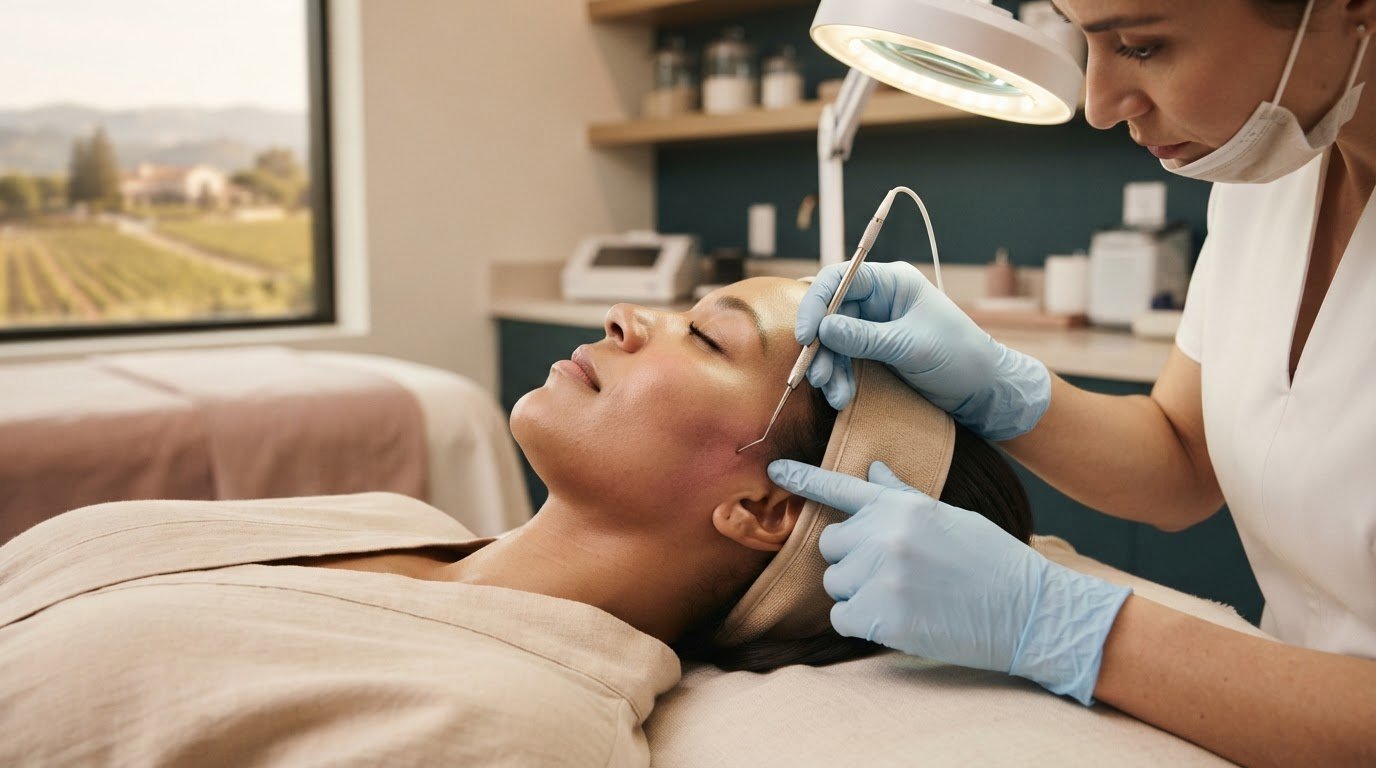
What makes facial electrolysis precise is also why it takes time: each follicle is treated individually rather than treating an entire area at once. If you’re wondering how electrolysis works for face, understanding that follicle-by-follicle process is a useful place to start.
Before a session, it’s natural to want a clear picture of what the electrologist does and how your skin might respond. During treatment, a very fine probe is guided into a hair follicle and a small electrical current is applied. You may feel a brief sting or warmth, and temporary redness or swelling can occur.
This guide explains what happens before, during, and after a professional facial electrolysis session. You’ll learn why hairs at different growth stages require repeat visits, what skin reactions may look like, and how to plan for gradual progress rather than an overnight change. North Bay Electrology provides face and neck electrolysis in a professional setting, with appointments scheduled in advance.
Key Takeaways
- Learn how electrolysis works for face: treatment focuses on individual follicles, not the whole area at once.
- Understand how galvanic, thermolysis, and blend methods use different approaches to treat follicles.
- See why hairs growing in different phases mean appointments are repeated over time.
- Review the main steps of a professional facial electrolysis appointment, from identifying the area to treating follicles.
- Learn how North Bay Electrology’s face and neck electrolysis can support your next steps in the North Bay.
How does electrolysis work for facial hair?
It’s natural to want to know what will happen before choosing treatment for your face, especially if the process feels unfamiliar or personal. Electrolysis works on individual follicles. The electrologist treats selected hairs one at a time rather than applying energy across the whole face.
Facial electrolysis is a professional hair-removal method that uses a fine probe and electrical energy to treat individual hair follicles. This follicle-by-follicle approach is part of electrology, the practice of hair removal using electrolysis, as described in Electrology on Wikipedia.
What happens inside an individual hair follicle?
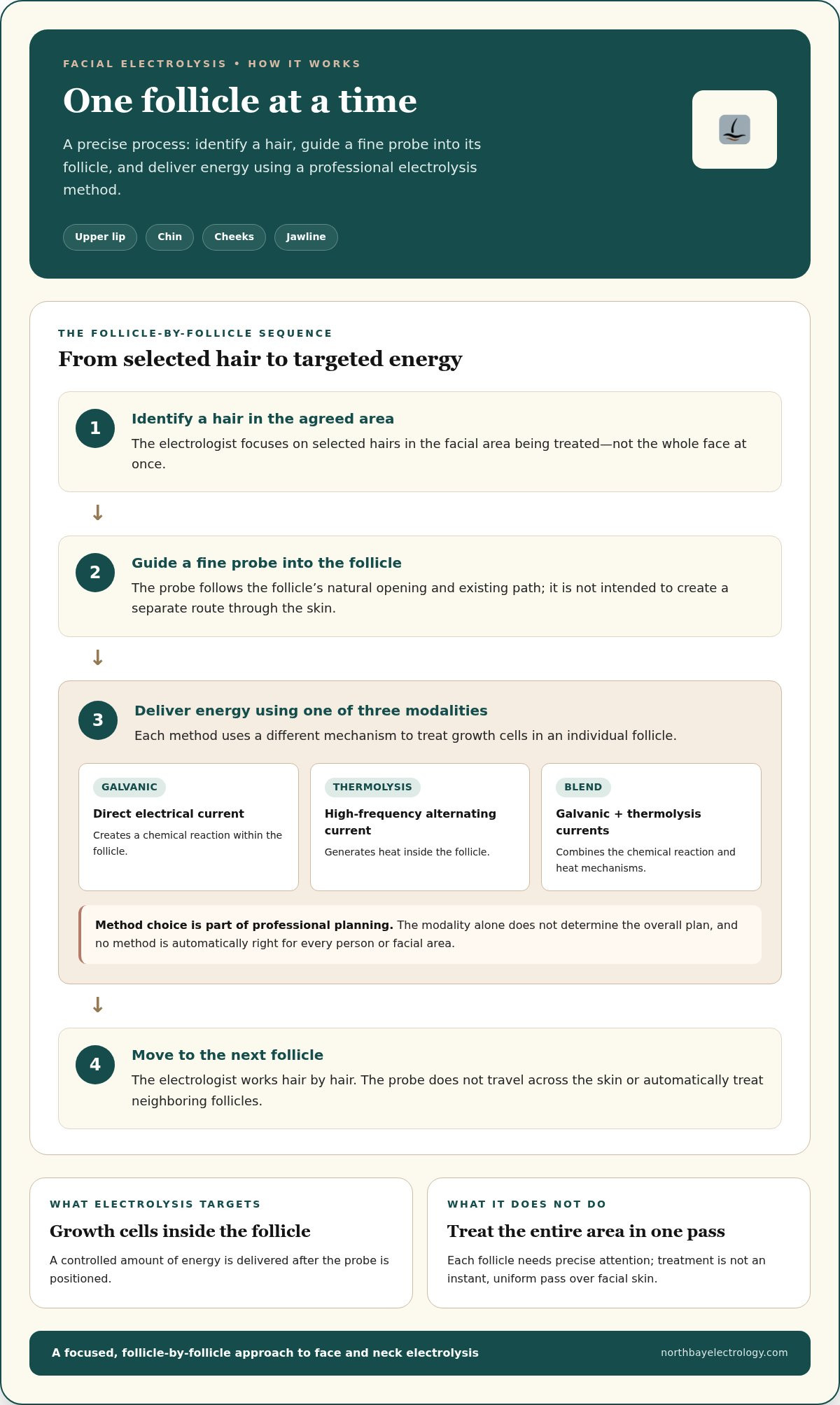
A follicle is the small structure in the skin from which an individual hair grows. During treatment, the electrologist identifies a hair and guides a very fine probe into the follicle through its natural opening. The probe follows that existing path; it isn’t intended to create a separate route through the skin.
Once the probe is positioned, a controlled amount of energy is delivered to growth cells within the follicle. The aim is to treat the structures responsible for producing that hair. The probe doesn’t travel across the skin or automatically treat neighboring follicles. Each follicle requires precise attention, so the electrologist works hair by hair.
This individual focus can be useful across facial areas where hairs are fine, sparse, or limited to a defined region, such as the upper lip, chin, cheeks, or jawline. The electrologist can focus on the agreed area and treat the follicles present there.
How is facial electrolysis different from simply removing visible hair?
Shaving cuts the visible part of a hair at the skin’s surface. Tweezing pulls out the hair, but neither method treats the follicle’s growth cells in the same way as electrolysis. Electrolysis directs energy into the follicle, focusing on where the hair grows rather than only on the part you can see.
On the face, the electrologist treats individual hairs in sequence: placing the probe into one follicle, applying energy, then moving to another. This requires careful, consistent work rather than a quick pass over the skin. Results for an individual hair can vary, and it isn’t appropriate to assume every treated hair will be gone after one appointment.
That distinction makes the process easier to understand: electrolysis is precise, but it does not treat the entire facial area instantly or uniformly. North Bay Electrology provides professional face and neck electrolysis for people seeking this focused approach. The following sections explain how different methods deliver energy and why treatment planning accounts for hair growth over time.
Which electrolysis methods can be used on the face?
Facial electrolysis can use different ways of delivering energy. The three recognized modalities are galvanic, thermolysis, and blend. Each uses a different mechanism to treat growth cells in an individual follicle. Knowing the basic differences can help you follow a treatment discussion, but it doesn’t mean one method is automatically right for every person or facial area.
Here’s a plain-language comparison:
| Method | Energy mechanism | In simple terms |
|---|---|---|
| Galvanic | Direct electrical current creates a chemical reaction within the follicle. | The current produces a chemical change that targets follicle growth cells. |
| Thermolysis | High-frequency alternating current generates heat. | Heat is used to target growth cells inside the follicle. |
| Blend | Combines galvanic and thermolysis currents. | Uses both a chemical reaction and heat in the treatment process. |
Galvanic electrolysis and thermolysis: what is the difference?
Galvanic electrolysis uses direct current, meaning electrical flow in one direction, to create a chemical reaction inside the follicle. Thermolysis uses high-frequency alternating current, which changes direction, to produce heat that targets growth cells. These terms describe how energy is delivered, not a guaranteed result. In a facial session, either method is applied follicle by follicle.
What does the blend method combine?
The blend method brings galvanic and thermolysis currents together. In broad terms, it combines the chemical reaction associated with galvanic treatment and the heat generated by thermolysis. That describes the mechanism, not a promise that blend will be more effective or suitable for everyone. Modality decisions are part of a professional treatment plan.
For a facial area, the useful question isn’t simply which method sounds strongest. The electrologist considers the treatment area and the individual’s needs when planning care. A small area of upper-lip hair and a broader area along the jaw may call for different considerations, but the modality alone doesn’t determine the overall plan. Your electrologist can explain the approach and how it fits your treatment.
Understanding how electrolysis works for face includes knowing that “electrolysis” can refer to more than one energy mechanism. The comparison can help you recognize the terms without needing to choose a method yourself or assume one is universally best. A clear conversation about your plan can help you feel prepared for a professional session.
If you’re considering face or neck treatment in the North Bay, you can explore appointment options for facial electrolysis with North Bay Electrology. Appointments are scheduled in advance, giving you a practical next step to consider at your own pace.
Why does facial electrolysis take multiple sessions?
Seeing facial hair appear between appointments can be discouraging, but it doesn’t automatically mean treatment has failed. Facial hairs don’t all grow in step. Some are growing while others are resting or shedding. Because electrolysis is most effective when a hair is in its active growth phase, one session can’t treat every follicle at the same ideal point in its cycle.
Because facial hairs enter their active growth phase at different times, electrolysis treats an area gradually through a series of appointments. This staggered timing is a normal part of treatment planning, not a sign that the process is being done incorrectly.
How hair-growth cycles affect treatment timing
Each follicle follows its own growth pattern. A hair that’s visible during one appointment may be in an active phase, while a nearby follicle may not yet have a visible hair to treat. At a later visit, that second hair may be easier to identify and address. The face is treated over time as different hairs become accessible in their growth cycles.
Appointments are planned around the area and the person’s response to treatment. Hair density, the pattern of visible growth, and individual circumstances can all shape the plan, so progress and timing vary. Your electrologist can help you understand what changes to watch for without setting an unsupported deadline.
Does regrowth mean electrolysis did not work?
Not necessarily. A hair that becomes visible after a session may come from a follicle that wasn’t presenting a treatable hair at the earlier appointment. It can also be difficult to tell by sight whether a visible hair is the same one previously treated or a different hair emerging nearby. Hair appearing between visits, by itself, doesn’t establish that a session was unsuccessful.
Additional appointments allow the electrologist to work with follicles as hairs appear in a treatable phase. That’s different from claiming every visible hair has been addressed in one visit. If you notice a change that concerns you, share what you’re seeing at your next appointment. Reviewing the area can put the change in context and help guide the next part of your plan.
For practical tracking, note which areas still have visible hairs and whether the pattern seems to change between visits. These observations make it easier to discuss your experience and goals with your electrologist. Avoid judging progress from one day or one patch of regrowth. Hair cycles unfold over time, and the face may not change evenly from one area to another.
Understanding how electrolysis works for face also means allowing for this uneven timing. A steady, individualized plan gives the electrologist opportunities to treat hairs as they become visible and enter an appropriate growth phase. This gradual approach helps set realistic expectations without promising a particular number of sessions or completion date.
What happens during a facial electrolysis appointment?
Knowing the sequence can make a first facial electrolysis appointment easier to understand. The electrologist works with you to identify the area and your goals, then treats follicles individually. The pace and scope depend on the treatment plan, so a session is tailored rather than identical for every face.
A simple walkthrough of the treatment process
- Identify the area and goals. You and the electrologist establish which facial area you’re focusing on, such as the upper lip, chin, or jawline, and discuss what you hope to address.
- Review the area. The electrologist looks at the treatment area and visible hairs to guide the session. This keeps the work focused on the agreed area and follicles that can be treated.
- Treat individual follicles. A fine probe is guided into a follicle through its natural opening. A small electrical current is applied, and the electrologist moves from follicle to follicle. You may notice a brief sting or warmth. Sensations vary from person to person and across areas of the face.
- Close with guidance. The electrologist can discuss what was addressed and what to expect next. The time and amount of treatment depend on the plan and the area being worked on, so the scope can differ from one appointment to another.
This step-by-step approach shows how electrolysis works for face in practice: the practitioner focuses on specific follicles rather than treating the visible facial area all at once. You can say how you’re feeling during the session, including if you need a pause or have a question. Clear communication helps keep the experience responsive to your needs.
Comfort, skin response, and reassurance
There isn’t one sensation everyone experiences. Some people describe a brief sting or heat, while others may experience it differently. A professional can explain the process as it happens, but don’t expect a particular comfort level or assume another person’s experience will match yours.
Temporary redness or swelling can occur after electrolysis. Small whiteheads or scabs may also appear, and these reactions typically settle within a few hours to a few days. Skin responses vary, and this general information can’t predict how your skin will respond. If you have a medical concern, a skin condition, or questions about whether treatment is appropriate for you, seek individualized guidance from a qualified health professional. If a reaction concerns you or doesn’t follow the expected course explained to you, contact an appropriate professional for advice.
Preparation and aftercare guidance can vary with individual circumstances. Follow the instructions provided for your treatment, and raise personal concerns before the session so they can be considered as part of your care.
How to take your next step with facial electrolysis in the North Bay
You now have a clearer picture of how electrolysis treats individual follicles, how galvanic, thermolysis, and blend differ, and why facial hair-growth cycles call for a gradual plan. You’ve also seen the basic flow of a professional appointment. These details can help you approach treatment with informed expectations and a clearer sense of what you’d like to discuss.
What a professional, individualized plan can clarify
A conversation about treatment goals can help identify which facial areas matter most to you, whether that’s the upper lip, chin, jawline, or another area. It also gives you space to ask questions and understand how the treatment approach may fit your needs. The plan can be adjusted to your circumstances and progress, without assuming a fixed number of sessions or promising a particular outcome.
If you’d like to learn more about this approach, read the guide to permanent face and neck hair removal. It offers another perspective on electrolysis for facial areas and can help you prepare questions for a professional discussion.
Booking face and neck electrolysis in the North Bay
North Bay Electrology provides face and neck electrolysis, with care based in Petaluma and appointments serving people across North Bay communities. Appointments are scheduled in advance, so plan a visit rather than a walk-in. This appointment-only approach gives you time to discuss your goals and understand the process in a professional setting.
North Bay Electrology serves clients from Petaluma, Novato, Cotati, Rohnert Park, Santa Rosa, Sonoma, Napa, Vallejo, San Rafael, Sebastapol, American Canyon, Terra Linda, Corte Madera, Windsor, and Healdsburg. As you consider treatment, note the areas you’d like to address and any questions about the process, comfort, or tracking progress. You don’t need every detail decided before beginning a conversation.
If facial electrolysis feels like a suitable next step, you can schedule a facial electrolysis appointment with North Bay Electrology.
Move forward at a pace that feels right
Choosing facial electrolysis is a personal decision. Start by considering what matters most to you: which area you’d like to focus on, what questions you still have, and what would help you feel comfortable discussing treatment.
Understanding how electrolysis works for face gives you a foundation for an informed conversation. Bring your questions and priorities to an appointment and use them to shape a plan around your goals. North Bay Electrology specializes in face and neck electrolysis and serves communities across the North Bay through scheduled appointments.
If you feel ready, you can take the next step without needing to predict exactly how the process will unfold.
Whether you’re ready to book now or still weighing your options, your questions and goals deserve thoughtful attention. Move forward when the time feels right for you.
Frequently Asked Questions
Can electrolysis remove facial hair permanently?
Yes. Electrolysis is intended for permanent hair removal by treating individual follicles, but that doesn’t guarantee every hair will be eliminated or establish a fixed timeline. Hair that becomes visible later may come from a follicle that wasn’t treated during an earlier appointment. A professional plan accounts for your growth pattern and progress over time. If you’re tracking changes, note which areas seem different and discuss them during your next appointment.
Does facial hair color affect how electrolysis works?
Hair color isn’t the target: electrolysis treats the follicle rather than relying on hair pigment. That’s one reason it can be considered for facial hairs of different colors, but it doesn’t mean every hair type or person will respond identically. Your facial hair pattern, skin, and goals still matter. A qualified electrologist can discuss the hairs you want treated and help shape an individualized plan. This is part of understanding how electrolysis works for face.
Can electrolysis be used on the upper lip or eyebrows?
Electrolysis may be used for facial areas such as the upper lip or eyebrows when treatment is appropriate for the individual. Work near the eyes calls for particular precision and professional care, so don’t attempt to treat these areas yourself. If you’re considering eyebrow shaping or upper-lip treatment, describe your goals and concerns during a professional discussion. Suitability depends on your circumstances and the area involved, rather than applying a single rule to everyone.
Is facial electrolysis safe for different skin tones?
Electrolysis doesn’t rely on hair pigment as its target, but that fact alone can’t guarantee safety for every skin tone or person. Technique, the condition of your skin, and individual health circumstances all matter. Share relevant medical or skin concerns with a qualified professional before treatment, including irritation or a condition affecting the area. They can discuss your situation and whether the planned approach is appropriate for you. General information can’t replace individualized guidance.
Can new facial hair appear while I am having electrolysis?
Yes, hairs can become visible at different times as follicles move through their growth cycles. A newly visible hair doesn’t necessarily mean a previously treated follicle produced the same hair again; it may be a different hair emerging nearby. If you notice a substantial or unexpected change in facial hair, discuss it with an appropriate healthcare professional rather than trying to identify a cause yourself. Your electrologist can also consider visible changes when discussing treatment progress.
Does facial electrolysis hurt?
People experience facial electrolysis sensations differently, so there’s no single description that fits everyone. Some people notice brief stings or warmth, while your experience may differ by area or appointment. No one can promise a pain-free session or predict exactly how treatment will feel for you. If you’re concerned about sensitivity, discuss comfort and pacing with your electrologist before the appointment. Sharing your concerns helps you make an informed plan for the session.
How long does a facial electrolysis appointment take?
Appointment length varies with the area being treated, the amount of hair, and your individual plan. Focusing on a small area, such as the upper lip, may involve a different scope from addressing several facial areas. There isn’t one standard duration that applies to everyone. Your electrologist can discuss appointment planning in relation to your goals and treatment area. North Bay Electrology schedules face and neck electrolysis appointments in advance for clients across the North Bay.

Article by
Madison Hanselman
As a trans woman and owner of North Bay Electrology in Petaluma, I bring a deep personal empathy and love for technical systems to my practice. My own transition fuels my passion for permanent hair removal, making my clinic a proud partner and safe haven for the LGBTQ+ community. Balancing rigorous analytics with heartfelt care, I approach electrology as both a precise science and a life-changing path to self-actualization.