

Could a temporary change in your skin mean permanent damage? It’s understandable to worry when an area looks or feels different after a session, but not every short-term reaction becomes a scar. Learning how to avoid scarring from electrolysis starts with understanding what careful treatment and thoughtful aftercare can do, and recognizing when healing needs a closer look.
You deserve clear guidance, not alarm or dismissal. This practical guide covers how to prepare, what to communicate during treatment, and how to care for your skin afterward. No approach can promise that scarring will never occur, but informed care can help reduce avoidable irritation and support healing.
We’ll also look at how to distinguish ordinary healing from symptoms that are worsening or lingering. Sharing your skin history, sensitivities, and concerns is part of individualized electrolysis care, whether treatment is for the face, neck, body, or a sensitive area.
Key Takeaways
- Learn how to avoid scarring from electrolysis by preparing thoughtfully, communicating openly, and following care guidance tailored to your skin.
- Temporary redness or small healing spots aren’t automatically signs of lasting scars.
- Share a history of unusual healing, irritation, or skin concerns before treatment so your experience can be discussed with care.
- Report unexpected discomfort during a session, and avoid picking or rubbing treated skin while it heals.
- Recognize when a skin change deserves professional attention, and bring your questions to an electrolysis appointment.
Can electrolysis cause scars? Understand the risk without assuming the worst
Scarring is a possible concern with any treatment that affects the skin, but a spot that looks different immediately after electrolysis isn’t automatically a scar. Electrolysis treats individual hair follicles. For a basic overview of what electrolysis is, including its methods, see the Wikipedia overview.
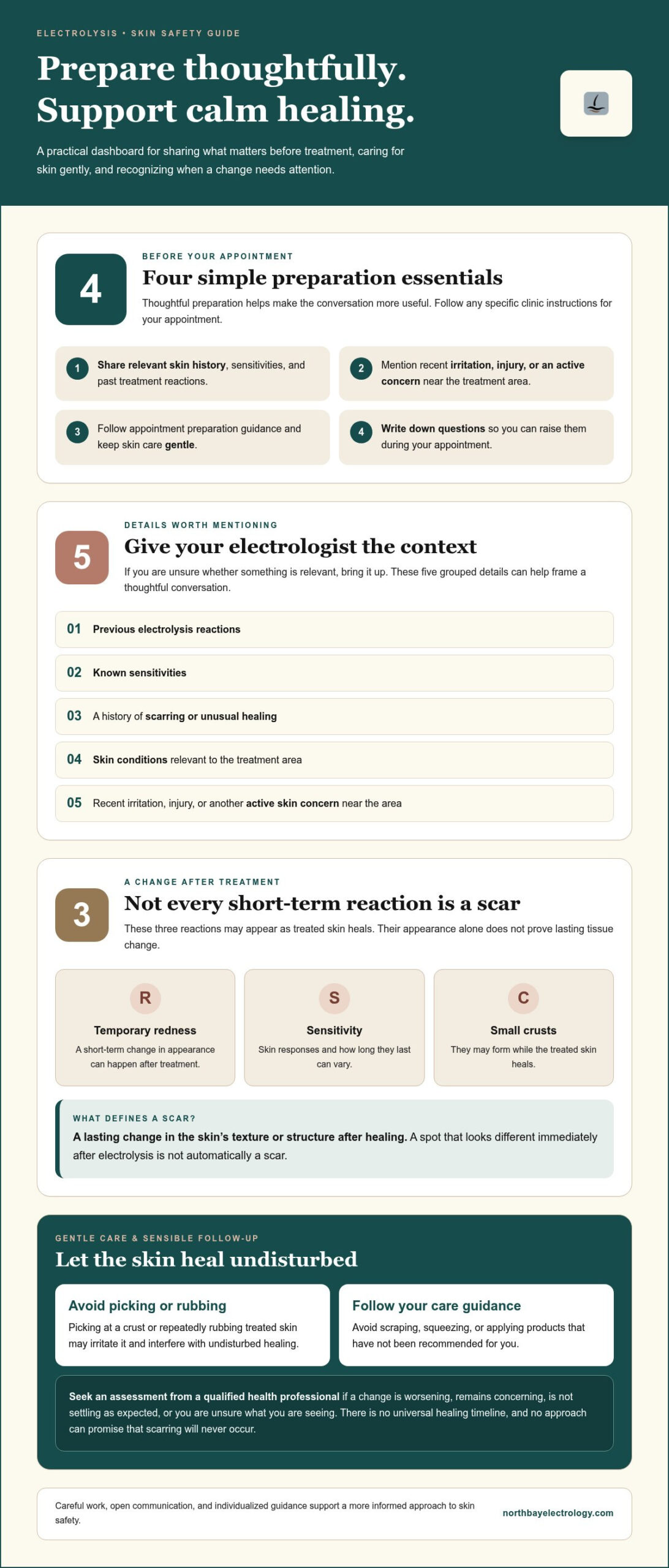
A scar is a lasting change in the skin’s texture or structure after healing. Temporary redness, sensitivity, or a small healing spot is not, by itself, proof of a scar. Skin responses differ, so appearance alone may not tell you whether a change is temporary or lasting. If you’re uncertain, or a change is worsening or not settling as expected, seek an assessment from a qualified health professional.
What skin changes can appear after electrolysis?
Some people notice temporary redness or sensitivity, and small crusts may form as the treated skin heals. These reactions can look concerning, especially in a visible or sensitive area, but they don’t necessarily indicate lasting tissue change. The appearance and duration of a reaction can vary. Don’t rely on a universal timeline or assume discoloration confirms a permanent scar. If the area is worsening, remains concerning, or you’re unsure what you’re seeing, ask a health professional to assess it.
Why can scarring risk differ from person to person?
The treatment area, personal skin history, and individual healing response can all shape the experience. Treatment technique matters too, which is why careful work and clear communication are relevant to skin safety. There isn’t one risk profile that fits everyone, and no one can promise a particular healing result.
Picking at a crust or repeatedly rubbing the treated area may irritate skin and interfere with undisturbed healing. Follow the aftercare instructions for your treatment rather than scraping, squeezing, or applying products that haven’t been recommended for you. If a mark concerns you, seek guidance instead of trying to interpret it alone.
Before treatment, tell your electrologist about previous scarring, unusual healing, irritation, or skin conditions that may be relevant. These details are useful, not something to feel self-conscious about. Open conversation helps make your concerns part of the plan and supports a more informed approach to how to avoid scarring from electrolysis.
Before electrolysis: prepare your skin and share the details that matter
Preparation can make your appointment conversation more useful and help your electrologist understand your concerns. You don’t need a complete skin history or to know in advance which details matter. Share what you’ve noticed, then ask questions that help you feel informed.
What should you tell your electrologist before treatment?
Before treatment, mention any previous electrolysis reactions, known sensitivities, history of scarring or unusual healing, and skin conditions relevant to the area. Also point out recent irritation, injury, or another active skin concern near the planned treatment area. These details help frame a thoughtful conversation; they aren’t a reason to feel embarrassed.
If you’re unsure whether something is relevant, bring it up. You can ask what to expect during treatment and how to communicate if a sensation feels unexpected. A respectful appointment leaves room for questions and helps you speak up without feeling rushed.
How can you keep your skin calm before an appointment?
Keep preparation simple. Follow the clinic’s specific instructions and arrive with clean skin unless you’ve been advised differently. Avoid unnecessary friction and harsh routines on the treatment area. Don’t start a new product or aggressive skin treatment just because you’re worried about scarring; a sudden change may create irritation of its own. If you’re considering a change, discuss it first rather than guessing.
A short checklist can help you prepare:
- Share relevant skin history, sensitivities, and past treatment reactions.
- Tell your electrologist about recent irritation, injury, or an active concern in the area.
- Follow the preparation guidance provided for your appointment and keep skin care gentle.
- Write down questions so you can raise them during your appointment.
Medication and health-condition questions need individualized guidance. Don’t stop prescribed medication or change a medical skin-care routine on your own. If you’re concerned that a medicine or health condition could affect treatment or healing, speak with the clinician who manages it and share relevant guidance with your electrologist.
These steps can help make your care more informed and personal, though they can’t predict exactly how your skin will respond. If you’re preparing for electrolysis in the North Bay, review electrolysis appointment information and bring your questions to the appointment. Clear communication is a practical part of thinking about how to avoid scarring from electrolysis.
During electrolysis: how careful technique and communication support skin safety
Electrolysis works on individual hair follicles, treating them one at a time rather than affecting a broad patch of skin. The technique is precise, and the experience can differ depending on the treatment area and your own sensitivity. Knowing what to expect may help you feel more prepared, but you don’t need to endure an uncomfortable sensation without speaking up.
What should a professional electrolysis appointment feel like?
There isn’t one sensation everyone should expect. You may notice brief discomfort, warmth, or another feeling during treatment, and your experience may vary across areas or appointments. A professional appointment should also make space for your comfort, privacy, questions, and consent, especially when treating a sensitive area.
Tell your electrologist promptly if discomfort feels unusual, changes suddenly, or makes you want to pause. Speaking up gives you and the electrologist a chance to address what you’re experiencing before continuing. You can ask for an explanation, a pause, or a moment to regroup. Your feedback is useful information, not an interruption.
Why does individualized treatment matter for skin care?
Skin and hair vary across treatment areas, and people can respond differently during a course of electrolysis. A single approach shouldn’t be assumed to suit every area or every person. Sharing how your skin has responded, including any change that concerns you, can help guide an informed conversation as treatment progresses.
Careful treatment also includes clear explanations and attentive communication. Hygiene, privacy, and respect are part of a professional experience; clients should feel able to discuss boundaries and understand what is happening. If something feels unclear, ask. You deserve to be treated with patience and dignity.
At North Bay Electrology, appointments provide dedicated care for face, neck, body, and sensitive-area electrolysis, as well as pre-surgical hair clearance. You can raise questions and share feedback during your appointment without assuming a particular skin response. If you’re considering how to avoid scarring from electrolysis, speaking up during treatment is one practical way to make sure concerns are heard as they arise.
After electrolysis: support healing and recognize changes that need attention
After treatment, keep care simple and follow the instructions provided for your skin and treatment area. Advice may differ by location and individual needs, so avoid adopting someone else’s routine or adding products, medication, or treatments without guidance. Gentle handling helps avoid unnecessary irritation while your skin settles.
Which aftercare habits can help protect healing skin?
Use clean hands when touching the treated area, and follow your electrologist’s directions for keeping it clean and caring for it. Avoid picking, scratching, or removing small crusts that may form. Rubbing and pressure can also disturb healing, so take care with clothing or other contact around the area. If an instruction is unclear, ask your electrologist rather than guessing.
These practical habits support a careful approach to how to avoid scarring from electrolysis, but they aren’t a substitute for individualized aftercare advice. North Bay Electrology’s electrolysis appointment information is available alongside the guidance you receive for your treatment.
When should you seek professional advice about a skin reaction?
Questions about routine care or what to expect from your treatment are appropriate to raise with your electrologist. If a reaction seems to be worsening, persists in a way that concerns you, or you’re unsure how to interpret it, seek advice from an appropriate healthcare professional. You don’t need to diagnose the change yourself.
Contact a healthcare professional promptly if you notice spreading redness, increasing pain, drainage, or other worsening symptoms. These signs don’t establish a diagnosis, but they deserve medical assessment. Seek prompt medical care for symptoms that are severe or getting worse rapidly.
It can help to note when the change began and how it has developed, then share that information when asking for advice. If you’re concerned, trust that concern and reach out. Getting an assessment is a sensible step, not an overreaction.
Choosing a reassuring next step for electrolysis in the North Bay
Questions about past reactions, sensitive skin, or a treatment area are welcome parts of an electrolysis conversation. You don’t need a clear explanation for every concern before bringing it up. Sharing what you’ve experienced and what would help you feel comfortable gives the appointment a more informed, personal starting point.
What can you discuss at an electrolysis appointment?
You can ask what to expect for your treatment area, how to communicate if you need a pause, and which aftercare instructions apply to you. Share relevant skin history, previous reactions, or preferences about comfort and privacy. If your questions change during treatment, raise them then, too. Your concerns deserve a respectful response.
How can North Bay Electrology support your next step?
North Bay Electrology provides appointment-based electrolysis for the face, neck, body, and sensitive areas, as well as specialized pre-surgical hair clearance. Dedicated appointments offer time to discuss your goals, skin concerns, and questions as part of your care. This can be especially reassuring if you’re approaching treatment with a past reaction or uncertainty about how your skin may respond.
For people in the North Bay, the next step can be a conversation focused on your needs, without pressure to move faster than feels right. Bring questions about how to avoid scarring from electrolysis, what to share about your skin history, and what guidance to follow after treatment. Individualized care supports informed decisions, while each person’s response to treatment can differ.
Review electrolysis appointment information when you’re ready to explore a next step. A thoughtful appointment begins with being heard.
Move forward with informed, respectful care
Knowing how to avoid scarring from electrolysis means taking a thoughtful approach before, during, and after treatment. Share your skin history and past reactions, communicate promptly if something feels unusual, and follow aftercare instructions tailored to your treatment area. Temporary changes don’t automatically mean lasting damage, but worsening or concerning symptoms deserve professional attention.
Your questions belong in the conversation. North Bay Electrology provides appointment-based care for the face, neck, body, and sensitive areas, with dedicated time to discuss your concerns and treatment needs.
With clear information and open communication, you can take your next step feeling more prepared and supported.
Frequently Asked Questions
Can electrolysis cause permanent scars?
Permanent scarring is possible, but temporary redness, sensitivity, or small healing spots aren’t automatically scars. A scar is a lasting change in skin texture or structure, and individual responses can vary with treatment and healing. If a mark is worsening, persists in a way that concerns you, or you’re unsure what it means, seek advice from an appropriate healthcare professional rather than trying to diagnose it yourself.
How can I reduce the risk of scarring from electrolysis?
To support careful healing, share your skin history and previous reactions before treatment, follow your electrologist’s instructions, and avoid picking or rubbing the treated area. Speak up during treatment if a sensation feels unusual or you need a pause. These steps can help you make informed choices, but no approach can guarantee that scarring won’t occur. Seek professional advice if a skin change worries you or is getting worse.
Is redness or a small scab normal after electrolysis?
Temporary redness, sensitivity, or a small crust may appear after electrolysis, but skin reactions and their duration differ from person to person. These changes don’t automatically mean you have a permanent scar. Follow the aftercare instructions for your treatment area and avoid removing any crusts. If the reaction is worsening, persists in a way that concerns you, or you’re unsure what you’re seeing, ask an appropriate healthcare professional for guidance.
Can picking at skin after electrolysis lead to scarring?
Picking, scratching, or removing healing crusts can irritate the skin and interfere with healing, so it’s best to leave the area undisturbed. Avoid unnecessary rubbing or friction as well, and follow your electrologist’s area-specific aftercare instructions. If you’ve already picked at the area, don’t blame yourself. Keep following your care guidance, and seek advice if the skin becomes increasingly painful, looks worse, or concerns you.
What should I avoid before an electrolysis appointment?
Avoid starting a new product or aggressive skin treatment on the area just because you’re worried about scarring. Unnecessary friction and harsh routines may irritate skin. Follow the clinic’s preparation instructions and arrive with clean skin unless advised otherwise. Don’t stop prescribed medication or change a medical skin-care routine on your own. If a health condition or medication raises questions, discuss it with the clinician who manages your care.
When should I contact a healthcare professional after electrolysis?
Seek advice from an appropriate healthcare professional if a skin reaction is worsening, persists in a way that concerns you, or is difficult to interpret. Spreading redness, increasing pain, or drainage merit medical assessment. These signs don’t establish a diagnosis, but they shouldn’t be ignored. For severe or rapidly worsening symptoms, seek prompt medical care. For questions about routine aftercare, your electrologist can clarify the instructions provided for your treatment.
Does electrolysis cause dark spots or changes in skin color?
Temporary changes in skin color may occur, but discoloration alone doesn’t confirm a permanent scar or explain the cause. Skin responses differ, and it can be difficult to judge a change by appearance alone. Follow your aftercare guidance and seek professional assessment if the color change is worsening, persistent, or concerning. North Bay Electrology provides appointment-based electrolysis for clients in Petaluma, Novato, Cotati, Rohnert Park, Santa Rosa, Sonoma, Napa, Vallejo, San Rafael, Sebastapol, American Canyon, Terra Linda, Corte Madera, Windsor, and Healdsburg.

Article by
Madison Hanselman
As a trans woman and owner of North Bay Electrology in Petaluma, I bring a deep personal empathy and love for technical systems to my practice. My own transition fuels my passion for permanent hair removal, making my clinic a proud partner and safe haven for the LGBTQ+ community. Balancing rigorous analytics with heartfelt care, I approach electrology as both a precise science and a life-changing path to self-actualization.