
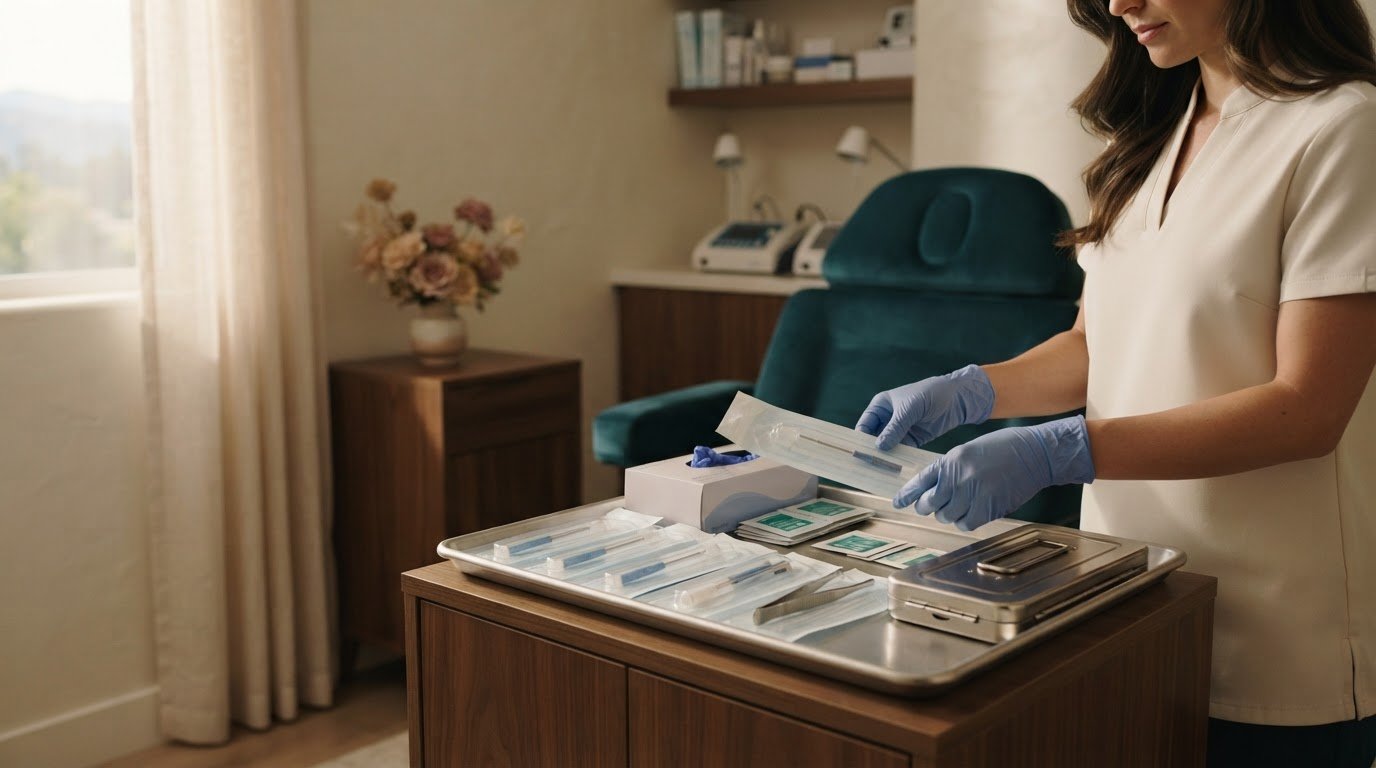
What if the clearest sign of a hygienic electrolysis clinic isn’t a reassuring promise, but a step you can see before treatment begins? It’s understandable to want clear answers about probe handling, sterilization, and skin irritation before booking. Hygienic electrolysis clinic standards are reflected in consistent practices, not just careful-sounding language.
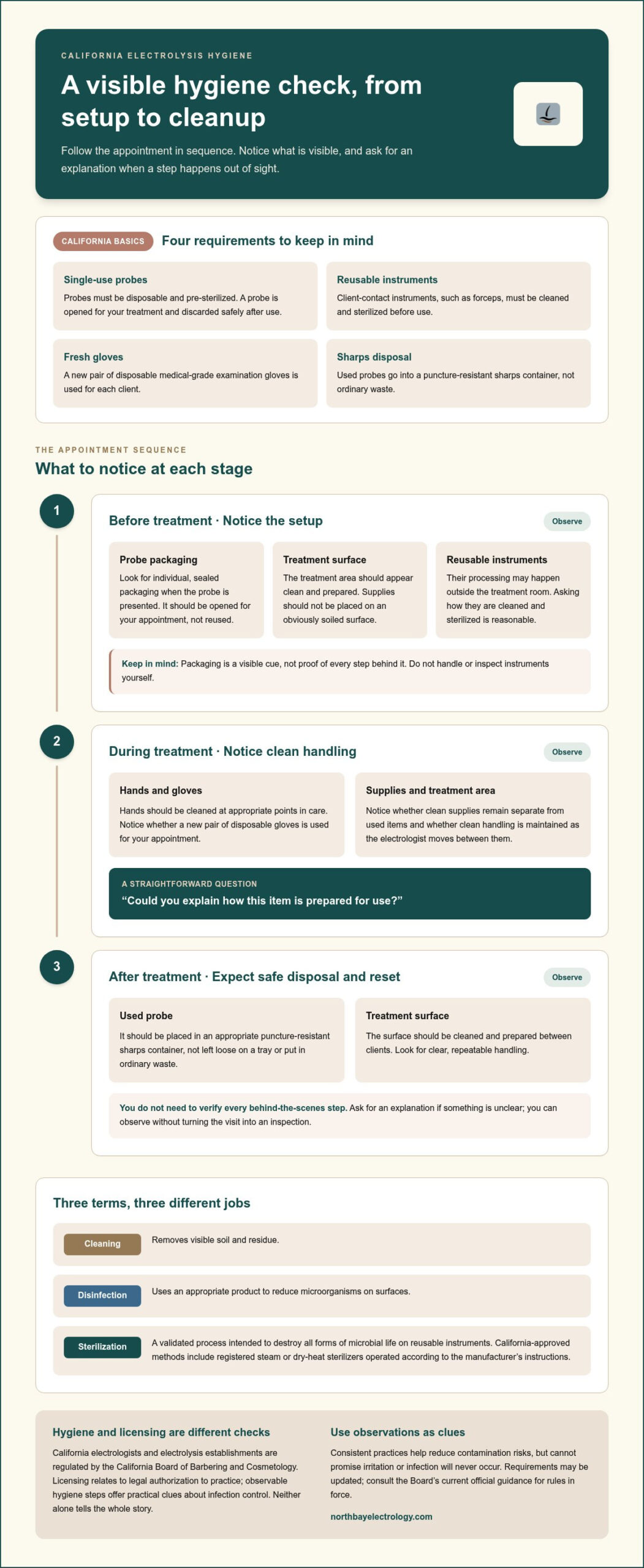
In California, electrolysis probes must be single-use and pre-sterilized, and reusable instruments must be cleaned and sterilized before each use. A new pair of disposable gloves should be used for each client. Knowing these basics can help you notice what happens and ask questions without feeling uncomfortable.
This checklist explains which hygiene steps matter, what you can observe before treatment starts, and how to ask about sterilization in a straightforward way. With a clearer picture of what to expect, you can approach your appointment feeling informed and more at ease.
Key Takeaways
- Learn which hygienic electrolysis clinic standards you can observe before and during an appointment, rather than relying on broad assurances.
- Follow a simple sequence to notice treatment setup and handling, then ask respectful questions if you need clarification.
- Understand how hygiene requirements differ from licensing rules, and why both matter when assessing care in California.
- Know what to expect when discussing privacy, consent, and individualized plans for sensitive-area or pre-surgical electrolysis.
- See how an appointment-based approach supports dedicated care for face and neck, body, sensitive-area, and pre-surgical electrolysis.
What hygienic electrolysis clinic standards should clients expect in California?
Before treatment begins, it’s reasonable to want to know how a clinic handles items that touch your skin. Hygienic electrolysis clinic standards are the repeatable practices used to reduce contamination risks during treatment, including appropriate hand hygiene, clean surfaces, and safe handling of probes and instruments. These steps help lower risk, but they can’t promise that irritation or infection will never occur.
Electrolysis uses a fine probe to treat individual hair follicles. The general Electrolysis overview explains the treatment method; hygiene standards focus on preventing contamination as supplies and instruments are used. You can observe some practices, such as a fresh pair of gloves or a probe being opened for your treatment. Other requirements, including how reusable instruments are sterilized, may be explained rather than visible during an appointment.
What does hygiene mean during an electrolysis appointment?
Hygiene is a sequence, not a single cleaning step. Hands should be cleaned at appropriate points in care, and treatment surfaces should be cleaned and disinfected. Single-use probes must be pre-sterilized, opened for the individual treatment, and discarded safely after use. Reusable instruments, such as forceps, require a different process: they must be cleaned and then sterilized before they’re used again.
The terms describe different levels of care. Cleaning removes visible soil and residue. Disinfection uses an appropriate product to reduce microorganisms on surfaces. Sterilization is a validated process intended to destroy all forms of microbial life on reusable instruments. In California, approved sterilization methods include registered steam or dry-heat sterilizers operated according to the manufacturer’s instructions.
Which California standards govern electrolysis hygiene?
California electrologists and electrolysis establishments are regulated by the California Board of Barbering and Cosmetology. State rules address licensing as well as infection-control practices. Requirements include using single-use, pre-sterilized disposable probes, placing used probes in a puncture-resistant sharps container, and cleaning and sterilizing reusable client-contact instruments before use. Electrologists must also use a new pair of disposable medical-grade examination gloves for each client.
A license and observable hygiene steps answer different questions. Licensing relates to legal authorization to practice; watching a probe being opened or seeing clean handling offers practical clues about infection control. Neither alone tells the whole story. California requirements can be updated, so consult the Board’s current official guidance for the rules in force. This checklist can help you know what to look for, but it doesn’t replace those requirements or provide a complete legal interpretation.
The electrolysis hygiene checklist: probes, instruments, hands, and surfaces
A useful hygiene check follows treatment from setup to cleanup. You don’t need to touch equipment or interrupt care. Notice whether supplies are handled deliberately and whether the steps appear consistent. Consistent handling at every appointment helps reduce opportunities for contamination.
Before treatment: notice the setup
- Probe: If a probe is presented before use, look for individual, sealed packaging and a single-use item. It should be opened for your treatment, not reused.
- Reusable instruments: Forceps and similar instruments require appropriate cleaning and sterilization between uses. You may not see that processing happen in the treatment room, so asking for a clear explanation of the process is reasonable.
- Surface: The treatment area should appear clean and prepared. Supplies should be arranged to support clean handling, not placed on an obviously soiled surface.
Packaging is a visible cue, not proof of every step behind it. Reusable instruments follow a separate processing path, and their handling must meet current applicable requirements. If a detail isn’t visible, ask about it without inspecting or handling instruments yourself.
During treatment: notice handling
Hand hygiene matters before treatment and whenever hands could have become contaminated. Gloves should be used as required by the procedure and applicable guidance. In California, the rules include a new pair of disposable medical-grade examination gloves for each client. Notice whether clean handling is maintained as the electrologist moves between supplies and the treatment area.
You can observe without interrupting: watch whether a probe is opened for your appointment, notice if clean supplies remain separate from used items, and speak up if you’re unsure about what you’ve seen. A straightforward question might be, “Could you explain how this item is prepared for use?”
After treatment: expect safe disposal and reset
Used single-use probes should be discarded in an appropriate puncture-resistant sharps container, not left loose on a tray or placed in ordinary waste. The treatment surface should be cleaned and prepared between clients. You don’t need to verify every behind-the-scenes step. Look for clear, repeatable handling and feel free to ask for an explanation.
These observations can help you understand the hygienic electrolysis clinic standards that shape an appointment, without turning your visit into an inspection. North Bay Electrology provides electrolysis by appointment, allowing time for dedicated care and questions. To learn more about appointment-based electrolysis care, review the booking information.
How to assess a clinic’s hygiene practices without relying on vague promises
It’s natural to want reassurance before treatment, especially if you’re unsure what a hygienic setup should look like. Phrases such as “clean and safe” may sound comforting, but explanations of specific, repeatable practices give you more useful information. You’re not there to conduct an inspection. The goal is to understand what will happen and feel comfortable proceeding.
Use this simple sequence as a guide:
- Observe the setup. Notice whether the work area appears prepared for your scheduled treatment and whether supplies are presented in an orderly way. Don’t touch equipment or packages. If something is unclear, pause and ask before treatment begins.
- Notice handling. Observe how the electrologist handles supplies and separates items intended for use from those already used. You might see a probe opened for your appointment; reusable instruments may have been processed before you arrive, so that step may not be visible.
- Ask for clarification. A brief, respectful question can help you understand the process without disrupting care. You can say, “Could you explain how this item is prepared?” or “How are reusable instruments processed between appointments?”
Questions that make it easier to understand the process
If you’d like more detail, keep your questions neutral and focused on your comfort. For example: “Is this probe single-use?” “How do you prepare the treatment area between clients?” or “Could you tell me how reusable instruments are cleaned and sterilized?” Ask one question at a time. A clear explanation can reduce uncertainty, but no conversation or visible practice can guarantee that risk is zero.
Pay attention to whether the response addresses your question in plain language. It’s reasonable to request a pause while you get an explanation, particularly if you’re feeling uncertain. Your comfort matters, and you don’t need to apologize for wanting to understand care that involves close contact with your skin.
These observations are practical clues, not a complete assessment of every procedure or regulatory requirement. Use them alongside the checklist in this article, and focus on whether the process is understandable to you. Hygienic electrolysis clinic standards are easier to recognize through specific actions and calm, clear communication than through reassuring labels alone.
Hygiene and comfort during electrolysis: what changes with sensitive or pre-surgical care?
The same hygiene fundamentals apply across electrolysis treatments. What may change is the treatment plan, the area being treated, and the communication that helps you feel informed and respected. Privacy, consent, and clear explanations are part of a thoughtful appointment, especially when treatment involves a sensitive area or is planned in connection with surgery.
How can sensitive-area treatment feel more respectful and prepared?
You deserve care that respects your boundaries and personal goals. Before treatment, the electrologist can explain the steps and give you space to ask questions. You can share what would help you feel more comfortable, request clarification, or ask to pause. Your preferences matter throughout the appointment.
There’s no need to assume that a client’s gender, anatomy, treatment history, or reasons for seeking electrolysis can be inferred. A respectful conversation lets you describe only what’s relevant to your care. Clear communication can make expectations easier to understand, but it should never replace consent or pressure you to continue when you’re uncomfortable.
What should pre-surgical electrolysis clients coordinate?
For pre-surgical electrolysis, follow the hair-clearance instructions provided by your surgical team. The timing and treatment area are specific to your care plan, so don’t rely on general timelines or advice from an article. Share the instructions that affect appointment planning, including any timing guidance, so the electrolysis plan can be discussed in that context.
Electrolysis hygiene and surgical decisions are related but distinct. Hygiene practices support careful treatment; they don’t determine whether a procedure is appropriate for you or predict a surgical outcome. Your surgical team is the right source for decisions about eligibility, timing, and preparation. For more background on this specialized service, see the pre-surgical electrolysis clinical guide.
North Bay Electrology provides pre-surgical and sensitive-area electrolysis by appointment, alongside face and neck and body treatments. An appointment-based model allows time for a dedicated conversation about your needs and questions. The hygienic electrolysis clinic standards discussed here remain the foundation, while respectful planning helps make care more personal.
North Bay Electrology’s appointment-based approach to informed electrolysis care
Knowing what to expect can make it easier to move from research to an appointment. North Bay Electrology provides electrolysis by appointment only, creating dedicated time for care and conversation. Walk-ins aren’t accepted, so appointments are scheduled in advance.
What can clients expect when planning an appointment?
As you plan, consider what you’d like treatment to address and whether there are care considerations you want to discuss. Sharing relevant information can help shape a personal conversation about your goals. You don’t need to have every question or detail prepared before booking.
North Bay Electrology offers face and neck, pre-surgical, body, and sensitive-area electrolysis for clients in Petaluma, Novato, Cotati, Rohnert Park, Santa Rosa, Sonoma, Napa, Vallejo, San Rafael, Sebastapol, American Canyon, Terra Linda, Corte Madera, Windsor, and Healdsburg. Each person’s reasons for seeking treatment are their own. Explain what matters to you in the words that feel comfortable, and ask for clarification as you consider your next step.
For pre-surgical care, follow your surgical team’s instructions about timing and treatment planning. For sensitive-area care, it’s reasonable to communicate privacy or comfort needs. Sharing these considerations can guide the conversation without requiring you to disclose more than feels relevant.
How can clients take the next step with confidence?
Use the checklist as a practical reference, not a test you must administer. Look for clear explanations, appropriate handling of supplies, and a treatment area that appears prepared. If a step is unclear, ask a simple question before treatment begins. Good communication can help you feel more informed, although no checklist can guarantee a particular outcome.
Hygienic electrolysis clinic standards are important, and so is feeling respected during care. North Bay Electrology’s appointment-only approach offers space to discuss face and neck, pre-surgical, body, or sensitive-area electrolysis in a dedicated setting. Questions about comfort are welcome, and you can share your needs at your own pace.
Move Forward With Clarity and Confidence
Choosing care feels more manageable when you know what to look for. Hygienic electrolysis clinic standards are reflected in clear explanations, appropriate handling of supplies, and consistent attention to the treatment area. You can observe what’s visible, ask respectful questions, and request clarification whenever a step feels uncertain.
Comfort matters alongside hygiene. Whether you’re considering face and neck, body, sensitive-area, or pre-surgical electrolysis, sharing your goals and relevant care considerations can help guide the conversation. For pre-surgical planning, follow your surgical team’s instructions.
North Bay Electrology provides electrolysis by appointment only, allowing dedicated time for care and questions. Clients across Petaluma, Novato, Cotati, Rohnert Park, Santa Rosa, Sonoma, Napa, Vallejo, San Rafael, Sebastapol, American Canyon, Terra Linda, Corte Madera, Windsor, and Healdsburg can explore treatment options in a respectful, supportive setting.
You deserve to feel informed and respected as you decide what’s right for you. Take the next step at your own pace.
Frequently Asked Questions
What hygiene standards should an electrolysis clinic follow?
An electrolysis clinic should use consistent infection-control practices to reduce contamination risks during treatment. In California, probes must be single-use and pre-sterilized, and reusable client-contact instruments must be cleaned and sterilized before use. Electrologists must use a new pair of disposable medical-grade examination gloves for each client. Treatment surfaces should be cleaned and disinfected, and used probes placed in a puncture-resistant sharps container.
How are electrolysis probes sterilized or disposed of?
Electrolysis probes are single-use, pre-sterilized items. They aren’t cleaned for reuse; after treatment, they must be discarded in a puncture-resistant sharps container. You can look for an individually packaged probe being opened for your appointment, but don’t handle treatment supplies yourself. Reusable instruments, such as forceps, follow a different process: they must be cleaned and sterilized before each use.
Is electrolysis safe if the clinic follows proper hygiene practices?
Following appropriate hygiene practices helps reduce contamination risks, but no procedure can guarantee zero risk or prevent every skin reaction. Temporary redness or irritation may occur after electrolysis, and infection is a concern to take seriously. Ask questions if you’re unsure about a hygiene step, and share relevant health information before treatment. If you develop concerning symptoms after an appointment, seek advice from a qualified healthcare professional.
What should I look for in an electrolysis treatment room?
Look for a treatment area that appears clean and prepared, with supplies handled in an orderly way. You may observe a single-use probe being opened for your appointment and clean items kept separate from used ones. Don’t touch equipment or packages. Some processes, such as sterilizing reusable instruments, may happen outside the room, so a clear explanation can help clarify what you can’t directly observe.
Can I ask an electrologist about their sanitation procedures?
Yes. Asking about hygiene is a reasonable part of understanding your care, and you can ask in a calm, straightforward way. For example: “Is this probe single-use?” or “How are reusable instruments cleaned and sterilized?” You can also ask how the treatment area is prepared between appointments. A clear answer can ease uncertainty, but it doesn’t replace required procedures or guarantee that risk is absent.
How does California regulate electrolysis clinics?
California electrologists and electrolysis establishments are regulated by the California Board of Barbering and Cosmetology. State infection-control requirements cover matters such as single-use pre-sterilized probes, reusable instrument processing, and disposable gloves for each client. Sterilizers must be monitored, including monthly biological testing. Regulations can change, so consult the Board’s current official guidance for the requirements in force. A patient checklist is useful, but it isn’t a substitute for official rules.
What happens if I have a concern about hygiene during my appointment?
If a hygiene step concerns you, pause and tell the electrologist before treatment continues. Ask for a clear explanation of how the probe or instrument is prepared, then decide whether you feel comfortable proceeding. You don’t need to handle equipment or apologize for asking. North Bay Electrology serves clients in Petaluma, Novato, Cotati, Rohnert Park, Santa Rosa, Sonoma, Napa, Vallejo, San Rafael, Sebastapol, American Canyon, Terra Linda, Corte Madera, Windsor, and Healdsburg.

Article by
Madison Hanselman
As a trans woman and owner of North Bay Electrology in Petaluma, I bring a deep personal empathy and love for technical systems to my practice. My own transition fuels my passion for permanent hair removal, making my clinic a proud partner and safe haven for the LGBTQ+ community. Balancing rigorous analytics with heartfelt care, I approach electrology as both a precise science and a life-changing path to self-actualization.