What if the condition you’ve known as PCOS for years just received a new name that finally validates every systemic symptom you’ve experienced? In May 2026, the medical community officially transitioned to the term PMOS, or Polyendocrine Metabolic Ovarian Syndrome, to better reflect the complex hormonal and metabolic nature of this condition. For many in Santa Rosa, this shift is more than just a change in terminology; it’s a step toward better understanding why frustrating symptoms like persistent facial hair occur in the first place.
We understand that managing visible hair growth can feel like a relentless, daily battle. The constant cycle of plucking and shaving doesn’t just irritate your skin; it takes a heavy emotional toll. You deserve a solution that moves beyond temporary fixes and conflicting advice about laser treatments. In this article, you’ll discover why the transition to PMOS matters for your health and why electrolysis remains the only FDA-approved permanent solution for hormonal hair. We’ll explore the science of permanent clearance and explain how a specialized, trauma-informed approach can help you reclaim your confidence without the shadow of unwanted hair.
Key Takeaways
- Learn about the 2026 medical transition from PCOS to PMOS and how this new terminology validates the systemic nature of your symptoms.
- Understand the physiological link between androgens and hirsutism to better manage unwanted facial and neck hair.
- Contrast the permanent efficacy of electrolysis with the risks of laser treatments, which can sometimes trigger more growth in hormonal areas.
- Gain clarity on the treatment timeline and why a consistent series of sessions is necessary to achieve lasting results.
- Discover a safe, non-judgmental environment for specialized care that prioritizes your comfort and clinical safety.
Understanding PMOS: The Clinical Shift from PCOS
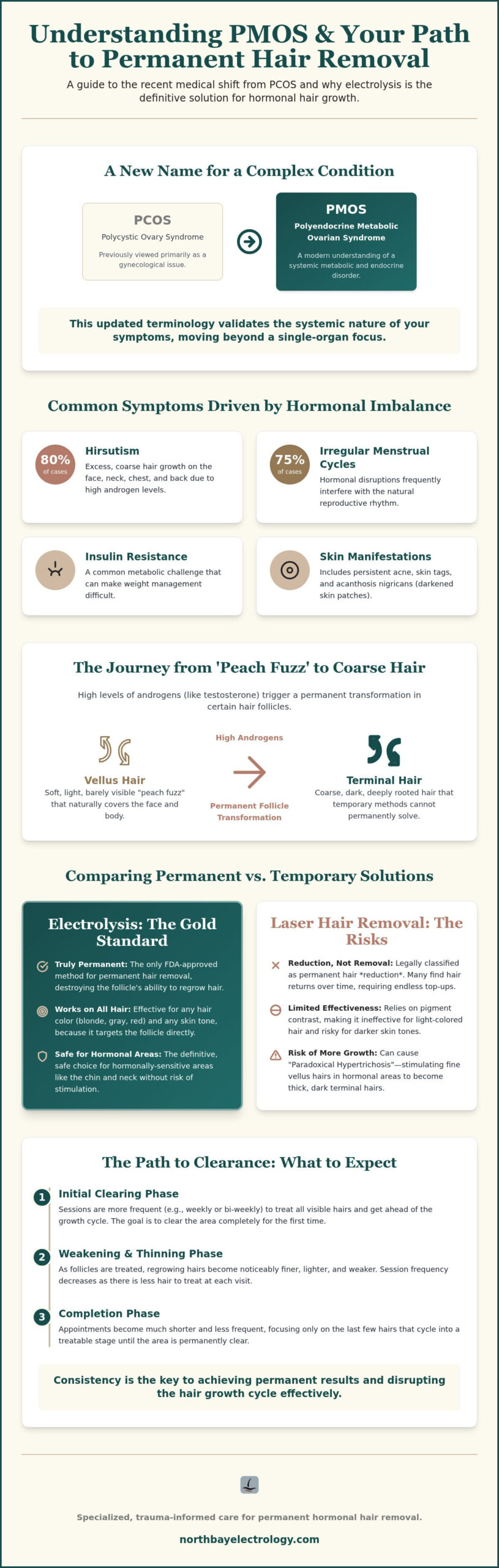
In May 2026, the medical community adopted a more precise name for a condition that affects millions of individuals. The transition from Polycystic Ovary Syndrome (PCOS) to Polyendocrine metabolic ovarian syndrome (PMOS) marks a significant milestone in specialized care. This updated terminology acknowledges that the condition isn’t merely a gynecological concern but a systemic metabolic and endocrine disorder. While the name change is a recent development, the daily reality for those living with it remains a complex journey of hormonal management.
PMOS is a hormone health issue affecting 1 in 8 women worldwide. For many, the shift in clinical focus provides a sense of relief, as it finally addresses the metabolic roots of symptoms that were previously misunderstood. By viewing the body through this broader lens, healthcare providers can offer more comprehensive support for the endocrine imbalances that drive unwanted physical changes. While the name is new, the underlying hormonal challenges remain the same.
The Core Symptoms of PMOS
The symptoms of this syndrome are often interconnected, creating a ripple effect across your overall well-being. High levels of androgens, or “male” hormones, frequently disrupt the natural rhythm of the body. This often results in irregular menstrual cycles, which approximately 75% of women with this condition experience. Beyond reproductive health, the metabolic component plays a central role. Insulin resistance is a common challenge, often making weight management feel like an uphill battle despite your best efforts.
Your skin often acts as a mirror for these internal hormonal shifts. You might notice persistent acne, the appearance of skin tags, or acanthosis nigricans, which is a darkening of the skin in areas like the neck or underarms. Perhaps most distressing for many is hirsutism, or excess hair growth, which affects 70% to 80% of those with PMOS. Understanding these signs as part of a single metabolic picture is the first step toward finding peace with your body.
When to Seek a Clinical Diagnosis
Obtaining a formal diagnosis is a powerful act of self-advocacy. It moves you away from guesswork and toward a structured plan for wellness. Clinical experts typically use blood tests to measure levels of testosterone and anti-Müllerian hormone (AMH) to confirm an imbalance. In some cases, an ultrasound is performed to identify small, fluid-filled follicles on the ovaries. The modern diagnostic trend focuses more on laboratory markers of insulin resistance and androgen excess rather than just imaging.
A clear diagnosis serves as the foundation for your hair removal strategy. Once you understand the hormonal drivers at play, you can choose treatments that align with your body’s specific needs. At North Bay Electrology, we view this clinical information as a roadmap. It helps us provide the most effective, permanent clearance for your unique situation. If you’re ready to begin this process in a supportive environment, you can book a session to discuss your goals and create a personalized plan.
The Link Between PMOS and Hirsutism
Hirsutism is one of the most visible and emotionally taxing symptoms of PCOS, now clinically referred to as PMOS. This condition involves excess male-pattern hair growth in areas such as the chin, neck, chest, and back. While everyone has some level of body hair, the hormonal environment in PMOS causes follicles to behave differently. Androgens, such as testosterone, act like a chemical switch. They signal specific follicles to produce hair that is significantly thicker, darker, and more persistent than typical body hair. For 70% to 80% of individuals with this syndrome, managing this growth becomes a daily, exhausting priority.
Living with visible facial hair often leads to a heavy emotional burden. Many people spend hours every week plucking, shaving, or concealing, only to find that a “shadow” remains. This constant maintenance is more than a cosmetic inconvenience. It’s a struggle that can impact your self-esteem and identity. It is common to feel a sense of distress or a loss of control over your own appearance. Acknowledging the biological roots of this growth is the first step toward finding a solution that offers lasting peace of mind.
How Hormones Transform Vellus Hair
Hormonal shifts don’t just make hair grow faster; they fundamentally change the follicle’s output. Most of the face is naturally covered in vellus hair, the soft, light “peach fuzz” that is barely visible. However, when high levels of androgens are present, these follicles undergo a permanent transformation. They become terminal follicles, producing coarse, pigmented hair that is deeply rooted in the skin. Topical methods like shaving or waxing feel like a losing battle because they only remove the hair above the surface. They do nothing to stop the follicle’s newly established biological programming. This is why a clinical, permanent solution is necessary to stop the cycle of regrowth.
The Psychological Safety of Affirming Care
At North Bay Electrology, we believe that hair removal is a form of advocacy and care. We provide a safe, non-judgmental space where your experience is validated. There is no reason to feel shame about a biological process driven by your endocrine system. Reaching a state of permanent clearance contributes significantly to your mental well-being. It allows you to wake up without the immediate need to check the mirror or reach for a razor. If you are looking for a supportive partner in your journey, you can schedule a private consultation to discuss a personalized treatment plan in our Santa Rosa clinic.
Why Electrolysis is the Gold Standard for PMOS
When managing the systemic effects of PMOS, finding a reliable method for hair clearance is essential for your long-term comfort. Many people first consider laser hair removal, but this can be a problematic choice for those with hormonal imbalances. Laser is technically classified as permanent hair reduction, whereas electrolysis is the only method recognized by the FDA for permanent hair removal. Electrolysis stands alone in its ability to treat every skin tone and hair color with equal success, including white, grey, or blonde hairs that laser technology often misses.
For those with hormonal conditions, laser treatments carry a specific risk known as paradoxical hypertrichosis. This occurs when the low-level heat of a laser actually stimulates dormant follicles in hormonal areas like the face and neck, causing more hair to grow than before. Electrolysis avoids this risk entirely by delivering precise energy directly into the follicle rather than heating a broad area of skin. This makes it a far safer and more predictable option for individuals navigating the complexities of their endocrine health.
The Science of the Hair Follicle
Electrolysis works by targeting the germinative cells at the base of the hair follicle. A fine, sterile probe is inserted into the natural opening of the follicle, where a small amount of electrical energy destroys the area responsible for regrowth. This precision is vital for the sensitive skin of the face and neck. Because the treatment physically disables the follicle, it remains effective even when your PMOS hormone levels fluctuate. It doesn’t rely on the hair’s pigment; it focuses on the follicle’s anatomy to ensure the hair cannot return.
The precision of treating one follicle at a time allows for a meticulous approach, especially in delicate areas like the upper lip or jawline. This one-by-one method ensures that every active hair is addressed at its source. While it requires patience and a series of appointments, this focused energy is what guarantees permanent results. It provides a level of certainty that temporary methods simply cannot match.
Electrolysis vs. Temporary Methods
Relying on temporary fixes like waxing, threading, or shaving creates a cycle of skin trauma. These methods can lead to painful ingrown hairs, hyperpigmentation, and chronic irritation that can take months to heal. Over a lifetime, the cumulative cost and time spent on these temporary measures far exceed the investment in permanent clearance. Choosing a path toward permancy matters because it offers an end date to the daily struggle of hair management.
Beyond the financial aspect, the emotional cost of temporary methods is significant. The anxiety of letting hair grow out for a wax appointment can be paralyzing for those with hormonal growth. Electrolysis allows for a more flexible schedule, and as you progress, the hair becomes finer and more sparse until it’s gone for good. By choosing electrolysis, you aren’t just removing hair; you’re protecting the long-term health and integrity of your skin.
The PMOS Treatment Journey: What to Expect
Embarking on a journey toward permanent hair clearance is an empowering decision. It’s essential to view electrolysis as a marathon, not a sprint. Unlike temporary fixes that offer immediate but fleeting results, electrolysis works progressively to disable follicles forever. Because hair grows in cycles, we must treat each follicle during its active growth stage, known as the anagen phase. Only hairs in this phase are effectively targeted, which is why a series of sessions is required to achieve total clearance.
For individuals with PMOS, the treatment timeline may look slightly different than for those with non-hormonal growth. High androgen levels often lead to a higher density of terminal follicles in a single area. This means your initial clearance phase might take longer as we work through a larger volume of active hairs. Consistency is your greatest ally in this process. Sticking to a regular appointment schedule ensures we catch each hair at the optimal time, preventing the “shadow” from returning and moving you closer to smooth, clear skin.
Your First Appointment and Consultation
Your journey begins with a thorough, professional assessment of your skin and hair patterns. We take the time to understand your medical history and your specific goals for the face and neck. This isn’t a one-size-fits-all service; we create a customized plan that respects your skin’s sensitivity and the unique way your PMOS presents. We’ll discuss the number of sessions likely needed and what you can expect during each visit. Preparing for Your First Session involves understanding these steps so you feel confident and informed from the moment you walk through our doors.
Pain Management and Aftercare
We prioritize your comfort throughout every session. Modern electrolysis techniques are designed to be manageable, and we use specific methods to ensure face and neck treatments are as gentle as possible. After your session, following a precise aftercare routine is vital. This helps prevent temporary redness and supports healthy skin healing. Our “by appointment only” policy ensures you receive care in a focused, private environment. This dedicated time allows us to maintain the highest clinical standards while providing the emotional safety you deserve during your transformation.
Affirming Electrolysis Services in the North Bay
North Bay Electrology serves as a dedicated ally for those managing the physical manifestations of PMOS. We specialize in providing FDA-approved, permanent hair removal for the face, neck, and other sensitive areas. Our clinic understands that hormonal hair growth is a deeply personal concern. We offer a professional, non-judgmental atmosphere where your dignity and comfort are prioritized. For residents across Sonoma and Marin counties, we provide the technical precision required for lasting results alongside a trauma-informed approach to care.
Our appointment-only model is a deliberate choice. We recognize that privacy is paramount for our clients, particularly when addressing visible facial hair. By operating without walk-ins, we ensure that your time in our clinic is exclusively yours. You won’t have to worry about a crowded waiting room or a rushed session. This quiet, clinical setting allows us to focus entirely on your individual treatment plan and your progress toward clear skin. We believe that every client deserves a space where they feel seen, heard, and respected.
Serving Petaluma, Santa Rosa, and Beyond
Finding a local specialist who truly understands the biological drivers of hormonal hair can be a challenge. We’re proud to offer convenient access for clients in Novato, Rohnert Park, and San Rafael. Whether you’re coming from Petaluma or Santa Rosa, you’ll find a welcoming space designed for your well-being. Our deep understanding of how hormones affect the skin allows us to provide more than just a service; we offer a path toward reclaiming your self-image. For more information on local options, explore our guide to Electrolysis in Sonoma County.
Booking Your Path to Confidence
We’ve streamlined our scheduling process to make your journey as stress-free as possible. You can easily select your dedicated time through our secure GlossGenius portal. This transparency allows you to plan your sessions around your lifestyle and treatment needs. While we don’t offer direct insurance billing, we understand the financial aspect of long-term care. We’re happy to provide the necessary insurance reimbursement paperwork to help you navigate your provider’s requirements. Our goal is to make the administrative side of your care as smooth as the results we achieve together.
Reclaiming Your Confidence and Skin Health
Managing the systemic challenges of PMOS requires a combination of medical insight and clinical expertise. By choosing electrolysis, you’re opting for the only FDA-approved method that addresses the hair follicle at its source. This provides a permanent end to the cycle of shaving, plucking, and temporary fixes. Whether you’re dealing with new growth or persistent terminal hairs on the face and neck, specialized care ensures your skin remains healthy and clear.
North Bay Electrology has been serving the North Bay since 2026, offering a private, appointment-only environment designed for your comfort. We specialize in face and neck treatments, delivering results that are both clinically accurate and emotionally validating. You don’t have to navigate this journey alone. We’re here to provide a supportive, non-judgmental space where your personal transformation is our primary focus.
Take the first step toward lasting peace of mind and skin that reflects your true self. We look forward to supporting you through every stage of your clearance journey.
Frequently Asked Questions
Is electrolysis permanent even if my PMOS hormones are imbalanced?
Yes, electrolysis provides permanent results because it destroys the follicle’s ability to regenerate hair. While hormonal imbalances associated with PMOS can stimulate new follicles to produce hair over time, the specific follicles treated during our sessions are permanently disabled. This makes electrolysis the only FDA-approved method for permanent hair removal, offering a reliable solution even when your internal hormone levels fluctuate or remain elevated.
Why is electrolysis better than laser for PMOS facial hair?
Electrolysis is the superior choice for hormonal growth because it avoids the risk of paradoxical hypertrichosis, a condition where laser heat stimulates more hair growth in sensitive areas. Unlike laser, which requires specific hair pigments to work, electrolysis is effective on all skin tones and hair colors. This precision is essential for treating the stubborn, deeply rooted terminal hairs that often appear on the face and neck due to endocrine shifts.
How many sessions will I need to clear my chin and neck hair?
The number of sessions varies based on your hair density and individual growth cycles. Most clients require a series of appointments over several months to catch every hair in its active growth phase. Because PMOS can cause a higher density of follicles in a single area, your initial clearance phase might be more frequent. We’ll create a customized timeline during your private consultation to ensure we achieve your goals as efficiently as possible.
Does North Bay Electrology accept walk-ins for PMOS consultations?
No, we do not accept walk-in appointments at our clinic. To ensure the highest level of privacy and dedicated care for our clients, all consultations and treatments are conducted by appointment only. This model allows us to maintain a professional, calm environment where we can focus entirely on your specific needs. You can easily schedule your dedicated time through our secure GlossGenius portal for our Santa Rosa and Petaluma area clients.
Can electrolysis help with the ingrown hairs caused by PMOS?
Yes, electrolysis is an excellent solution for preventing the painful ingrown hairs often caused by daily shaving or waxing. By permanently destroying the hair follicle, we eliminate the source of the problem entirely. As the hair stops growing, your skin has the opportunity to heal from chronic irritation and inflammation. This results in a much smoother skin texture and a significant reduction in the “shadow” often associated with hormonal hirsutism.
Is the treatment safe for sensitive skin on the face?
Electrolysis is a safe and effective treatment for the sensitive skin on the face and neck. We use modern, precise techniques tailored to your skin’s specific needs and sensitivity levels. Following our professional aftercare instructions helps to minimize temporary redness and ensure healthy healing. Our goal is to provide a gentle experience that respects the integrity of your skin while achieving the permanent hair clearance you desire in a clinical, affirming setting.
Will my insurance cover electrolysis for PMOS?
Coverage depends entirely on your specific insurance provider and plan. While North Bay Electrology does not offer direct insurance billing, we provide the necessary insurance reimbursement paperwork for you to submit to your carrier. Many clients find that with a clinical diagnosis, they can seek reimbursement for treatments deemed medically necessary. We recommend contacting your insurance agent directly to verify your plan’s specific requirements for out-of-network hair removal services in California.
What is the difference between PCOS and PMOS?
PMOS, or Polyendocrine Metabolic Ovarian Syndrome, is the updated clinical term for what was formerly known as PCOS. In May 2026, the medical community adopted this new name to more accurately reflect the condition’s systemic metabolic and endocrine effects. While the terminology has changed to provide better diagnostic clarity, the underlying symptoms, such as hormonal hair growth and insulin resistance, remain the same. This shift helps healthcare providers offer more comprehensive, systemic care for patients.
Article by
Madison Hanselman
As a trans woman and owner of North Bay Electrology in Petaluma, I bring a deep personal empathy and love for technical systems to my practice. My own transition fuels my passion for permanent hair removal, making my clinic a proud partner and safe haven for the LGBTQ+ community. Balancing rigorous analytics with heartfelt care, I approach electrology as both a precise science and a life-changing path to self-actualization.