

There’s no single session count for men’s facial hair removal in Cotati. The treatment area, hair growth, chosen method, and desired result all shape the plan. Electrolysis and laser follow different processes. Laser hair removal may be followed by hair-free periods lasting several months or years.
It’s understandable to want a clear timeline before starting, especially when facial hair removal involves a visible or sensitive area. The practical answer is that session plans depend on your goals and the method used, not a universal number.
This guide explains how electrolysis and laser differ, what can affect session timing, and what to discuss at a consultation. It also covers practical aftercare and how face and neck electrolysis can fit into a personalized hair-removal plan.
Key Takeaways
- Understand why session timing depends on the removal method, treatment area, hair growth, and your goals.
- Learn practical aftercare steps and how to think about activities while your skin settles after treatment.
- Use a consultation to discuss your priorities, treatment area, and a plan suited to your needs.
- Recognize possible skin reactions and what changes to watch for as your skin recovers.
- See how face and neck electrolysis may suit people seeking a focused approach to facial hair removal.
Number and spacing of treatment sessions
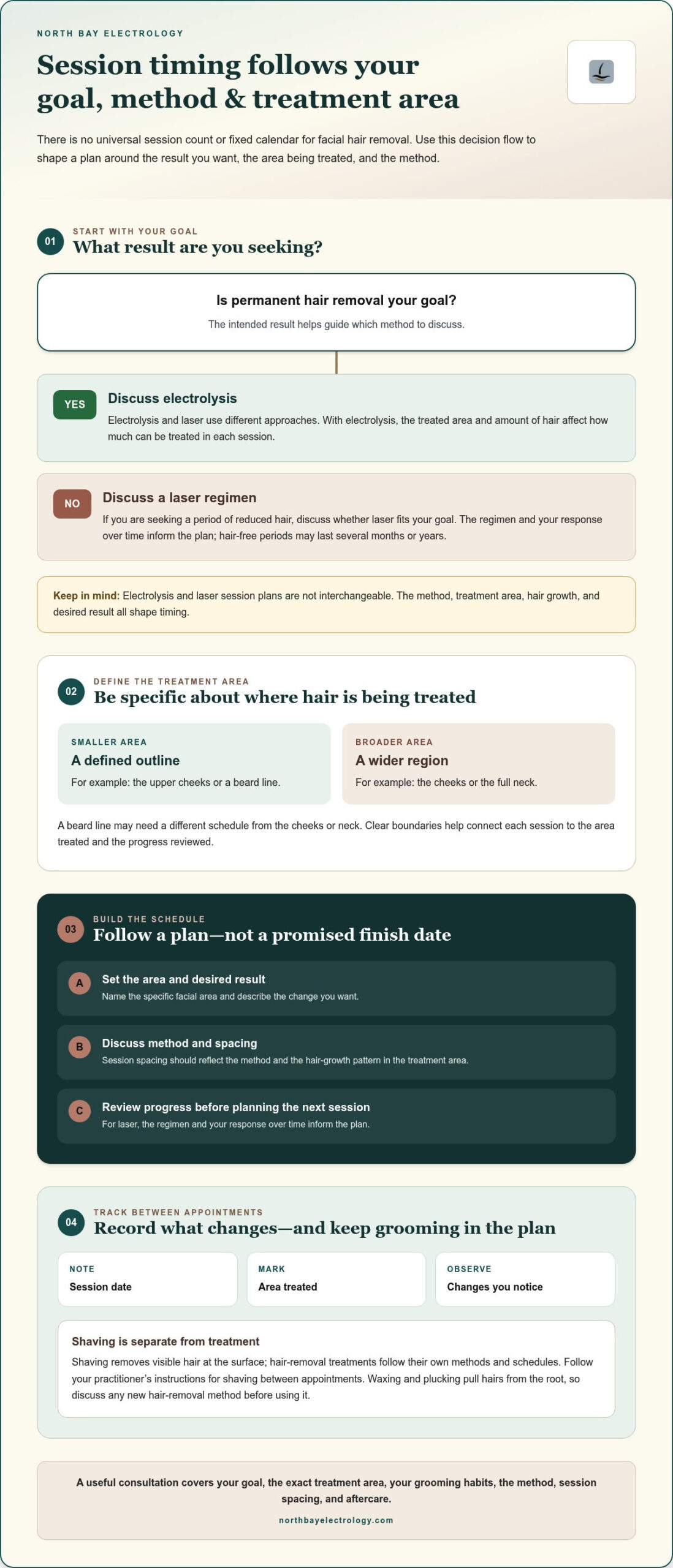
There isn’t one session count or calendar that fits every facial hair-removal method. The treatment area, hair growth, method, and desired result shape the schedule.
Recommended Session Count
The recommended number of treatments depends first on whether your goal is permanent hair removal or a period of reduced hair. Electrolysis and laser use different approaches, so their session plans aren’t interchangeable. With electrolysis, the treated area and amount of hair affect how much can be treated in each session. With laser, the regimen and your response over time inform the plan.
Session Intervals
Session spacing should reflect the method and hair-growth pattern in the treatment area. A beard line, for example, may need a different schedule from the cheeks or neck. Laser timing is planned across a treatment regimen, after which hair-free periods may last several months or years.
Treatment Session Planning
Start by defining the area and result you want. Decide whether you’re addressing a small outline, such as the upper cheeks, or a broader area, such as the full neck. Then discuss how the method affects treatment length and spacing. A clear plan connects each session to the area treated and the progress reviewed.
Keep a simple record between appointments. Note each session’s date, the area treated, and any changes you observe. Tracking the cheek line separately from the neck, for example, can help show where hair continues to appear. These details give your practitioner a practical basis for reviewing the plan as treatment progresses.
Shaving is separate from a treatment session. It removes visible hair at the surface, while hair-removal treatments follow their own methods and schedules. If you shave between appointments, follow your practitioner’s instructions for the treated area. Discuss any new hair-removal method before using it, since it may affect your plan.
Think of scheduling as a sequence, not a promise of a fixed finish date. Begin with the area and method, follow the recommended spacing, then review progress before planning the next appointment. This keeps session timing tied to your treatment rather than an assumed number of visits.
Aftercare and activity restrictions
Aftercare depends on the method and area treated, so follow the instructions specific to your session. A cheek treatment and a neck treatment may call for different guidance. Keep the instructions handy and use them to guide shaving, skin care, and daily activities as your skin settles.
After treatment, keep your routine simple. Use clean hands when touching the area and avoid applying unfamiliar products right away. If your usual aftershave stings or has a strong fragrance, wait until your treatment instructions say you can use it. Handle the skin gently instead of scrubbing, picking, or repeatedly checking it.
- Shaving: Follow the method-specific advice about when and how to shave. If the area feels tender, avoid pressing a razor against it.
- Skin products: Use only products that fit your aftercare instructions. Set aside exfoliants or fragranced products if the instructions call for avoiding them.
- Activity: Use the guidance for your treatment when planning exercise or other activities that could irritate the area. Don’t assume every method has the same restrictions.
- Observation: Note changes such as new discomfort or visible irritation. A short record can help you describe what happened and when.
Hair-removal habits between appointments matter. Waxing and plucking pull hairs from the root, while shaving cuts visible hair at the surface. Since these methods affect hair differently, don’t switch casually during a treatment plan. Discuss an approach that accounts for the method, facial area, and your usual grooming routine.
For example, someone maintaining a sharp beard outline may need clear guidance on which edges to shave and when. Someone treating a wider cheek area may need to avoid friction from a close shave while the skin feels sensitive. Discuss these practical differences before leaving, rather than relying on general aftercare advice for another method.
Use a simple sequence after each session: review the instructions, apply only the permitted skin care, and follow the stated activity limits. If a reaction concerns you, describe its appearance, location, and timing to a qualified health professional. For guidance shaped around your facial hair removal plan, explore personalized treatment planning.
Personal consultation
A consultation turns a general goal into a facial hair-removal plan. Describe the area you want treated, such as the upper cheeks, beard line, or neck. Explain whether you want a defined outline, less visible hair, or removal in a specific patch. These details help focus the discussion on suitable methods and the work involved.
Describe your usual grooming routine. Mention how often you shave, whether you wax or pluck, and any recent changes in the area. If you shape a beard line, for example, you may want to preserve part of the outline while treating stray hairs above it. Clear boundaries help define what the treatment should address.
The method matters because electrolysis and laser work differently. Ask how the selected approach treats follicles, what each session involves, and how progress will be reviewed. If your goal is hard to describe, use a mirror or simple face diagram to mark the area. A visual reference can clarify whether “cheek line” means the sideburn edge, lower cheek, or both.
- Define the goal: Describe the area and the result you hope to achieve.
- Share relevant context: Explain your shaving and hair-removal habits, plus any skin sensitivity you’ve noticed.
- Discuss the method: Ask how the treatment works and what the session plan involves.
- Clarify aftercare: Confirm which grooming steps to follow between sessions.
Use the consultation to discuss practical concerns as well as your desired result. If you need to maintain a clean-shaven look for work, say so. If you’re growing a beard and want a more defined edge, explain which hairs you want to keep. These examples help set treatment boundaries around your routine instead of treating the whole face as one uniform area.
Ask how the plan may change as treatment progresses. Hair can appear differently across the chin, cheeks, and neck, so identify which areas matter most to you. Clarify how to describe new growth or changes at later appointments. This gives you and your practitioner a shared, specific way to review progress.
Before leaving, make sure you understand the next step: the method under consideration, the area included, preparation instructions, and how to manage shaving or other hair removal between appointments. Write down any questions that come up later. A focused consultation helps you decide whether the proposed approach suits your goals, comfort, and daily grooming needs.
Possible skin reactions
Skin can look or feel different after facial hair removal. The method, treated area, and skin type all shape the response, and the cheek, jawline, and neck may react differently. Notice what changes, where it appears, and whether it improves or becomes more uncomfortable. These details can help distinguish a brief change from a pattern that needs attention.
After a session, observe the area in good light instead of repeatedly touching it. Note any visible redness, tenderness, warmth, puffiness, or small bumps. Don’t assume every change has the same cause. Shaving, collar friction, or a newly used skin product can also affect facial skin.
Keep a simple record after each treatment. Note the method, area treated, products used, and changes you observe. For example, record whether irritation appears along the neck after shaving or on the cheek where you applied a product. This gives your practitioner clearer information than a general description such as “my skin felt different.”
- Location: Identify whether a change affects the cheeks, chin, jawline, or neck.
- Appearance: Describe what you see, such as redness, bumps, or swelling.
- Sensation: Note tenderness, itching, warmth, or discomfort in your own words.
- Progress: Record whether the area is settling, staying the same, or worsening.
Keep aftercare simple while monitoring the area. Follow the instructions for your specific treatment, and avoid applying unfamiliar products to irritated skin. If shaving makes the area more uncomfortable, pause and follow your session’s grooming guidance. Scratching or picking at bumps can make it harder to assess how your skin is changing.
Skin type is one consideration, but it doesn’t explain every reaction. The removal method, treatment area, grooming habits, and products used all provide context. Tell your practitioner about previous sensitivity, including reactions to products or difficult hair-removal experiences. That history can inform discussion of your approach and aftercare.
A smooth appearance may be your goal, but a permanent hair-removal plan also requires attention to how your skin responds between treatments. Describe any persistent or worsening change before your next session, including when it began and which area is affected. A precise account helps guide the conversation without treating every temporary-looking mark as a diagnosis.
Men’s facial hair removal options
To arrange an appointment with North Bay Electrology, use the practice’s booking channel. The clinic is by appointment only and does not accept walk-ins.
If you’re seeking men’s facial hair removal in Cotati, start by deciding what “removal” means for you. Do you want a temporary way to manage unwanted hair, or a plan for permanent hair removal? That distinction helps narrow your options before you focus on a specific facial area.
Common options work differently:
- Shaving: Cuts hair at the skin’s surface and lets you maintain a beard line or clean-shaven look at home.
- Waxing: Removes hair from the root. It’s a temporary option for areas such as the cheeks or neck.
- Plucking: Removes individual hairs, which can suit a small area but requires repeat grooming as hair returns.
- Depilatory products: Use a chemical formula to remove visible hair. Follow the product directions for the face and treated area.
- Electrolysis: Treats hairs individually and is used for permanent hair removal.
- Laser hair removal: Uses a treatment regimen to reduce hair. After completing the regimen, hair-free periods can last several months or years.
These methods serve different goals. Shaving can maintain a precise outline, such as a clean cheek edge, without changing the longer-term pattern of growth. Waxing and plucking remove unwanted hair temporarily, while FDA-approved electrolysis is the permanent hair-removal option offered by North Bay Electrology. It may suit someone targeting specific hairs or a defined facial area.
Laser hair removal and electrolysis also differ in how treatment is delivered. Laser follows a regimen, while electrolysis treats hairs individually. Consider your target area’s size and shape, whether you want temporary management or permanent removal, and how you prefer to maintain facial hair between treatments. A sharply defined beard line may call for a different plan from removing hair across the cheeks and neck.
Before choosing, write down the areas you want treated and the areas you want to preserve. For example, mark the beard boundary you want to keep, then identify unwanted hair beyond it. Bring that distinction to a consultation so the method and plan can reflect your grooming goals.
North Bay Electrology: Face & Neck Electrolysis
North Bay Electrology offers Face & Neck Electrolysis for people seeking a focused approach to facial hair removal. This FDA-approved method may suit goals such as treating hair along the cheeks, beard line, or neck when you want permanent hair removal rather than temporary grooming. Discussing your target area and preferred outline can make the next step clear.
Bring questions about session planning, shaving between treatments, and aftercare. North Bay Electrology also provides Pre-surgical Electrolysis, Body Hair Removal, Sensitive Area Electrolysis, and assistance with Insurance Reimbursement Paperwork.
Contact North Bay Electrology to discuss Face & Neck Electrolysis and your treatment goals.
Take the Next Step at Your Pace
Choosing a plan for men’s facial hair removal in Cotati can start with one personal priority: the change you want your daily routine to support. You might want a cleaner neckline, a more defined beard edge, or less time spent managing particular hairs. Naming that priority helps keep the conversation focused on what matters to you.
Before reaching out, consider which facial areas you want to address and which you prefer to leave untouched. Note any questions that feel difficult to ask, too. Sharing them openly can make the conversation more useful and respectful of your preferences. You don’t need every detail decided in advance; a clear starting point is enough.
Your goals deserve thoughtful attention. Taking the next step can begin with a simple conversation.
Frequently Asked Questions
How Many Sessions Will You Need?
There isn’t a fixed session count for everyone; the method and treatment area shape the plan. A few hairs along the chin differ from a broader area involving the cheeks and neck. Hair-growth patterns and your desired result matter, too. Track changes in each area between visits so you can review the plan using specific observations.
What facial hair removal services are available for men in Cotati, CA?
For men’s facial hair removal in Cotati, North Bay Electrology offers Face & Neck Electrolysis. The practice serves Cotati and nearby communities, including Petaluma, Novato, Rohnert Park, Santa Rosa, Sonoma, Napa, Vallejo, San Rafael, Sebastapol, American Canyon, Terra Linda, Corte Madera, Windsor, and Healdsburg. Services are by appointment only; use the practice’s booking channel to arrange a visit.
What areas of the face and neck can men have treated for hair removal?
Face & Neck Electrolysis can treat the chin, lip, sideburns, jawline, and neck. Identify a specific target, such as stray hairs above a beard line, or discuss a wider area. Before treatment, explain which parts you want addressed and which you want to preserve. That distinction helps align the treatment area with your preferred facial-hair shape.
What should men do before and after facial hair removal treatment?
Before treatment, note the exact area you want addressed and anything you want left untouched. Share your grooming routine and relevant skin sensitivities during your appointment. Afterward, follow the instructions for your treatment rather than using a general routine meant for another method. Keep a brief record of products used and skin changes so you can give a clear update at your next visit.
What are the risks and side effects of facial hair removal for men?
Possible skin responses depend on the method, treatment area, and personal sensitivity. Before treatment, discuss previous reactions and concerns about any facial area. Follow the aftercare guidance you receive, and note when a change begins and whether it improves or worsens. For persistent or worsening symptoms, seek advice from a qualified health professional rather than trying to diagnose the cause yourself.

Article by
Madison Hanselman
As a trans woman and owner of North Bay Electrology in Petaluma, I bring a deep personal empathy and love for technical systems to my practice. My own transition fuels my passion for permanent hair removal, making my clinic a proud partner and safe haven for the LGBTQ+ community. Balancing rigorous analytics with heartfelt care, I approach electrology as both a precise science and a life-changing path to self-actualization.