
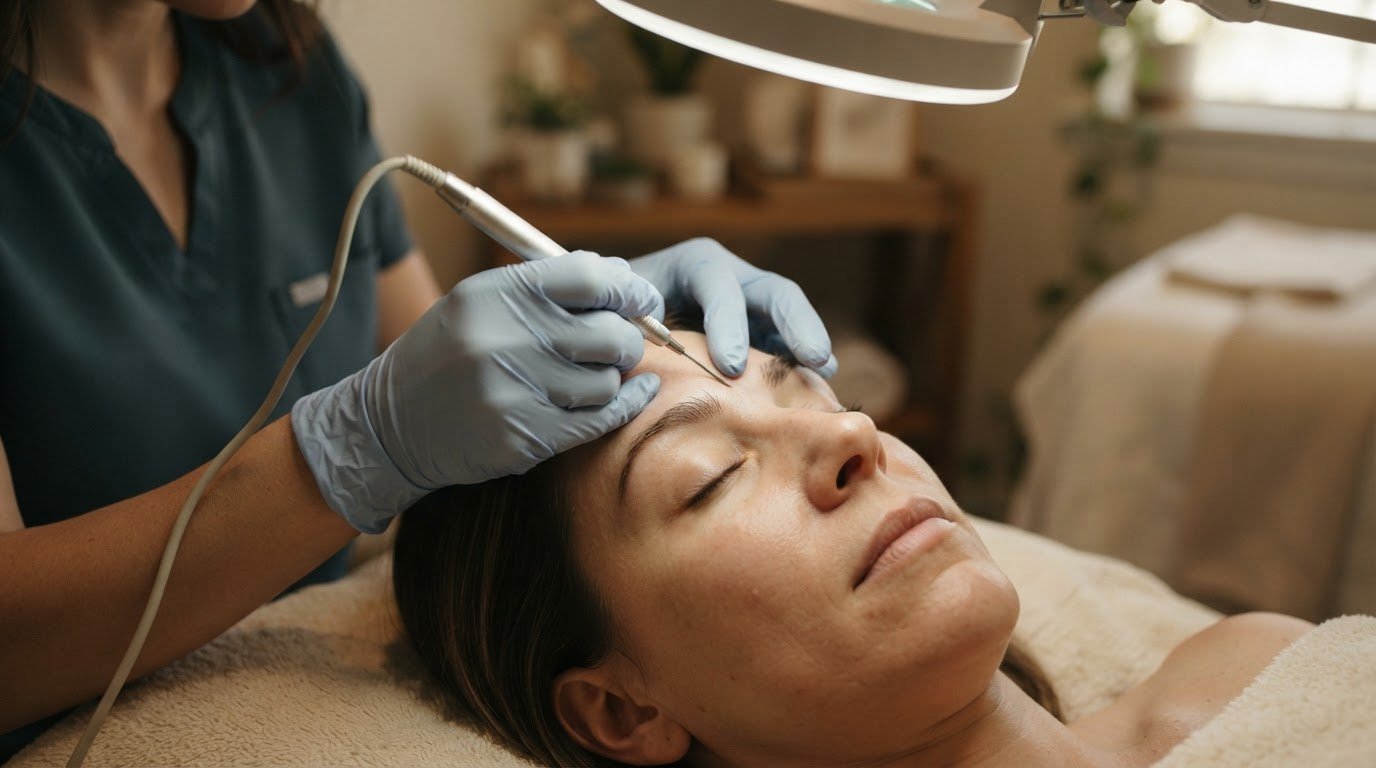
Permanent unibrow removal is possible with electrolysis, which treats individual hairs in the area between the brows. Electrolysis is the only FDA-approved method for truly permanent hair removal and does not rely on hair pigment, so it can treat blonde, red, gray, and white hairs. The approach depends on your hair, skin, and the precision you want around your eyebrows.
It’s understandable to want lasting results without changing your brow shape or irritating the delicate surrounding area. This guide compares electrolysis with temporary methods and laser hair reduction, explains factors that affect suitability, and outlines how treatment progresses.
You’ll also learn what careful treatment around the eyebrows involves and what to expect as hair growth changes over time. With clear information about the process, you can weigh your options at your own pace and decide whether professional electrolysis fits your goal.
Key Takeaways
- Hair color and skin tone help determine which removal approach may suit you; the treatment area and desired brow shape matter, too.
- Plan for a course of electrolysis sessions, with timing shaped by hair growth and how the area responds over time.
- Protect the delicate brow area by following treatment-specific preparation and aftercare guidance, including avoiding strong acids or retinoids beforehand.
- Plucking, shaving, threading, and depilatory creams offer temporary results, so consider how often you want to maintain the area when comparing methods.
- Unibrow growth has no known single cause. North Bay Electrology’s Face & Neck Electrolysis may be a next step if you’re considering professional treatment.
Suitability for different hair colors and skin tones
Hair color and skin tone can affect which hair removal method is suitable. Electrolysis treats individual follicles without relying on melanin, the pigment targeted by laser hair removal. It can treat blonde, red, gray, and white eyebrow hairs, making it an option when unwanted hair lacks the dark pigment lasers typically target.
Laser hair removal may suit people whose hair and skin provide enough contrast for treatment. The Office on Women’s Health says laser hair removal works best for people with light skin and dark hair. Skin tone and hair darkness both affect the choice of laser and wavelength. A professional can assess whether laser treatment is appropriate for the area.
In the narrow space between the brows, precision matters as much as hair color. Electrolysis can remove individual hairs from the glabella, the area between the eyebrows. This can help define a gap while preserving surrounding brow hair. Before treatment, a professional can assess the hairs to address and the brow outline you want.
Plucking removes visible hairs, but it doesn’t permanently reduce hair growth in the area. Results are temporary, so you may need to pluck repeatedly to maintain the same appearance. Plucking also doesn’t make hair itself thicker. Whether a hair returns depends on the follicle; removing the visible strand alone is not permanent hair removal.
Eyebrow hair can return after temporary removal because the follicle remains. Shaving cuts hair at the skin’s surface, while plucking pulls out a strand; neither is a permanent solution. Electrolysis treats follicles individually over a course of appointments. The treatment area, hair growth, and the precision needed to preserve your natural brow shape all inform the plan.
Insurance coverage depends on your plan’s terms. Reimbursement paperwork can support a claim but does not guarantee payment. Provider regulations also depend on jurisdiction, so rules may differ across the United States.
For example, someone with light skin and dark hair may be suitable for a laser assessment, while someone with white hairs may consider electrolysis. These are examples of method selection, not a diagnosis. An assessment should consider hair color and density, surrounding skin, and how close treatment will come to the eyebrow hairs you want to keep. This helps align the method and treatment boundaries with your preferred shape.
Treatment sessions and expected timeline
Electrolysis usually takes a series of appointments, not a single visit. A gradual plan for permanent unibrow removal treats visible hairs over time as they become available. The schedule depends on the treatment area, hair growth, and your shaping goal. A professional can map the intended area and discuss how appointments may progress.
Nios recommends electrolysis twice a month at first, then monthly as hair thins. Each appointment focuses on hairs that can be treated at that time. This gradual progression is central to permanent unibrow removal: the provider works through the area over successive sessions rather than treating every follicle at once. The schedule can change as the amount of visible hair decreases.
Appointment length depends on the scope of treatment. Nios estimates small-area electrolysis treatments, including eyebrows, take about 5-30 minutes. Session length can vary with the treatment area and the amount of shaping involved. Discuss the specific treatment boundary when considering permanent unibrow removal.
After electrolysis, unwanted hairs fall out within a few days. Later appointments address additional hairs as they become available for treatment. Nios advises against plucking or waxing between sessions because visible hair is needed. It also recommends stopping shaving and trimming 4 days before an electrolysis appointment.
Laser treatment follows a different schedule. A dermatologist says topical numbing cream can be applied about 30 minutes before laser treatment. A doctor recommends leaving a few weeks between laser sessions to allow follicles to change growth cycles. That spacing differs from electrolysis appointments, so the method affects the overall plan.
Careful boundaries matter near the brows. Before treatment, agree on which hairs to remove and which eyebrow hairs to preserve. For a narrow central area, a clearly defined outline helps keep treatment aligned with your preferred shape. This planning keeps the focus on your goal without assuming you want broader eyebrow shaping.
After electrolysis, Nios advises avoiding heavy heat, sweat, and makeup for one day. Follow the aftercare directions for the method used. The price depends on the case and is given after a quote request; treatment area, appointment length, method, and session plan inform it.
For a practical next step, use electrolysis appointment scheduling to discuss a treatment timeline.
Choosing a professional removal method for a unibrow
The right method depends on your desired result, hair and skin characteristics, and how precisely the area needs shaping. A professional can assess those factors and explain which approach fits your goal, whether you want temporary upkeep or lasting hair removal.
Comparing professional unibrow removal methods
An assessment should consider hair color, skin tone, density, and the brow outline you want to preserve. Electrolysis treats individual hairs, while laser hair reduction treats a broader area. A doctor recommends laser reduction followed by electrolysis for permanent hair removal. This approach may first reduce hair, then address remaining individual hairs where precise brow shaping matters.
Temporary methods suit different maintenance preferences. Plucking results can last three to eight weeks, while threading results last one to two months. Shaving may need repeating within a couple of days, and depilatory cream results can last up to two weeks. These methods remove or conceal visible hair temporarily rather than treating follicles for permanent results.
Waxing and tweezing also remove visible hairs, but they don’t permanently treat follicles. Someone seeking a lasting, narrow gap may consider electrolysis because it targets individual hairs. A plan for permanent unibrow removal should define which central hairs are in scope and which eyebrow hairs should remain. The method should reflect that boundary and your hair and skin characteristics.
Finding a Qualified Provider
Finding a qualified professional nearby starts with looking for providers who describe their training and the method they perform. If you’re considering electrolysis, look for clear information about the treatment process and how the treatment area is defined. Licensing requirements can differ by location, so don’t assume one credential applies everywhere.
A trained professional should explain how hair color, skin tone, and treatment goals inform method selection. They should also explain how they distinguish hairs to remove from brows to preserve. Someone wanting only the central hairs treated needs a different boundary from someone seeking broader eyebrow shaping. A clear explanation helps you understand the proposed approach before treatment.
Consider how much upkeep you prefer. Threading or plucking may suit a temporary change, while electrolysis is intended for lasting hair removal. Laser reduction followed by electrolysis may also be discussed in a suitable case. Choosing permanent unibrow removal means weighing the method against your desired shape, the area involved, and the time commitment, not selecting by method name alone.
Eyebrow-area safety
Between the eyebrows, safe treatment depends on a clearly defined target and careful attention to surrounding skin. With laser hair removal, SEV says localized redness or swelling tends to dissipate within a few hours.
Potential Treatment Risks
Electrolysis treats individual follicles, so the treatment boundary should distinguish unwanted hairs from the eyebrows you want to keep. Before treatment begins, agree on the intended shape and the hairs within the glabella. A clear outline helps keep the session focused on your goal. For laser treatment, discuss how the provider will define the small area between the brows.
Because the eyes are close to this area, treatment boundaries are especially important. A provider should explain which hairs fall within the treatment zone and how the chosen method will be applied. If you want to remove only a narrow strip, make that clear before treatment starts. The plan should not assume you want a wider change to your brow shape.
Possible Side Effects
For laser hair removal, SEV says localized redness or swelling tends to dissipate within a few hours. The response may be visible around the treated area, so consider your immediate schedule when planning treatment. This describes effects noted for eyebrow laser treatment, not the expected response to electrolysis.
For electrolysis, treatment is guided by the area and individual hair follicles. Discuss any skin concerns before a session so the provider can take them into account when planning treatment. Don’t assume a response to one method describes another. Ask for aftercare guidance specific to the procedure you receive.
Preparation can also affect the skin around the brows. Nios advises avoiding strong acids or retinoids on the brow area for two days before treatment. This step is particularly relevant when skincare products are used close to the intended treatment zone. Tell the provider about products applied near the eyebrows, so the preparation discussion covers the actual area being treated.
After treatment, follow method-specific instructions rather than adding new skincare products to the area. Avoid applying strong active products immediately around freshly treated brows unless your provider’s directions allow it. If redness or swelling follows laser treatment, SEV says it tends to settle within a few hours. Keep the treatment boundary and aftercare instructions clear for each appointment.
Before proceeding, confirm the target hairs, the brow hairs to preserve, and the treatment method. These points help align the session with your preferred shape and the delicate location. For laser treatment, factor the possibility of temporary localized redness or swelling into your plans. For electrolysis, clearly identify the intended follicles before the session begins.

Genetics and hormones behind unibrow growth
There is no known cause for a unibrow. Genetics or hormones should not be presented as a proven explanation for hair between the eyebrows. Someone may notice similar brow growth among relatives, but that observation alone does not establish why it occurs. The visible hair pattern is clear; its specific cause is not.
It helps to separate what you observe from what you can conclude. New hairs between your brows do not by themselves show that a hormone change caused them. A family resemblance also does not prove that inheritance explains an individual pattern. These details may prompt questions, but they are not a confirmed explanation for unibrow growth.
The practical decision is usually about the hair you want treated, not assigning a cause. A professional can assess the location, color, density, and surrounding brow shape. These features help determine whether a hair removal method is appropriate and how narrowly to define the area. The assessment focuses on your treatment goal, even when the reason for growth remains unknown.
Hair growth can be viewed as a changing pattern rather than a single event. A few visible hairs may draw attention to the space between the brows, while your desired result may be a clearly defined gap. Describing the specific hairs you want removed helps distinguish that goal from changing the full eyebrow shape. You don’t need to assume a genetic or hormonal cause to explain your preference.
If you’re concerned about a noticeable change in hair growth, describe what changed and when you noticed it in a medical discussion. This information can help a health professional consider your concern in context. It does not establish the cause of a unibrow, and hair removal does not explain why the hairs appeared. Keep questions about a possible health change separate from decisions about cosmetic treatment.
For treatment planning, focus on the result you want and the area you want preserved. You might want to remove only the central hairs while retaining your natural eyebrow shape. A professional can use that distinction to define the treatment area. The cause of growth may remain unknown, but a clearly stated goal makes the intended change easier to discuss.
Avoid treating hair removal as an investigation into hormones or inheritance. These address different concerns: appearance and why a growth pattern exists. If your question is about appearance, discuss the treatment area and preferred brow outline. If you’re concerned about a broader health change, raise that separately with a medical professional.
North Bay Electrology: Body Hair Removal
North Bay Electrology provides Face & Neck Electrolysis for people considering treatment of unwanted hair between the brows. Electrolysis addresses individual hairs, making it relevant when precision around your natural eyebrow shape matters. You can discuss the area you want treated and the brow hairs you prefer to keep.
North Bay Electrology also offers Body Hair Removal, Pre-surgical Electrolysis, and Sensitive Area Electrolysis. These services address different hair removal needs; for unibrow concerns, Face & Neck Electrolysis is the relevant service. The clinic provides affirming, trauma-informed care to help you discuss how electrolysis may fit your goals and what to expect.
Contact North Bay Electrology to discuss your treatment goals.
Take the Next Step Toward a Plan That Fits
Choosing permanent unibrow removal is an opportunity to define the result you want, including which hairs to remove and which parts of your natural brow to preserve. Share your preferences when discussing treatment so the plan reflects your goals and comfort. The right approach depends on your individual treatment area and needs.
North Bay Electrology offers Face & Neck Electrolysis, Pre-surgical Electrolysis, and Body Hair Removal. For unwanted hair between the brows, Face & Neck Electrolysis is the relevant service to discuss. Share what you hope to change and the brow hairs you want to keep to talk through how electrolysis may address the area.
You deserve a thoughtful, respectful conversation about your options. Take the next step when you feel ready.
Frequently Asked Questions
How can a professional remove my middle eyebrow permanently?
A professional can use electrolysis to treat individual hairs between your brows. Electrolysis is the only FDA-approved method for truly permanent hair removal. During planning, describe the brow shape you want to preserve and identify the central hairs you want removed. This helps define the treatment area and keeps the goal focused on your preferred appearance, rather than changing your entire eyebrow shape.
How Much Time Do I Need?
Allow for a series of appointments rather than expecting one visit to address every hair. Nios estimates small-area electrolysis treatments, including eyebrows, take about 5-30 minutes per session. The full course takes longer because treatment progresses over appointments as hairs become available. The area’s size and your shaping goal affect the schedule, so a small central section differs from full eyebrow shaping.
How many sessions do I need?
There isn’t one session count that applies to everyone. A few initial treatments may be needed, and the plan depends on the number of hairs, their growth pattern, and the area being treated. The provider can assess these details and discuss how your schedule may change as hair thins. Think of the plan as gradual progress toward your chosen brow outline, not a single appointment.
Should I pluck between professional treatment sessions, and how should I prepare?
No. Avoid plucking or waxing between electrolysis sessions because visible hairs are needed for treatment. Nios advises stopping shaving and trimming 4 days before electrolysis. It also advises avoiding strong acids or retinoids on the brow area for two days before treatment. Share your usual brow-area skincare routine during planning, especially if you apply active products close to the hairs being treated.
Still Have Questions?
Bring your questions about treatment goals, preparation, or reimbursement paperwork to a conversation with North Bay Electrology. The clinic serves clients in Petaluma, Novato, Cotati, Rohnert Park, Santa Rosa, Sonoma, Napa, Vallejo, San Rafael, Sebastapol, American Canyon, Terra Linda, Corte Madera, Windsor, and Healdsburg. You can describe the area you want treated and the brow hairs you want to keep, then discuss whether electrolysis suits your goals.
What Is A Unibrow?
A unibrow is hair growth that connects the eyebrows across the glabella, the area between them. The amount and pattern of hair differ from person to person, and there is no known cause for a unibrow. Some people prefer to remove a few central hairs; others want a more defined gap. Describing your preferred shape helps distinguish the treatment goal from broader eyebrow shaping.
What if I’m nervous about permanent removal?
It’s okay to feel uncertain about changing a feature on your face. You can start by explaining what concerns you, what you hope to keep, and what result would feel right. North Bay Electrology provides affirming, trauma-informed care. Discussing the treatment area and process can help you make a considered choice without pressure to proceed before you’re ready.
Who is an Eyebrow Electrolysis for?
Eyebrow electrolysis may suit people seeking individual hair removal between or around their brows, including those with hair colors that laser treatment may not target well. North Bay Electrology provides electrolysis for all skin tones and hair types. It can be relevant when you want to address specific hairs while preserving your chosen brow shape. Your treatment goal and hair pattern guide the discussion.

Article by
Madison Hanselman
As a trans woman and owner of North Bay Electrology in Petaluma, I bring a deep personal empathy and love for technical systems to my practice. My own transition fuels my passion for permanent hair removal, making my clinic a proud partner and safe haven for the LGBTQ+ community. Balancing rigorous analytics with heartfelt care, I approach electrology as both a precise science and a life-changing path to self-actualization.