
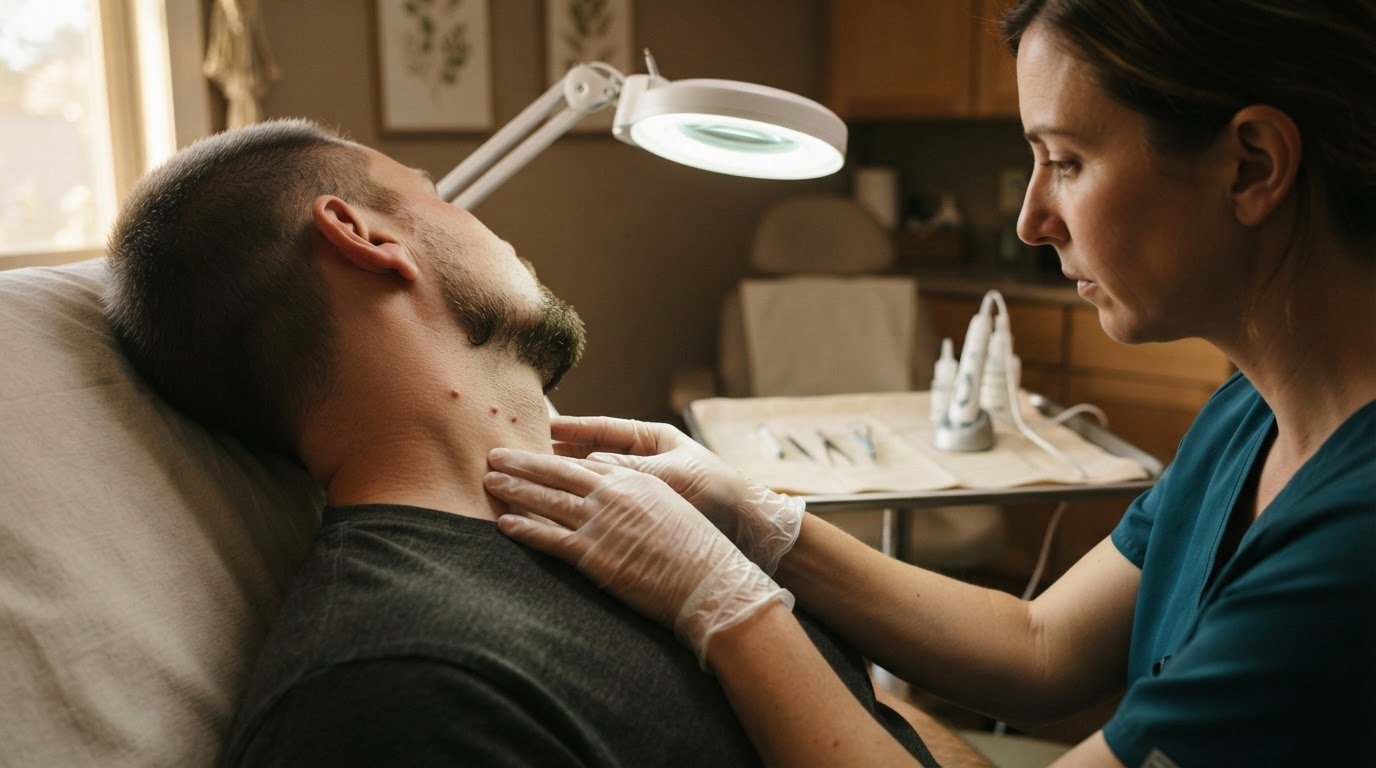
A close shave can leave two different kinds of irritation. Razor burn usually appears within minutes as broader redness or stinging, while razor bumps on the neck are individual, often itchy or tender spots that form when shaved hairs curl back into the skin. The difference matters because each has a different cause.
If your neck feels raw after shaving, it’s understandable to wonder whether you’re seeing temporary surface irritation or an ingrown hair. Beard-area hair can grow at angles that make close shaving more challenging, and the neck is a common place for bumps to appear. These reactions aren’t a reflection of poor grooming, and you don’t have to guess at what you’re seeing.
This guide explains how razor burn differs from ingrown-hair bumps, what can contribute to irritation in the neck and beard area, and which gentle habits may help reduce repeat flare-ups. You’ll also learn when symptoms warrant medical attention, so you can respond with more clarity and care.
Key Takeaways
- Razor burn tends to cause broader stinging or redness soon after shaving, while ingrown hairs often appear as distinct bumps as hair grows back.
- Shaving direction, blade condition, and repeated passes can affect irritation, especially along the neck and beard line.
- Curly or coarse hair and the direction beard hair grows can make ingrown-hair bumps more likely in the neck area.
- Persistent symptoms, signs of infection, or discomfort that interferes with daily life are reasons to seek medical care.
- For people seeking a longer-term approach to unwanted facial or neck hair, Face & Neck Electrolysis may be a relevant option.
What is razor burn?
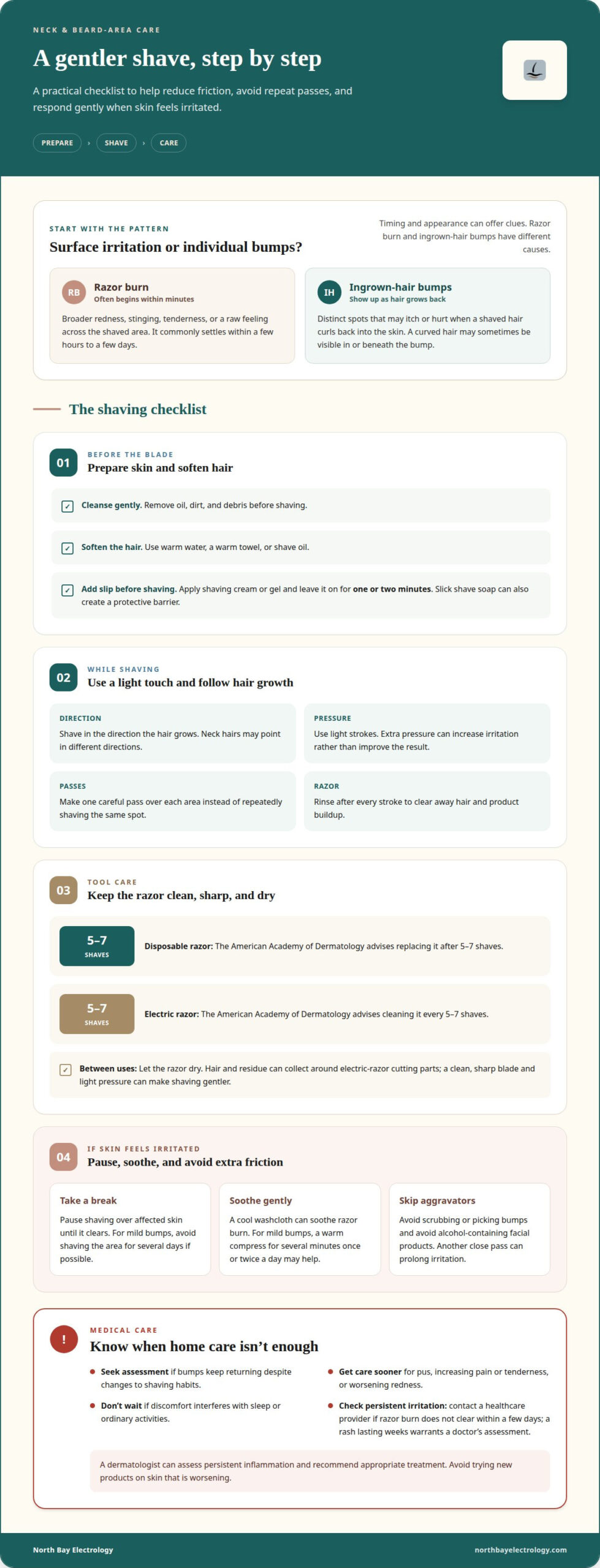
Razor burn is short-term skin irritation that can follow shaving. It often appears within a few minutes, with redness, stinging, or a raw feeling across the shaved area. On the neck, irritation may be more noticeable where the skin is sensitive or the razor repeatedly passes over uneven contours. Shaving against the direction of hair growth increases friction and can aggravate the skin. A dull blade may tug at hairs instead of cutting cleanly, adding irritation around their follicles.
Preparation helps reduce friction before a blade touches the neck. First, cleanse with a gentle cleanser to remove oil, dirt, and debris. Then soften the hair with warm water, a warm towel, or shave oil. Apply shaving cream or gel and leave it on for a minute or two before shaving. These steps help the razor glide instead of scraping dry skin. Slick shave soap can also create a protective barrier between the blade and skin.
Technique matters as much as preparation. Use light strokes and shave in the direction the hair grows, especially across the neck, where hairs may point in different directions. Make one careful pass over each area instead of repeatedly shaving the same spot. Rinse the razor after every stroke to remove hair and product buildup. If a close shave requires extra pressure or repeated passes, it may increase irritation rather than improve the result.
- Choose a clean, sharp razor: A dull blade can drag across skin and irritate follicles. The American Academy of Dermatology advises replacing a disposable razor after 5-7 shaves.
- Maintain electric razors: Hair and residue can collect around the cutting parts. The American Academy of Dermatology advises cleaning an electric razor every 5-7 shaves.
- Store razors dry: Let the razor dry between uses, and replace disposable blades regularly. A clean, sharp blade and light pressure can make shaving gentler.
Sensitive skin may react more often to shaving, so reduce avoidable friction instead of pressing harder. If redness or stinging appears, pause shaving over the affected skin until it clears. A cool washcloth, for example, can soothe the area, while another close pass may prolong irritation. Razor burn is irritation, not automatically an ingrown hair. Individual bumps that form as hairs grow back can have a different cause, which matters when deciding how to prevent recurring neck irritation.
When to seek medical care
Arrange medical care when bumps keep returning despite changes to your shaving habits. A board-certified dermatologist can assess whether persistent inflammation is related to ingrown hairs or another skin condition and recommend appropriate treatment. Seek care sooner if the area becomes increasingly painful, interferes with sleep or ordinary activities, or develops pus, which can signal infection.
Pay attention to how long the irritation lasts. Cleveland Clinic advises contacting a healthcare provider if home care or over-the-counter remedies don’t clear razor burn within a few days. A rash that persists for weeks also warrants a doctor’s assessment. If symptoms worsen rather than settle, don’t keep trying new products on inflamed skin.
Yes, ongoing irritation can leave dark marks, and untreated razor bumps can cause lasting changes, including deep grooves and raised scars. Avoid picking or squeezing bumps, since additional trauma can aggravate inflammation. Reducing repeat irritation can help protect healing skin.
For mild bumps, give the affected area a break from shaving for several days if possible. A warm compress applied for several minutes once or twice a day can soothe the area. Avoid alcohol-containing facial products, which may further irritate the skin. If you use an over-the-counter hydrocortisone cream, apply it sparingly and only for a few days unless a dermatologist advises otherwise.
- Use exfoliants cautiously: If your skin tolerates them, a gentle chemical exfoliant with salicylic acid or glycolic acid can be used a few times a week. Stop if it stings or worsens redness.
- Keep post-shave care gentle: Rinse with cool water and choose a mild product without irritating ingredients. Avoid scrubbing inflamed bumps, which can damage the surface and prolong discomfort.
- Watch for infection: Pus, increasing tenderness, or worsening redness calls for medical assessment rather than repeated home treatments.
A dermatologist can determine whether prescription treatment is appropriate and help address bumps that persist or recur. If repeated shaving is a continuing source of unwanted facial or neck hair, consider whether long-term facial hair-removal options fit your goals. This is a separate consideration from treating an active rash, which needs medical attention when symptoms persist or show signs of infection.
Difference between razor burn and ingrown-hair bumps
Razor burn is surface irritation, while an ingrown-hair bump forms around a hair growing back into the skin. Their timing, appearance, and connection to hair growth can help distinguish them.
Razor burn often starts within a few minutes of shaving and affects a broader patch of skin. It may feel like stinging or tenderness, with redness across the area rather than a bump around each hair. Irritation commonly settles within a few hours to a few days. For example, a generally red strip under the jaw after shaving may fit surface irritation.
An ingrown hair is different: after shaving, a hair curls back into the skin as it grows. The resulting spot is usually a distinct bump that may itch or hurt. Sometimes a curved hair is visible within or beneath the bump. A cluster of individual raised spots along the beard line may therefore point to ingrown hairs rather than widespread razor burn.
Pseudofolliculitis Barbae
Pseudofolliculitis barbae is skin inflammation caused by ingrown hairs, often in shaved beard areas. The term describes a reaction to hairs that re-enter or grow into nearby skin, not ordinary surface irritation alone. It matters because repeated bumps around the jaw or neck may reflect recurring ingrown hairs rather than a single episode of razor burn after shaving.
Hair Texture and Ingrown Hairs
Curly or coarse hair is more prone to becoming ingrown after shaving, particularly after a very close cut. As the short hair grows, its curved tip can turn back toward the skin instead of emerging freely. This helps explain why two people using similar shaving methods can have different results. Hair texture and direction of growth both affect where bumps may appear.
Location can offer another clue. Razor burn may follow the path of a razor across a larger area; ingrown hairs tend to create separate raised spots where individual hairs are trapped. On the neck, hair can grow in several directions, so one section may show scattered bumps while nearby skin looks smooth. That pattern can make the distinction less obvious at first glance.
Consider the pattern and timing together, not redness alone. Redness can accompany both conditions, and a bump doesn’t prove an ingrown hair is present. Broad stinging a few minutes after shaving is more consistent with razor burn; a visible curled hair inside a tender spot supports an ingrown hair. If bumps persist or worsen, a clinician can assess the skin and identify the cause.
How to distinguish razor bumps from razor burn
Timing, shape, and location can help you sort out shaving irritation, but appearance alone can’t confirm a diagnosis. Compare what you see with how the skin feels and how it changes after shaving.
Comparing Razor Burn and Razor Bumps
Razor burn is broad irritation that can develop soon after shaving, while razor bumps are separate raised spots linked to ingrown hairs. This distinction matters because diffuse stinging and localized bumps point to different causes. Razor burn usually lasts from a few hours to a few days, and its irritation often stops within a couple of days.
For example, a sensitive, red patch appearing shortly after shaving fits the timing of razor burn. Individual bumps that remain as hairs regrow fit ingrown-hair irritation more closely. Track when the change began, whether it covers a shaved strip or isolated follicles, and whether symptoms are improving. These observations can help you explain the pattern during a medical visit.
Distinguishing Similar Skin Conditions
Razor burn and herpes are different conditions, and irritation after shaving alone can’t establish which one is present. Acne, folliculitis, and ingrown hairs can also create similar-looking bumps, so location and appearance aren’t enough for a certain diagnosis. Treating the wrong cause may delay appropriate care.
For a common comparison, an ingrown hair may appear as a bump centered on a trapped or curling hair. Acne and folliculitis can also involve raised spots, but their appearance may overlap. A clinician can assess the skin and consider when symptoms began, where they appear, and whether shaving preceded them.
Assessing razor burn often begins with a close look at the affected area and a discussion of recent shaving. Note whether redness began within minutes, whether discomfort is widespread, and whether individual bumps persist as hair grows. A clear timeline helps distinguish a short-lived shaving reaction from a recurring or unexplained skin problem.
For a practical comparison, observe the area without squeezing or scraping it. Note whether you see broad redness, isolated bumps, or changes that continue beyond the usual few-hour-to-few-day course of razor burn. If a new rash appears in a sensitive area, spreads, or remains unexplained, arrange medical assessment rather than relying on a visual guess.
Seek prompt clinical advice for painful or worsening lesions, especially if you’re unsure whether they followed shaving. A healthcare professional can evaluate possible causes, including herpes, acne, folliculitis, and ingrown hairs. Persistent or recurring changes deserve attention even when shaving seems to trigger them, because timing alone doesn’t prove the cause.
Razor bumps on the neck and beard area
Beard hair can emerge at a lower angle than hair elsewhere, making the neck harder to shave closely. A freshly cut, blunt hair tip may curl back toward the skin as it grows. That can create bumps along the underside of the jaw, especially where hair grows in changing directions. A close shave may increase the chance of this cycle by leaving short tips near the skin’s surface.
Hair texture and individual biology also matter. Curly or coarse hair is more likely to curve into the skin after shaving, and genetics can influence hair and skin traits associated with ingrown hairs. As many as 83% of Black males may experience razor bumps. This reflects a pattern of risk, not a certainty for any individual, and bumps can affect people with different skin tones and hair types.
Preparation can reduce factors that trap hairs beneath the skin. Hydrating the area and softening beard hair before shaving can help; insufficient hydration, exfoliation, or hair softening can make trapped hairs more likely. Gentle exfoliation may help remove dead skin cells that collect around follicles. If your neck is prone to bumps, avoid pressing for a very close shave or repeatedly shaving against the grain.
- For active mild bumps: Stop shaving the area for several days if possible. A warm compress can be applied for several minutes once or twice a day.
- For shaving again: Follow the direction of hair growth on the neck. If a closer result is needed, shave across the grain rather than against it.
- For ongoing prevention: Shaving daily or at least every 2-3 days may leave less time for hair to grow and curve. If shaving worsens active bumps, pause instead.
- For product choices: Avoid facial products containing alcohol, which can further irritate skin with bumps.
Growing the beard out removes shaving as a trigger for new ingrown hairs, though it may not suit everyone’s preferences. If recurring bumps make shaving uncomfortable, adjust your approach on the neck: follow the direction of hair growth, avoid overly close passes, and give inflamed skin a break. Persistent bumps, pus, or worsening discomfort warrant medical attention rather than more aggressive exfoliation or shaving.
North Bay Electrology: Face & Neck Electrolysis
North Bay Electrology offers Face & Neck Electrolysis for people considering a longer-term approach to unwanted facial or neck hair. Because shaving can trigger recurring ingrown-hair bumps, reducing reliance on shaving may be worth discussing when irritation keeps returning. Electrolysis is the only FDA-approved method for truly permanent hair removal, but it isn’t a treatment for an active rash or infection. If the skin is painful, worsening, or showing signs of infection, seek medical care first.
Contact North Bay Electrology to discuss whether Face & Neck Electrolysis aligns with your hair-removal goals.
Choose a next step that fits your goals
If razor bumps on the neck keep shaping how you groom, consider what you want to change: the irritation itself, how often you shave, or unwanted hair over time. Electrolysis is a hair-removal option, not a treatment for an active rash, infection, or unexplained skin change. Seek medical care for those concerns before considering a cosmetic hair-removal service.
North Bay Electrology offers Face & Neck Electrolysis, Pre-surgical Electrolysis, and Body Hair Removal. These services address different hair-removal needs, so the most relevant next step depends on the area and your goals. There’s no need to decide before you feel ready; clear information can help you consider your options calmly.
If you’d like to explore whether electrolysis suits your goals, contact North Bay Electrology.
Choose the path that feels right for you, one informed step at a time.
Frequently Asked Questions
What causes bumps after shaving the neck?
Razor bumps on the neck form when a shaved hair curls back into the skin as it grows. Neck hair may emerge at different angles, so one stroke can cut some hairs against their growth direction. Curly or coarse hair is more likely to turn inward, especially after a close shave. The bump develops around the trapped hair, rather than from surface friction alone. Avoiding an ultra-close shave can reduce this trigger.
How do you treat these bumps at home?
Pause shaving the affected patch for several days if possible, and apply a warm compress for several minutes once or twice daily. Don’t squeeze or dig at bumps, since that can further injure the skin. Keep cleansing gentle and avoid alcohol-based facial products. If you shave nearby, leave the raised area alone rather than repeatedly passing over it. Seek medical advice if bumps worsen or show signs of infection.
How long do razor bumps on the neck take to heal?
Healing depends on whether the trapped hair can grow out without further irritation. A bump may remain while the hair continues curling beneath the skin, and repeat shaving can keep the area inflamed. Avoid picking and give the affected patch a break from shaving. If bumps keep returning after you change your shaving habits, or the area becomes painful or infected, arrange medical assessment rather than waiting for it to settle.
What is the best shaving technique to prevent neck razor bumps?
Follow the direction of growth in each part of the neck, since beard hair can change direction across a small area. Use light pressure and avoid stretching the skin tightly for a closer result. If you need a closer shave, go across the grain rather than against it. For example, check the hair direction under the jaw separately from the lower neck, then adjust each stroke to match.
Which shaving products help prevent razor bumps on sensitive skin?
Choose a gentle cleanser to remove oil and debris, then use shaving cream or gel to reduce drag. Let the product sit briefly so beard hair softens before the blade moves across it. Slick shave soap can also reduce friction. After shaving, rinse away residue and use a gentle post-shave product. Avoid alcohol-containing facial products if your skin is prone to bumps or feels irritated.
Can benzoyl peroxide, salicylic acid, or glycolic acid treat razor bumps?
Salicylic acid or glycolic acid may help limit dead-skin buildup that can contribute to trapped hairs. Use a gentle exfoliant only if your skin tolerates it, and avoid applying it to raw or highly irritated skin. Benzoyl peroxide isn’t a treatment to add automatically for ingrown hairs. If you’re considering it, ask a healthcare professional whether it suits the bumps you’re experiencing.
When should you see a doctor for razor bumps on the neck?
See a healthcare provider if bumps continue despite changes to your shaving habits, or if you notice pus, worsening pain, or redness. Cleveland Clinic advises contacting a provider when home or over-the-counter care doesn’t clear razor burn within a few days. A rash lasting weeks, discomfort that disrupts sleep, or difficulty with ordinary activities also warrants medical attention. Note when symptoms began and what products or shaving changes preceded them.
What prescription treatments are available for persistent razor bumps?
A dermatologist can assess persistent bumps and determine whether prescription treatment fits their cause and appearance. The choice depends on whether the skin shows ingrown hairs, ongoing inflammation, or signs of infection, so a prescription shouldn’t be selected based on appearance alone. Bring a list of products you’ve tried and describe your shaving routine. That information helps the clinician distinguish a recurring shaving reaction from another skin condition.
Article by
Madison Hanselman
As a trans woman and owner of North Bay Electrology in Petaluma, I bring a deep personal empathy and love for technical systems to my practice. My own transition fuels my passion for permanent hair removal, making my clinic a proud partner and safe haven for the LGBTQ+ community. Balancing rigorous analytics with heartfelt care, I approach electrology as both a precise science and a life-changing path to self-actualization.