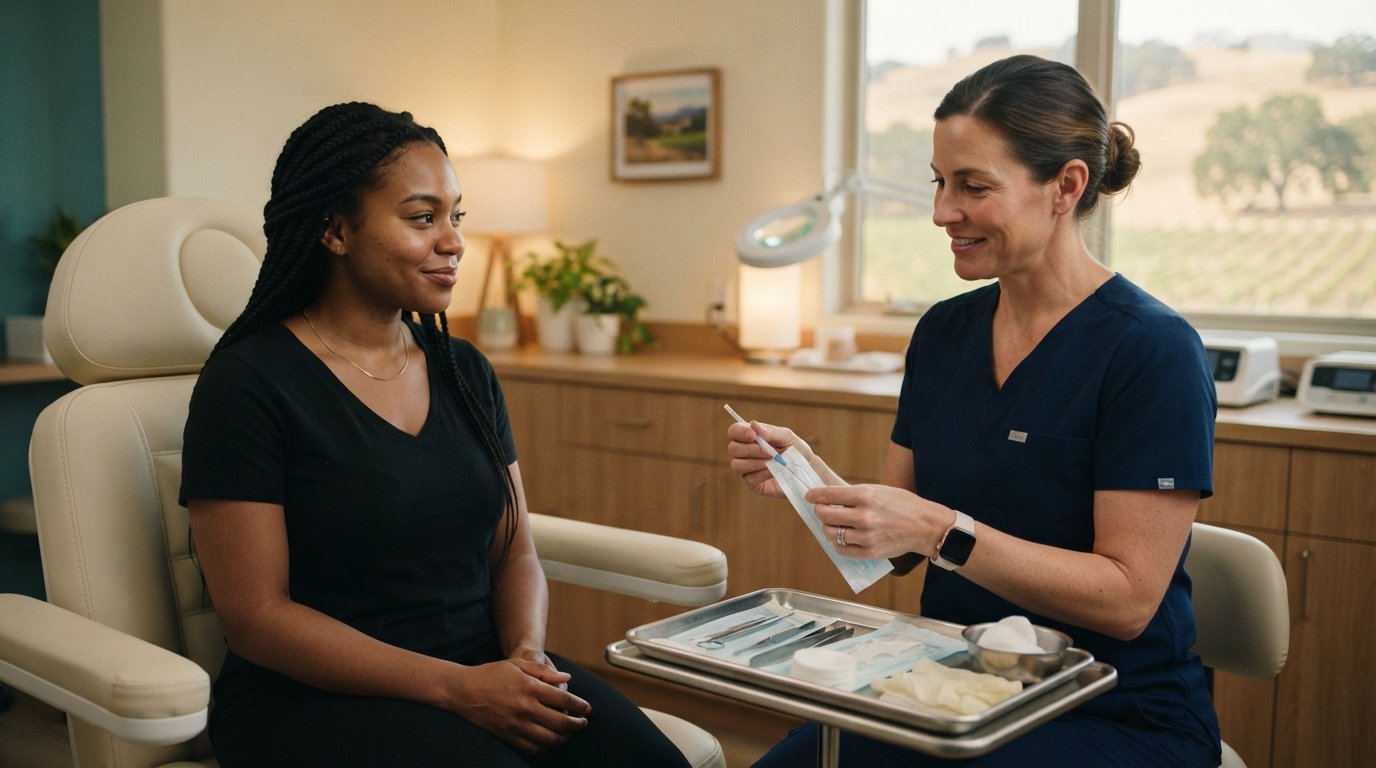
A safe hair-removal decision starts with clear expectations, not promises of effortless results. Finding safe electrolysis near Napa means understanding that a fine probe delivers an electrical current to destroy hair-follicle growth cells. Because hair grows in cycles, multiple sessions are needed. Temporary redness and swelling can occur, and scarring is also a possible risk.
It’s reasonable to want lasting results while also feeling cautious about discomfort, skin recovery, or choosing between methods. Electrolysis is the only FDA-recognized method of permanent hair removal, but the right option depends on your goals and the area being treated. Knowing what a session involves can make the decision feel more manageable.
This guide explains what to expect during treatment and recovery, how electrolysis compares with shaving, waxing, and laser hair removal, and what to discuss at a consultation near Napa. You’ll also learn why treatment plans involve repeat visits and which personal details can help shape a thoughtful conversation about your needs.
Key Takeaways
- Know what details about your health, skin, and treatment goals can help make a consultation more useful.
- Compare hair-removal methods by how they work, what results they’re designed for, and what matters most to you.
- Understand which questions about training, hygiene, and treatment practices can help you feel informed about safety.
- See what to look for in practical appointment and contact information when planning care near Napa.
- Explore when electrolysis for the face and neck may fit into your personal hair-removal goals.
Treatment expectations and recovery
Electrolysis treats individual follicles with a fine probe and electrical current, which destroys the follicle’s growth cells. Since hair grows in cycles, repeat sessions target follicles during active growth. A treatment plan depends on the area, hair-growth pattern, and how consistently sessions can be scheduled. The process is gradual, not a single appointment that addresses every hair. At a consultation, describe the area you want treated and your preferred pace. This gives the electrologist useful context for discussing your plan.
Skin response deserves a clear, practical discussion. Redness, swelling, and scarring are possible effects of electrolysis. The amount and duration of irritation can vary by person and treatment area. After a session, follow the aftercare instructions you receive. Avoid picking or rubbing treated skin, and contact a healthcare professional if a reaction concerns you. Before facial electrolysis, mention your usual skin-care products and facial treatments so they can be considered when planning appointments.
California requirements depend on the rules involved, such as electrologist practice, infection control, or facility operations. Ask which state and local health requirements apply to the treatment setting, and request a clear explanation of the clinic’s hygiene practices. This keeps the conversation focused on the actual service and location rather than assumptions about general salon rules.
Which providers for safe electrolysis near Napa have strong reviews and verified credentials? Reviews and credentials are different kinds of evidence, so assess them separately rather than treating one as proof of the other. North Bay Electrology professionals bring rigorous training and specialized expertise in permanent hair removal methods. Consider whether reviews describe relevant treatment experiences, and whether the provider can explain their training and approach clearly. Avoid relying on ratings alone when making a health-related decision.
How can you verify that electrolysis probes and equipment are sterile and single-use? Before treatment, ask to see the sterile probe package opened for your appointment, then observe the probe being discarded afterward. Ask how reusable equipment is cleaned and sterilized between clients. A clear answer should explain the steps, not simply offer general reassurance. If the explanation leaves you uncertain, pause and discuss your concern before treatment begins.
Hair and skin needs differ. Electrolysis works follicle by follicle, so the treatment area, hair pattern, and skin response help shape the plan. Bring up facial hair, body areas, or sensitive-skin concerns directly. For facial treatments, share your current routine, including exfoliants, masks, or other professional procedures. The electrologist can then discuss how treatment timing and skin care fit together. Mention any past irritation or scarring, too.
Pricing depends on the treatment area, hair growth pattern, and session plan, and is given after a quote request. Ask what factors shape the proposed plan and how session timing may change as hair growth changes. A written outline can help you understand the steps before beginning.
Comparison with other hair removal methods
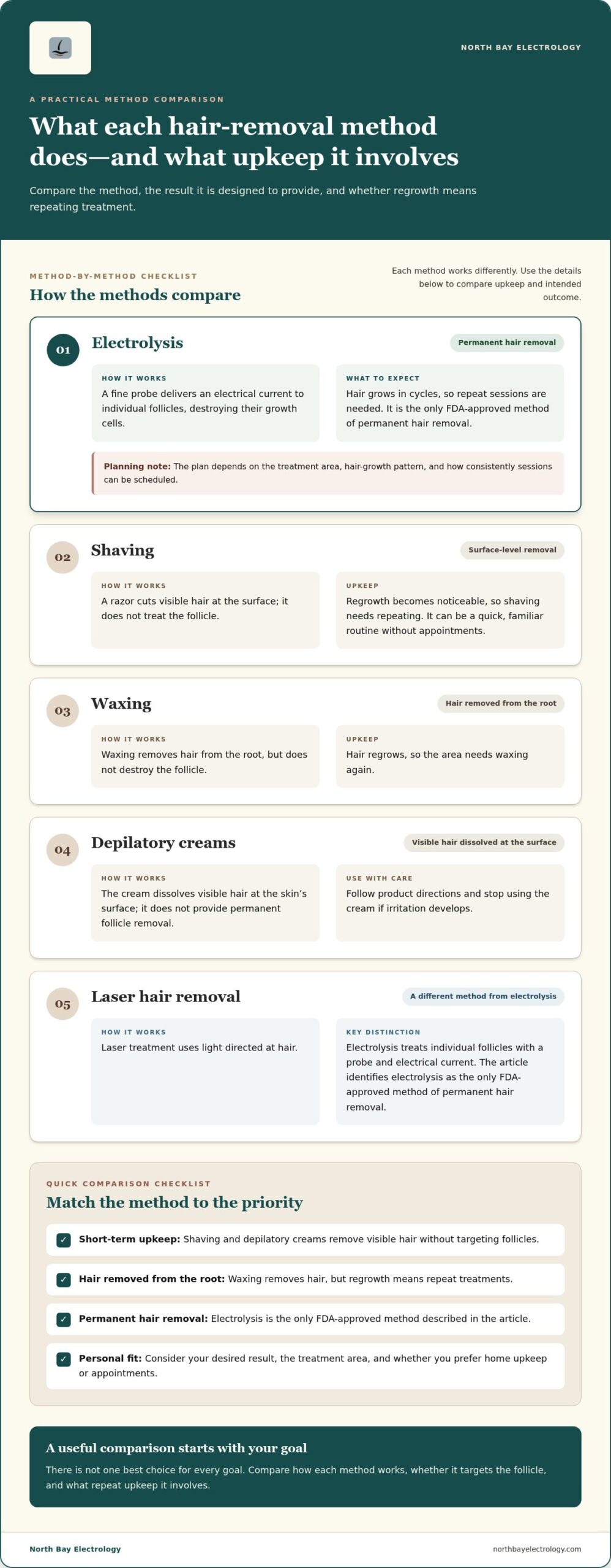
Choosing a method means weighing your desired result against its upkeep. Electrolysis works follicle by follicle, using a fine probe and electrical current. Because hair grows in cycles, treatment takes repeated sessions. Electrolysis is the only FDA-approved method of permanent hair removal. That distinction matters if you want lasting removal rather than short-term smoothness.
Shaving is a surface-level option. A razor cuts visible hair, so regrowth becomes noticeable and shaving needs repeating. It can suit someone who wants a quick, familiar routine without appointments. It doesn’t treat the follicle, though, and therefore doesn’t provide permanent removal. Shaving a small area before an event may be convenient, while maintaining that area takes ongoing effort.
Waxing removes hair from the root, but it doesn’t destroy the follicle. Regrowth means the area needs waxing again. Depilatory creams dissolve visible hair at the skin’s surface. They avoid a razor or appointment, but don’t provide permanent follicle removal. Follow product directions and stop using a cream if irritation develops.
Laser hair removal is another commonly considered option, but it isn’t the same as electrolysis. Electrolysis treats individual follicles with a probe and electrical current. Laser treatment uses light directed at hair. Electrolysis is the only FDA-approved method of permanent hair removal. For readers considering safe electrolysis near Napa, that distinction helps clarify the outcome each method is designed to provide.
Compare methods using practical questions, not just the first result. Consider whether you prefer home upkeep or appointments, and whether your goal is temporary or permanent removal. Think about the treatment area, too. A small facial area and a larger body area create different time and maintenance considerations. A conversation about safe electrolysis near Napa can help you connect your goals with the method and area you’re considering.
- For short-term upkeep: shaving and depilatory creams remove visible hair without targeting follicles.
- For hair removed from the root: waxing removes hair, but regrowth still calls for repeat treatments.
- For permanent hair removal: electrolysis is the FDA-recognized method.
There isn’t one best choice for every goal. Describe the result you want and consider how each method aligns with it. If you’re considering electrolysis, review electrolysis appointment information as you plan your next conversation.
Consultation and medical history
A focused consultation connects your treatment goal with your health history and practical concerns. Prepare specific examples, such as previous skin reactions or the area you want treated.
Medical history review
Share relevant health information before treatment planning begins. Include current medications, allergies, skin sensitivities, past scarring, and any recent facial procedures. These details help frame a discussion about your skin and treatment area. Don’t assume a detail is irrelevant: mention it and explain when it occurred.
Describe the area clearly, including whether you’re considering facial, body, or sensitive-area treatment. Explain what you hope electrolysis will change, and mention any previous hair-removal methods. For example, tell the electrologist if waxing or a skin-care product caused irritation. Bring a list of medications and products if their names are difficult to recall. If a health concern needs medical guidance, raise it before planning treatment.
Use the consultation to discuss comfort, privacy, and communication preferences, too. You can explain which areas feel sensitive and ask how treatment steps will be described. If you’ve had a distressing experience during personal care, share only what helps establish boundaries. Agree on a pause signal before treatment starts. Clear preferences help make the appointment more respectful and predictable.
Electrologist safety credentials
In California, ask the electrologist to explain their education, training, and hands-on experience. Request the exact credential name and issuing organization, then distinguish formal training from professional membership or a course certificate. The Monterey Bay Institute of Electrology is one named training institution. A credential should be presented accurately, without implying it proves every aspect of treatment safety.
Ask how training applies to your treatment area and the method being used. For example, ask how the electrologist selects a technique for facial hair versus a larger body area. A clear explanation should connect the method to the treatment, not rely on broad claims. If relevant, ask how continuing education or supervised practice supports their skills.
Discuss infection-control practices alongside credentials. Ask how single-use probes are handled, how reusable equipment is processed, and how the treatment surface is prepared between appointments. Observe whether the probe package is opened for your session and whether the used probe is discarded afterward. These specific steps give you practical information beyond a title or certificate.
Before you leave, summarize your questions and the next steps in your own words. A sound consultation should address your stated goals, relevant health details, treatment approach, and safety practices without rushing your concerns. Keep notes about the credential, technique, and aftercare instructions discussed. Those details make it easier to compare the plan with your needs and remember what was agreed.
Business location and contact details
When considering electrolysis near Napa, ask about the practitioner’s training and the exact credential name and issuing organization. Terms such as “licensed” and “certified” can describe different qualifications, so ask what each credential covers and how it relates to electrology.
Use your appointment details to plan your visit. Save the confirmed street address, appointment time, and arrival instructions together. Check the route from your starting point in Napa before leaving, and allow for parking and check-in. Electrolysis appointments are scheduled in advance; the clinic does not accept walk-ins.
Keep contact details in one place. Save the clinic’s phone number or booking contact from its appointment information, then use that channel for practical questions. For example, ask how to share relevant medical history, what to bring, and how to notify the clinic if your schedule changes. Avoid sending sensitive health details through an unfamiliar or public channel.
How can you find licensed or certified electrologists near Napa, California? Search specifically for electrology services in the Napa area, then ask each practitioner to name their training and credentials. Confirm the credential’s issuer and scope directly, and distinguish a training certificate from a state-issued license without assuming the terms are interchangeable.
Before booking, organize the information you’ll need to make an informed decision:
- Credential: Record the exact title, issuing organization, and training institution.
- Location: Save the appointment address and directions from your Napa starting point.
- Contact: Keep the official booking or phone details with your appointment record.
- Visit details: Note arrival instructions and any preparation guidance provided.
- Questions: Write down treatment-area, hygiene, and aftercare topics you want addressed.
Strong reviews can help you understand other clients’ experiences, but they don’t establish a credential. Read comments for specific details, such as communication, explanations, and appointment logistics. Then assess qualifications separately by asking about the practitioner’s electrology training and method. A clear response should identify the training and explain how it relates to the service you’re considering.
For a sensitive-area appointment, include privacy and access needs in your planning. Ask how check-in works, whether the treatment area is private, and how to communicate any accommodation needs. You can also ask how to update your appointment if travel from Napa takes longer than expected. Keep the answers with your confirmation so you don’t need to rely on memory.
Before traveling, compare your appointment confirmation with your calendar and route. Confirm that the date, time, address, and contact channel match. For a first visit, arrive with your questions and relevant health information ready. These simple steps help prevent avoidable confusion and leave more room for the treatment discussion.
Compare Napa-area providers by looking for reviews that describe communication, explanations, and appointment logistics. Separately assess each practitioner’s training and credentials by confirming the exact title, issuer, and scope directly with them.
What safety credentials should an electrologist have in California?
In California, ask for documented electrology education and the exact credential title. Don’t assume “certified” and “licensed” mean the same thing. Ask who issued the credential, what it covers, and how the practitioner’s training relates to electrolysis. These details help you assess qualifications without relying on a title alone.
A useful conversation starts with the training itself. Ask where the electrologist studied, what instruction covered, and how they learned the method used in treatment. Anne trained at Monterey Bay Institute of Electrology and specializes in the blend method. For any practitioner, ask how their education prepares them to work with your treatment area and hair pattern.
Separate three kinds of information: education, professional credentials, and practical safety procedures. A school certificate describes training. A professional designation may reflect membership or additional study. Neither, by itself, explains how equipment is handled during your appointment. Ask for the exact credential name and issuing organization, then ask what the credential represents.
- Training: Ask for the electrology school or training institution and areas of study.
- Credential: Record the exact title, issuer, and scope described by the practitioner.
- Method: Ask how training relates to the technique planned for your treatment.
- Hygiene: Ask how single-use probes and reusable equipment are handled.
Credentials matter, but they aren’t the only useful safety information. Ask the practitioner to explain how they prepare the treatment area, open a sterile single-use probe, and discard it after treatment. Ask how reusable equipment is cleaned and sterilized between appointments. A specific explanation lets you understand the actual steps rather than relying on a broad assurance or certificate.
Use your treatment goal to make questions specific. For facial hair, ask how the practitioner’s training applies to delicate, visible areas. For body hair, ask how the method is selected for the treatment area. If you have a history of skin sensitivity or scarring, include that context in the discussion. These examples help connect credentials and technique to your individual concerns.
Before deciding, write down the practitioner’s answers. Note the training institution, credential title, issuer, method, and hygiene steps. If a term is unfamiliar, ask for its meaning in plain language. A clear answer should distinguish formal training from experience and describe safety practices without suggesting that one credential guarantees a particular result.
Review your electrolysis appointment details and prepare questions about training, technique, and safety.
North Bay Electrology: Face & Neck Electrolysis
North Bay Electrology offers Face & Neck Electrolysis for people seeking permanent hair removal in those areas. Electrolysis treats individual follicles, so a personalized conversation can address your goals, hair-growth pattern, and areas of concern. Treatment is gradual because hair grows in cycles and multiple sessions are needed.
For other treatment areas, North Bay Electrology also offers Pre-surgical Electrolysis, Body Hair Removal, and Sensitive Area Electrolysis. You can discuss the area you want treated and your questions about the process, recovery, and appointment planning. Insurance Reimbursement Paperwork assistance is also available.
For a thoughtful conversation about your hair-removal goals, contact North Bay Electrology.
Take the Next Step at Your Pace
A personal-care decision can begin with one clear priority: what you want treatment to address. If you’re exploring safe electrolysis near Napa, consider the area involved and the questions you want answered before planning care. A thoughtful conversation can help you explain your goals, share relevant concerns, and understand how the next steps relate to your needs.
North Bay Electrology offers Face & Neck Electrolysis, Pre-surgical Electrolysis, and Body Hair Removal. In your first contact, describe the area you’re considering and what matters most to you. You don’t need to have every detail settled before starting that conversation.
Your needs and comfort deserve to guide the process. Take the next step when you feel ready, with your questions and priorities at the center.
Frequently Asked Questions
What are the prices per session for electrolysis near Napa?
Pricing depends on the case, and a quote is provided after a quote request. The main factors include the treatment area, hair growth pattern, and session plan. For example, a small facial area differs in scope from broader body treatment. Ask what the proposed quote covers and how changes to the treatment area could affect the plan. Compare quotes only when their treatment scope is similar.
How many electrolysis sessions are typically needed, and how often?
Electrolysis requires multiple sessions because hair grows in cycles, and treatment targets follicles during active growth. The number and spacing of sessions depend on the area, hair density, growth pattern, and how treatment progresses. There isn’t one schedule that fits everyone. Keep notes about treated areas and visible regrowth between appointments; those details can help you discuss whether the plan needs adjustment.
What should I expect at an electrolysis consultation and first appointment?
Expect a conversation about your goals, treatment area, health considerations, and questions before agreeing on a plan. Bring a written list of priorities, such as addressing a specific area or planning around an upcoming commitment. Appointment planning is relevant for people in Petaluma, Novato, Cotati, Rohnert Park, Santa Rosa, Sonoma, Napa, Vallejo, San Rafael, Sebastapol, American Canyon, Terra Linda, Corte Madera, Windsor, and Healdsburg.
What are the risks and side effects of electrolysis, and how can they be reduced?
Redness, swelling, and scarring are possible effects; Napa Solano Plastic Surgery identifies these risks. Follow the aftercare instructions for your treatment, and avoid picking or rubbing the area. Before starting, ask how the probe is opened and discarded, and how reusable equipment is processed. Share a history of skin irritation or scarring so it can inform the treatment discussion.
Which electrolysis providers near Napa have strong reviews and verified credentials?
Anne trained at Monterey Bay Institute of Electrology and specializes in the blend method. Assess reviews separately from credentials, and ask providers to explain their training and approach.

Article by
Madison Hanselman
As a trans woman and owner of North Bay Electrology in Petaluma, I bring a deep personal empathy and love for technical systems to my practice. My own transition fuels my passion for permanent hair removal, making my clinic a proud partner and safe haven for the LGBTQ+ community. Balancing rigorous analytics with heartfelt care, I approach electrology as both a precise science and a life-changing path to self-actualization.