
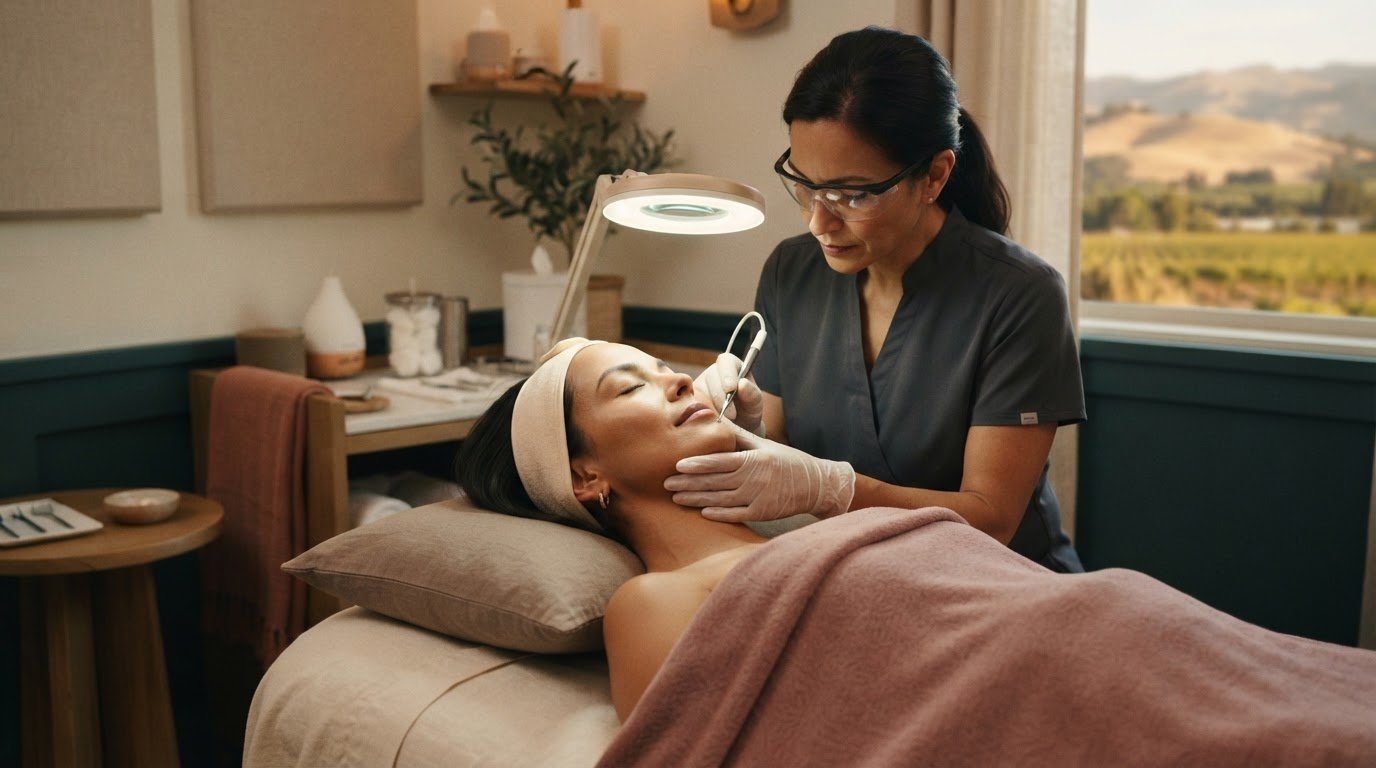
Sensitive skin doesn’t automatically rule out electrolysis in American Canyon. Electrolysis is the only FDA-approved method for permanent hair removal, and it treats individual follicles with a small current that permanently damages the cells responsible for hair growth. Temporary redness or irritation may occur, so a sensitive-skin electrolysis plan in American Canyon should account for your skin’s response and treatment needs.
If you’re concerned about discomfort or irritation, that’s understandable. A thoughtful plan considers the treatment area, your skin’s condition, and practical preparation and aftercare. This guide explains how electrolysis works, what to discuss when you have sensitive skin, and how North Bay Electrology supports clients near American Canyon.
Key Takeaways
- Electrolysis treats individual follicles with a small current, and it can address white or gray hair that lacks pigment.
- Build sensitive-skin planning around your treatment area, skin response, and a steady schedule; people commonly return weekly as hairs enter a growth stage.
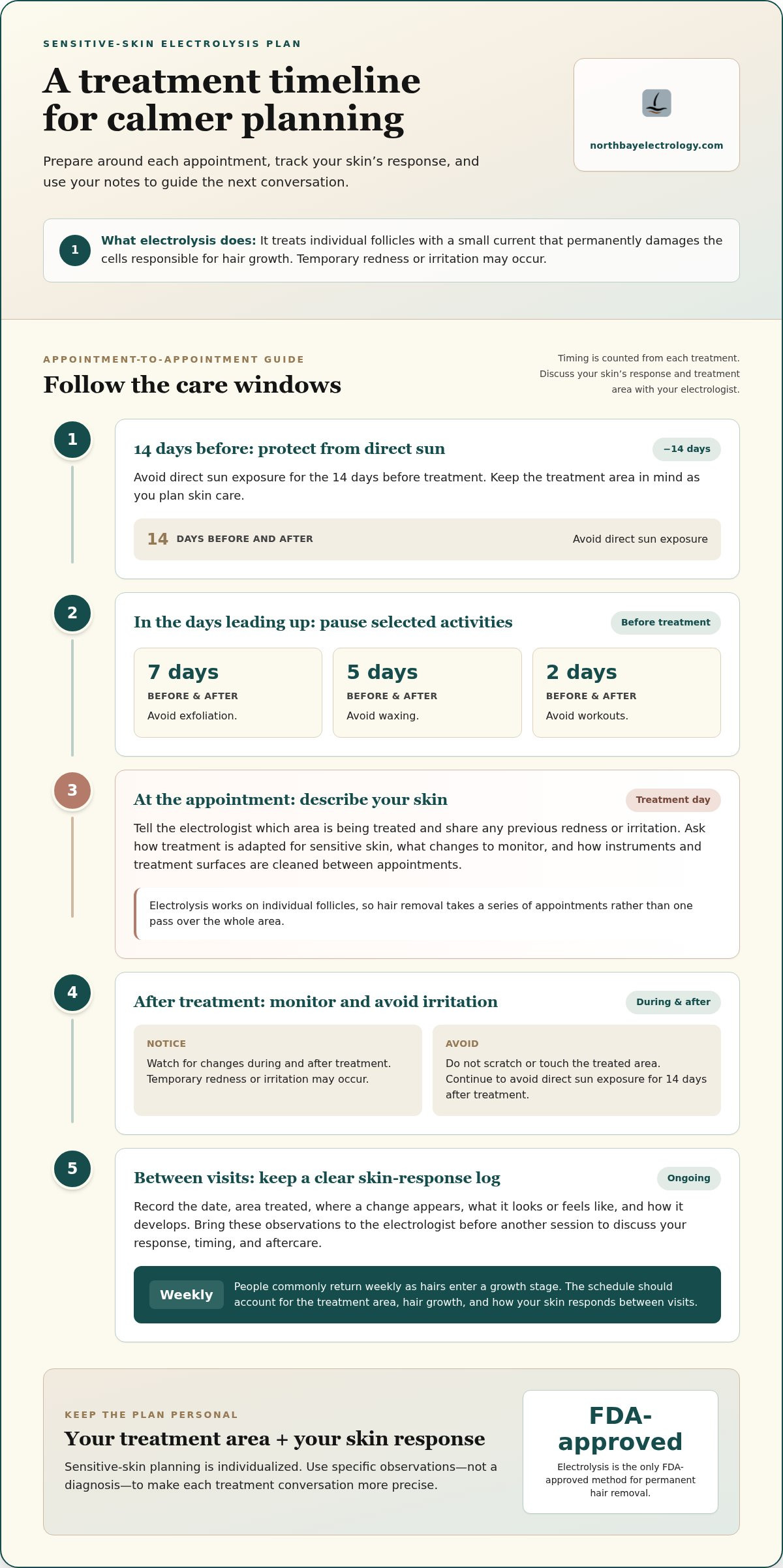
- Plan skin care around treatment: avoid exfoliation for 7 days before and after, and avoid direct sun exposure for 14 days before and after.
- Temporary redness or irritation may occur. Monitor your skin during and after treatment, and avoid scratching or touching the treated area.
- Learn what to consider when selecting an electrologist near American Canyon, including how experience and communication can support a more comfortable treatment process.
Personalized electrolysis treatment plans
A sensitive-skin plan considers the treatment area, hair growth, preparation, and aftercare. If you’re coming from American Canyon, keep a clear record of how your skin responds between appointments.
Personalized Hair Removal Treatments
A tailored plan starts with the treatment area and your skin’s response at each appointment. Note whether redness or irritation appears, where it occurs, and how it changes afterward. This record helps you discuss future treatments and aftercare. Electrolysis treats individual follicles, so hair removal takes a series of appointments rather than one pass over the whole area.
Pre- and Post-Treatment Precautions
Plan skin care around specific preparation periods. Avoid exfoliation for 7 days before and after treatment, waxing for 5 days before and after, and direct sun exposure for 14 days before and after. Avoid workouts for 2 days before and after treatment. After electrolysis, avoid sun exposure and don’t scratch or touch the treated area. Monitor your skin during and afterward for changes, and note any irritation to discuss before another session.
Electrolysis Treatment Scheduling
People commonly return for electrolysis treatments weekly as hairs enter the growth stage. The schedule should account for the treatment area, hair growth, and how your skin responds between visits. Keep appointments consistent where possible, and record the date, area treated, and any skin changes. This simple log makes it easier to discuss whether the timing or aftercare needs adjustment. A missed appointment may affect the pace of progress, so plan recurring visits around your routine.
Questions About Sensitivity and Sanitation
Ask how the electrologist adapts treatment for sensitive skin and how instruments and treatment surfaces are cleaned between appointments. You can also discuss which skin changes to monitor and what aftercare applies to your treatment area. Electrolysis treats individual follicles, while laser relies on pigment and cannot target gray or white hair. For hair without pigment, electrolysis is an option to discuss.
Make skin monitoring part of each appointment, not just something to consider afterward. Observe the treated area during and after electrolysis, noting changes that may follow treatment. Record where a change appears, what it looks or feels like, and how it develops. Use clear descriptions rather than trying to diagnose it. If redness or irritation occurs, note its location and whether it changes over time. These observations give you a more precise account of your skin’s response than a general impression.
Bring your notes to the electrologist before another session. Describe the area treated and the changes you noticed, including whether they appeared during or after treatment. Specific observations make it easier to discuss your response and consider adjustments to the plan or aftercare. Keep monitoring between appointments and add new observations to the same record, so responses from different visits can be considered together. Raise questions about any changes when discussing your skin and next treatment.
Skin care and electrolysis services
Skin care needs can shape the treatment conversation, especially if an area is easily irritated. Match the service to your goal, treatment area, and the changes you notice after appointments.
Electrolysis Service Descriptions
Service descriptions should make clear which area is treated and what the appointment addresses. Face and neck electrolysis, body hair removal, and sensitive-area treatments involve different locations and personal considerations. If you’re seeking facial hair removal, focus the discussion on your face; if you’re preparing for surgery, ask about pre-surgical electrolysis. Clear language helps keep the plan aligned with your priorities.
Medical Electrolysis Services
Pre-surgical electrolysis is for hair removal connected with surgical preparation. Discuss the treatment area and timing as part of your planning, alongside your surgical instructions. Electrolysis is the only FDA-approved method for permanent hair removal. A medical goal still calls for individualized skin care: record irritation or other changes and share them during treatment planning.
Electrolysis Types for Sensitive Skin
No single electrolysis approach is best for everyone with sensitive skin. Electrolysis targets individual follicles, so discuss the treatment area, your skin’s response, and any prior irritation when planning treatment. For example, mention redness after a previous appointment and ask how it informs the next session. Focus on a careful, responsive plan rather than assuming one approach suits every skin type.
Skin care also means noticing habits that affect the treatment area. Overwaxing, overshaving, and overtweezing hormonally caused hair can damage skin. People with PCOS or other hormonal conditions may experience extensive hair growth, so describe the pattern and any irritation linked to hair-removal habits. This context helps distinguish permanent hair removal from short-term grooming and makes the discussion more specific to your needs.
Gender-affirming care begins with respectful communication about the area being treated and the result you want. Use your own terms for your body and explain which areas feel sensitive or private. If you’re seeking hair removal in a sensitive area, discuss boundaries and preferences before the session. You can also discuss pre-surgical electrolysis when hair removal relates to a planned procedure.
For sensitive skin electrolysis in American Canyon, useful questions include how skin responses inform treatment planning and what aftercare applies to the treated area. Review electrolysis treatment information as you consider the service that matches your goals.
Electrologist experience and training
For sensitive skin electrolysis in American Canyon, an electrologist’s training and communication matter alongside treatment technique. Experience should be described accurately, with healthcare background distinguished from electrology-specific training.
When choosing an electrologist in California, review stated credentials and verify any claimed license with the issuing authority. Ask about electrology training and sanitation procedures, too. These steps help you assess credentials without treating general healthcare experience as proof of a particular license.
Christy Try has over 15 years of experience in healthcare. That background is relevant context, but it is distinct from a claim about years spent performing electrolysis. When comparing experience, look for clear descriptions of both the person’s healthcare background and their electrology training, rather than relying on one number alone.
Ask how the electrologist’s training supports accurate treatment of individual follicles and responses to skin changes. A useful explanation should connect the process to what you may observe, such as temporary redness or irritation. Clear answers help you understand what the electrologist monitors and how your feedback can inform future appointments.
For sensitive skin, communication is part of planning. Explain which areas react easily, what products or grooming habits affect them, and whether previous hair removal caused irritation. Then ask how those details inform treatment. A focused discussion addresses your specific area and concerns, rather than relying on a generic description of hair growth.
Sanitation questions can be direct and specific. Ask how instruments and work surfaces are cleaned between appointments and how single-use items are handled. North Bay Electrology uses advanced sterilization protocols. You can also discuss how to share skin changes during treatment, so you understand the care process before your appointment begins.
Use a simple comparison process: review stated credentials, ask about electrology-specific training, and discuss an example of your skin’s sensitivity. Then consider whether the explanation is clear and responsive. For instance, describe irritation after shaving and ask how that history informs treatment planning. This gives you a more useful basis for a decision than a broad claim of experience alone.
Hair growth varies by treatment area, so experience should support careful assessment, not a one-size-fits-all promise. An electrologist can explain how individual follicles are treated, what skin responses to monitor, and how your observations inform the next discussion. Clear communication helps you understand the process and make decisions at a pace that feels manageable.
Electrolysis
Electrolysis has been used for more than 100 years to remove unwanted hair. It treats individual hair follicles with a small current that permanently damages the cells responsible for hair growth. Understanding that follicle-by-follicle method helps set realistic expectations for treatment planning in California.
Electrolysis is the only FDA-approved method for permanent hair removal. Unlike treatments directed across a broad area, electrolysis addresses hairs individually. This makes the process precise, but a larger area involves more follicles and takes time. The treatment area and amount of hair influence how the work is approached.
Follicle moisture is central to how electrolysis works. Laser hair removal relies on pigment in the follicle, while electrolysis uses moisture there. This distinction matters for white or gray hair, which lacks the pigment laser targets. For example, someone seeking removal of gray facial hairs can consider electrolysis because it does not depend on hair pigment.
- Identify the goal: Note the specific area and hair you want removed, such as a few chin hairs or a larger body area.
- Discuss skin response: Describe any previous irritation and record changes during treatment.
- Track progress: Keep notes about the treated area and hair growth between visits.
- Follow aftercare: Avoid sun exposure and don’t scratch or touch the treated area afterward.
Temporary redness or irritation may follow electrolysis and generally heals quickly. Monitor the treated skin during and after appointments, noting where changes appear and how they develop. For example, a brief note about redness on the chin gives you a clear reference for your next conversation. This record supports thoughtful adjustments without assuming every area responds the same way.
Hair growth patterns also shape the process. Clients commonly return weekly as hairs enter the growth stage, allowing follicles to be treated over successive appointments. A consistent schedule helps organize treatment, while the area and observed skin response inform the ongoing plan. Electrolysis does not remove every hair in a treatment area in one session.
With sensitive skin, understand the method and observe your own response. A small current targets individual follicles, and aftercare helps protect the treated area. For white or gray hair, electrolysis is relevant because it does not rely on pigment. Clear goals, careful monitoring, and a planned series of appointments make the process easier to follow.
Electrolysis providers near American Canyon
For residents of American Canyon, proximity matters because electrolysis usually involves repeat appointments. Clients commonly return weekly as hairs enter the growth stage, so consider travel time and a workable appointment routine alongside the treatment approach. Choose a schedule you can realistically maintain, not just a convenient first visit.
Start by matching the treatment to your area and priorities. Face, neck, body, and sensitive-area electrolysis can involve different conversations about comfort, privacy, and skin response. If you’re preparing for a procedure, discuss how pre-surgical hair removal fits your timeline. A focused conversation should explain the process in terms you understand, without promising a specific result.
- Ask about credentials: If an electrologist says they’re licensed, ask which credential they mean and who issued it. Distinguish that claim from general healthcare experience or other training.
- Discuss sensitive skin: Describe one example of irritation, such as redness after shaving, and ask how skin observations inform treatment.
- Understand sanitation: Ask how instruments and treatment surfaces are handled between appointments, and how the process protects client privacy.
- Consider recurring visits: Compare the appointment routine with your weekly schedule and the travel involved from American Canyon.
Look for clear communication about what happens during treatment and what to observe afterward. Temporary redness or irritation may occur, so discuss how to monitor changes and share observations. Note the area treated and any response, then bring that information to your next appointment. This gives you a practical basis for discussing your care.
If you’re seeking permanent removal of white or gray hair in California, consider how the electrologist explains the difference between electrolysis and laser. Electrolysis treats individual follicles and does not rely on hair pigment. A clear explanation helps you understand why it may suit hair without pigment, while keeping your decision grounded in your treatment goals.
For sensitive-skin electrolysis near American Canyon, the strongest fit combines a manageable schedule, relevant experience, clear sanitation practices, and respectful communication. Use those points to compare the care process, not just location. Before committing to a recurring routine, make sure you understand the appointment cadence, preparation, and aftercare for your treatment area.
North Bay Electrology: Face & Neck Electrolysis
North Bay Electrology offers Face & Neck Electrolysis for people seeking permanent hair removal in those areas. Body Hair Removal and Sensitive Area Electrolysis address other treatment areas, while Pre-surgical Electrolysis is available when hair removal is part of surgical preparation.
Share your concerns about sensitive skin and your treatment goals as you discuss the area you want treated. North Bay Electrology provides trauma-informed, gender-affirming care, with advanced sterilization and high-magnification camera systems. Appointments are by appointment only, allowing dedicated time for care. The clinic also assists with insurance reimbursement paperwork but does not offer direct insurance billing.
Contact North Bay Electrology or visit northbayelectrology.com to explore your next step.
Take the Next Step at Your Pace
Choosing sensitive skin electrolysis in American Canyon starts with identifying what would make treatment feel clear and manageable. Consider your priorities, the areas you want addressed, and the questions you’d like answered. These details can shape a focused conversation about sensitive skin electrolysis in American Canyon and the approach that fits your goals.
North Bay Electrology offers Face & Neck Electrolysis, Pre-surgical Electrolysis, and Body Hair Removal. If one of these services suits your needs, share your treatment goals and any concerns about skin sensitivity. A clear discussion can help you understand the next step without feeling rushed.
Reach out when you’re ready to explore your options.
Your questions matter. Move forward at a pace that feels right for you.
Frequently Asked Questions
What is electrolysis, and how does it work?
Electrolysis removes hair by treating individual follicles with a small current. It is the only FDA-approved method for permanent hair removal. Because each follicle is addressed separately, the process differs from approaches that target a broad area at once. Someone removing a few hairs along the jawline has a different treatment area to discuss than someone seeking hair removal across a larger area of the body.
Who would benefit from electrolysis?
Electrolysis can be used across skin tones and hair types, including for white or gray hair. People also seek it for personal comfort, gender affirmation, or pre-surgical hair removal. Someone preparing for a procedure can discuss the relevant area, while a person concerned about facial hair can focus on the chin or jawline. Your goal and treatment area help guide the conversation.
Electrolysis for sensitive skin: what should I know?
Before treatment begins, tell the electrologist how your skin has reacted to hair removal. For example, describe redness after shaving or irritation in a particular area. Electrolysis may cause temporary redness or irritation that generally heals quickly. Note where a reaction occurs and how it changes, so your treatment discussion reflects your skin’s response rather than assumptions about sensitivity.
How many electrolysis sessions are typically needed?
The number of sessions depends on the treatment area, hair growth, and how many follicles need treatment. There is no single session count for everyone. Clients commonly return weekly as hairs enter the growth stage, but the overall course depends on the area and progress. A small patch of facial hair and a larger treatment area involve different amounts of follicle-by-follicle work.
What skin reactions and risks can electrolysis cause?
Temporary redness or irritation may occur after electrolysis and generally heals quickly. Observe the treated skin during and after appointments, noting where redness appears and how it develops. Avoid scratching or touching the area, which can aggravate it. If a skin change concerns you, describe it to the electrologist before continuing treatment, including when it appeared and which area was treated.

Article by
Madison Hanselman
As a trans woman and owner of North Bay Electrology in Petaluma, I bring a deep personal empathy and love for technical systems to my practice. My own transition fuels my passion for permanent hair removal, making my clinic a proud partner and safe haven for the LGBTQ+ community. Balancing rigorous analytics with heartfelt care, I approach electrology as both a precise science and a life-changing path to self-actualization.