
Achieving a successful gender-affirming surgery often depends as much on the work completed months before the operating room as it does on the surgeon’s precision. For many, the most daunting hurdle isn’t the procedure itself, but the rigorous GRS hair removal preparation required to ensure long-term safety and comfort. You’ve likely spent hours researching the risks of internal hair growth or worrying about the sensitivity of the treatment area. It’s completely natural to feel overwhelmed by the conflicting timelines and technical jargon that often dominate online forums.
We understand that this journey is deeply personal and requires a provider who views their work as a form of advocacy. This guide serves as your clinical and compassionate roadmap to achieving the permanent hair clearance necessary for a successful outcome. You’ll gain a clear understanding of the 12 to 18 month timeline required for total clearance and why FDA-approved electrolysis remains the gold standard for surgical sites. We’ll also provide practical advice on managing pain and selecting a trauma-informed specialist who prioritizes your psychological safety alongside your physical results. By the end of this article, you’ll have a manageable plan to move forward with dignity and peace of mind.
Key Takeaways
- Permanent hair destruction is a clinical safety requirement to prevent serious post-surgical complications, such as internal hair growth within the newly constructed canal or urethra.
- An effective GRS hair removal preparation plan typically spans 12 to 18 months, allowing your specialist to treat every follicle through its complete growth cycle.
- Specific surgical techniques, including vaginoplasty and phalloplasty, require meticulous clearance of unique donor sites like the scrotum, perineum, or forearm.
- Prioritizing skin hydration and utilizing professional pain management strategies are essential steps to ensure your treatment sessions remain comfortable and effective.
- Selecting a trauma-informed provider ensures you receive affirming care and the necessary documentation support for insurance reimbursement claims.
Understanding GRS Hair Removal: Why Permanent Clearance is Non-Negotiable
GRS hair removal is the clinical process of permanently destroying hair follicles within the specific skin sites designated for surgery. This step is a foundational part of Understanding GRS Hair Removal and its long-term success. The primary clinical risk of skipping this step is the potential for intra-vaginal or intra-urethral hair growth. Once tissue is inverted during surgery, any remaining follicles will continue to produce hair inside the body. This isn’t just an inconvenience; it can lead to serious health issues like chronic inflammation, infections, and the development of internal hairballs or stones.
Choosing electrolysis for your GRS hair removal preparation ensures you’re meeting the highest medical standards for safety. While laser treatments are often marketed for “permanent reduction,” they don’t provide the total clearance that surgeons demand. Electrolysis is the only FDA-approved method for permanent hair removal, making it the gold standard for all hair colors and skin tones. It provides the precision needed to treat the sensitive donor sites that will eventually become internal tissue.
The Biology of Permanent Hair Removal
Electrolysis achieves permanency by targeting the dermal papilla, which is the vital part of the follicle responsible for hair growth. By applying a controlled amount of energy, we permanently disable the follicle’s ability to regenerate. This level of precision is non-negotiable for surgical flaps, where 100% clearance is the only way to prevent post-operative complications. Per the FDA’s clinical standards, electrolysis is the only treatment permitted to claim permanent hair removal for all individuals.
Addressing Common Misconceptions
A common myth is that laser is “good enough” for surgical prep. While laser can thin the hair, surgeons frequently require follow-up electrolysis to catch fine or light hairs that laser technology misses. Even these seemingly minor hairs can cause significant trouble if they end up inside a surgical site. Another reality is the timeline. You shouldn’t wait for a confirmed surgery date to start. Beginning your sessions 12 to 18 months early allows us to work through every growth cycle, ensuring your skin is healthy and ready for your procedure.
The Clinical Timeline for Pre-Op Electrolysis Success
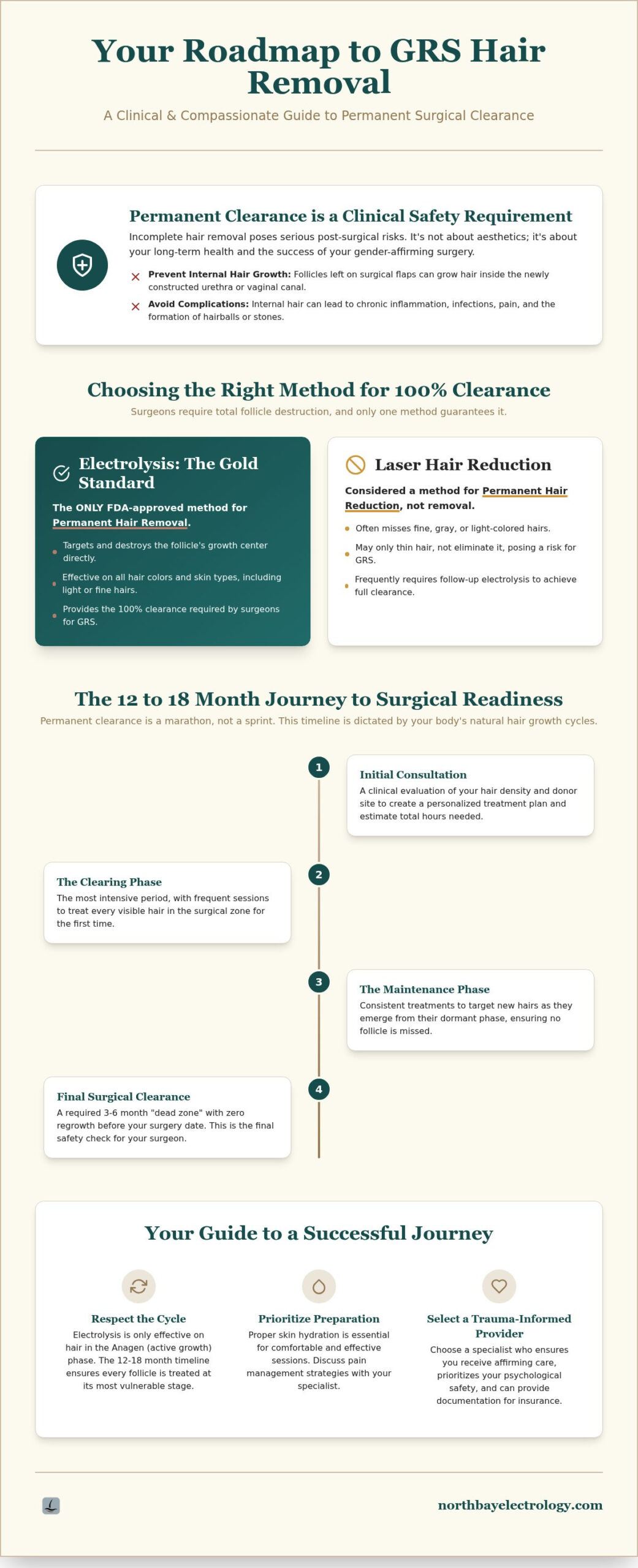
The journey to permanent clearance is a marathon, not a sprint. Meticulous GRS hair removal preparation requires a structured, four-step approach to meet the exacting safety standards of gender-affirming surgeons. We don’t just treat hair; we manage a timeline that aligns with your surgical goals to ensure the best possible medical outcome.
Step 1: The Initial Consultation. We start by assessing your unique hair density and the exact dimensions of the donor site. This isn’t just a cursory glance. It’s a clinical evaluation to estimate the total hours needed for your specific biology and surgical plan. Understanding the scope of work early helps reduce anxiety and allows for better financial and personal planning.
Step 2: The Clearing Phase. This is the most intensive period of your journey. You’ll visit us frequently to achieve “first clearance,” which means every visible hair in the surgical zone is treated for the first time. This phase can take several months depending on the area’s size and hair thickness. It’s the heavy lifting phase of the process.
Step 3: The Maintenance Phase. Once the initial visible growth is cleared, we focus on the “new” growth. These are actually follicles that were dormant or in a resting phase during your previous sessions. Consistency here is vital to ensure no follicle is left behind as it enters its active growth stage.
Step 4: Final Surgical Clearance. Most surgeons require a “dead zone” of three to six months with zero regrowth before your procedure. This buffer ensures that no hidden follicles wake up after the tissue has been inverted. It’s the final safety check for your long-term health and surgical success.
Why 12 to 18 Months is the Standard
The 12 to 18-month window isn’t arbitrary. It’s dictated by the natural rhythm of human biology. Hair grows in three distinct phases: Anagen (active growth), Catagen (transition), and Telogen (resting). Because electrolysis is most effective during the Anagen phase, we must wait for every follicle to cycle into that window. The Clinical Timeline for Pre-Op Electrolysis Success depends on catching every hair at the optimal moment. Multiple passes over the same area are necessary to ensure 100% destruction of the dermal papilla. We also build in essential rest periods to allow your skin to recover and remain supple, which is a clinical prerequisite for successful tissue grafting.
Frequency and Duration of Sessions
To stay on track for your surgical date, most clients benefit from one to two-hour blocks. These longer sessions allow us to make significant progress on the donor site while maintaining the precision required for permanent results. Consistency is the single biggest factor in meeting your deadline. If you miss sessions, the follicles you meant to catch in the active phase will slip back into a resting state, potentially pushing your surgery date back by several months. If you’re ready to map out your specific journey with an affirming expert, you can view our availability and request a consultation to begin your clinical preparation.
Specialized Preparation for Vaginoplasty and Phalloplasty
Every surgical plan is unique, and your surgeon will provide a specific template or “map” of the tissue they intend to use. Following this map exactly is the most critical part of your GRS hair removal preparation. This isn’t just about aesthetics; it’s about the functional integrity and safety of your future anatomy. Most surgical protocols align with NIH recommendations for pre-surgical hair removal to ensure that donor sites are clinically prepared for inversion or grafting.
The precision required for these procedures means we don’t just clear the surface. We focus on the specific anatomical zones that will become internal tissue. Whether you’re preparing for a genital procedure or a donor flap on a limb, the goal is 100% permanent destruction of every follicle in the designated area. This meticulous work prevents the long-term complications that can arise from internal hair growth, such as chronic inflammation or the formation of stones.
Vaginoplasty Specifics: The Genital Zone
For vaginoplasty, the primary focus areas include the scrotum, perineum, and the penile shaft. This tissue is essential for labiaplasty and the construction of the vaginal canal. Since this skin will be inverted during the procedure, leaving even a few active follicles can lead to intra-vaginal hair growth. We recognize that these are high-sensitivity areas. We utilize specialized techniques and pacing to ensure your comfort while maintaining the clinical precision required for total clearance. You can find a deeper breakdown of this process in our guide on Preparing for Vaginoplasty.
Phalloplasty Specifics: The Donor Site
Phalloplasty preparation involves clearing larger surface areas, typically the Radial Forearm Flap (RFF) or the Anterolateral Thigh (ALT). While the location is different, the stakes are just as high. The skin used for the urethral extension must be completely hair-free to prevent future blockages or infections within the urinary tract. Managing the hair density on a limb requires a dedicated strategy to ensure we meet your surgical deadline. Our approach to Phalloplasty Preparation focuses on systematic clearance of the entire donor flap, ensuring the tissue is healthy and ready for its new purpose.
Practical Preparation: Managing Your GRS Hair Removal Journey
Managing your GRS hair removal preparation requires a blend of clinical discipline and self-compassion. While the technical work happens in our office, the success of each session often depends on how you care for yourself in the days leading up to your appointment. We recognize that genital electrolysis is a deeply personal and sometimes vulnerable experience. Our commitment is to provide a trauma-informed environment where your psychological safety is prioritized alongside the technical efficacy of the treatment.
Logistically, you’ll need to coordinate your shaving routine with your appointment schedule. We require a small amount of growth, typically what you’d see two to three days after shaving, so we can accurately guide the probe and remove the treated hair. After your session, focus on gentle recovery. Using soothing agents like witch hazel or pure aloe vera helps calm the skin and reduces redness. Maintaining a consistent routine between sessions ensures your skin remains healthy and resilient throughout this long-term process.
Optimizing Your Skin for Electrolysis
Hydrated skin is a clinical prerequisite for effective electrolysis. When your skin cells are saturated with moisture, they conduct electrical current more efficiently. This allows us to use lower, more comfortable settings while still achieving permanent destruction of the follicle. Dehydrated skin acts as a resistor, which can lead to increased heat and unnecessary discomfort. We recommend increasing your water intake significantly for 48 hours before your visit.
You should also review your current skincare regimen. Avoid using retinols, harsh acids, or chemical exfoliants on the donor site for at least one week prior to treatment. These products can thin the skin and increase sensitivity, making the area more prone to irritation. The ideal skin state for a successful electrolysis session is supple, well-hydrated tissue that is free from active inflammation or chemical irritation.
Comfort and Pain Management Strategies
Pain sensitivity in the genital area is a common concern, but it’s manageable with a proactive strategy. Most clients find success using prescription-strength lidocaine creams, such as a 5% formulation. For maximum efficacy, apply the cream liberally 60 to 90 minutes before your session and cover the area with a medical-grade plastic wrap to prevent evaporation and enhance absorption. This creates a much more comfortable experience during intensive clearing sessions.
Systemic factors also play a role in your comfort levels. We advise avoiding caffeine and other stimulants on the day of your appointment, as these can heighten nerve sensitivity and increase anxiety. If you feel overwhelmed by dysphoria or treatment-related stress, please let us know. We can adjust our pacing, offer breaks, or use grounding techniques to help you feel secure. Your comfort is not a distraction; it’s an essential part of the clinical process.
Choosing North Bay Electrology for Your Surgical Preparation
North Bay residents in Petaluma, Santa Rosa, and surrounding areas often find it difficult to locate local specialists who truly understand the complexities of pre-surgical protocols. At North Bay Electrology, we bridge this gap by combining clinical precision with a deep, heart-centered commitment to gender-affirming care. We don’t view ourselves as just technicians; we’re your advocates and partners in a transformative journey that deserves the highest level of expertise. Choosing the right partner for your GRS hair removal preparation is a decision that directly impacts your surgical outcome and your peace of mind.
Our “Affirming Expert” approach means we prioritize your dignity and psychological safety above all else. We recognize that this process is a long-term commitment that requires immense trust, patience, and a non-judgmental atmosphere. Our clinical register is professional and authoritative, yet it’s always balanced with the empathetic warmth you need when navigating such a sensitive transition. We’re here to guide you through the technical requirements while validating the personal significance of your goals. Choosing the right specialist for your GRS hair removal preparation means finding someone who values your journey as much as you do.
A Specialized Clinical Environment
We maintain a strict “Appointment Only” policy to ensure that your time in our office is entirely dedicated to your care. This private setting allows us to provide the focused attention required for meticulous surgical clearance without the distractions of a high-volume clinic. We exclusively utilize FDA-approved electrolysis because it remains the only method capable of delivering the permanent results your surgeon demands. By focusing solely on permanent destruction of the hair follicle, we ensure your skin is clinically ready for the next stage of your transition.
Navigating the Financials
The financial side of gender-affirming healthcare can feel like another hurdle to clear. While we don’t provide direct insurance billing, we offer robust support with insurance reimbursement paperwork. We’ll provide the detailed documentation and session logs necessary to help you seek coverage from your insurance provider. We view this administrative support as a vital part of our advocacy, helping you manage the investment in your surgical safety. It’s important to view this as a permanent investment in your health and comfort. If you’re still researching your options, consider our guide on Choosing a Professional Electrolysis Clinic to understand what to look for in a North Bay provider.
Securing Your Path to Permanent Results
Successful gender-affirming surgery depends on meticulous preparation that starts long before you reach the operating room. By committing to a structured 12 to 18 month timeline and following your surgeon’s specific tissue map, you ensure the long-term safety and functional integrity of your results. Permanent clearance isn’t just a clinical requirement; it’s a vital investment in your future comfort and health.
At North Bay Electrology, we’re dedicated to supporting you through every step of your GRS hair removal preparation. We provide specialized expertise in pre-surgical protocols, combined with the compassionate, trauma-informed care you deserve. Our team also offers assistance with insurance reimbursement paperwork to help you navigate the financial aspects of your transition with confidence and dignity.
You don’t have to navigate this complex process alone. We’re here to be your protective guide and advocate as you move toward a more authentic and empowered version of yourself.
Frequently Asked Questions
How many months before GRS should I start electrolysis?
You should ideally begin the process 12 to 18 months before your scheduled surgery date. This timeline allows your specialist to treat every follicle through its full growth cycle, ensuring total clearance. Because hair grows in stages, multiple passes are required to achieve the permanent results necessary for surgical safety. Starting early also provides your skin with ample time to heal and remain supple before the procedure, which is a key requirement for successful tissue grafting.
Can I use laser hair removal instead of electrolysis for GRS?
No, laser hair removal is considered permanent reduction, while electrolysis is the only FDA-approved method for permanent hair removal. Most surgeons require electrolysis for GRS hair removal preparation because it ensures the complete destruction of the follicle. Relying solely on laser can leave behind fine or light hairs that may continue to grow after tissue inversion. This leads to serious internal complications that are difficult to treat after your procedure is complete.
Will my insurance cover pre-surgical electrolysis for bottom surgery?
Many insurance plans now recognize pre-surgical electrolysis as a medically necessary component of gender-affirming care. While we don’t offer direct insurance billing, we provide comprehensive insurance reimbursement paperwork to support your claim. You’ll typically need a diagnosis of gender dysphoria and a letter of medical necessity from your surgeon. We recommend contacting your provider early to understand their specific documentation requirements and coverage limits. We’re here to help you navigate these administrative steps with ease.
How painful is genital electrolysis for GRS preparation?
The genital region is highly sensitive, but we utilize several strategies to ensure your comfort during GRS hair removal preparation. Most clients manage the sensation effectively by using prescription-strength topical numbing creams applied 60 to 90 minutes before the session. We also recommend staying well-hydrated and avoiding caffeine on the day of your appointment. Our trauma-informed approach allows for a gentle pace, ensuring you feel secure and supported throughout the entire clinical process.
How much hair clearance is actually required for a vaginoplasty?
Surgeons typically require 100% hair clearance on the specific donor sites used for the vaginal canal and labia. This usually includes the scrotum, the perineum, and portions of the penile shaft. Every surgeon has a slightly different map for their procedure, so it’s essential to bring your surgeon’s specific clearance requirements to your initial consultation. This precision ensures that no hair follicles are present on the tissue that will eventually be inverted during your surgical procedure.
What happens if I have hair left over after my surgery?
If hair follicles remain on the donor tissue after surgery, they will continue to produce hair inside the newly constructed vaginal canal or urethra. This can lead to significant clinical complications, including chronic inflammation, recurrent infections, and the formation of internal hairballs or stones. These issues often require complex secondary procedures to resolve. Achieving total permanent clearance during the preparation phase is considered a non-negotiable safety standard for all gender-affirming surgeries involving tissue inversion or grafting.
Should I shave before my pre-surgical electrolysis session?
You should not shave immediately before your appointment. We require approximately two to three days of hair growth, which is about the length of a grain of rice. This allows your electrologist to see the direction of the hair growth and accurately insert the probe into the follicle. If the hair is too short, we cannot effectively treat the area. We will provide specific instructions on managing your shaving schedule and skin care during your initial clinical consultation.
Does North Bay Electrology work with my specific surgeon’s requirements?
Yes, we specialize in following the specific anatomical maps provided by gender-affirming surgeons. Whether you’re working with a local Bay Area specialist or traveling for your procedure, we tailor our treatment plan to meet their exact clearance zones. We understand the nuances of different surgical techniques and ensure that the donor tissue for your vaginoplasty or phalloplasty is clinically prepared according to your medical team’s high standards. Our goal is to ensure your surgery proceeds without any complications.

Article by
Madison Hanselman
As a trans woman and owner of North Bay Electrology in Petaluma, I bring a deep personal empathy and love for technical systems to my practice. My own transition fuels my passion for permanent hair removal, making my clinic a proud partner and safe haven for the LGBTQ+ community. Balancing rigorous analytics with heartfelt care, I approach electrology as both a precise science and a life-changing path to self-actualization.