A 2021 study revealed that gender-affirming hair removal is associated with a 38% reduction in severe psychological distress among transgender and gender-diverse individuals. For many in our community, accessing reliable LGBTQ electrolysis services isn’t merely a cosmetic preference; it’s a clinical necessity for mental health and surgical success. You likely already know the frustration of explaining your identity in a medical setting or the disappointment of non-permanent laser treatments that don’t meet WPATH standards. You deserve a space where your dignity is the priority and your transition goals are understood without question.
This article provides the essential technical and emotional roadmap for permanent hair removal, specialized pre-surgical clearance, and trauma-informed care tailored for the North Bay community. We’ll clarify the vital differences between permanent removal and temporary reduction; we’ll also outline the specific timelines required for bottom surgery and how to manage the insurance reimbursement process. By the end of this guide, you’ll have a clear, professional path forward to achieve the results you need in an environment that truly affirms who you are.
Key Takeaways
- Understand why electrolysis is the only FDA-approved method for truly permanent hair removal, which is a critical distinction for achieving long-term gender-affirming goals.
- Learn about the medical necessity of 100% hair clearance for pre-surgical donor sites to prevent serious post-operative complications in procedures like vaginoplasty.
- Discover how specialized LGBTQ electrolysis services create a trauma-informed environment that prioritizes your psychological safety and dignity throughout the treatment process.
- Explore practical strategies for skin preparation and hydration to ensure your sessions are as effective and comfortable as possible.
- Gain insights into navigating the insurance reimbursement process, including how professional paperwork support can help make your care more accessible.
Understanding LGBTQ Electrolysis: A Clinical Necessity for Affirmation
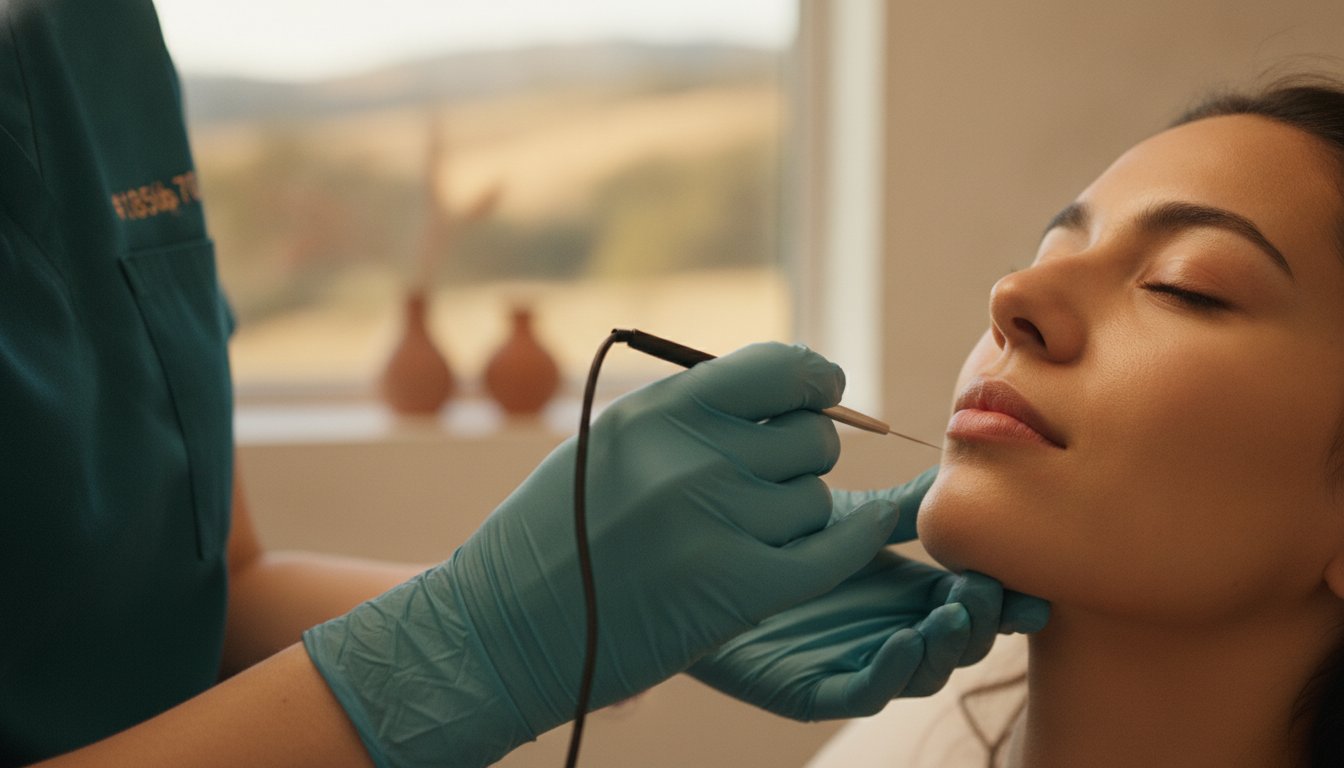
Electrolysis stands as the gold standard for gender-affirming care because it is the only method recognized by the FDA for permanent hair removal. While other technologies offer temporary reduction, LGBTQ electrolysis services focus on complete follicle destruction. This technical distinction is vital for individuals who require total clearance for social transition or surgical preparation. To understand the foundational science, one might ask, What is Electrology? It’s a precise clinical process that uses a fine probe to deliver energy directly to the hair root, ensuring that specific follicle can never produce hair again.
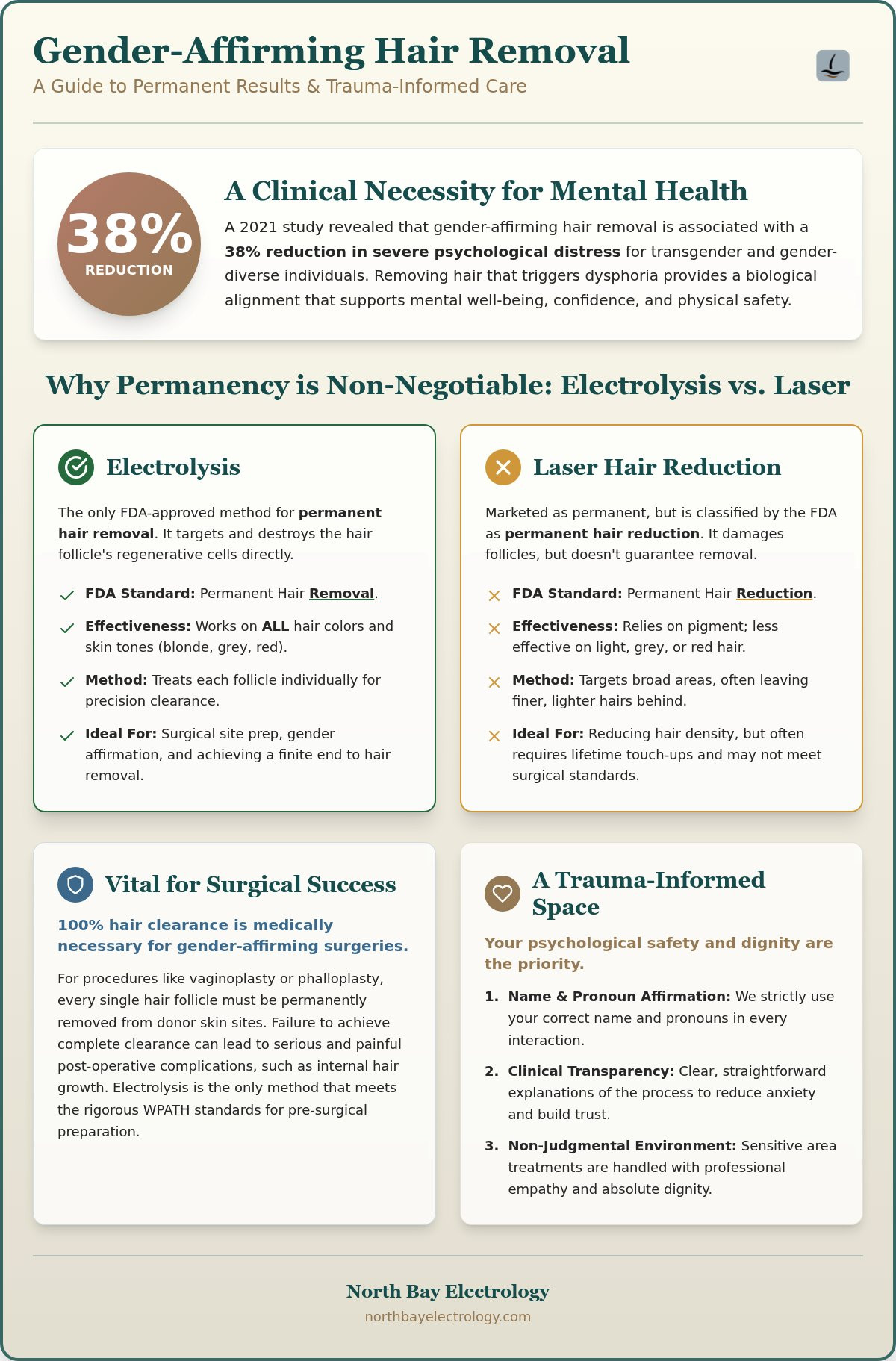
For many, hair removal is often dismissed as a cosmetic luxury. However, in the context of gender affirmation, it’s a fundamental component of healthcare. A 2021 study showed that gender-affirming hair removal is associated with a 38% reduction in severe psychological distress. By eliminating hair that triggers dysphoria, these treatments provide a biological alignment that supports mental well-being and physical safety. This isn’t just about aesthetics; it’s about providing the clinical tools necessary for a person to live authentically.
The Emotional Impact of Permanent Results
The presence of facial hair often creates a visible shadow that can be difficult to conceal, even with professional-grade makeup. This shadow can lead to heightened anxiety during social interactions or concerns about safety in public spaces. Achieving permanent clearance provides a profound sense of relief. It removes the daily burden of shaving and the constant fear of stubble returning by midday. When the hair is gone permanently, the psychological weight of managing it disappears. This allows your true self to be seen clearly and consistently without the interference of unwanted growth.
Trauma-Informed Care in the Treatment Room
Clinical excellence involves more than just technical skill; it requires a deep commitment to psychological safety. A trauma-informed approach means we recognize that the treatment room can be a vulnerable space, especially for the LGBTQ+ community. We prioritize your comfort through specific practices:
- Pronoun and Name Affirmation: We strictly use your correct pronouns and chosen name in every interaction, from the first consultation to the final session.
- Clinical Transparency: We provide clear, straightforward explanations of the process to reduce anxiety and build trust.
- Non-Judgmental Environment: Sensitive area treatments are handled with professional empathy and absolute dignity.
This specialized care transforms a medical procedure into a supportive journey toward self-actualization. By focusing on your individual needs, we ensure that your path to permanent results is as comfortable as it is effective. Our Petaluma facility is designed to be a private, appointment-only space where you can feel secure throughout your entire transformation.
Electrolysis vs. Laser: Why Permanency is Non-Negotiable
Laser technology is often marketed as a permanent solution, but there’s a distinct clinical difference between reduction and removal. For many individuals in the North Bay seeking LGBTQ electrolysis services, this distinction determines the success of their transition. Laser targets pigment; it works best on dark hair and light skin. It often leaves behind fine or light-colored hairs that can still cause significant dysphoria. Electrolysis treats every follicle individually. It doesn’t rely on pigment. This makes it effective for every hair color and skin tone, including blonde, red, and grey hair.
The Gender-Affirming Hair Removal Guidelines from UCSF highlight that while laser is effective for some, electrolysis remains the only method for truly permanent hair removal. This is because electrolysis destroys the germinative cells at the base of the follicle. Once these cells are neutralized, the hair cannot grow back. Laser merely damages the follicle, which often leads to hair returning years later or requiring a lifetime of touch-up sessions. For those seeking a finite end to their hair removal journey, the precision of electrolysis is a superior long-term investment.
FDA Standards for Permanent Hair Removal
The FDA classifies electrolysis as permanent hair removal because it eliminates the follicle’s ability to regenerate. Laser is classified as permanent hair reduction. This means laser may reduce the total number of hairs, but it cannot guarantee they won’t return. Clinical methods like thermolysis and the blend technique provide a high safety profile. They allow for precise treatment that protects the surrounding skin while ensuring the hair root is completely neutralized. This clinical standard is why surgeons require electrolysis for pre-surgical preparation.
Hormones and Hair Growth Patterns
Biological factors and medical transition play a significant role in how hair behaves. Testosterone creates deep, resilient follicles that often resist light-based treatments. While Hormone Replacement Therapy (HRT) can slow the rate of new growth, it won’t eliminate follicles that have already transitioned to a terminal state. Strategic planning is key to managing these changes effectively. We often recommend starting LGBTQ electrolysis services early in the transition process to stay ahead of growth patterns.
This approach is also the most effective way to manage hair growth related to PCOS, which can be a significant source of distress for many in our community. While the initial investment of time is greater than laser, the long-term benefit is a life free from the cycle of regrowth and maintenance. If you’re ready to begin a permanent plan, you can view our available session times to find a schedule that works for your journey.
Pre-Surgical Electrolysis: Preparing for Vaginoplasty and Phalloplasty
For gender-affirming surgeries like vaginoplasty or phalloplasty, permanent hair removal isn’t just an aesthetic choice; it’s a critical medical requirement. Surgeons require 100% permanent clearance of the donor tissue to prevent hair growth inside the newly constructed anatomy. Internal hair growth can lead to infections, stones, or other serious complications that are difficult to resolve post-operatively. This is why our LGBTQ electrolysis services emphasize technical precision and exhaustive clearance. We work in tandem with your surgical team to ensure we meet their specific mapping requirements for donor sites. According to Pre-Surgical Hair Removal Research, electrolysis is the preferred method for donor site preparation because it ensures the hair follicles are permanently neutralized before the tissue is repurposed.
We also understand that the financial aspect of surgery can be overwhelming. While we don’t offer direct insurance billing, we provide comprehensive insurance reimbursement paperwork support. We help you document the medical necessity of your treatments so you can seek the coverage you deserve from your provider. Our goal is to act as your advocate, ensuring the technical side of your preparation is seamless and professionally documented.
Timeline for Bottom Surgery Clearance
Timing is everything when preparing for a major procedure. We recommend starting your treatments at least 12 to 18 months before your scheduled surgery date. This window allows us to work through multiple hair growth cycles and utilize the “clear and wait” method. This technique ensures that we’ve treated every dormant follicle that might surface months after your initial sessions. Finishing your clearance several months before surgery gives your skin ample time to heal and remain stable for the procedure. It’s a marathon, not a sprint, and early planning reduces pre-op stress significantly.
Specialized Care for Sensitive Donor Sites
Treating donor sites like the scrotum, labia, or forearm requires a high level of technical expertise and a gentle touch. These areas are physiologically sensitive, and pre-surgical sessions often last longer than standard appointments to achieve the necessary clearance. We prioritize your comfort by discussing pain management strategies and maintaining a trauma-informed environment throughout. You can prepare for your journey by reviewing our Pre-Surgical Electrolysis Checklist. This resource helps you understand the steps needed to ensure your skin is ready for treatment. If you’re ready to discuss your surgical timeline, you can book a consultation at our Petaluma clinic.
Navigating Your Journey: Preparation and Aftercare for Success
Achieving the best results from LGBTQ electrolysis services requires a collaborative approach between you and your electrologist. Success begins with skin preparation, specifically hydration. Well-hydrated skin allows the probe to slide more easily into the follicle and improves the conductivity of the electrical current. We recommend increasing your water intake significantly for at least 48 hours before your appointment. Additionally, the hair must be long enough for us to grasp with forceps; this usually means allowing three to five days of growth, or approximately 1/8 inch, before your session.
Your journey starts with a comprehensive consultation at our private Petaluma clinic. During this time, we review your health history and any medications, including hormone replacement therapy (HRT), which can influence skin sensitivity. We focus on clinical transparency, explaining the technical process and setting a realistic timeline based on your specific hair density and growth cycles. This step is essential for reducing anxiety and ensuring you feel secure in your treatment plan.
We recognize that discomfort is a significant concern for many clients. To manage this, we suggest applying a topical numbing cream 60 to 90 minutes before your session. During the treatment, we utilize precise techniques designed to minimize skin trauma while ensuring the germinative cells of the follicle are neutralized. Our goal is to balance clinical efficacy with your personal comfort at every stage.
Your First Appointment Checklist
To ensure your first visit is productive and comfortable, please keep the following requirements in mind. Being prepared helps us maximize the time spent on actual hair removal during your session.
- Hair Growth: Ensure hair is at least 1/8 inch long so it can be effectively treated and removed.
- Health History: Prepare a list of current medications and any history of skin sensitivities or keloid scarring.
- Stimulants: Avoid caffeine and other stimulants on the day of your treatment to help keep your nervous system calm.
- Skin Condition: Arrive with clean skin, free of lotions, makeup, or deodorants in the area being treated.
Skin Health and Recovery
Trauma-informed aftercare is vital for protecting your skin and ensuring rapid healing. For the first 24 to 48 hours after your session, avoid sun exposure, heavy exercise, and environments like saunas or hot tubs that introduce heat and bacteria to the area. We recommend using simple, soothing products such as pure aloe vera or witch hazel to calm the skin. It is normal to experience slight redness or minor swelling immediately after treatment; these are typical physiological responses. However, we provide clear instructions on how to identify normal healing versus reactions that may require additional attention. By following a strict aftercare routine, you support the long-term health and appearance of your skin throughout your transition.
Choosing North Bay Electrology for Your Affirmation Journey
North Bay Electrology is more than a clinical facility; it’s a dedicated space for advocacy and care. We understand that finding reliable LGBTQ electrolysis services in the North Bay requires trust in both technical skill and emotional safety. Our practice is built on the “Affirming Expert” promise. This is where clinical precision meets a deep, compassionate understanding of the unique journeys within our community. We don’t just treat hair; we support your personal transformation.
We specialize in permanent face and neck hair removal. By using only FDA-approved methods, we ensure your results are truly lasting. This focus is essential for individuals in social transition who need the confidence of a clear, shadow-free complexion. Our Petaluma clinic provides a private, appointment-only environment. This setup ensures maximum discretion and a calm atmosphere where you won’t feel rushed or overlooked during your treatments.
Local Access to Specialized Care
Residents of the North Bay shouldn’t have to travel to San Francisco or Sacramento for trans-competent care. We’re proud to serve a wide geographic area, with clients regularly visiting us from Santa Rosa, San Rafael, and the surrounding Marin County. Our location in Petaluma makes specialized care accessible for those in Napa and Sonoma as well. We’ve built our practice to fill the gap in local services, ensuring you have an expert provider close to home.
Our appointment-only model is a deliberate choice for the privacy of our LGBTQ+ clients. It allows us to maintain a non-judgmental, one-on-one setting that prioritizes your psychological safety. By focusing on the specific needs of our local community, we’ve created a hub for gender-affirming care that understands the challenges of finding specialized providers in Northern California. You deserve a provider who is as invested in your well-being as you are.
Start Your Transformation Today
The first step in your journey is a detailed consultation. During this session, we’ll map out your specific hair removal goals and integrate them into your broader transition timeline. Whether you’re preparing for a future surgery or seeking the daily relief of permanent facial hair removal, we’re here to guide you. We’ll discuss the technical details and the emotional roadmap together, ensuring you feel empowered at every stage.
Transitioning is a long-term process that requires patience and expertise. We’re committed to being your steady, knowledgeable partner through every session. Our methodical approach ensures that every follicle is addressed with the attention to detail it deserves. When you’re ready to move forward with a provider who views their work as a form of care and advocacy, we’re ready to start with you.
Achieving Your Vision for Permanent Self-Actualization
Transitioning involves many technical and emotional steps, but permanent hair removal shouldn’t be a source of anxiety. You’ve learned that electrolysis is the only FDA-approved method for permanent removal, which is vital for surgical success and social safety. By choosing specialized LGBTQ electrolysis services, you ensure your care is handled with the clinical precision and trauma-informed empathy you deserve. We’re committed to your psychological safety as much as your physical results.
North Bay Electrology provides a private, non-judgmental environment in Petaluma. We offer specialized pre-surgical hair clearance and dedicated insurance reimbursement paperwork support to help you navigate the practical side of your care. It’s about more than just hair; it’s about providing a safe space where your identity is affirmed at every appointment. This methodical approach ensures you reach your goals with dignity and professional support.
Your journey toward a life free from unwanted growth is a powerful act of self-care. We’re here to guide you through every step of this transformation with the patience and expertise you’ve been looking for. You don’t have to navigate this process alone.
Frequently Asked Questions
Is electrolysis actually permanent for transgender facial hair?
Yes, electrolysis is the only method recognized by the FDA for permanent hair removal, making it highly effective for transgender facial hair. Unlike laser, which offers reduction, electrolysis destroys the germinative cells of the follicle. This ensures that once a follicle is treated successfully, it cannot produce hair again. It works on all hair colors and skin tones, providing a finite solution for those seeking to eliminate facial hair shadow permanently.
How long does pre-surgical electrolysis for vaginoplasty take?
Pre-surgical clearance typically requires a timeline of 12 to 18 months to ensure all hair growth cycles are addressed. This duration is necessary to clear the donor tissue completely and observe the area for any dormant follicles that may surface later. Starting early is essential for meeting surgical requirements. We work closely with your timeline to achieve the 100% permanent clearance your surgeon needs for a successful, complication-free outcome.
Can I get electrolysis if I am currently on HRT?
You can certainly receive treatments while on Hormone Replacement Therapy (HRT). In fact, HRT often complements LGBTQ electrolysis services by slowing the rate of new hair growth and thinning the hair over time. While hormones won’t eliminate existing terminal follicles, they can make the overall process more manageable. We monitor your skin’s response to ensure your treatment plan remains effective as your body undergoes hormonal changes during your transition.
Does insurance cover LGBTQ electrolysis services in California?
Many insurance providers in California now recognize gender-affirming hair removal as a medical necessity. While we don’t offer direct billing, we provide comprehensive insurance reimbursement paperwork support to help you claim your benefits. Coverage varies by plan, so we recommend contacting your provider to discuss their specific requirements for electrolysis. Having professional documentation from an affirming expert often streamlines the process of getting your treatments covered as part of your transition journey.
What is the difference between thermolysis and blend for trans hair removal?
Thermolysis uses high-frequency alternating current to create heat that destroys the hair root, while the blend method combines this heat with a chemical reaction. Thermolysis is often faster for clearing large areas, whereas the blend method is sometimes preferred for deep, resilient follicles common in testosterone-driven growth. We select the specific technique based on your hair type and skin sensitivity to ensure the most efficient and comfortable path to permanent results.
How painful is electrolysis on sensitive areas like the face or groin?
Sensitivity varies for everyone, but areas like the upper lip or groin are naturally more reactive. We prioritize your comfort by using precise clinical techniques and suggesting topical numbing agents. Most clients describe the sensation as a quick heat or a mild sting. Our trauma-informed approach ensures we move at a pace that respects your limits, making even long pre-surgical sessions on sensitive donor sites a manageable part of your transition.
How do I find a trans-competent electrologist near me in Sonoma County?
Finding a trans-competent provider involves looking for specialists who prioritize trauma-informed care and understand gender-affirming requirements. Our Petaluma clinic serves Sonoma County and the entire North Bay, providing a safe, private space for clients from Santa Rosa to San Rafael. We focus specifically on the needs of the LGBTQ+ community, ensuring your name and pronouns are respected while delivering the technical precision required for permanent results in an affirming environment.
What should I do if I have had poor results with laser hair removal in the past?
If you’ve experienced regrowth after laser, switching to electrolysis is the best course of action for permanent results. Laser often fails to address light-colored hairs or follicles influenced by testosterone, leading to frustrating reduction rather than removal. Electrolysis bypasses these limitations by treating each follicle individually. We can effectively clear the remaining hair that laser missed, providing the finality you need to complete your facial or body hair removal goals.

Article by
Madison Hanselman
As a trans woman and owner of North Bay Electrology in Petaluma, I bring a deep personal empathy and love for technical systems to my practice. My own transition fuels my passion for permanent hair removal, making my clinic a proud partner and safe haven for the LGBTQ+ community. Balancing rigorous analytics with heartfelt care, I approach electrology as both a precise science and a life-changing path to self-actualization.